Transaction Certificate Auditing Protocols for Off-Shore Linen Yarn Spinners
Offshore linen yarn auditing requires batch-matched transaction certificates verified against mill mass balance logs to prevent uncertified fiber blending.


Paperwork
Auditing chain-of-custody documentation across international linen supply routes reveals a systematic gap between facility-level accreditations and batch-specific shipment proof. Offshore spinning facilities often hold valid facility scope certificates issued by independent certifiers like Control Union or IDFL under standards such as European Flax or the Organic Content Standard. These annual documents confirm that a mill maintains operating machinery, inventory tracking software, and segregation procedures necessary to handle certified fiber.
A facility scope certificate does not prove that a specific shipment of wet-spun yarn contains verified European flax. Proof of origin for a commercial lot demands a transaction certificate issued for that explicit transaction, matching the gross weight, shipping mark, and invoice number of the fiber delivery.
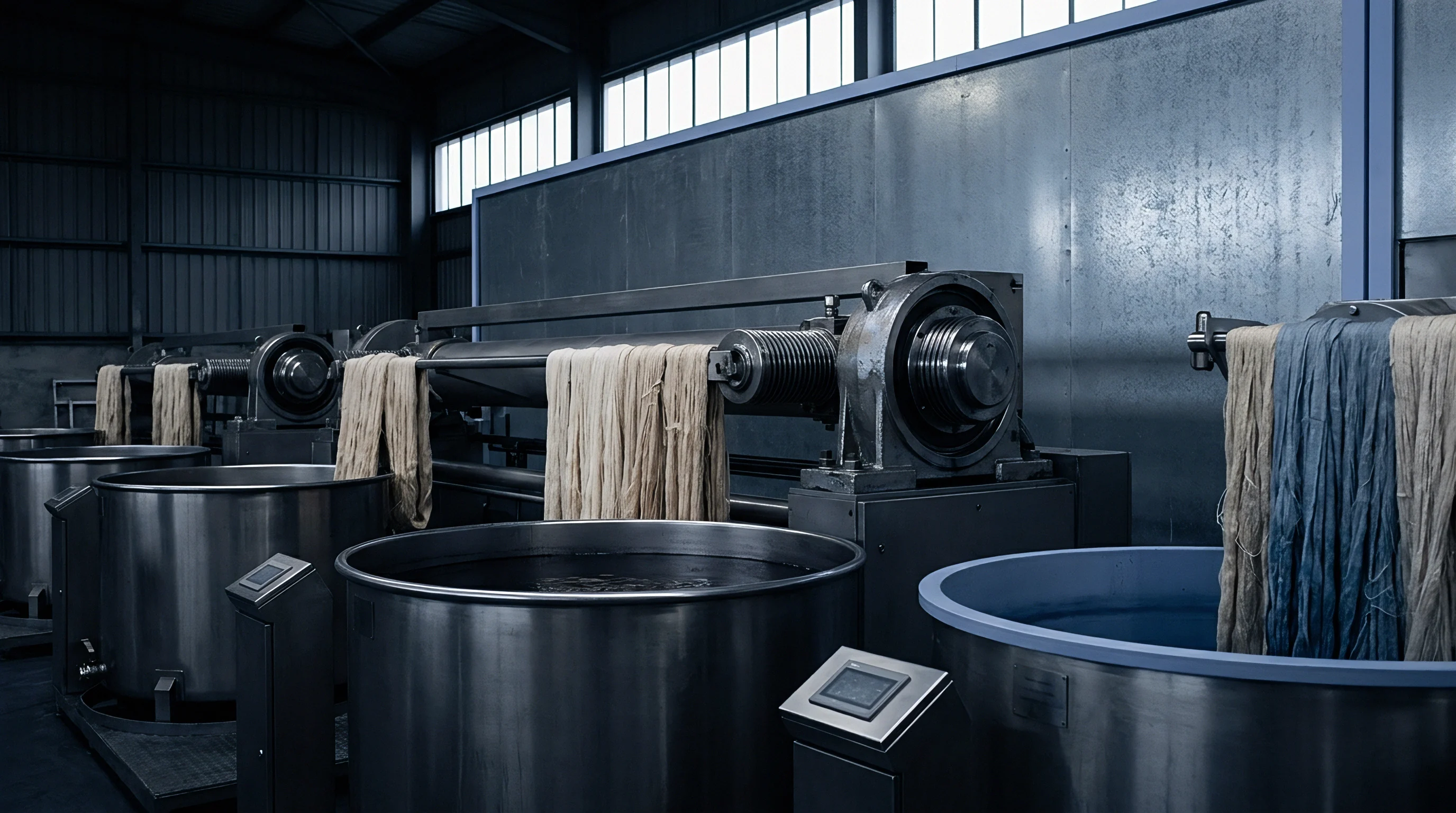
Scope Certificates versus Transaction Records
Facility accreditations confirm that a mill possesses the technical equipment and administrative systems necessary to handle certified fiber. Certifiers issue scope certificates following an annual physical inspection of the spinning facility. These documents contain an expiration date, a list of covered processing steps like hackling, carding, or wet spinning, and the maximum allowable percentage of certified material the mill can process.
Off-shore traders skip certificates. In contrast, transaction certificates authenticate the physical transfer of a specific quantity of raw flax or yarn between two commercial entities. Each transaction certificate lists the seller, buyer, net fiber weight, commercial invoice reference, and unique shipping batch code.
A buyer purchasing 100% European Flax yarn accepts severe risk when accepting only a facility scope certificate at port entry.

Structural Failures in Intermediate Documentation
Discrepancies frequently surface when intermediate traders generate internal delivery slips without obtaining corresponding official certifier documentation. Chain of custody breaks down most frequently during raw fiber transit between European scutching mills and Asian spinning facilities. Scutching units in France, Belgium, or the Netherlands issue initial transaction certificates covering baled flax fiber dispatched to export traders.
When an offshore trader consolidates bales from multiple European scutchers before selling to a spinner in Jiangsu or Zhejiang, the trader often fails to request a consolidated transaction certificate. The spinner receives physical fiber accompanied only by a commercial invoice and a bill of lading, leaving the resulting spun yarn without documentary continuity.
| Scheme Name | Covered Transformation Stages | Scope Certificate Validity Period | Transaction Certificate Issue Trigger | Chain-of-Custody Model |
|---|---|---|---|---|
| European Flax | Scutching, hackling, spinning, weaving, wet processing | Twelve months from audit date | Individual shipment invoice dispatch | Physical segregation with batch identification |
| Masters of Linen | 100% European transformation from fiber to fabric | Twelve months from site evaluation | Every commercial consignment document set | Strict territorial physical segregation |
| Organic Content Standard | Ginning, carding, spinning, garment manufacturing | Twelve months from compliance check | Bale transfer between certified facilities | Mass balance or physical segregation |
| Global Organic Textile Standard | Fiber spinning, dyeing, finishing, manufacturing | Twelve months from site assessment | Delivery invoice generation between entities | Physical segregation with chemical restriction |
Documentary breaks invalidate downstream claims. When a mill cannot produce a continuous chain of transaction certificates matching every intermediary trade step, certifiers refuse to issue a final transaction certificate for the spun yarn export.
- Expired Scope Documentation occurs when a spinner presents a facility certificate that lapsed before the spinning date of the specific yarn lot.
- Weight Mismatch Discrepancies happen when the net weight listed on the transaction certificate exceeds the physical fiber weight recorded on import customs bills.
- Omitted Invoice Mapping arises when a mill provides a transaction certificate that references a general purchase order rather than the commercial invoice number for the delivered yarn.
- Unaccredited Subcontract Spinning emerges when a primary mill outsources wet spinning to an uncertified secondary facility without notifying the certification body.
Offshore spinning operations routinely present transaction certificates that cover yarn weight rather than raw fiber mass balance.
Auditing protocols require cross-referencing invoice dates against scope certificate validity windows. Offshore mill managers frequently assert that individual transaction certificates remain unnecessary because annual facility audit summaries validate all fiber passing through the production floor.


Spindle
Physical auditing inside offshore yarn mills shifts focus from paperwork to the mechanical reality of fiber conversion. Paper documents prove nothing if physical fiber stores cannot be reconciled against production output logs. Auditing an offshore spinning mill demands an on-site physical review of incoming raw flax bale tags, storekeeper ledgers, roving frame outputs, and bobbin winding tallies.
Flax arrives at the mill store in high-density compressed bales bound with steel strapping. Each bale carries a mill tag recording the scutcher lot number, harvest year, fiber length grade, and net weight.

Bale Store Tracking and Fiber Lot Identification
Incoming flax shipments arrive at the mill storehouse bearing physical tags, shipping bills, and phytosanitary certificates. Storekeepers maintain inventory ledgers recording the entry of European flax alongside domestic Asian flax inputs. Unmarked bales carry risks.
During an audit, inspectors compare the raw bale serial numbers stored in the warehouse against the batch numbers listed on corresponding European Flax transaction certificates. When bale tags are missing or lack lot numbers, fiber provenance is lost. Unmarked bales stored adjacent to certified European fiber present severe cross-contamination risks during bale opening and blending operations.

Mass Reconciliation across Mechanical Wet Spinning
Raw flax fibers pass through hackling, carding, drawing, and roving before entering the water baths of high-count yarn production. Combing pins straighten long flax fibers into continuous slivers while removing short fibers known as tow. Hackling comb waste accumulates.
Hackling tow represents between twelve and eighteen percent of raw fiber mass depending on initial fiber quality and retting consistency. The standard hackling waste baseline resting at 14% assumes medium-grade Normandy scutched flax with an average fiber length of 65 millimeters; processing lower-grade short flax or over-retted straw increases tow extraction up to 22%. Flax yields vary.
Wet spinning requires soaking roving slivers in hot water baths at 60 to 70 degrees Celsius to soften pectin bonds before drafting through high-speed rollers. Hot water bath extraction and mechanical fly loss reduce dry yarn yield by an additional four to six percent.
- Examine warehouse intake logs to confirm raw bale shipping marks match European scutching bills.
- Inspect physical bale tags in the storage bay for lot numbers and certifier stamps.
- Audit hackling section output records to calculate tow separation percentages.
- Compare roving weight allocations against wet-spinning frame production logs.
- Verify bobbin winding yield tallies against final packed cone weights.
A standard wet-spinning line loses between six and nine percent of input flax mass as unrecoverable tow and sludge during hackling and bath preparation.
Reconciling physical fiber inputs against spinning frame bobbin logs establishes whether a mill processed pure European flax or blended uncertified domestic fibers into the roving run. Flawed input registers render downstream certificate applications invalid. Uncertainty remains regarding how auditing bodies can continuously track fiber loss percentages across micro-lots when mills run simultaneous production orders on shared machinery.


Arithmetic
Reconciling input tonnage against output yarn volume demands explicit calculation of processing waste and fiber yield ratios. A precise mass balance calculation exposes uncertified fiber dilution in offshore mills. Yield loss is predictable.
When an offshore mill purchases 10,000 kilograms of certified scutched European flax, that raw fiber mass cannot produce 10,000 kilograms of fine wet-spun linen yarn. Mechanical processing inevitably generates mass loss through hackling tow extraction, carding waste, bath dissolution, and winding trimmings. When a mill delivers 9,800 kilograms of certified finished yarn from a 10,000 kilogram fiber input, uncertified tow or foreign fiber has been added to the blend.

Which Documents Disclose Mass Loss between Hackling and Wet Spinning?
Auditors trace material movement by comparing raw scutched flax weighbridge tickets against roving frame yield records. Production engineers log fiber weight at four distinct control gates inside the spinning plant. Gate one measures dry scutched flax entering the hackling combs.
Gate two records hackled long flax sliver prior to carding and roving. Gate three measures wet-spun roving output prior to drying. Gate four records final conditioned yarn cones packed into export cartons.
Comparing gate logs against transaction certificate applications reveals whether output weight claims exceed physical fiber availability.

Worked Batch Mass Balance Calculation
A single processing run demonstrates the numerical relationships governing verified linen yarn production. Consider a production lot starting with 10,000 kilograms of certified scutched European flax at a baseline moisture regain of twelve percent. Hackling removes 1,400 kilograms of short-fiber tow (14%) and 200 kilograms of comb dust (2%).
Drawing and roving convert the remaining 8,400 kilograms of long flax into roving sliver with a minor waste loss of 100 kilograms (1%). Hot-water wet spinning dissolves 415 kilograms of pectin substances (5%) and generates 250 kilograms of flyer fly loss (3%). The wet spinning pectin dissolution loss figure of 5% reflects standard 60-degree Celsius hot-water bath duration of 45 minutes; extending bath dwell time or adding alkaline wetting agents elevates organic pectin removal to 7.5%.
Winding, clearing, and conditioning yield 7,550 kilograms of net finished dry linen yarn. Proof costs money. Audits confirm facts.
Published certifier estimates suggest unannounced mill audits detect uncertified fiber blending in approximately 12% of offshore linen runs, though this figure lacks independent statistical verification across small-scale spinners; prudent buyers manage this uncertainty by requiring third-party DNA isotopic fiber testing on every twentieth yarn container.
| Processing Gate | Material Form | Stage Yield Ratio (%) | Mass Transferred Out (kg) | Extracted By-Product / Waste |
|---|---|---|---|---|
| Gate 1: Fiber Intake | Scutched European Flax | 100.0 | 10,000 | None (Raw Material Baseline) |
| Gate 2: Combing | Hackled Long Fiber Sliver | 84.0 | 8,400 | 1,400 kg Tow / 200 kg Combs Dust |
| Gate 3: Roving Preparation | Drawn Roving Bobbins | 83.0 | 8,300 | 100 kg Roving Waste |
| Gate 4: Wet Spinning | Wet Spun Yarn Bobbins | 76.35 | 7,635 | 415 kg Soluble Pectin / 250 kg Fly Waste |
| Gate 5: Final Winding | Conditioned Yarn Cones | 75.50 | 7,550 | 85 kg Winding Knotting Waste |
| Calculated yield based on standard 26 Nm wet-spun linen yarn at 12% official moisture regain. | ||||
Discrepancies trigger audits. Any mill output claim exceeding 76% of raw scutched fiber weight indicates unauthorized blending of lower-cost uncertified tow or domestic bast fibers.
- Bale Tag Reconciliation Checklist matches every physical bale serial number in the storehouse directly against the certified supplier packing list.
- Hackling Yield Verification confirms that mill hackling tow production logs align with standard industry waste bands between 12% and 18%.
- Bath Loss Accounting checks that wet-spinning mass balance calculations incorporate soluble pectin loss factors between 4% and 6%.
- Moisture Regain Adjustment forces auditors to calculate all yarn weights at the official commercial moisture regain baseline of 12%.
Under ISO 17065 section 7.7, an unannounced mill site audit invalidates a scope certificate if physical bale serial numbers do not match the input register.
Certifier rules govern. Incorporating ISO 17065 section 7.7 into the supply contract gives the buyer the right to reject yarn shipments without financial penalty whenever transaction certificate issuance exceeds thirty calendar days from port dispatch.


Tariff
Customs clearance and preferential trade status depend on non-preferential rules of origin and precise Harmonized System classification. Documenting textile origin for customs authorities demands precise distinction between raw material origin and non-preferential country of origin. Importing linen yarn into North America or Europe involves strict scrutiny under Harmonized System Chapter 53.
Unprocessed or scutched flax falls under HS heading 5301, while spun linen yarn falls under HS heading 5306. A transaction certificate that confirms European Flax origin for raw fiber does not automatically grant European country of origin to yarn wet-spun in China.

Harmonized System Classification across Flax Stages
Raw or scutched flax enters trade channels under code 5301, whereas spun linen yarns fall under heading 5306. Harmonized System rules split flax processing into distinct tariff categories based on transformation level. HS code 5301 covers flax, raw or retted, broken, scutched, or hackled.
HS code 5306 covers single or multiple spun flax yarns. Customs rules apply. Tariff rates vary substantially across these categories.
Importing raw flax into Asian spinning hubs generally incurs minimal duty, whereas importing finished spun yarn into destination markets triggers duties ranging from 3% to 12% depending on trade agreements and bilateral concessions.

Country of Origin Substantial Transformation Rules
Customs authorities in major import markets assess non-preferential origin based on where the substantial manufacturing process occurs. Under European Union Customs Code Article 60 and United States Customs Regulations 19 CFR 102, non-preferential origin is determined by the country where the last substantial economic process took place. For linen yarn, spinning raw flax fibers into yarn under HS 5306 constitutes substantial transformation.
Yarn spun in Jiangsu from French scutched flax carries Chinese non-preferential origin on customs declarations. Sourcing managers paying premium prices for European flax fiber ensure product labeling explicitly distinguishes fiber origin from yarn manufacturing origin. Labeling yarn as Made in France when wet spinning occurred in China violates FTC regulations and EU labeling laws.
Duty rates alter margins. Clearance stops abruptly.
| HS Code Heading | Product Description | Primary Manufacturing Stage | Non-Preferential Origin Rule | Mandatory Proof Document |
|---|---|---|---|---|
| 5301.10 | Flax, raw or retted | Field harvesting and retting | Country of agricultural growth | Phytosanitary certificate and farm invoice |
| 5301.21 | Flax, broken or scutched | Mechanical decortication | Country of scutching operation | European Flax Scutcher Transaction Certificate |
| 5306.10 | Single flax yarn | Wet or dry mechanical spinning | Country where spinning occurred | Mill spinning output log and certificate of origin |
| 5306.20 | Multiple or cabled flax yarn | Twisting and plying | Country of twisting if substantial shift met | Plier mill transaction record and invoice |
Declarations must align with physical transport records. Mismatches between transaction certificate origin claims and bill of lading port locations trigger customs holds and origin re-evaluations.
- Certificate of Origin Form A provides official governmental declaration of the physical spinning location for customs tariff calculation.
- Raw Fiber Import Customs Declaration proves the offshore spinner imported authentic European scutched flax prior to yarn manufacture.
- Commercial Spinning Mill Invoice links specific yarn lot numbers to the corresponding wet-spinning line batch run.
- Certifier Mass Balance Verification confirms the volume of spun yarn exported does not exceed certified raw fiber intake limits.
Yarn spun from blended European flax and domestic tow shows uneven dye absorption under reactive dyestuff testing.
Origin defense files require complete alignment between certifier transaction records and government customs entries. A yarn shipment that lacks batch-matched transaction certificates at the port of entry inevitably faces customs inspection delays and origin reclassification.


Recovery
Enforcing commercial remedies against offshore yarn spinners requires clear contractual terms tied to documented batch failure. When an offshore spinner delivers yarn that fails audit verification, commercial recovery depends on the legal structure of the purchase contract. Sourcing contracts that rely on informal email specifications or generic purchase order terms leave buyers with zero recourse when certifiers refuse to issue transaction certificates.
Sourcing managers protect financial commitments by inserting explicit audit protocols and transaction certificate delivery dates into master supply agreements.

Contractual Indemnification and Verification Warranty Clauses
Sourcing contracts shift compliance risks back to the spinner by linking invoice settlement to confirmed certificate validity. Effective supply contracts mandate that transaction certificates accompany every commercial yarn shipment before final payment dispatch. Standard payment terms retain twenty to thirty percent of lot value until the certification body validates the transaction certificate against input raw fiber claims.
Contractual warranty clauses stipulate that if a certification body revokes or denies a transaction certificate due to mill record discrepancies, the spinner accepts full liability for cargo rejection, return freight fees, and secondary weaving loom downtime penalties.
Quantifying Financial Exposure in Uncertified Consignments
When a customer audit reveals uncertified flax content in finished apparel, the buyer incurs expenses spanning testing, regulatory fines, product recalls, and brand remediation. Financial damages escalate exponentially once uncertified yarn enters downstream fabric production. Replacing uncertified yarn at the spinner level costs thirty to forty dollars per kilogram including freight adjustments.
If uncertified yarn is woven into finished fabric before detection, losses expand to include weaving costs, dyeing charges, and cut-and-sew garment manufacturing labor. Establishing pre-shipment audit protocols and binding arbitration clauses in trade hubs like Singapore or Hong Kong allows buyers to enforce recovery claims effectively against offshore spinners. Audit records endure.
Liabilities remain clear.
Failure to secure verified transaction certificates prior to fabric weaving results in complete forfeiture of certified product premiums and total buyer exposure to mislabeling penalties in import markets.