Physical Segregation Protocols for Flax Fiber Intake Verification
Physical segregation requires verified transaction certificates, moisture-adjusted mass reconciliation, secure cordons, and core sampling before warehouse release.


Weighbridge
Intake control begins at the gross vehicle scale, where overall tonnage is broken down into inventory lots before offloading. Consignments under European Flax certification rules arrive with three baseline documents: the carrier bill of lading, the scutcher commercial invoice citing the relevant scope certificate identifier, and the delivery ticket listing batch numbers. Segregation fails when mills treat a transport container as an undifferentiated mass.
A standard 40-foot high-cube sea container holds roughly 18 to 22 metric tons of scutching tow or long line scutched flax in high-density bales. The receiver logs the gross vehicle weight, directs the truck to the unloading bay, and records tare weight immediately after discharge on a certified scale meeting OIML R76 accuracy class III tolerances.
Weight discrepancies often exceed standard legal tolerances when fiber absorbs moisture during transit. Natural bast fibers equilibrate quickly with ambient humidity. While ISO 6741-1 sets commercial moisture regain for flax at 12.00 percent, ocean transport through humid tropical routes regularly pushes delivered container readings to between 14.5 and 16.0 percent.
The receiving clerk checks the net weight against the invoice only after applying the standard moisture correction calculation.
A delivery ticket lacking the scutcher lot sequence invalidates the chain of custody before a forklift ever touches the container door.
Gross intake weights logged without correcting for ambient conditions cause friction between spinners and fiber merchants. Flax shipped from Normandy or Flanders at 11.8 percent moisture gains weight during transshipment through humid ports, artificially depressing apparent yields during later hackling. The weighbridge attendant logs temperature, relative humidity, and container seal numbers directly into the ERP intake module.
Any broken, mismatched, or missing bolt seal triggers immediate segregation of the entire containerload into a holding pen until a formal surveyor inspects it.
Documentary Reconciliation at Unloading
Documents are matched before the warehouse crew cuts strapping or unloads bales from the truck bed. The intake supervisor compares the European Flax Scope Certificate, issued by an accredited body such as Bureau Veritas Certification, against the physical packing manifest. A scope certificate only confirms that the scutching plant held valid qualification during the processing period; it does not prove that the incoming shipment itself contains certified fiber.
That requires a transaction certificate or an endorsed scutcher lot declaration listing batch serials, net weight in kilograms, and harvest year.
Customs filings offer a second check against paperwork substitution. The intake specialist checks field 31 of the Single Administrative Document or import customs declaration to verify the Harmonized System code. Scutched flax is cleared under HS 5301.21 for broken or scutched flax, while hackled or further processed line fiber falls under HS 5301.29, and flax tow enters under HS 5301.30.
Discrepancies between shipping papers and customs codes point to paperwork errors or deliberate substitution to hide lower-grade fiber blends. Any difference greater than 0.5 percent between declared weights on the delivery note and net weighbridge readings triggers an administrative hold, freezing the freight in the receiving slip.

Cordon
Perimeter controls physically separate certified flax from conventional stock to stop accidental mixing during staging. European Flax chain of custody standard version 3.0 mandates distinct separation between certified lots and non-certified goods through receiving, storage, and processing. Bales unloaded from verified containers go into a marked buffer zone painted with yellow floor stripes and set off by stanchions.
Mills processing both types reserve dedicated intake bays strictly for certified shipments, maintaining a strict two-meter buffer to isolate certified stacks from conventional bast fiber stored in the same bay.
Cross-contamination happens easily through forklift traffic, dropped tags, or loose fiber drifting across aisles. In mixed-intake facilities, forklift drivers use color-coded tines or stick to swept tire paths between bays. Dock protocols prohibit conventional bales from remaining on the staging platform during an intake audit.
Bale stacks are capped at four tiers under standard safety rules, and each stack is limited to a single scutching run from one certified producer. Mixing multiple scutching runs in the same row throws off automated inventory reconciliation logic.
Storage bays require durable, weather-resistant placards attached directly to the frame, displaying the internal lot number, European Flax batch registration, receipt date, nominal weight, and moisture reading. If inventory is kept in open bays, mills run heavy vinyl cordons secured with padlocks, with keys held by the QA manager until release. Where continuous cordons aren’t feasible, floor-to-ceiling galvanized mesh partitions create locked bond rooms inside the main warehouse.
Chain of custody rules enforce complete physical boundaries between certified lots and conventional fiber stocks in shared warehouse spaces.
Warehouse management systems back up physical cordons with logical bin locks. ERP software marks storage coordinates in certified bays as restricted. Handlers cannot transfer inventory to opening rooms or hackling lines without scanning both the bay barcode and the individual bale tag.
Assigning a conventional bale code to a certified bin triggers a system transfer error and an audible alarm on the scanner.

Physical Demarcation Standards
Quarantine zones rely on clear visual markers and tamper-evident perimeters. Floor striping needs durable epoxy paint, renewed every six months to stay visible under heavy traffic, and staging areas must be kept free of loose fiber. Table 1 outlines the minimum physical segregation rules for each phase of intake staging.
| Operational Stage | Physical Barrier Type | Separation Distance | Tagging Requirement | System Lock Mechanism |
|---|---|---|---|---|
| Container Discharge | Movable safety stanchions | 3 meters clear buffer | Container manifest sheet | Temporary dock intake hold |
| Initial Moisture Testing | Dedicated sampling lane | 2 meters painted buffer | Barcode sample flag | Inspection pending status |
| Quarantine Holding | Galvanized wire mesh cage | Enclosed locked cell | High-visibility amber placard | Restricted quarantine code |
| Bulk Bale Staging | Epoxy floor demarcation | 2 meters physical gap | European Flax verified label | Location-locked bin record |
| Hackling Preparation | Dedicated roller conveyor | Structural partition wall | Batch traveler docket | Pre-blend release authorization |
Individual bale wrapping is sometimes cited as sufficient protective separation between mixed lots, but that approach fails certification body surveillance audits. Packaging routinely tears, punctures, or degrades during ocean transit, allowing loose tow or uncertified stricks to interlock with adjacent certified bales.

Sheath
Primary packaging protects the fiber stricks and carries core traceability markers during transit. Scutched flax arrives in dense rectangular bales wrapped in woven polypropylene, natural burlap, or high-tensile polyethylene film, bound with steel strapping. Receiving checks evaluate the sheath for tears, water penetration, oil stains, and broken straps.
Inspectors examine bale exteriors for dampness before offloading; water damage during sea transit breaks down the pectin matrix and causes fungal decay, weakening cell walls and discoloring the fiber.
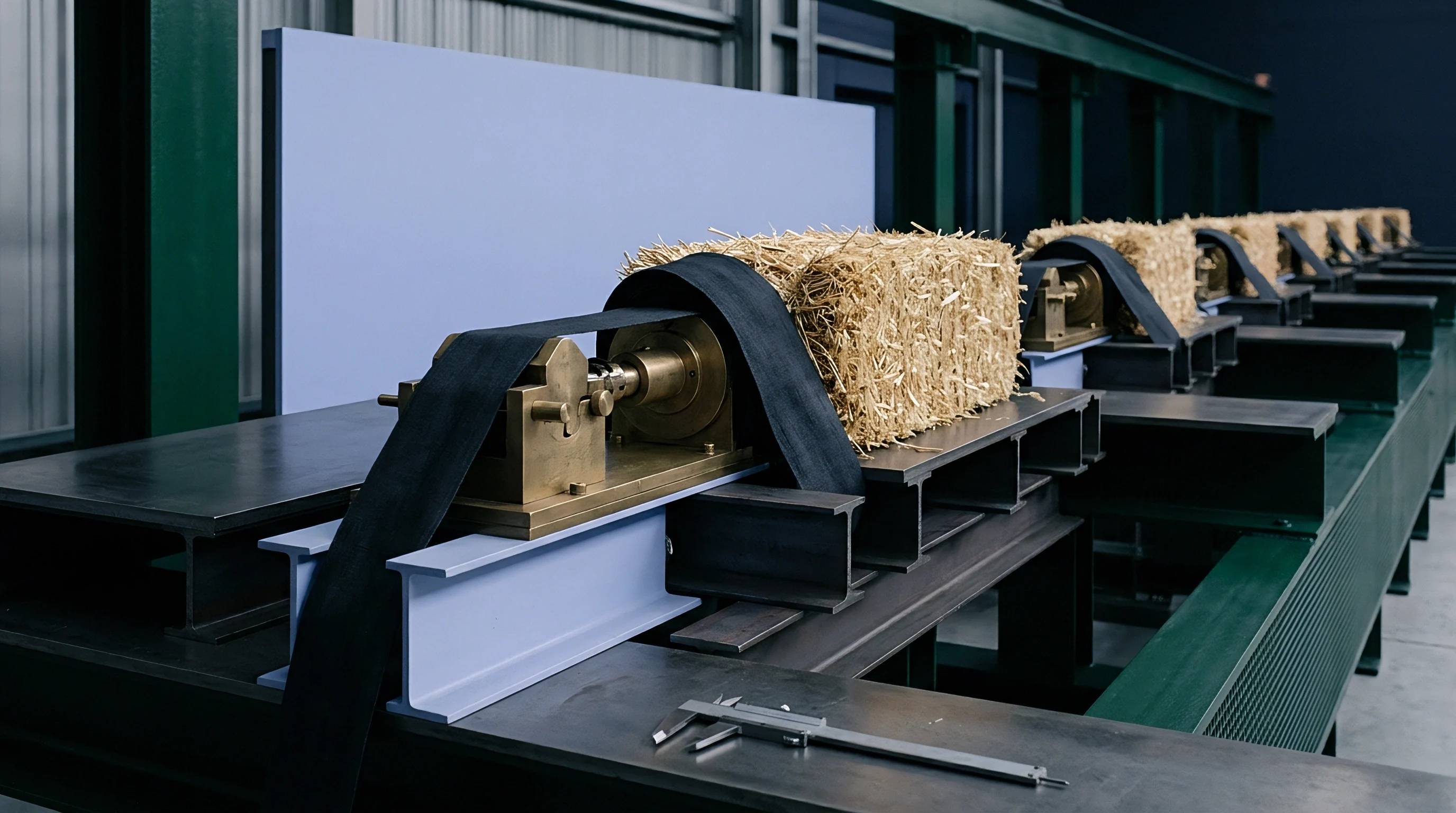
Strapping bands hold commercial bales under 200 to 350 bars of pressure, compressing 100 to 220 kilograms of long fiber into a dense block. If a band snaps, the bale expands, exposing loose stricks to dirt, moisture, and cross-contamination. Standard packing rules require five or six transverse steel bands spaced evenly along the length.
Inspectors reject or quarantine decompressed bales because internal fiber alignment collapses and contamination risks surge.
Outer wrapper checks keep synthetic packaging fragments out of the production line. Damaged polypropylene wraps shed plastic fibers when snagged by forklift tines. If these synthetic bits pass into carding or hackling machinery, they mix with the flax, survive chemical bleaching, and break threads during fine yarn spinning.
Damaged synthetic wrapping requires immediate re-sheathing or surface cleaning under focused light before the bale moves to storage.

Label Tamper Verification
Bale labels form the essential link between physical stock and the paper chain of custody. European Flax rules require a primary label on every bale showing the grower ID, scutching mill registration, harvest year, lot identifier, and individual bale number. Inspectors check for swapped labels, duplicate serials, or altered thermal printing.
Tag fasteners with plastic arrow ties undergo pull tests to ensure tags weren’t removed from conventional stock and fastened onto uncertified bales.
Barcodes printed on water-resistant synthetic stock prevent smudging from transit moisture. The intake technician scans the linear Code 128 or Data Matrix barcode with an industrial reader, which matches the serial number against the supplier’s pre-loaded shipping notice. A missing tag, unreadable barcode, or duplicate serial sends the bale directly to the quarantine cage.
Handling friction during ocean transit can tear tags off, but missing labels are still treated as uncertified material, downgrading the affected volume to conventional mill run status.

Probe
Core sampling draws fiber specimens from deep inside compressed bales without destroying the packaging. Surface moisture and cleanliness often differ from core conditions. Technicians use hollow stainless steel probes with hardened cutting tips, driven by high-torque electric drills or hydraulic rams.
Probes measure 400 to 600 millimeters long with an inside diameter of 15 to 25 millimeters, allowing clean extraction right from the bale core.
Sampling plans follow ISO 2859-1 acceptance rules. For a standard intake lot of 100 bales under General Inspection Level II (Single Sampling Plan, Normal Inspection, AQL 1.5), technicians core 32 randomly chosen bales. If two or more fail quality or moisture checks, the receiver rejects the lot or mandates 100 percent sorting at the supplier’s expense.
Probes must enter perpendicular to the long axis of the fiber stricks; driving parallel tears the bundles and jams the barrel with snarled tow. Technicians clean the barrel between samples with a dry wire brush to avoid cross-lot contamination. Extracted core samples go straight into airtight, vapor-sealed glass or metal jars to preserve true moisture levels for testing.
Moisture Regain Determination
Flax trading uses dry mass calculations to adjust invoices against actual delivered weight. Because water makes up a noticeable fraction of gross weight, lab technicians determine commercial weight by measuring absolute dry mass through oven drying per ISO 6741-2. Samples are dried at 105 degrees Celsius until reaching constant weight ~ defined as two consecutive weighings 15 minutes apart differing by under 0.05 percent.
The standard moisture regain allowance for scutched flax is 12.00 percent. Technicians calculate commercial mass by adding this fixed percentage to the measured bone-dry weight. Electrical resistance meters offer quick screening at unloading docks, though they require daily calibration against oven-drying results.
Table 2 details the weight and financial adjustments caused by moisture variance across a 20-metric-ton long line flax shipment.
| Measured Regain | Delivered Gross Mass | Bone-Dry Mass | Calculated Commercial Mass | Mass Invoiced Variance | Commercial Financial Balance |
|---|---|---|---|---|---|
| 9.50% | 20,000 kg | 18,265 kg | 20,457 kg | +457 kg | Supplier credit 2,514 USD |
| 11.00% | 20,000 kg | 18,018 kg | 20,180 kg | +180 kg | Supplier credit 990 USD |
| 12.00% | 20,000 kg | 17,857 kg | 20,000 kg | 0 kg | Neutral invoice match |
| 13.50% | 20,000 kg | 17,621 kg | 19,736 kg | -264 kg | Buyer debit memo 1,452 USD |
| 15.00% | 20,000 kg | 17,391 kg | 19,478 kg | -522 kg | Buyer debit memo 2,871 USD |
| 16.50% | 20,000 kg | 17,167 kg | 19,227 kg | -773 kg | Buyer debit memo 4,252 USD |
Disputes over moisture frequently stem from humidity differences between European scutching facilities and spinning mills in eastern China. Testing protocols require full logging of calibration procedures, equipment serial numbers, and conditioning curves. Sampling stops immediately if core fibers show visible mold, smell fermented, or register internal temperatures above 35 degrees Celsius, which indicates active heating inside the bale.

Bench
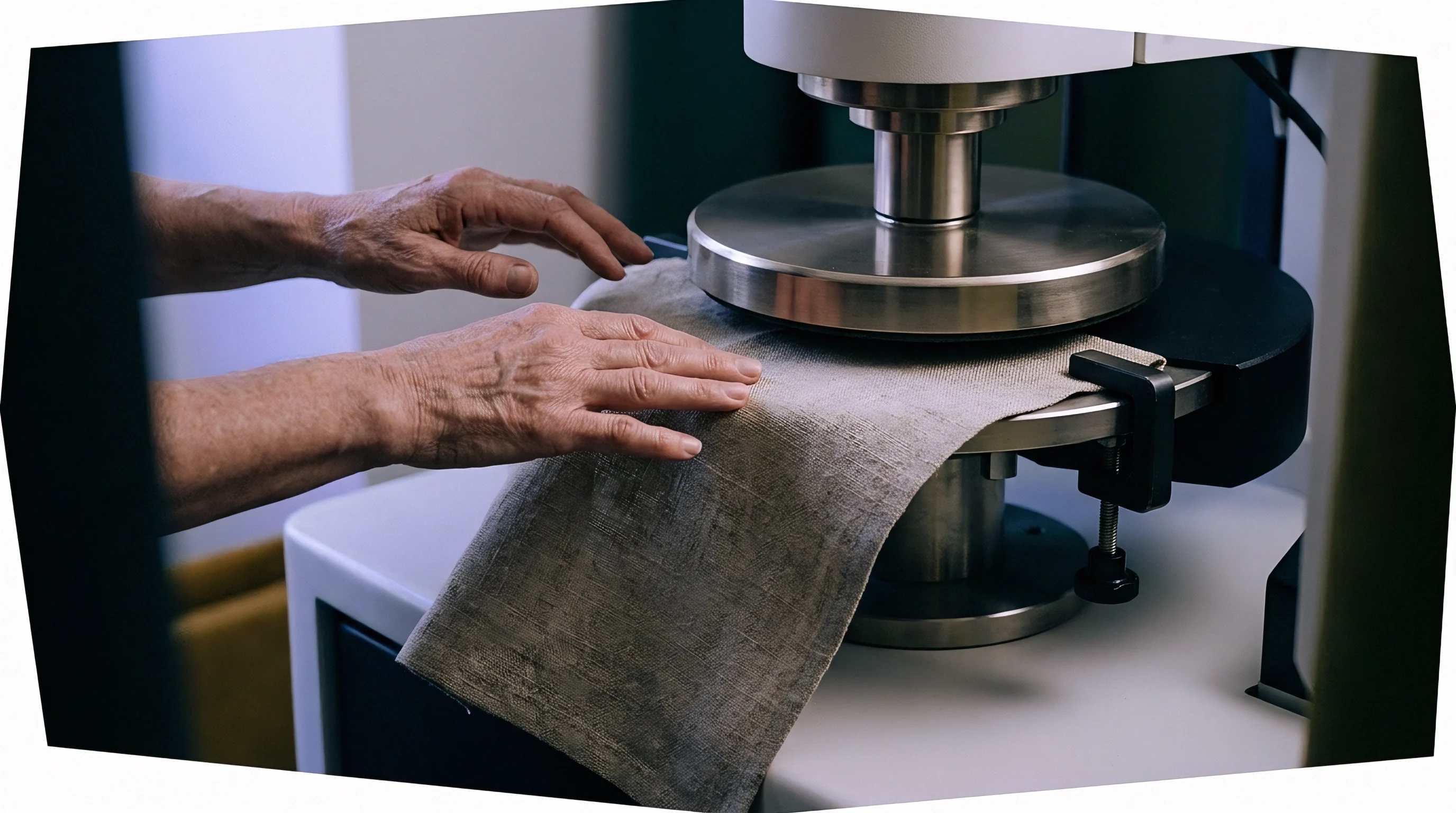
Lab intake tests measure physical and chemical properties to verify that incoming lots match technical spec sheets. Fiber grade, cleanliness, and scutching quality dictate whether long line fiber reaches target yarn counts during wet or dry spinning. Technicians run bundle tensile tests on an automated strength tester per ISO 3060, using a 3.2-millimeter gauge length to measure breaking tenacity in centinewtons per tex.
Scutching separates bast fiber bundles from the woody stem core, known as shive. Shive content is measured gravimetrically by mechanically shaking and hand-picking a conditioned 100-gram sample to isolate residual woody bits, weed seeds, and soil. For premium long line flax destined for fine yarns (Nm 39 to Nm 50), residual shive cannot exceed 1.50 percent by weight.
Lots with 1.51 to 2.50 percent shive are restricted to coarser counts or blended with tow, while anything above 2.50 percent fails intake.
Shive content above two percent signals improper retting and forces yarn mills into unexpected roving stop lines.
Bundle fineness is measured using airflow permeability instruments or image analysis microscopy. Analysts cut bundles into 10-millimeter lengths, condition them under standard textile atmospheric conditions, and calculate linear density in decitex. Long line flax typically ranges between 1.8 and 3.5 decitex.
Readings above 4.2 decitex indicate under-retted fiber whose unseparated bundles resist drafting during wet spinning preparation.

Retting Uniformity Verification
How well enzymes break down pectin binders during field dew retting determines fiber color, softness, and divisibility. Labs check retting depth using the Fried test or colorimetric reflectance. Under-retted flax remains green, stiff, and coarse from unhydrolyzed pectin, whereas over-retted material turns dull dark grey, with degraded cellulose and weakened bundle tenacity.
Spectrophotometers log CIE L , a , and b coordinates to confirm color consistency across sampled bales.
Chemical screening detects synthetic sizing, paraffin waxes, or softeners used to mask poorly retted raw fiber. Near-infrared spectroscopy checks core samples for unexpected hydrocarbon absorption bands to confirm the stock is virgin natural flax. Any bench test failure generates a Non-Conformance Report in the quality database, locking the batch before it reaches production staging.

Quarantine
Quarantine segregation isolates non-conforming or unverified lots from active production lines. Isolation starts as soon as an inspector flags missing papers, tampered seals, moisture spikes, pests, or lab test failures. The quarantine enclosure is a fenced, padlocked area inside the main warehouse with clear hazard markings, accessible only to authorized QA personnel with electronic keycards.
Every affected bale gets a durable, bright orange tag showing the intake record number, isolation date, non-conformance category, and inspector’s name. Entering a quarantine record into the ERP suppresses the batch, making it invisible to spinning scheduling software. If a forklift scanner reads a quarantine tag, it sounds a warning chime and blocks transfer to preparation.
Biological contamination requires immediate isolation. Damp flax attracts storage fungi like Aspergillus and Penicillium, along with grain beetles that nest in residual seeds. Because infested bales risk spreading to healthy stock, protocol requires independent fumigation or removal from the site within 72 hours of detection.

Quarantine Release Sequence
Clearing a lot from quarantine takes a structured investigation and formal administrative sign-off across five sequential gates.
- Issue Identification documents the underlying cause, whether paper errors, tag mismatches, lab failures, or moisture issues.
- Secondary Validation Testing requires drawing an expanded set of core samples from 60 bales for independent re-testing at an external ISO 17025 accredited laboratory.
- Commercial Dispute Filing formally notifies the fiber merchant, supplier, and carrier of the breach and projected costs.
- Corrective Disposition Assignment determines whether to downgrade the lot to conventional spinning, return it to the mill, or accept a price adjustment.
- Electronic System Clearance requires the quality director’s sign-off on the disposition report to clear system transfer locks.
Orange tags come off only after the quality director signs the physical release notice. Technicians then apply standard green verified inventory tags before moving bales to active staging bays. Lots remaining unresolved after thirty calendar days automatically convert to scrap or return-to-vendor status.


Audit
Intake procedures rely on regular chain of custody audits by internal teams and third-party registrars. External auditors verify that segregation controls follow scheme rules ~ specifically European Flax Standard version 3.0, and Global Organic Textile Standard version 7.0 where organic claims are made. Auditors match transaction certificates against spinning work orders, checking mass balance to ensure volumes aren’t inflated during production.
Mass-balance calculations weigh raw material inputs against finished yarn output, accounting for mechanical waste during preparation and spinning. Processing long line flax generates significant waste across hackling, spreading, drawing, roving, and wet ring spinning. Hackling tow typically claims 25 to 35 percent of initial fiber weight, while carding and combing short fiber tow creates another 10 to 15 percent.
Auditors review weight ledgers to confirm that total certified yarn and sub-product yields stay within expected limits relative to raw fiber input.
Auditing also covers machine clean-down logs and changeover schedules. When mills run certified European Flax and conventional fiber on the same machinery, equipment requires a complete clean-down. Operators blow down opening lines, vacuum card flats, clean gill boxes, and strip roving frames to clear out stray conventional fibers.
Auditors check maintenance logs, operator sign-offs, and waste weight receipts to confirm purge cycles took place before certified runs started.

Where Traceability Breaks in Asian Processing?
The distance between European scutching plants and Asian spinning mills introduces traceability risks at Chinese intake ports. Scutched flax from France, Belgium, or the Netherlands travels to mills concentrated in Jiangsu, Zhejiang, and Shandong provinces. Bales clearing customs in Qingdao, Shanghai, or Ningbo frequently pass through bonded warehouses or trading desks where original European Flax tags get damaged, lost, or replaced with local labels.
Traceability gaps widen when spinners buy from local consolidators who blend genuine European Flax with uncertified Russian, Belarusian, or Chinese fiber to cut costs. Scope certificates shown by brokers only prove the broker held certification at the time; they don’t prove the delivered shipment is certified stock. Buyers must ensure the mill provides a Transaction Certificate listing the receiving mill as consignee, covering the exact gross weight, container numbers, and scutching lot serials.
Mills sometimes use parallel internal batch numbers that disconnect physical lots from shipping documents. Auditors check the hackling floor and roving areas to verify that internal travelers carry the same European Flax batch code as the weighbridge receipt. If workers track lots using generic local designations like Grade 1, Grade 2, or standard blend codes, physical segregation breaks down and the yarn loses its certified status.
Contracts protect buyers from audit failures through explicit warranty terms. Under standard origin verification clauses, the seller warrants that shipments are fully documented European Flax backed by third-party transaction papers referencing specific bale serials. Should physical or documentary segregation fail verification, the seller agrees to cover all re-testing fees, demurrage charges, and return freight.


Ledger
Intake records tie physical checks and documentation together into a permanent audit file. The intake ledger acts as the master database tracking fiber from container offloading through release to the opening room. System records connect weighbridge slips, seal verifications, moisture readings, lab quality scores, and transaction certificate numbers to a single mill lot code, ensuring finished yarn traces back to its original harvest batch.
ERP software uses serialization modules to follow individual bales through production. Technicians scan each bale serial number with handheld devices during bay transfers. When carding or hackling departments request raw material, the system generates picking lists strictly from verified, released stock.
Technicians cannot scan out bales sitting in quarantine or awaiting lab results, keeping physical movement synchronized with database status.
Retention policies require keeping physical and electronic intake files for five years. Customs agencies, retail brands, and certification auditors regularly request these dossiers during spot checks. A complete lot file includes the bill of lading, commercial invoice, packing list, certificate of analysis, moisture calculation sheet, intake receiving ticket, quarantine release form, and copies of the valid scope and transaction certificates.
Reconciliation Ledger Metrics
Balance accounting depends on strict weight reconciliation across every incoming container. Table 3 illustrates a model intake ledger tracking a four-container shipment through verification.
| Container Number | Declared Net Weight | Scale Net Weight | Average Core Moisture | Corrected Commercial Mass | Document Verification | Disposition Status |
|---|---|---|---|---|---|---|
| MSKU9281745 | 20,450 kg | 20,510 kg | 12.2% | 20,473 kg | Valid TC match | Released to Bay A1 |
| TCLU4829103 | 20,380 kg | 20,950 kg | 14.8% | 20,443 kg | Valid TC match | Moisture debit applied |
| CMAU7361829 | 20,500 kg | 20,480 kg | 12.1% | 20,462 kg | Seal mismatch | Quarantine Cell Q2 |
| SUDU3918274 | 20,420 kg | 20,390 kg | 12.0% | 20,390 kg | Missing lot tag | Rejected return vendor |
Reconciliation ledgers protect mills against origin disputes and mislabeling penalties in major consumer markets. In the United States, the Federal Trade Commission enforces the Textile Fiber Products Identification Act against false claims and undocumented fiber content. Without verifiable intake ledgers linking finished goods back to certified raw stock, items sold as European Flax face stop-sale orders, mandatory recalls, and heavy fines.
Maintaining these ledgers requires continuous administrative effort, software infrastructure, and technical oversight. These overhead costs are reflected in the certified fiber premium, which runs 0.35 to 0.65 USD per kilogram above conventional fiber. Mill managers integrate physical segregation, lab testing, and mass-balance tracking into routine inventory operations to protect brand contracts, certification standing, and commercial credibility.