Verifying Physical Origin Declarations against Mass Balance Certificates
Verify mass balance claims by requiring physical segregation transaction certificates, calculating moisture-adjusted yield losses, and auditing mill bale intake records.


Gate
Documentary proof of flax origin relies on two distinct chain-of-custody models across international textile supply chains. Physical segregation demands that certified raw material remains physically separated from non-certified stocks at every stage from scutching through wet spinning, weaving, and finishing. Mass balance systems allow certified and uncertified flax raw materials to mix in shared mill storage and processing lines, provided the facility maintains strict administrative accounts of certified inputs and equivalent certified yarn or fabric outputs.
Discrepancies arise when buyers evaluate a physical origin declaration issued at the garment factory level using a mass balance certificate generated at the spinning mill. A mass balance certificate confirms that a specific quantity of certified fibre entered a facility, but it guarantees no physical presence of that certified fibre in any specific yarn lot or fabric roll leaving the mill.

Documentary Hierarchy in Linen Chain of Custody
Auditing provenance requires separating facility qualifications from individual consignment transfers. Standard compliance systems rely on a two-tier document structure: Scope Certificates and Transaction Certificates. A Scope Certificate confirms that a mill possesses the operational controls, software systems, and storage facilities required to process certified materials under a specific standard such as European Flax, Masters of Linen, or the Global Recycled Standard.
It carries an issuing date, an expiry date, and an explicit list of audited processing sites. A Scope Certificate alone proves zero physical volume of certified material within a delivered order.
Transaction Certificates provide the quantitative bridge between seller and buyer for a specific lot. Issued by an accredited third-party certification body, a Transaction Certificate lists the input material lot numbers, net weights, invoice references, and shipping bill declarations. When verifying origin, the buyer checks that the seller issued a Transaction Certificate covering the exact weight of yarn or greige cloth in the consignment.
If the mill relies on mass balance credit accounting, the Transaction Certificate validates the transfer of administrative origin credits rather than physical fibre tracing.
European Flax certification requires complete physical segregation across all processing stages, whereas mass balance standards allow administrative credit allocation across blended production lots.

Scope Certificates versus Batch Transaction Certificates
Verifying origin declarations across international borders requires evaluating the scheme rules under which each certificate operates. European Flax and Masters of Linen enforce strict physical segregation protocols. European Flax guarantees that long-flax fibre originates exclusively from Western European agricultural holdings in France, Belgium, and the Netherlands.
When a spinning mill in Jiangsu or Zhejiang buys European Flax scutched fibre, it receives a Transaction Certificate for that specific weight. If the mill operates under physical segregation, it processes that fibre through designated opening, carding, and spinning machinery, issuing a secondary Transaction Certificate for the spun yarn.
Mass balance frameworks alter this accounting mechanism. In a mass balance regime, the mill accepts European Flax fibre into its general raw material inventory, mixing it with uncertified flax from East European or local Chinese growers. The mill registers the certified weight into an administrative volume credit ledger.
When shipping yarn to a weaving mill, the spinner writes down its credit balance by an equivalent mass, issuing a mass balance declaration. The yarn delivered to the weaver may contain zero percent European long-flax fibre, yet it carries valid paper documentation under mass balance rules.
| Certification Standard | Chain of Custody Model | Guaranteed Physical Origin | Primary Traceability Document | Audit Vector |
|---|---|---|---|---|
| European Flax | Physical Segregation | 100% Western Europe | Transaction Certificate (TC) | Bale tag matching and mill batch records |
| Masters of Linen | Physical Segregation | 100% European Union (field to yarn to fabric) | Scope and Transaction Certificates | EU mill facility audit and yarn origin invoices |
| Global Recycled Standard (GRS) | Physical Segregation or Mass Balance | Percentage matching batch claim | Transaction Certificate (TC) | Input-output mass balance reconciliation ledger |
| OEKO-TEX Standard 100 | Chemical Compliance | Zero origin guarantee | Lab Test Report and Certificate | Chemical residue testing on finished substrate |
The gap between administrative origin transfer and physical fibre origin creates commercial risk for brands marketing regional provenance claims. Under FTC rules in the United States and EU Regulation 1007/2011 on textile labelling, declaring a country of origin on finished linen goods demands physical origin proof. If a brand claims European Flax on a garment hangtag based solely on a mass balance Transaction Certificate, a regulatory audit testing physical fibre characteristics or inspecting raw material batch tags can collapse the claim.
Money moves on these numbers.
To verify physical origin declarations against mass balance paperwork, auditors demand five core documents for every consignment:
- Scutcher Bale Delivery Notes carrying raw material batch IDs, net bale weights, and moisture readings recorded at the scutching facility entrance.
- Mill Raw Store Intake Registers showing date of arrival, weighbridge receipts, storage bay assignments, and physical tag numbers.
- Spinning Batch Work Orders detailing exact bale tag inclusions, opening room blending proportions, and machinery run schedules.
- Transaction Certificates issued by an accredited certifier matching the shipping invoices and bill of lading weight exactly.
- Finished Yarn Test Reports specifying yarn count in Lea or Nm, twist per metre, single-end tensile strength, and moisture content at time of packing.
When a buyer accepts mass balance paperwork in place of physical segregation certificates, the brand inherits the legal liability of any physical origin mismatch discovered during customs inspections or trade authority audits.


Conversion
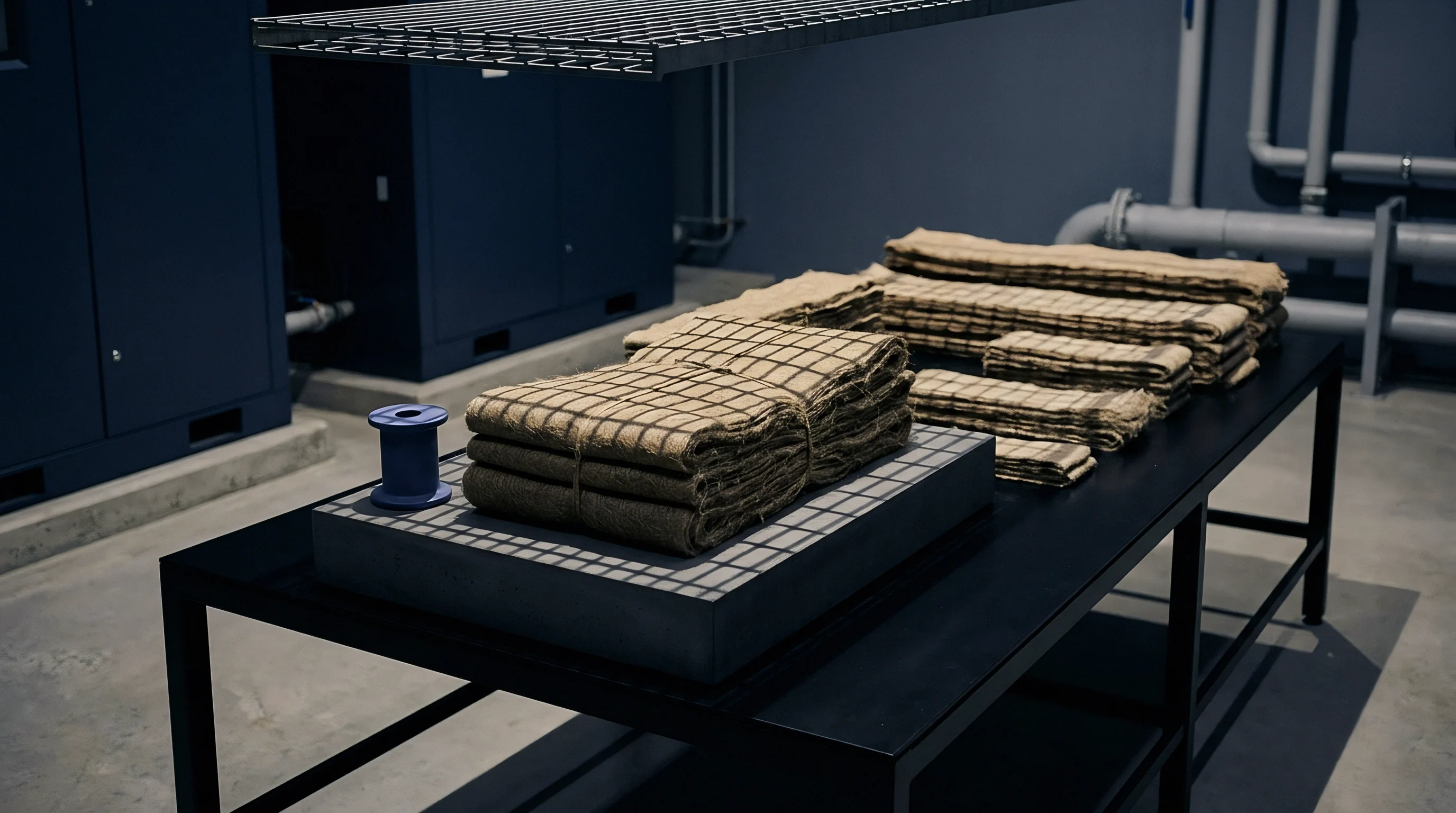
Physical mass balance reconciliation accounts for natural fibre moisture regain and mechanical processing losses at every mill stage. Flax scutching, hackling, carding, wet spinning, and weaving each extract non-conforming fibre mass, organic trash, and dust. A mill purchasing 10,000 kilograms of certified raw flax straw or hackled line fibre cannot produce 10,000 kilograms of certified linen yarn.
Auditors run precise mass balance equations to calculate expected output mass based on known industry yield factors. Discrepancies between declared yarn output and theoretical mass yield signal administrative credit inflation or uncertified fibre substitution.
Yield Loss Equations across Spinning and Weaving
Raw flax processing converts scutched long fibre and short tow fibre into yarn through mechanical cleaning and drafting. Hackling long-flax fibre yields hackled line fibre alongside short-fibre tow and waste. In wet spinning, hackled line fibre passes through roving frames, hot-water basins to soften pectin, and ring spinning spindles.
The wet spinning process loses mass through pectin dissolution, short-fibre shedding in hot-water baths, and bobbin winding waste.
A standard mass balance audit applies baseline transformation yield factors across each conversion step:
- Scutched long flax input to hackled line fibre yields between 65 percent and 75 percent usable sliver, generating 20 percent to 30 percent hackling tow and 5 percent organic dust loss.
- Hackled line fibre to wet-spun long-staple yarn (Nm 26 to Nm 39) yields 82 percent to 88 percent finished yarn, with 10 percent to 15 percent lost as combings, fly, and basin sludge.
- Tow fibre to dry-spun or wet-spun tow yarn (Nm 9 to Nm 14) yields 75 percent to 82 percent net yarn mass due to higher short-fibre extraction during carding and combing.
- Yarn to woven greige fabric yields 94 percent to 97 percent net fabric weight, losing 3 percent to 6 percent as warping waste, loom selvedge trimmings, and sizing adjustments.
Yield losses vary by batch. When a mill inputs 100 metric tonnes of European Flax scutched fibre, standard long-staple wet spinning yields approximately 58 to 66 metric tonnes of certified long-staple yarn. If the mill presents mass balance certificates claiming 85 metric tonnes of certified Nm 26 yarn from that 100-tonne raw input, the administrative credit ledger has been inflated.
The auditor flags the excess 19 metric tonnes as uncertified fibre introduced into the spinning line.
Standard wet spinning of European long-flax fibre yields between 58 percent and 66 percent finished yarn mass relative to raw scutched fibre inputs after accounting for hackling waste and basin extraction.

Moisture Regain and Standard Weight Adjustments
Flax is a highly hygroscopic fibre with a commercial moisture regain standard of 12 percent under ISO 6741-1. Physical mass shifts significantly based on ambient humidity and storage conditions. Raw flax stored in a high-humidity environment in Southern China can gain 3 percent to 5 percent additional water weight relative to dry-conditioned fibre.
Conversely, yarn spun in temperature-controlled wet-spinning halls and packed immediately in moisture-barrier bags reflects specific commercial dry weights.
Mass balance verification adjusts all physical weighbridge receipts to dry commercial mass using the standard formula:
Commercial Mass = Direct Weighed Mass × (100 + Standard Regain) / (100 + Actual Moisture Content)
Where standard regain for flax yarn is fixed at 12.0 percent. If an intake weighbridge logs 10,000 kilograms of flax fibre with a measured moisture content of 15.5 percent, the adjusted commercial mass equals 9,700 kilograms. Evaluating mass balance credits using direct wet weight rather than adjusted commercial dry weight introduces a 300-kilogram ledger error on a single consignment.
| Processing Stage | Input Material | Output Product | Standard Yield Range (%) | Primary Waste Mass Destination |
|---|---|---|---|---|
| Hackling | Scutched Long Flax | Hackled Line Fibre | 65.0 – 75.0 | Hackling tow, combings, organic dust |
| Combing (Tow) | Scutched Tow Fibre | Combed Tow Sliver | 70.0 – 78.0 | Noils, card waste, short debris |
| Wet Spinning | Hackled Line Sliver | Wet-Spun Yarn (Nm 14-39) | 82.0 – 88.0 | Spinning basin sludge, flyer waste, winding breaks |
| Weaving | Sized Yarn Packages | Woven Greige Cloth | 94.0 – 97.0 | Warping ends, loom fringe, selvedge trim |
| Scouring and Bleaching | Greige Woven Cloth | Finished White Linen | 88.0 – 93.0 | Pectin removal, wax extraction, weight loss |
Fiber length determines spinning loss. High-grade French flax with a average fibre length exceeding 700 millimetres generates minimal hackling waste compared to shorter Belgian crop years affected by drought. Mill auditors calculate expected mass output per batch using crop-year quality baselines rather than static average targets.
Physical origin verification fails when a mill applies standard yield formulas to poor-grade fibre inputs to justify high mass-balance credit output allocations.
Calculations that rely on net shipping weights without moisture adjustment fail an auditor’s initial intake check.

Discrepancy
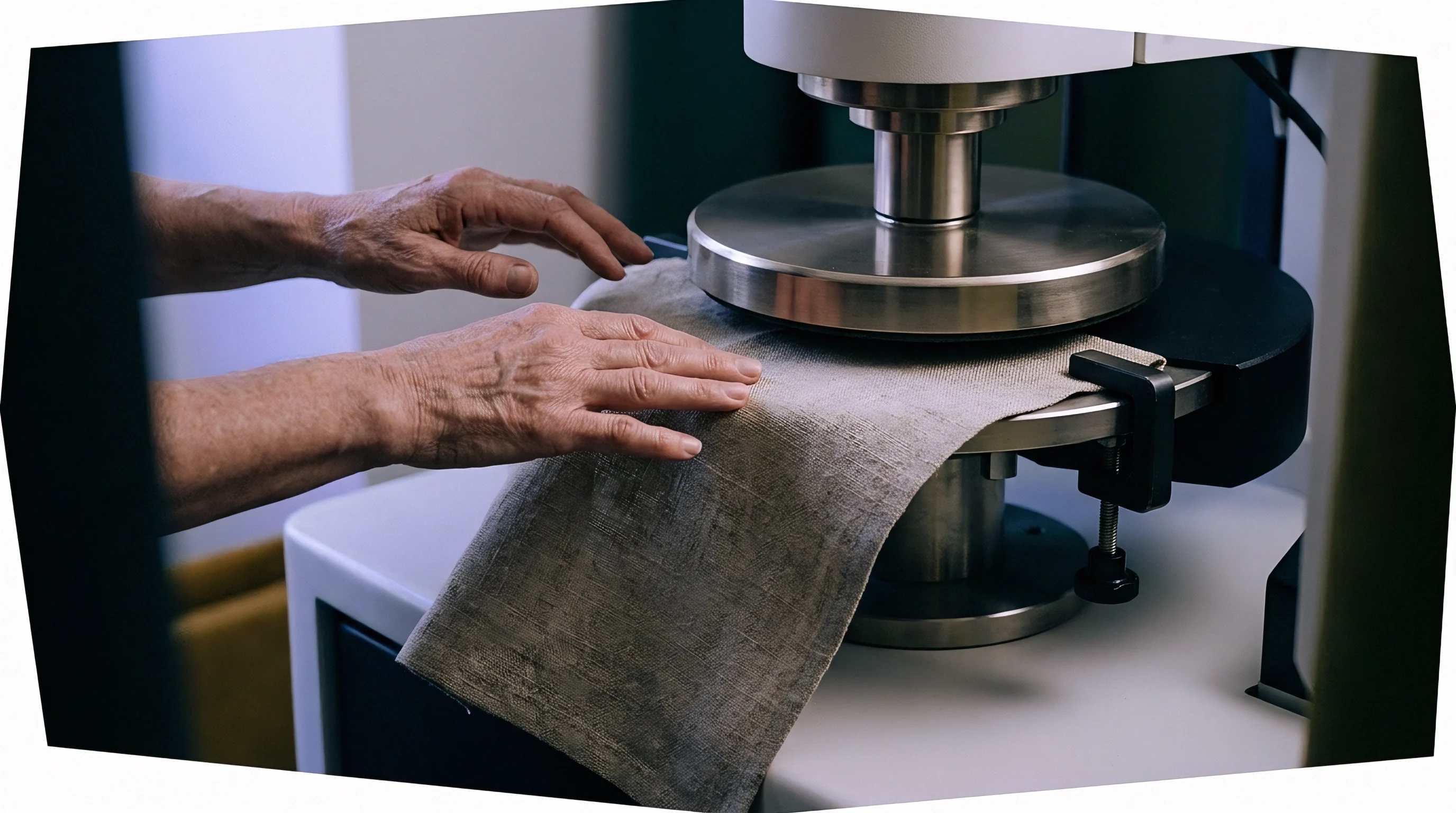
Audit records in high-volume spinning regions reveal recurring points where physical yarn production diverges from administrative credit ledgers. Spinning mills in China often operate both wet-spinning lines for long-staple flax and dry-spinning lines for short tow flax within the same facility. Certified European Flax fibre commands a cost premium over Russian, Kazakh, or domestic Chinese raw flax.
Under mass balance rules, administrative credit transfers allow mills to sell yarn with origin certificates while running mixed raw material lots through shared carding and spinning frames.

Volume Credit Pooling and Administrative Blending
Volume credit accounting permits a facility to aggregate certified fibre purchases across multiple months into a single central credit pool. The mill then assigns these credits to outgoing yarn shipments based on buyer demand. Physical verification breaks down when credit pooling spans extended timeframes or geographically separated operating sites under one corporate entity.
Administrative blending occurs when a mill purchases 50 tonnes of European Flax long fibre and 50 tonnes of uncertified tow fibre. The mill inputs both lots into its opening room simultaneously, producing 80 tonnes of blended yarn containing 50 percent European long fibre and 50 percent uncertified tow. Under physical segregation, this entire 80-tonne yarn batch loses its 100 percent European Flax status and can only be sold as a blend.
Under mass balance accounting, the mill deducts 40 tonnes from its European Flax credit balance and issues a 100 percent European Flax Transaction Certificate for 40 tonnes of the output yarn. The physical yarn shipped under that certificate contains only half European fibre.
Volume credit pooling allows mills to issue pure origin transaction certificates for yarn lots produced from physically blended raw material batches.

What Audits Reveal in Off-Site Mill Records?
Unannounced physical audits at spinning mills examine raw material bale store inventory, machinery layout, batch production cards, and waste disposal logs. Discrepancies emerge when physical store balances do not match the administrative credit software. An auditor inspecting a Jiangsu mill claiming a mass balance reserve of 120 metric tonnes of European Flax raw fibre checks physical bale tags in the warehouse.
If the physical store holds only 20 tonnes of European Flax bales alongside 100 tonnes of uncertified fibre, the administrative ledger reflects phantom credit balances.
Mill auditors use a structured checklist to identify physical origin manipulation:
- Bale Tag Mismatch where physical tags in the raw fibre store show supplier names or lot numbers that differ from the purchase orders attached to the Scope Certificate.
- Disproportionate Waste Generation where reported hackling waste figures fall below physical machinery capabilities, indicating unrecorded insertion of pre-cleaned short fibre.
- Spinning Speed Deviations where production logs show ring frames running at speeds exceeding technical limits for long-staple flax, indicating synthetic or cotton fibre blending.
- Basin Sludge Anomaly where wet-spinning basin cleaning schedules show zero pectin extraction logs during periods of high reported flax yarn output.
- Divergent Yarn Test Data where laboratory tests show single-end strength and CV percent values inconsistent with European long-staple fibre profiles.
When questioned regarding inventory gaps between physical store tags and credit ledgers, mill managers routinely state that certified raw fibre was transferred to an off-site subsidiary warehouse without real-time software synchronization. This excuse fails to satisfy ISO 17065 chain-of-custody requirements when the secondary site lacks an active Scope Certificate.


Surcharge
Certified Western European flax yarn carries a distinct pricing tier compared to uncertified grey yarn traded on commodity spot markets. Premium pricing stems from agricultural quality, land rents, labor rates in France and Belgium, and certification compliance overheads. The commercial surcharge for certified European Flax long-staple yarn ranges from 15 percent to 35 percent over standard uncertified flax yarn of equivalent count (Nm).
When buyers pay this surcharge based on mass balance documentation, they pay for administrative provenance rather than physical material separation unless physical segregation is explicitly mandated in the purchase specification.

Fibre Surcharges and Landed Cost Premiums
Raw flax pricing fluctuates based on harvest yields in Normandy and Flanders. Long-staple hackled line fibre from Western Europe trades at a baseline premium of 1.20 EUR to 2.50 EUR per kilogram over non-European long fibre. Wet-spinning conversion costs in China add processing fees, transportation, import tariffs, and certification administration charges.
The resulting landed cost of spun yarn reflects both raw material surcharges and processing economics.
| Item Specification | Uncertified Commodity Price | European Flax Certified Price | Origin Surcharge (%) | Primary Surcharge Driver |
|---|---|---|---|---|
| Scutched Long Fibre (EUR/kg) | 3.80 – 4.50 | 5.20 – 6.80 | 35.0 – 50.0 | Agricultural provenance, fiber length, tensile strength |
| Nm 26 Wet-Spun Yarn (USD/kg) | 12.50 – 14.00 | 15.50 – 18.20 | 24.0 – 30.0 | Fibre input cost, physical segregation line cleaning |
| Nm 39 Fine Linen Yarn (USD/kg) | 18.00 – 21.00 | 22.50 – 26.50 | 25.0 – 31.0 | High hackling yield loss, specialized long-staple spinning |
| 180 gsm Plain Woven Fabric (USD/m) | 4.20 – 5.10 | 5.40 – 6.80 | 28.0 – 33.0 | Yarn surcharge, weaver certification compliance fee |
Audit records prove physical flow. When a buyer pays a 30 percent surcharge for certified yarn but receives fabric produced under a mass balance credit system, the financial premium compensates administrative book-keeping. If the weaving mill blends mass balance yarn packages with uncertified yarn packages during warping, the physical fabric arriving at the garment factory contains an indeterminate percentage of genuine European flax.

Customs Origin Rules versus Scheme Provenance
Non-preferential rules of origin enforced by customs authorities differ fundamentally from private certification scheme standards. Under US Customs and Border Protection (CBP) regulations and the EU Union Customs Code (UCC), textile origin is determined by the country of substantial transformation. For linen cloth, spinning raw fibre into yarn or weaving yarn into fabric determines customs country of origin, not the country where the flax straw was grown.
Fabric woven in China from 100 percent European Flax certified yarn is legally classified as Origin China for customs declarations and import duty assessment. If an importer attempts to claim preferential tariff treatment or European origin status on customs documentation based solely on a European Flax Scope Certificate, customs authorities confiscate the shipment for false declaration. Duty rates reflect country rules.
Chain-of-custody failures expose buyers to three primary commercial risks:
- Customs Seizure and Fines resulting from misdeclaring non-preferential country of origin based on raw material provenance certificates rather than processing location rules.
- Regulatory Advertising Sanctions from consumer protection agencies for marketing 100 percent European Linen when the physical garment contains mass-balance blended short tow fibre.
- Commercial Margin Erosion caused by paying certified raw material surcharges on yarn shipments that fail physical laboratory verification.
Evaluating landed cost requires factoring in audit expenses and physical testing fees alongside raw material surcharges. A complete provenance verification dossier includes independent laboratory testing for fibre length distribution, cross-sectional anatomy under scanning electron microscopy, and chemical isotope ratio mass spectrometry (IRMS) baseline testing to verify geographical origin independently of paper certificates.


Covenant
Commercial contracts allocate the financial risk of origin failure through specific indemnity clauses and testing mandates. Standard purchase order terms that state simply “Supplier guarantees European Flax compliance” offer zero protection when a mill delivers mass balance goods under valid scheme rules. Buyer contracts must explicitly state whether physical segregation or mass balance accounting is required, define acceptable physical verification methods, and set explicit financial penalties for origin failure.

Warranty Drafts for International Linen Orders
Enforceable contracts define origin obligations in exact technical terms. Drafting legal warranties requires specifying chain-of-custody models, physical batch isolation requirements, access rights for unannounced audits, and laboratory testing benchmarks prior to shipment release. Importers eliminate ambiguity by inserting explicit provenance definitions directly into mill master purchase agreements.
A rigorous origin warranty clause incorporates three binding elements:
1. Physical Segregation Mandate: The seller warrants that all goods supplied under this agreement are produced under strict physical segregation protocols. The seller explicitly agrees that mass balance credit allocation, credit pooling, and administrative blending are prohibited for production of these goods.
2. Audit Access and Document Provision: The seller warrants to provide complete physical transaction records, including raw bale tags, mill work orders, scutching intake logs, and batch-specific Transaction Certificates, within 5 business days of request. The seller grants the buyer or its designated third-party auditor unrestricted access to manufacturing facilities and storage stores for unannounced physical inventory inspections.
3. Financial Indemnity for Failure: If laboratory testing or physical inventory auditing reveals that delivered goods contain less than 100 percent physical European-grown flax fibre, or if mass balance credit substitution is discovered, the seller agrees to refund the full purchase price of the affected lot, pay a liquidating penalty equal to 30 percent of the invoice value, and indemnify the buyer against all customer claims, regulatory fines, and customs penalties.
Inspection terms protect the buyer.

Audit Escalation Triggers and Commercial Redress
When a physical origin discrepancy surfaces, the contract specifies an escalation sequence. The buyer freezes all pending invoices for the suspect lot and issues an immediate hold notice to the shipping line. Independent testing laboratories draw representative swatches from at least 10 percent of delivered fabric rolls under ISO 2859-1 sampling plans.
If isotope analysis or fibre length profiling confirms physical origin mismatch, the buyer executes the contractual indemnity remedies immediately.
Standard legal remedies rely on explicit contract clauses:
Section 8.4 of the Master Sourcing Agreement stipulates that any failure of physical fibre origin verification invalidates all pending payment obligations and triggers mandatory replacement of non-conforming goods at the supplier’s sole expense.
Blended lots forfeit certified status. Buyers who accept unverified mass balance declarations without contractual segregation warranties remain financially exposed to origin failure claims in downstream retail markets.