Scutched Flax Bundle Fineness and Hackling Yields
Scutched flax bundle fineness directly governs hackling line yield, drafting behavior, and maximum spinnable yarn count in wet linen processing.

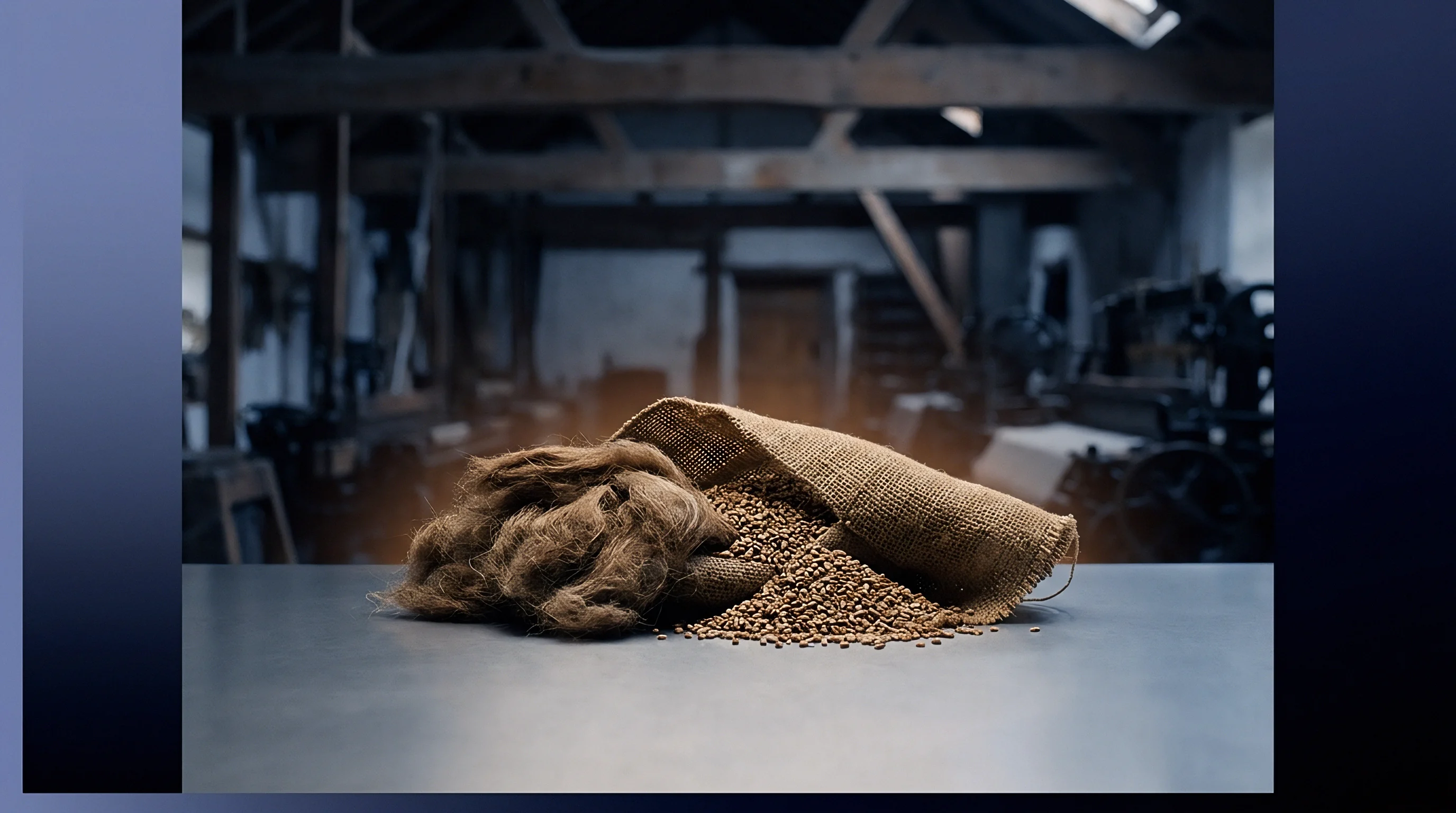
Fineness

Bundle Linear Density and Technical Fibre Division
Scutched flax enters the mill as long, parallelized ribbons of technical fibres bound together by inter-cellular pectin matrices. The diameter of these composite bundles, measured across the mid-span of the scutched strick, dictates the ultimate attenuation potential on drawing frames and the spinning count ceiling of the resulting yarn. Standard test method ISO 2370 defines the determination of flax fibre fineness by airflow permeability methods, expressing bundle diameter as a specific surface area converted to metric fibre number (Nm) or linear density in decitex.
Long-staple dew-retted European flax suitable for high-count wet spinning typically exhibits bundle fineness values between 1.8 dtex and 2.6 dtex. Coarser scutched lots ranging from 3.2 dtex to 4.5 dtex force mill engineers to adjust drafting zone nip settings to prevent catastrophic end breakage.
Decitex governs yarn thinness. Technical bundles consist of single elementary fibres measuring 10 to 30 micrometres in individual diameter, joined longitudinally and laterally by calcium pectinate complexes. Biological retting severity determines how readily these composite structures split into finer sub-units during mechanical processing.
Insufficient field retting leaves tough, recalcitrant middle lamellae intact, holding fibre bundles in stiff, thick ribbons that resist division. Over-retting degrades the cellulosic cell walls of the elementary fibres themselves, reducing tensile strength while permitting excessive filamentation during scutching. The classer evaluates this trade-off by hand-pulling a 5-gram bundle to observe its lateral cleavage resistance and cross-sectional uniformity prior to laboratory testing.
Gravimetric analysis provides the referee standard when airflow instruments show drift due to moisture variations. Laboratory technicians cut a central 50-millimetre specimen from twenty randomly sampled stricks per 5-tonne batch, weigh the bundle on an analytical balance precise to 0.1 milligrams, and count individual strands under optical magnification. Metric fibre number equals the total length of individual fibres in metres per gram of mass.
Higher Nm values denote finer fibre streams capable of producing fine line yarns without structural voids.
| Flax Grade Category | Bundle Linear Density (dtex) | Metric Fibre Number (Nm) | Elementary Fibre Diameter (µm) | Target Wet-Spun Yarn Ceiling (Nm) |
|---|---|---|---|---|
| Extra Fine Line (Dew-Retted) | 1.6 – 2.1 | 4700 – 6200 | 11 – 15 | Nm 80 – Nm 110 |
| Standard High-Line (Dew-Retted) | 2.2 – 2.8 | 3500 – 4500 | 14 – 18 | Nm 50 – Nm 70 |
| Medium Commercial (Dew-Retted) | 2.9 – 3.7 | 2700 – 3400 | 17 – 21 | Nm 30 – Nm 45 |
| Coarse / Tow-Heavy (Water/Dew) | 3.8 – 5.2 | 1900 – 2600 | 20 – 26 | Nm 14 – Nm 26 |
Pectin drives bundle cohesion. Moisture content inside the bundle alters the shear plane stiffness of the inter-cellular matrix during room-temperature mechanical division. At relative humidity levels below 55 percent, dry pectin complexes turn brittle, causing transverse micro-fractures across the fibre body rather than longitudinal splitting along middle lamellae.
At relative humidity levels above 70 percent, moisture absorption swells the bast structure, increasing surface tack and friction between adjacent stricks. Mill air conditioning standards enforce strict conditioning of scutched flax at 65 percent relative humidity and 20 degrees Celsius for 48 hours to ensure consistent bundle splitting behavior.
Whether laboratory airflow meters can isolate bundle perimeter variations from variations caused by variable residual shive content inside commercial stricks remains an open measurement challenge.
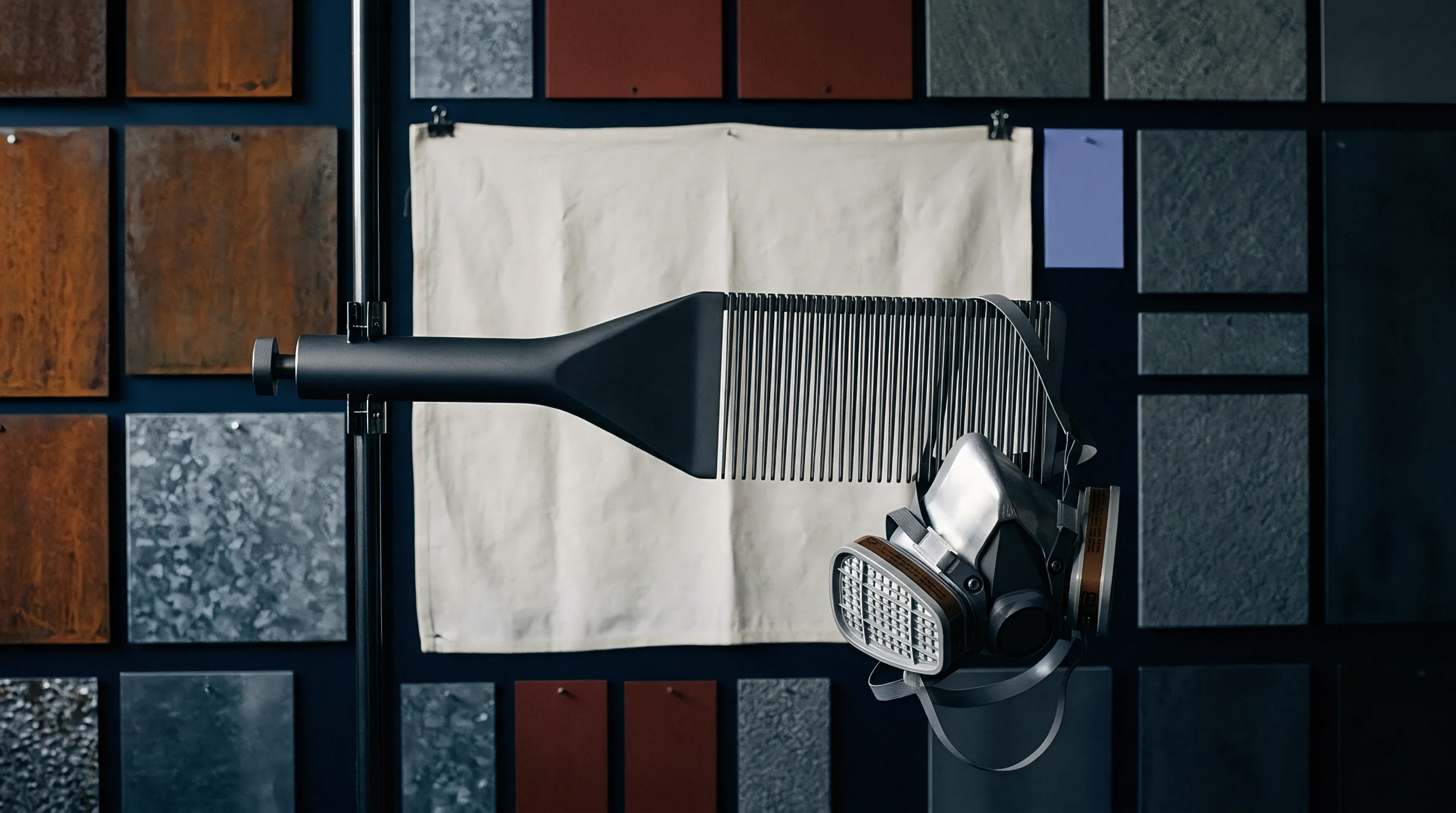

Comb
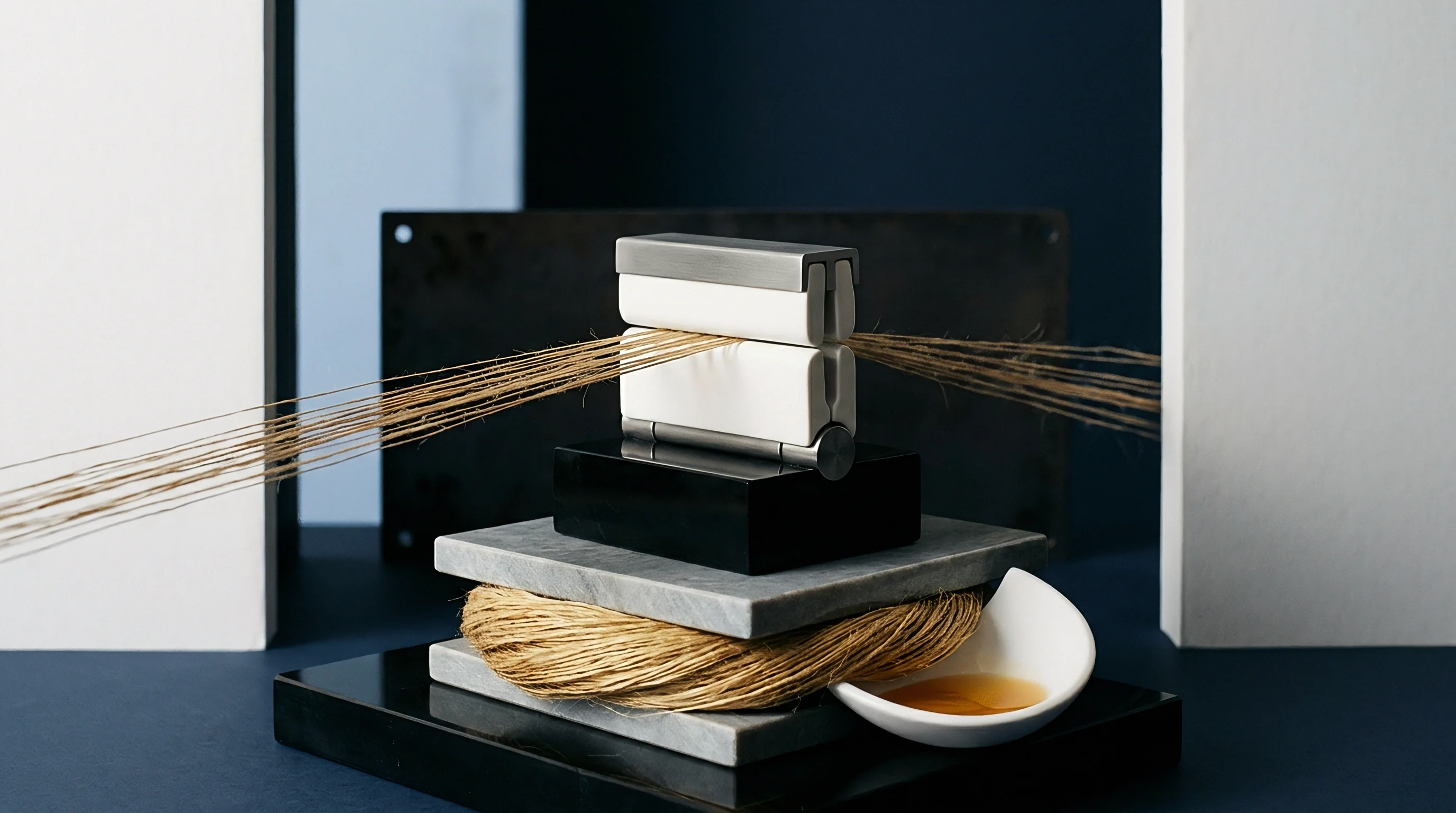
Density Gradients in Hackling Pin Systems
Mechanical hackling performs three sequential operations on scutched flax bundles: combing out short tangled filaments, splitting coarse technical bundles into fine line units, and removing residual woody stem shives. Bundles are held in steel clamps that travel along double-sided hackling beds equipped with rotating aprons carrying pinned bars. Pin density increases progressively from the feed end to the discharge end of the hackling machine.
Initial coarse hackling bars utilize round steel pins spaced at 1 to 2 pins per centimetre with pin diameters of 1.8 millimetres. Final fine hackling bars feature flat or needle-pointed pins spaced at 20 to 28 pins per centimetre with pin diameters down to 0.35 millimetres.
Coarse bundles break pins. When heavy, unretted scutched stricks hit high-density pin aprons without adequate pre-combing, mechanical impact forces exceed the bending moment of fine steel needles. The hackling operation extracts short, crisscrossed, or broken fibres as hackling tow, while long, straight, parallelized fibres remain in the clamp to form hackled line flax.
Higher initial bundle fineness allows aggressive pin penetration without excessive fibre snapping, shifting the mass distribution toward prime hackled line fibre.
Hackling machines operating with a pin density gradient from 1.5 to 24 pins per centimetre generate a prime long-line yield of 62 percent when processing dew-retted scutched bundles measuring 2.2 decitex at 65 percent relative humidity.
Inter-pin friction generates localized frictional heat along the running bundle, softening residual plant waxes and facilitating smooth longitudinal bundle division. Excessive linear apron speed, however, imparts impact shocks that severe elementary filaments. The operator controls line yield by adjusting apron velocity, clamp dwell time, and pin penetration depth based on incoming lot test certificates.

Fibre Separation Mechanics during Combing
Pin geometry directly controls the mechanical splitting force applied to scutched stricks. Round pins split bundles through wedge action, forcing technical fibres laterally apart along weak intercellular boundaries. Flat needles combine cutting action with sliding tension, peeling away thin sub-bundle ribbons while stripping attached epidermal fragments.
- Root End Entanglement occurs when scutching leaves root bases unseparated, causing pins to tear whole bundles out of clamps rather than combing them.
- Transverse Mid-Span Fracture stems from localized mechanical damage during field scutching, turning long line potential into low-value hackling tow.
- Pin-Sleeve Gumming arises when high residual pectin and unfermented plant sap deposit sticky films across pin bases, increasing fibre dragging force.
- Nepping and Ribbon Rollover develops when fine, high-maturity fibres twist around high-speed pin tips, creating dense fibrous knots that ruin downstream sliver evenness.
Failure to match comb pin progression to incoming bundle linear density causes severe mechanical degradation, driving line yields down by as much as 14 percentage points while flooding tow collectors with fragmented long-staple stock.


Drafting

Inter-Fibre Cohesion and Sliver Formation
Combed line bundles emerging from hackling clamps are formed into continuous slivers on spreader machines. Overlapping stricks pass through drafting zones where back and front roller speed differentials stretch the fibre assembly, reducing mass per unit length. Inter-fibre friction maintains bundle cohesion during drawing.
Because flax fibres lack the natural 3D crimp of wool or the cell-wall convolutions of cotton, drafting force depends entirely on surface friction, residual wax lubrication, and the mechanical assembly pressure exerted by faller bars carrying gilling pins.
Moisture shifts slip resistance. Wet-spinning preparation requires precise control of sliver weight uniformity, measured as coefficient of variation (CV%) of 1-metre cut lengths. When scutched bundle fineness is inconsistent across incoming lots, the number of individual fibres per sliver cross-section fluctuates.
A sliver containing fewer than 100 parallel bundles in its draft zone suffers from drafting waves, where groups of fibres slide together as undivided clumps rather than moving as individual filaments.
Standard raw material contracts for line flax specify a maximum moisture content of 12 percent by weight, above which commercial mass calculations require immediate invoice price adjustments under ISO 6741 guidelines.

Does Speed Alter Inter Fibre Friction?
Increasing roller surface speeds alters the dynamic friction coefficient between smooth flax bundles inside the draft zone. At low drafting velocities, static friction dominates, requiring higher initial pull forces to start bundle movement. As operational speed climbs past threshold limits, fluid lubrication effects from surface plant waxes reduce dynamic drag, allowing fine bundles to slip past adjacent thick bundles without full attenuation.
High-speed drawing frames utilize weighted pressing rollers to restore inter-bundle contact pressure.
- Verify bundle linear density on incoming stricks using airflow permeability apparatus under controlled 65 percent relative humidity.
- Select faller bar pin density matrices matching the measured decitex range to ensure proper bundle restraint during draft pin penetration.
- Adjust front-to-back roller draft ratios within the 10x to 14x range to prevent draft wave formation in fine line slivers.
- Set nip roll nip clamping pressure to prevent slip-stick movement of thick technical ribbons through the drafting zone.
- Measure downstream sliver evenness on capacitance testers to confirm bundle division efficiency before transferring sliver cans to roving frames.
Fibre length dictates draft roller spacing.

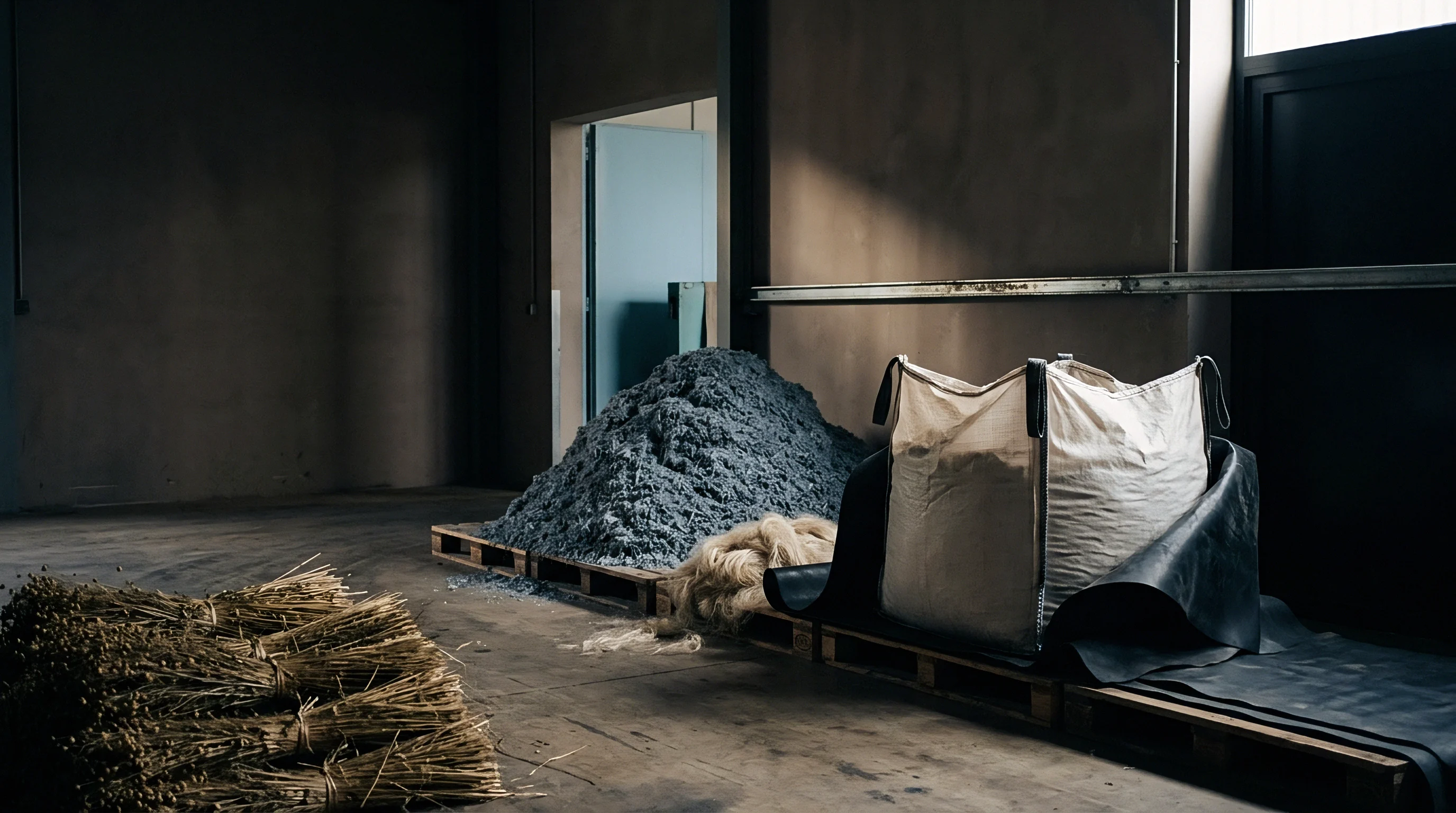
Yield
Mass Balance across Combing Operations
Hackling yield represents the percentage mass of prime long-line flax recovered from raw scutched stricks fed into the hackling machine. The mass balance accounts for three distinct output streams: hackled line flax, hackling tow, and waste dust or shives. Scutched bundle fineness acts as the primary material governor of this mass split.
Fine, well-retted scutched bundles undergo smooth longitudinal division across fine pin beds, yielding high proportions of long line fibre. Coarse or uneven bundles suffer heavy pin impact breakage, diverting valuable mass into the lower-priced hackling tow stream.
Yield loss hits the margin. A standard 1000-kilogram lot of scutched flax entering the hackling room converts into line flax and tow according to fibre structural integrity, moisture content, and machine pin settings. The table below outlines mass balances and resulting yarn count ceilings for typical scutched flax inputs.
| Scutched Bundle Input Grade | Input Bundle Fineness (dtex) | Hackled Line Yield (%) | Hackling Tow Extraction (%) | Shive & Dust Loss (%) | Spinnable Yarn Limit (Nm) |
|---|---|---|---|---|---|
| French Dew-Retted Courtrai Type 1 | 1.9 | 68.5 | 26.0 | 5.5 | Nm 100 |
| Belgian Dew-Retted Prime Line | 2.3 | 64.0 | 30.0 | 6.0 | Nm 60 |
| Dutch Dew-Retted Medium Line | 3.1 | 55.5 | 37.5 | 7.0 | Nm 36 |
| Eastern European Water/Dew Mixed | 4.2 | 44.0 | 47.5 | 8.5 | Nm 18 |
Consider a practical processing scenario comparing two raw material selections for producing Nm 60 wet-spun line yarn. Processing Grade A (fine bundle, 2.2 dtex) yields 65 percent hackled line flax and 29 percent hackling tow from a 10,000-kilogram input lot, producing 6,500 kilograms of line sliver. Processing Grade B (coarse bundle, 3.8 dtex) yields 46 percent hackled line flax and 46 percent hackling tow from the same input mass, producing 4,600 kilograms of line sliver.
To fulfill a delivery contract for 20,000 kilograms of finished Nm 60 yarn, the mill must purchase 30,769 kilograms of Grade A scutched fibre compared to 43,478 kilograms of Grade B stock. The extra 12,709 kilograms of raw material input required for Grade B consumes additional warehouse space, increases bale opening labor, and overburdens tow carding lines.
Fine technical bundles yield higher proportions of long line fibre during mechanical combing because longitudinal shear strength along middle lamellae is lower than the tensile fracture limit of individual elementary cell walls.
Documentation covering raw flax shipments must explicitly detail test methodologies used to establish commercial mass and fineness values.
- Certificate of Origin validating regional growth conditions, retting method, and harvest year crop characteristics.
- Airflow Test Report declaring mean bundle decitex, metric fibre number, and standard deviation across sampled bales under ISO 2370.
- Moisture Determination Record establishing oven-dry mass loss and calculated commercial mass adjustments under ISO 6741.
- Hackling Trial Receipt recording line yield percentage, tow recovery ratio, and shive mass loss on a 100-kilogram pre-production sample.
Standard trade terms governing raw flax purchases stipulate that if delivered hackled line yield falls more than 2.0 percentage points below certified pre-shipment sample trial values, the seller must reimburse the buyer for the net price differential between long line fibre and hackling tow across the entire contract volume.

Trade

Commercial Valuation Models for Scutched Stocks
Raw scutched flax pricing reflects two dominant parameters: initial bundle fineness and verified hackling line yield. Fibre traders price scutched bales per kilogram of raw material, but spinning mills calculate cost on a landed-yarn-per-metre basis. Because hackled line flax commands a price three to four times higher than hackling tow on open markets, high line yields significantly reduce net raw material cost per kilogram of drawn sliver.
Tow sells at heavy discounts. When a mill processes low-yielding scutched bundles, revenue generated from selling co-product hackling tow fails to offset the raw material mass loss sustained at the hackling bed. The financial calculation balances raw bale purchase price against line yield percentage, tow credit, and wet-spinning efficiency.
Raw scutched flax cost represents less than 35 percent of finished linen fabric production expense, but bundle fineness variations account for over 70 percent of downstream yarn quality rejections.
The table below presents landed cost structures for Nm 39 wet-spun line yarn as a function of incoming scutched fibre bundle parameters and hackling performance.
| Fibre Fineness Grade | Raw Scutched Price (€/kg) | Hackled Line Yield (%) | Tow Credit Offset (€/kg Line) | Net Line Sliver Cost (€/kg) | Finished Yarn Cost (€/kg Nm 39) | Raw Material Cost per Metre Fabric (€) |
|---|---|---|---|---|---|---|
| Premium Fine (1.9 dtex) | 5.20 | 68.0 | 0.38 | 7.27 | 11.45 | 1.72 |
| Standard Line (2.4 dtex) | 4.40 | 63.0 | 0.42 | 6.56 | 10.80 | 1.62 |
| Commercial Medium (3.2 dtex) | 3.60 | 54.0 | 0.51 | 6.16 | 11.10 | 1.67 |
| Coarse Stock (4.1 dtex) | 2.90 | 42.0 | 0.62 | 6.28 | 12.85 | 1.93 |
Although Coarse Stock presents the lowest initial purchase price per raw kilogram (€2.90), its poor hackling yield (42.0%) drives net line sliver cost up to €6.28 per kilogram. High end-breakage rates on spinning frames further elevate processing overhead, resulting in the highest finished yarn cost (€12.85/kg) and highest raw material fabric cost (€1.93/m). Premium Fine stock yields fine, uniform slivers that spin cleanly at high spindle speeds, keeping fabric raw material cost at €1.72 per metre despite high initial raw fibre purchase price.
Suppliers frequently defend batch price premiums by claiming weather-induced harvesting delays degraded stem retting uniformity without impairing ultimate hackling yield performance.