Evaluating Root to Tip Fineness Variation in Hackled Line Flax Stricks
Sectional gravimetric cut testing along hackled stricks identifies root to tip fineness gradients before uneven drafting compromises wet spun yarn lea count.


Morphology
Flax stems exhibit continuous anatomical transitions from the soil surface to the apical inflorescence. Bast fibre bundles occupy the phloem parenchyma between the outer cortical parenchyma and the inner xylem cylinder, running parallel to the stem length in overlapping spliced networks. Basal bundles develop thick cell walls early, as secondary cell wall deposition begins at the stem base during vegetative development ~ packing concentric lamellae of crystalline cellulose into early primary fibres while apical tissues continue cellular elongation.
The physical taper along a single hackled line strick reflects this developmental timing.

Basal Coarseness along the Unbroken Bast Axis
Cross-sectional diameters of technical fibre bundles expand significantly near the root pull point. Commercial pulling machines uproot whole plants to preserve full technical length, harvesting the subterranean stem portion alongside the above-ground stalk. This subterranean region contains heavily lignified, tightly grouped bundles embedded in thick middle lamellae rich in calcium pectate and unbranched rhamnogalacturonans.
Microscopic examination across ten-centimetre serial segments shows that technical bundle diameters average forty-five to seventy micrometres in the basal ten centimetres of the strick, narrowing to eighteen to twenty-eight micrometres in the mid-stem portion, and tapering below twelve micrometres at the branched apical tips. Line flax commands high mill prices.
Basal flax segments conditioned at sixty-five percent relative humidity consistently exhibit a linear density exceeding thirty-two tex, whereas apical tips from the same hackled strick fall below eighteen tex.

Retting Disparities between Soil Line and Panicle
Field dew retting proceeds at uneven rates across the vertical span of the pulled plant swath. Fungal colonisation by Cladosporium herbarum and Epicoccum nigrum initiates preferentially in the upper stems, where moisture retention fluctuates rapidly and the cuticle is thin. Top stem regions complete pectin breakdown days before the denser basal thirds release their structural adhesives.
Moisture levels near the soil surface maintain fungal activity, yet the dense cuticle and elevated lignin concentration of basal straw obstruct fungal polygalacturonase penetration. Root portions emerge from standard field retting under-retted, dark grey, and tenaciously cemented. Apical branches over-ret, displaying weakened, degraded cellulose chains and excessive bundle cleavage into weak short fibres.
Overlooking basal thickening sends an irregular mass flow into the first drawing frame, multiplying downstream sliver count variance until the spinning frame breaks three times as many ends per spindle hour.


Clamp
Industrial hackling systems secure fibre bundles between elastomer-faced steel jaws to expose alternating halves of the strick to moving pin bars. The mechanical interface grips the center of the strick while the root half hangs downward into the revolving combs of the first machine field. Tension balances the hackling pin stroke.
Clamping pressure concentrates compressive stresses on individual bundles, and variations in cross-sectional mass create localized slippage or crush fractures along the holding line.

Mechanical Gripping Zones in Hackling Machines
Modern flax dressing lines employ automated turnover clamps that transfer stricks through coarse, medium, and fine pin progressions. The grip location dictates which portion of the anatomical gradient endures the highest comb draft forces. Combing begins at the free tips, where pin penetration separates delicate apical ramifications with minimal tow generation.
The clamp then releases, shifts position along the strick axis, and regrips the combed half to expose the basal section. Processing coarse, heavily gummed roots requires substantial pin penetration forces, often shifting bundles within the jaws and generating uncontrolled shear fractures.
- Strick mass stabilization balances clamp holding torque against pin bar drag to prevent slippage of coarse basal bundles.
- Centerline registration alignment preserves the true midpoint between root pull point and apical branching during mechanical transfer.
- Differential clamping compression matches elastomer durometer hardness to the changing cross-sectional bulk along the strick body.
- Atmospheric conditioning verification holds the hackling hall at seventy percent relative humidity to maintain bundle flexibility under tension.
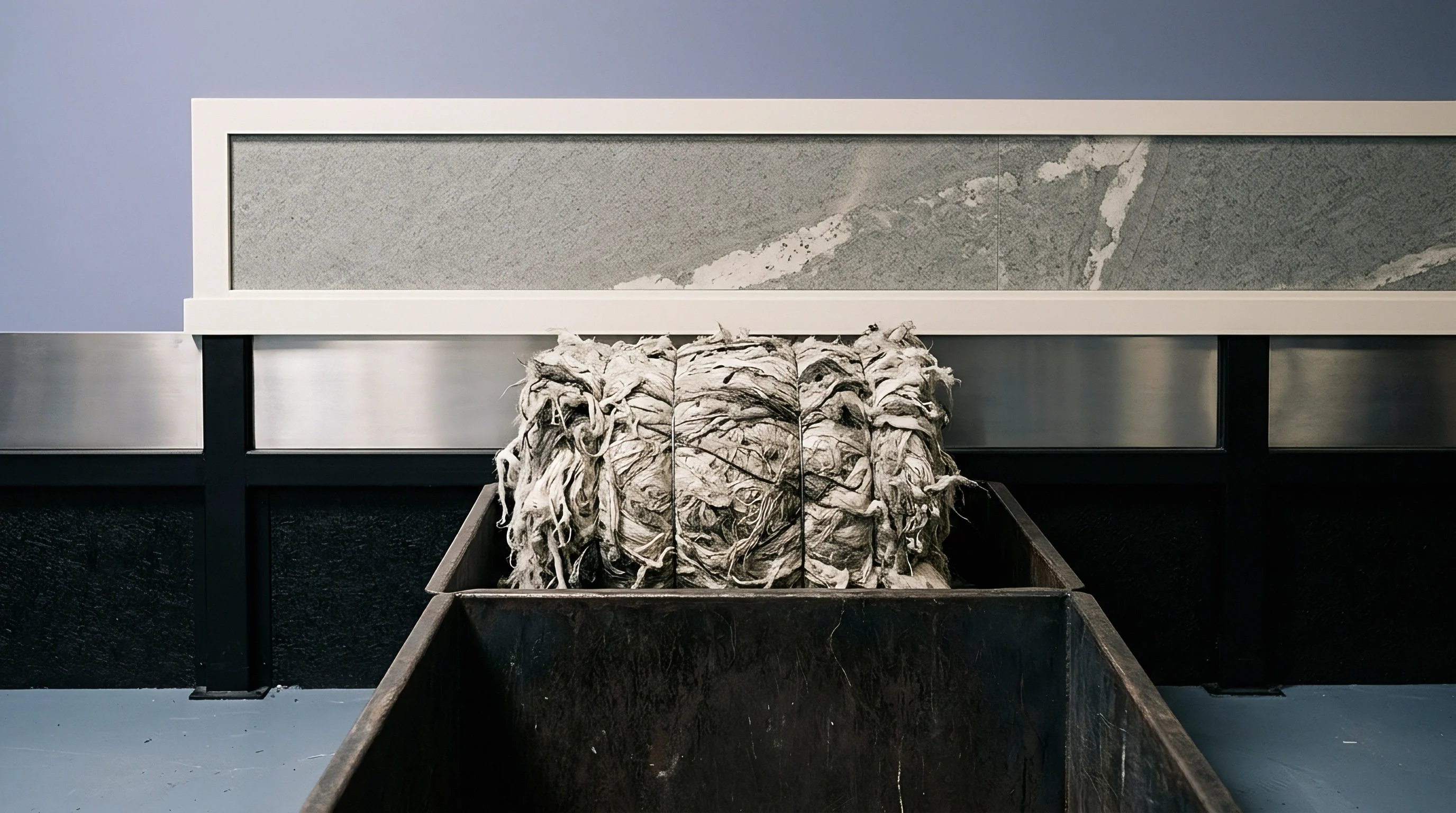
Can Gravimetric Cut Weighing Isolate Basal Coarseness?
Segmental dissection of conditioned stricks provides direct verification of linear density gradients. Technicians cut conditioned bundles into sequential one-hundred-millimetre lengths from root to tip using a pneumatic guillotine cutter, weighing each segment on an analytical balance with a sensitivity of 0.0001 grams. Cut lengths measure exactly one hundred millimetres.
The resulting mass values convert to linear density expressed in tex, representing grams per kilometre. Fibre mass shifts toward the ground. Dividing segment mass by cut length isolates localized linear density, revealing whether bundle splitting has occurred uniformly or remained restricted to the apical zone.
Clause 7.2 of the international bast supply agreement specifies that stricks displaying over thirty-five percent linear density divergence between apical and basal thirds permit an automatic five percent invoice rebate.


Metric
Fibre linear density quantifies the physical mass distributed along a given bundle length. Industrial classers express fineness through the metric yarn number system, measuring the length in metres yielded by one gram of fibre, or conversely through the direct tex system. Evaluating hackled line stricks across regional origins demonstrates that climate, seed density, and retting control produce distinct root-to-tip linear density profiles.
ASTM D1448 airflow testing on hackled bast fibres rejects air permeability values below three hundred millilitres per minute because unretted basal bark chokes the orifice.

Linear Density Gradients across Commercial Origins
Geographic provenance determines baseline anatomical uniformity. French dew-retted line flax cultivated in Normandy typically benefits from dense plant stands of approximately two thousand plants per square metre, suppressing stem branching and minimizing the diameter difference between base and tip. Chinese dew-retted stock from Heilongjiang often reflects lower sowing densities, resulting in thicker basal stems, heavy root lignification, and pronounced strick tapering.
Belgian water-retted flax exhibits superior middle lamella separation along the entire stem length, moderating the fineness jump between basal and median zones.
| Strick Segment Position | Normandy Dew-Retted | Courtrai Water-Retted | Heilongjiang Dew-Retted | Coefficient Of Variation |
|---|---|---|---|---|
| Basal Segment 0 to 100 mm | 28.4 tex | 22.1 tex | 37.6 tex | 14.8 percent |
| Lower Middle 100 to 300 mm | 21.2 tex | 17.5 tex | 26.8 tex | 11.2 percent |
| Upper Middle 300 to 600 mm | 16.5 tex | 13.8 tex | 19.4 tex | 9.6 percent |
| Apical Segment 600 to 800 mm | 13.1 tex | 11.2 tex | 14.5 tex | 8.4 percent |
| Values represent the arithmetic mean of forty stricks per origin evaluated under ISO 2370 standardized cutting procedures. | ||||

Airflow Permeability Limits for Bast Strands
Direct gravimetric methods require substantial laboratory time, prompting testing houses to deploy constant-pressure airflow instruments calibrated for bast fibres under ISO 2370. Airflow indices drop near the root. A five-gram plug of chopped fibre segments compressed into a cylindrical test chamber resists air movement in direct proportion to total external specific surface area.
Fine apical bundles offer immense surface area, choking airflow and yielding low permeability readings, whereas coarse basal bundles allow high volume passage through large interstitial voids. Technical managers monitor these airflow differentials across sequential strick cuts to predict how bundles will react during subsequent drafting stages.
Tapering in such batches occurs when late-season rain prevents uniform stand desiccation and forces uneven mechanical pulling across the field.
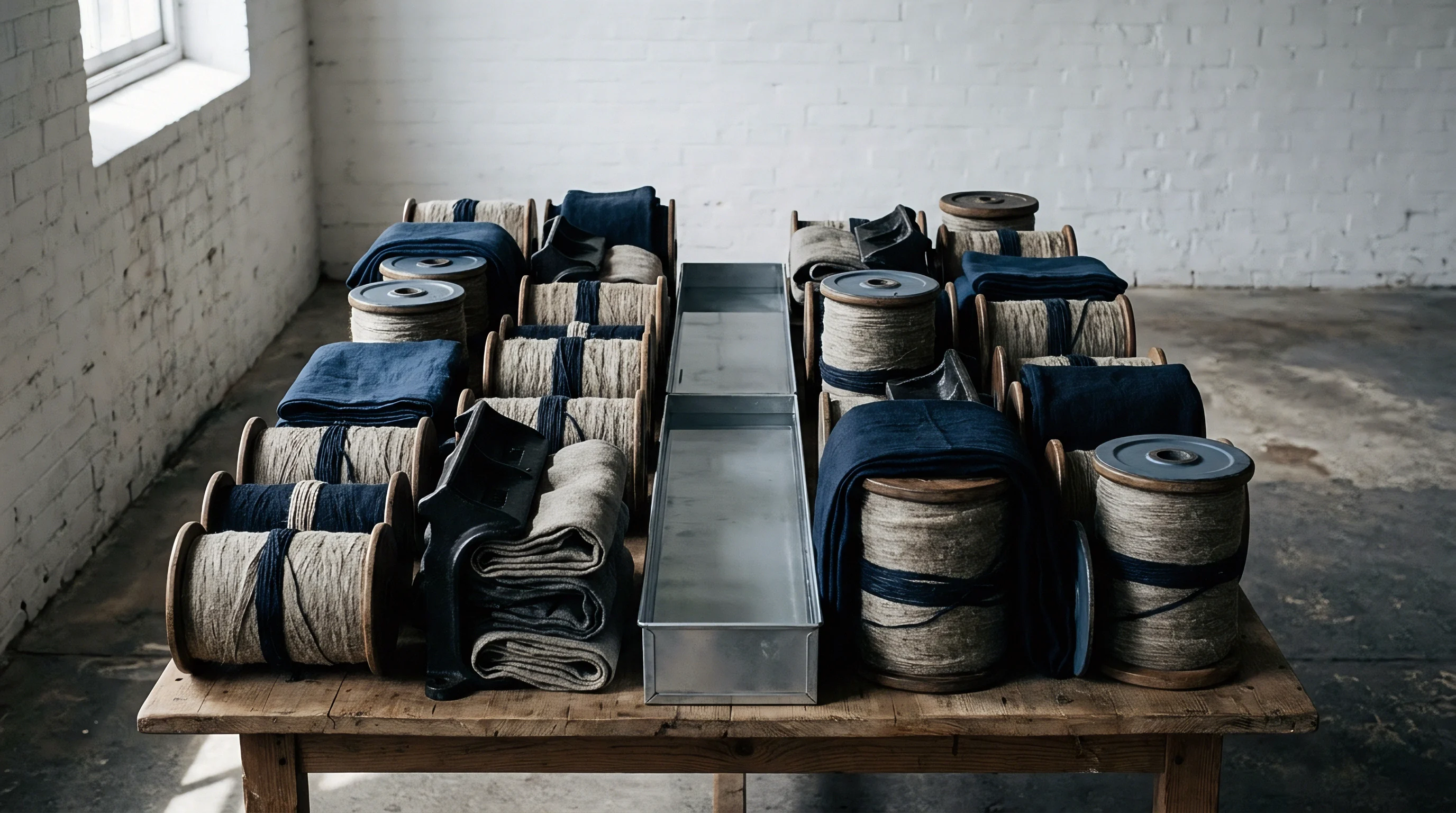

Cleavage
Chemical separation of technical flax bundles into fine elementary fibres depends on the selective extraction of non-cellulosic polysaccharides. Elementary fibres measure ten to thirty millimetres in length with individual diameters spanning ten to twenty micrometres. Technical bundles consist of ten to forty elementary cells held together by a pectinaceous middle lamella matrix.
Cleavage describes the longitudinal splitting of these technical bundles into finer sub-bundles under mechanical shear and biochemical processing.

Pectin Degradation in Biological Retting Swaths
Enzymatic cleaving actions target rhamnogalacturonan-I backbones and homogalacturonan domains inside the middle lamella. Apical bundles yield thirty percent less cellulose. The apical region contains lower concentrations of structural lignin, allowing fungal endopolygalacturonases to dismantle pectin linkages rapidly during field conditioning.
In the basal third, dense suberin deposits, polyphenols, and condensed lignins shield pectin chains from enzymatic contact. Middle lamella dissolution remains incomplete at the root end, forcing spinning mills to rely on high chemical concentrations in roving treatment tanks to induce bundle separation.
Uneven water absorption along the length of an unblended flax strick forces draft rollers to slip over dry basal shive.
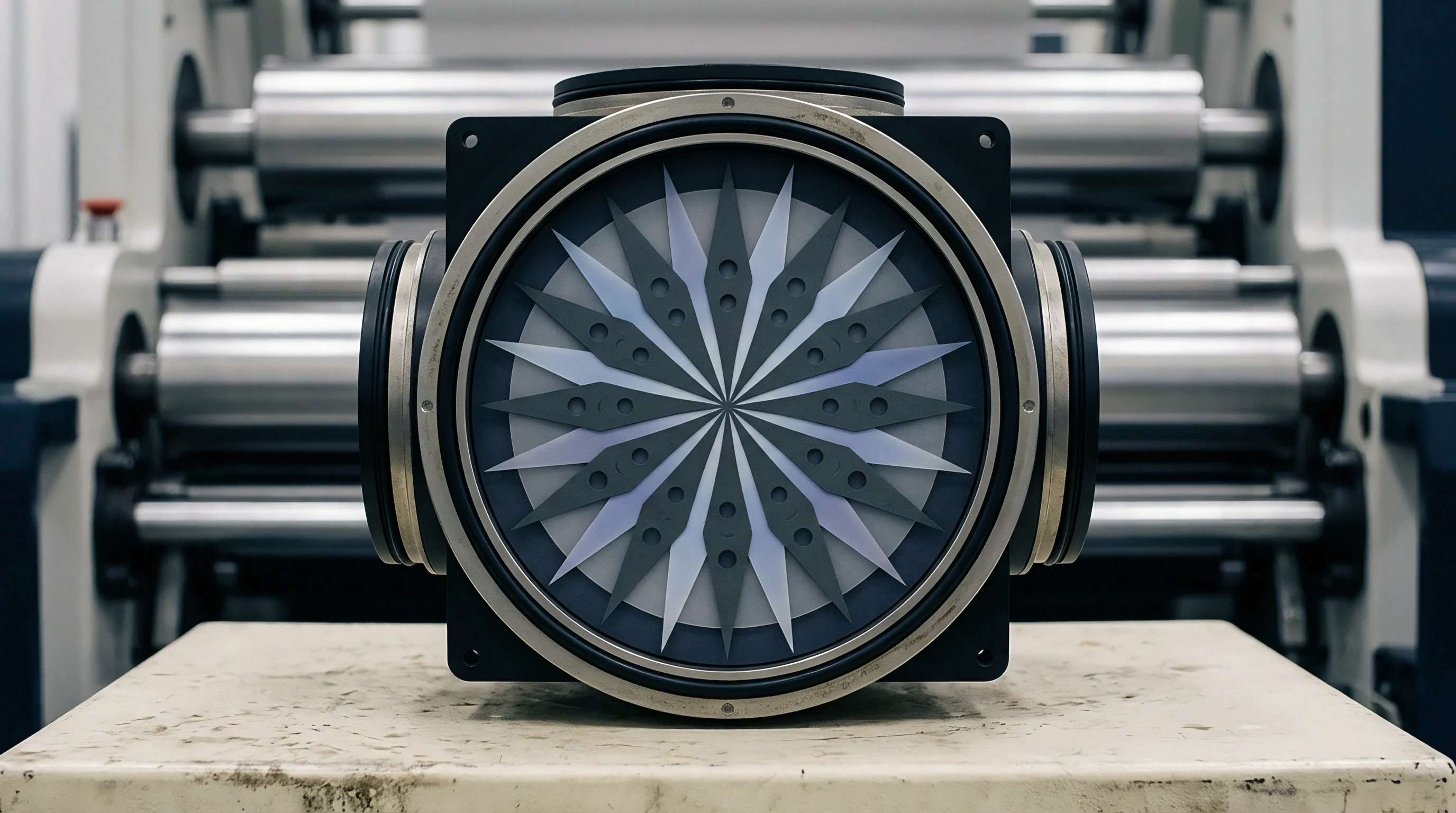
How Distant Are Bast Bundles from Unit Filaments?
Complete division down to unit elementary cells destroys line spinning continuity. Industrial wet spinning requires technical bundles to remain sufficiently coherent to form a continuous drafted ribbon during roving and yarn formation. Over-cleavage at the apical tip produces high quantities of short fibre fly, nep clusters, and roller wraps in the drawing frame.
Basal bundles resist separation entirely, remaining stiff, flat ribbons that deflect drawing rollers and introduce thick slubs into roving bobbins.
- Elementary cell diameter controls ultimate spinning count limits, averaging fifteen micrometres under full pectin extraction.
- Residual middle lamella pectin governs cohesive drafting friction, maintaining strand integrity through drawing zones.
- Basal lignin incrustation blocks wet swelling in hot spinning troughs, producing dry sliver passages and uneven yarn cross-sections.
- Apical cellulose crystallinity determines single-fibre tensile modulus, declining significantly in weather-damaged plant tips.
Laboratory trials have not yet settled whether chemical bio-pectinase spraying can selectively cleave stubborn root gums without eroding delicate apical cellulose walls.


Combing
Penetration of steel pins into the moving strick splits parallel bast bundles and removes short entangled fibre fragments as hackling tow. Combing efficiency depends directly on bundle diameter, flexibility, and pin density. A strick exhibiting excessive root-to-tip taper encounters severe pin resistance at the root end, causing pin deflection, bundle breakage, and elevated tow generation, while apical tips slip between pins without receiving adequate combing action.
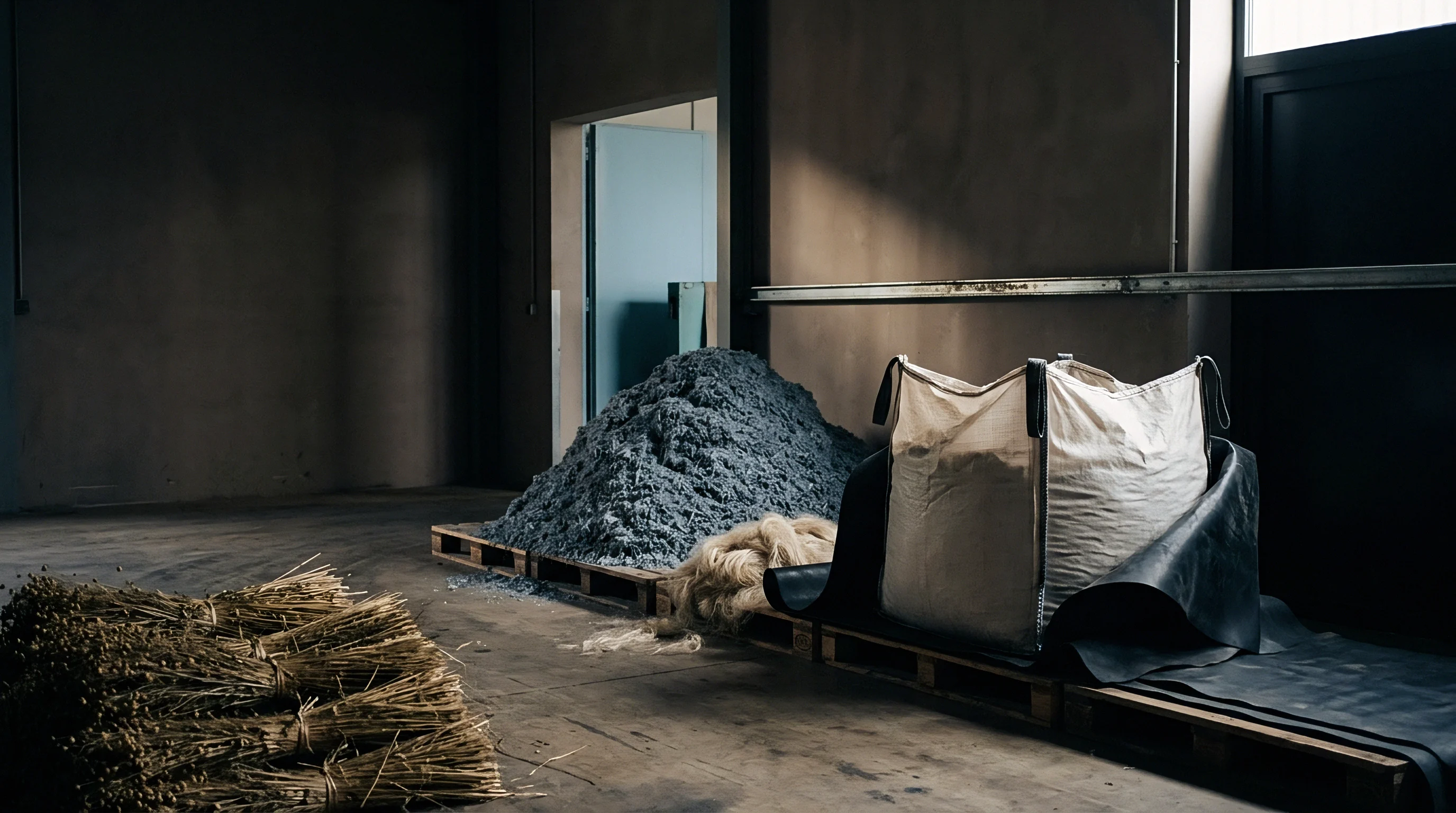
Pin Penetration Gradients from Head to Tail
Graduated hackling fields progress from two pins per centimetre on initial coarse bars up to twenty-eight pins per centimetre on finishing bars. Pins enter the hanging fibre bundle at set velocities, exerting longitudinal dragging forces that divide the gummed bast ribbons. Moisture penetration slows through dense bark.
Stiff, thick basal sections cannot flex around incoming pins, resulting in transverse tensile failure instead of longitudinal cleavage. The resulting waste drops into the collection boxes as valuable line fibre breaks into low-value hackling tow.
| Taper Ratio Base To Tip | Drafting Force In Newtons | Sliver CV Percentage | End Breaks Per 1000 Spindle Hours | Achievable Metric Count |
|---|---|---|---|---|
| 1.25 to 1.00 Uniform | 4.2 N | 2.8 percent | 18 breaks | Nm 60 |
| 1.60 to 1.00 Moderate | 6.8 N | 4.4 percent | 34 breaks | Nm 45 |
| 2.10 to 1.00 Severe | 11.5 N | 7.9 percent | 82 breaks | Nm 26 |
| 2.80 to 1.00 Extreme | 18.4 N | 12.6 percent | 164 breaks | Nm 18 |

Sliver Regularity Deficits on Spreadboard Feeders
Spreadboard tables receive hackled stricks hand-laid in continuous overlapping shingles to create an unbroken sliver ribbon. Draft rollers pinch coarser bundles unevenly. Mill operators lay stricks in alternating arrangements, placing root beside tip to balance localized mass.
If an incoming lot carries extreme root-to-tip fineness disparities, manual shingling cannot neutralize the mass fluctuation. Periodic drafting waves emerge within the sliver canopy, destabilizing the roving frame and introducing thick-thin anomalies that persist into the final yarn bobbin.
Stiff root ends break spinning needles, while soft apical ends wash away in the wet trough.
Feed the thicker root ends into the pins first when processing coarse straw, and reverse the strick orientation only when running fine water-retted stock.

Tariff
International trade nomenclature separates flax straw, scutched flax, hackled line flax, and tow under Harmonized System Code 5301. The commercial value of hackled line flax relies on hackling yield, which represents the percentage of scutched strick mass recovered as combed line. Batches exhibiting steep root-to-tip linear density variation generate low yields, dumping high percentages of input mass into low-value tow categories.
Commercial Classing Discrepancies and Landing Costs
Classers inspect strick uniformity at the bale sampling table by touch, sight, and manual break testing. Spinners dock payment for excessive taper. A lot purchased as high-grade French long-line at four euros and eighty cents per kilogram generates an effective loss if thirty-five percent of strick mass combs out as hackling tow valued at only one euro and forty cents per kilogram.
When basal coarseness forces the hackling line to extract excessive tow, the landed raw material cost per kilogram of usable combed sliver jumps from five euros and sixty cents to seven euros and twenty cents, shifting finished spinning margins into negative territory.

Price Deductions Tied to Strand Taper
Spinning mills enforce standard deduction schedules based on gravimetric taper ratios. A taper ratio calculated by dividing basal segment linear density by apical segment linear density serves as the binding index on the commercial contract invoice. Lots showing ratios under 1.40 pass without penalty, qualifying for fine wet-spun yarns above metric count Nm 50.
Ratios exceeding 2.00 trigger mandatory price deductions or reclassify the lot for dry-spun heavy industrial yarns, reducing the price paid to the scutching mill by up to twenty-five percent. Customs valuation offices in Ningbo and Antwerp track these differential splits directly on the landing documents to prevent lower-grade tow parcels from masking undeclared long-line imports.