Statistical Tolerance Bands for Inter Laboratory Flax Fineness Arbitration Clauses
Statistical arbitration clauses require critical difference thresholds based on inter-laboratory variance to prevent disputes over normal flax test scatter.

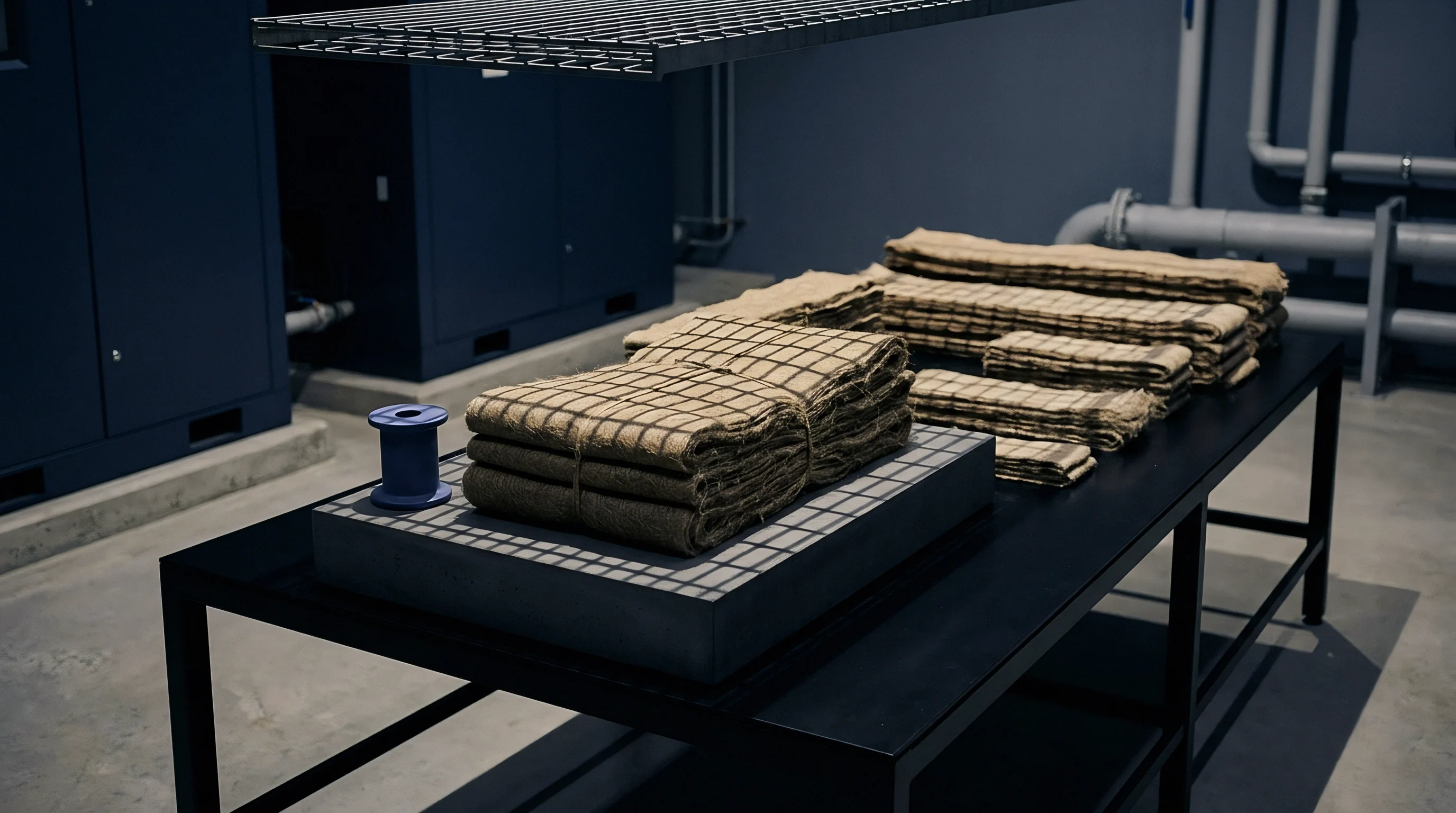
Bundle
Technical bast linear density testing begins with a conditioned specimen of four hundred milligrams weighed to a tenth of a milligram under ISO 6741 standard atmosphere conditions. Twenty parallel technical fibres, pulled by hand from scutching stricks or hackling line slivers, enter cutter blades set precisely to a length of ten millimeters. The gravimetric count, designated as the metric number (Nm) or direct linear density in decitex under ISO 2370, determines the finest yarn count a spinning frame can draw without elevated spindle breaks.
A shipment contracted at Nm 450 (22.2 dtex) frequently arrives with an origin test certificate claiming compliance, while the receiving spinner records Nm 370 (27.0 dtex) on identical lots. This divergence represents an immediate commercial penalty: coarser fibre limits draft ratios on the wet-spinning frame, forcing the mill to spin heavier yarn or absorb drafting waste exceeding eight percent.
Under standard conditions of twenty degrees Celsius and sixty-five percent relative humidity, a two-decitex gravimetric divergence shifts wet-spinning yarn tenacity by more than one centinewton per tex.
Commercial contracts routinely reference laboratory results without defining the critical difference limits separating testing uncertainty from true batch non-conformity. Secondary cell wall thickness varies along the stem height, and retting uniformity fluctuates between field swaths during autumn dew exposure. When two testing facilities assess the identical lot of dew-retted French or Belgian long line flax, gravimetric determinations of linear density show intra-laboratory coefficients of variation between nine and twelve percent.
Inter-laboratory coefficients of variation expand that distribution to fifteen through eighteen percent when sample conditioning or combing methods shift. Without statistically anchored arbitration boundaries, dispute resolution collapses into commercial friction.
Arbitration clauses depend on an actionable definition of equivalence. The gravimetric cut-and-weigh technique serves as the international baseline, yet its execution demands meticulous operator hand-combing to strip cortical parenchyma, residual epidermis, and shive particles without breaking long technical complexes. Mechanical combing eliminates loose short fibres.
Excessive combing splits technical bundles prematurely, artificially depressing the decitex reading and inflating the apparent fineness grade. Technologists who ignore bundle splitting during preparation produce irreproducible test dossiers that fail third-party verification.


Airflow
Pneumatic resistance measurement provides high-throughput assessment of bast linear density by drawing regulated gas through a compressed mass of fibres. Instruments adapted from cotton Micronaire apparatus or wool WIRA airflow chambers measure pressure drop across a cylindrical specimen chamber packed with five grams of clean flax. Because flax cell cross-sections are irregular, polygonal, and hollowed by variable lumen cavities, the relationship between specific surface area and bundle fineness deviates significantly from standard cylindrical fibre models.
The airflow resistance indicates the hydrodynamic specific surface area rather than a direct geometrical diameter. Coarser technical bundles present lower specific surface area per unit mass, permitting higher volumetric throughput at fixed differential pressure.
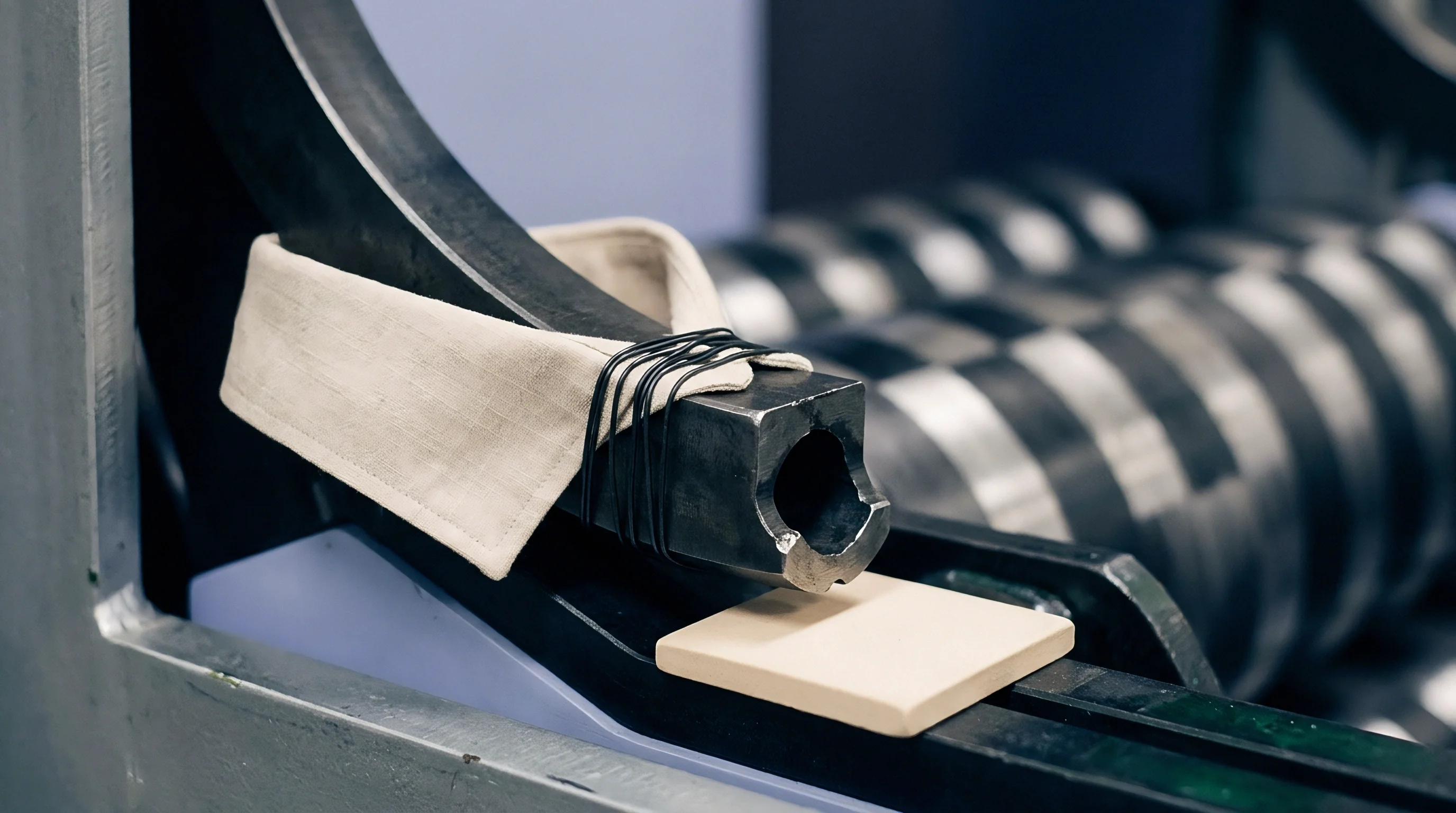
Pneumatic Instrument Calibration
Standardising bast airflow instruments demands certified calibration tops prepared from homogeneous, hackled flax slivers. Operators calibrate the manometer scale against known gravimetric reference lots spanning Nm 200 through Nm 600. When test rooms deviate from twenty degrees Celsius and sixty-five percent relative humidity, the moisture regain of flax shifts rapidly from ten to twelve percent, altering bundle swelling behavior and changing the effective interstitial void volume inside the testing tube.
A shift of two percent in sample regain produces an apparent coarsening of five to seven percent on pneumatic scales.
| Parameter | Test Condition | Acceptable Limit | Measured Fineness Impact |
|---|---|---|---|
| Specimen Mass | 5.000 g | ±0.005 g | 0.8 dtex shift per 10 mg deviation |
| Chamber Volume | 28.3 cm³ | ±0.1 cm³ | 1.2 dtex shift per 0.5 mm stroke change |
| Air Flow Rate | 4.0 L/min | ±0.05 L/min | 0.5 dtex shift per 0.1 L/min change |
| Ambient Relative Humidity | 65% | ±2% | 1.6 dtex shift per 5% RH deviation |
| Room Temperature | 20°C | ±1°C | 0.3 dtex shift per 2°C deviation |
Non-cellulosic constituents further complicate pneumatic measurement. Pectinaceous middle lamellae, hemicellulose binders, and residual waxes retain moisture differently than crystalline cellulose cores. Over-retted material sheds middle lamellae easily, generating finer technical bundles during mechanical conditioning inside the airflow chamber.
Under-retted fibre remains bound in rigid cortical ribbons, generating low hydrodynamic resistance that misrepresents the true splitting potential on drawing frames.
A contract clause naming an airflow reading without specifying chamber compression density is legally void of technical meaning.
Seasonal moisture differences in maritime containers account for lower airflow resistance recorded by the spinning mill.

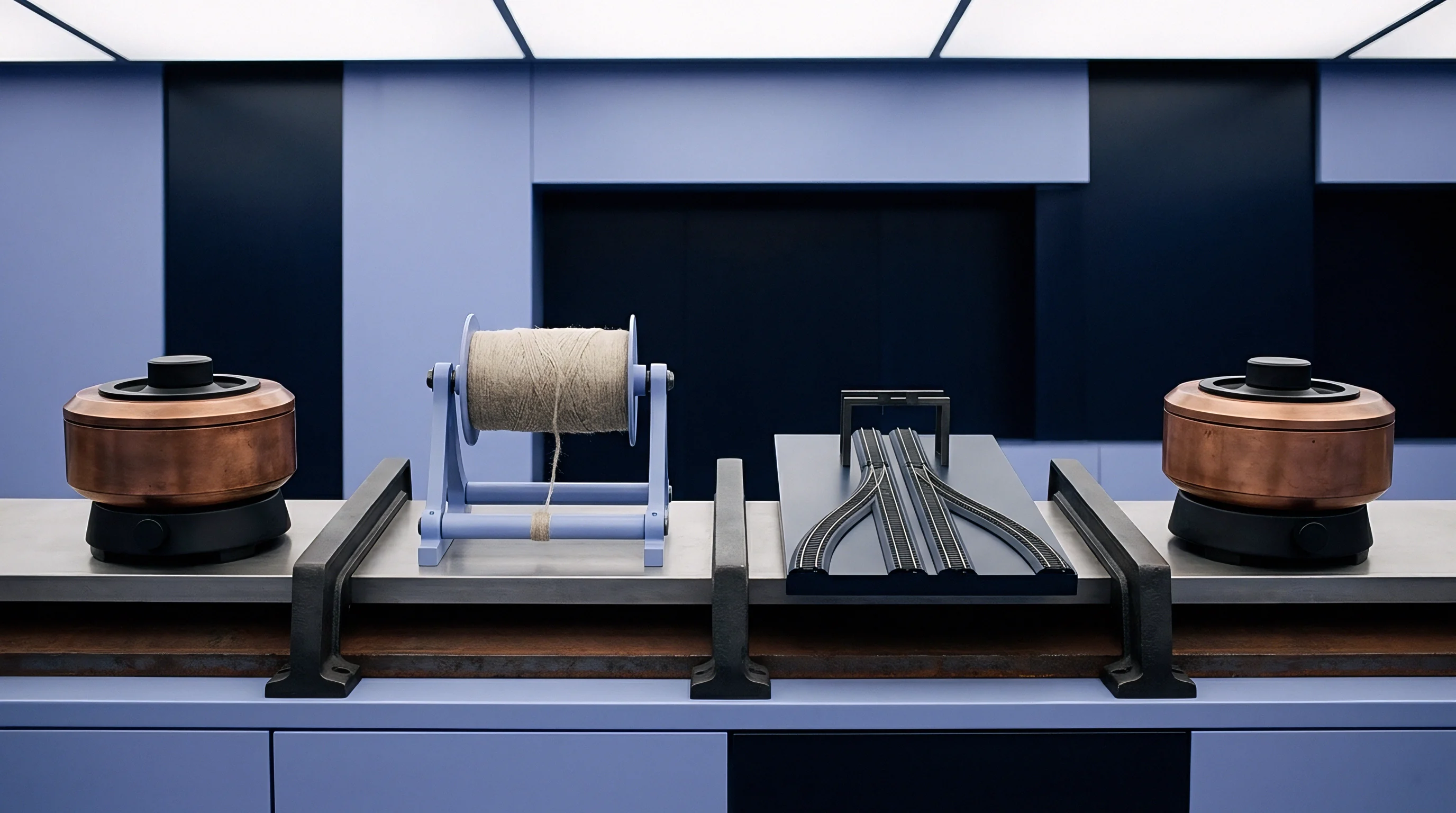
Scatter
Replication across independent testing facilities exposes systematic differences between operator preparation, environmental control, and instrument geometries. When three accredited facilities examine identical test slivers of Grade 4 dew-retted water-hackled line flax, their mean values diverge along predictable lines. The primary component of inter-laboratory discrepancy traces directly to specimen preparation rigor.

What Governs Systematic Bias between Airflow Instruments?
Instrumental calibration offsets between pneumatic testing units arise from differential manometer tube diameters, uncalibrated flowmeters, and operator packing technique. A technician who inserts fibres longitudinally creates channeling voids, whereas an operator who folds the specimen introduces transverse flow barriers. Longitudinal channeling yields an artificially fine reading.
Transverse orientation increases backpressure, registering as coarse fibre. These discrepancies compound when facilities apply incompatible conversion formulas to translate pneumatic backpressure into metric number.
- Specimen combing losses alter the mass ratio of short technical splits to thick parent complexes before gravimetric evaluation takes place.
- Moisture equilibration timing dictates whether internal hygroscopic gradients within the testing plug reach true sorption equilibrium.
- Cutter blade sharpness influences whether bundle ends are cleanly sheared or mechanically crushed and fibrillated at cut boundaries.
- Operator selection bias governs the subjective exclusion of dark retting stains or coarse root ends from the test sub-sample.
Experimental trials tracking European long line flax across independent testing benches reveal clear dispersion profiles. Random error and systematic laboratory bias combine to create overall measurement uncertainty.
| Testing Method | Declared Mean | Repeatability Std Dev (sr) | Reproducibility Std Dev (sR) | Reproducibility Limit (R) |
|---|---|---|---|---|
| ISO 2370 Gravimetric Cut | 22.5 dtex (Nm 444) | 1.45 dtex | 2.85 dtex | 7.98 dtex |
| ISO 2370 Gravimetric Cut | 28.0 dtex (Nm 357) | 1.80 dtex | 3.40 dtex | 9.52 dtex |
| ISO 2370 Gravimetric Cut | 36.0 dtex (Nm 278) | 2.40 dtex | 4.65 dtex | 13.02 dtex |
| Modified Bast Airflow | 22.5 dtex (Nm 444) | 0.95 dtex | 2.10 dtex | 5.88 dtex |
| Modified Bast Airflow | 28.0 dtex (Nm 357) | 1.25 dtex | 2.60 dtex | 7.28 dtex |
| Modified Bast Airflow | 36.0 dtex (Nm 278) | 1.70 dtex | 3.50 dtex | 9.80 dtex |
| Values compiled across ISO round-robin bast trials; reproducibility limit R equals 2.8 times reproducibility standard deviation. | ||||
The tabulated figures reveal that two competent testing houses evaluating a 28.0 dtex lot can report results differing by up to 9.52 dtex gravimetrically without either bench operating outside standard test tolerances. That range equals a thirty-four percent total spread. This statistical dispersion invalidates casual commercial rejection criteria.
Which chemical treatment baseline guarantees uncompromised bundle identity across facilities remains an open question in technical bast grading.
Interval
Establishing enforceable arbitration clauses demands rigorous mathematical formulation of the critical difference threshold. Let the seller laboratory mean be x_1 based on n_1 individual specimen tests, and the buyer laboratory mean be x_2 based on n_2 tests. The critical difference (CD) between the two determinations depends upon the intra-laboratory variance (repeatability variance, s_r squared) and the between-laboratory variance (reproducibility component, s_L squared).

Mathematical Derivation of Acceptance Limits
The combined variance of the difference between two independent laboratory averages follows standard metrological principles:
Var(x_1 – x_2) = 2 (s_L^2) + (s_r^2 / n_1) + (s_r^2 / n_2)
For standard arbitration testing where both facilities test an equal number of specimens (n_1 = n_2 = n), the critical difference at the ninety-five percent statistical confidence level evaluates to:
CD_0.95 = 1.960 sqrt
When the absolute difference between laboratory averages |x_1 – x_2| falls below CD_0.95, the two findings are statistically indistinguishable at the chosen confidence level. The commercial contract cannot sustain a breach claim. If the observed gap exceeds the critical difference threshold, the dispute passes to an agreed referee laboratory.
Are Symmetrical Rejection Thresholds Statistically Defensible?
Spinning mills face asymmetrical commercial exposure when receiving coarse shipments. Finer fibre spins into light, high-value apparel yarn counts without economic penalty. Coarser fibre causes drafting failures, end breaks, and yarn count downgrades.
If a contract specifies Nm 450 with a symmetric five percent tolerance band, the spinner risks accepting fibre at Nm 427.5 while receiving no equivalent operational benefit if the shipment tests at Nm 472.5, where lower tensile strength often accompanies excessive biological retting.
- Bale selection protocol isolates ten percent of delivered bales using stratified random sampling across pressing dates.
- Specimen preparation schedule enforces hand-hackling with standardized pinned combs followed by seventy-two hours of conditioned climate exposure.
- Testing allocation rules divide prepared sliver slivers into three hermetically sealed sub-lots for vendor, buyer, and reference umpire retention.
- Decision logic execution compares buyer-vendor differentials against the critical difference equation before commissioning external referee evaluation.
Consider a 20-tonne commercial lot of water-hackled line flax contracted at 24.0 dtex (Nm 417). The contract sets n = 5 individual test bundles per laboratory. The repeatability standard deviation s_r is 1.6 dtex, while the inter-laboratory standard deviation s_L is 2.2 dtex.
Substituting these operational variances yields:
CD_0.95 = 1.960 sqrt = 1.960 sqrt = 1.960 sqrt = 6.41 dtex
The buyer bench measures 28.5 dtex. The seller bench reported 23.0 dtex. The measured difference of 5.5 dtex falls beneath the 6.41 dtex critical difference limit.
Both testing centers fall within expected analytical dispersion. The arbitration claim fails.
Arbitration Clause 14.2: If the arithmetic difference between the receiving mill test average and the shipping invoice average remains within the calculated 95 percent critical difference limit, the shipping invoice figures govern settlement without price adjustment.
Arbitration clauses adopting this formulation eliminate arbitrary commercial disputes over standard laboratory scatter.


Settlement
Financial adjustments follow when the referee laboratory confirms that true delivered fineness deviates beyond the contractual critical difference band. The dispute contract assigns testing costs directly to the party whose bench result sat farthest from the referee finding. Beyond testing expenses, the settlement formula reconciles the delivered material value against the spinning mill economic loss.
A grade reduction shifts the yarn count potential downward, lowering the realized price per spun kilo or per finished woven metre.
Price Adjustment Mechanics for Coarse Deliveries
Spinners establish price deduction schedules tied directly to decitex deviations exceeding the contractual critical difference band. Linear density determines the draft limit in wet spinning. Wet spinning operates with a spinning limit of approximately twenty-five to thirty technical fibres per yarn cross section.
For a target count of Nm 50 (20.0 tex), input flax fibre measuring 25.0 dtex provides twenty fibres in the strand, causing immediate yarn weakness and frequent frame stops. To maintain frame efficiency, the spinner must drop the yarn target to Nm 39 (25.6 tex), reducing saleable metre yield per raw fibre kilogram.
| Fineness Deviation Beyond CD | Wet-Spinning Count Penalty | Raw Fibre Invoice Discount | Commercial Action |
|---|---|---|---|
| 0.1 to 1.5 dtex | 1 to 2 metric yarn counts | 3.0% of CIF value | Mandatory invoice rebate |
| 1.6 to 3.0 dtex | 3 to 5 metric yarn counts | 7.5% of CIF value | Invoice rebate plus freight credit |
| 3.1 to 5.0 dtex | 6 to 9 metric yarn counts | 15.0% of CIF value | Mill diversion or discounted renegotiation |
| Greater than 5.0 dtex | Unspinnable for line yarn | 100.0% refund | Full lot rejection at seller expense |
Raw material costs represent forty to fifty-five percent of delivered linen fabric cost. When a 20-tonne purchase of line flax contracted at 8.50 USD per kilogram lands 3.5 dtex coarser than the contractual upper tolerance limit, the weaving mill loses significant fabric area. Spinning Nm 39 instead of Nm 50 decreases total yarn length per tonne from 50,000 kilometres to 39,000 kilometres.
The finished plain-weave cloth drops from 180 grams per square metre down to heavier 230 grams per square metre stock, crashing the landed commercial margin.
Pencil grading on the warehouse floor cannot settle what the wet-spinning frame exposes.