Draft Frame Settings for Fine Long Staple Flax Processing
Draft frame reach must exceed maximum staple length by ten percent while nip pressures over sixty decanewtons prevent slippage in fine long-staple flax.

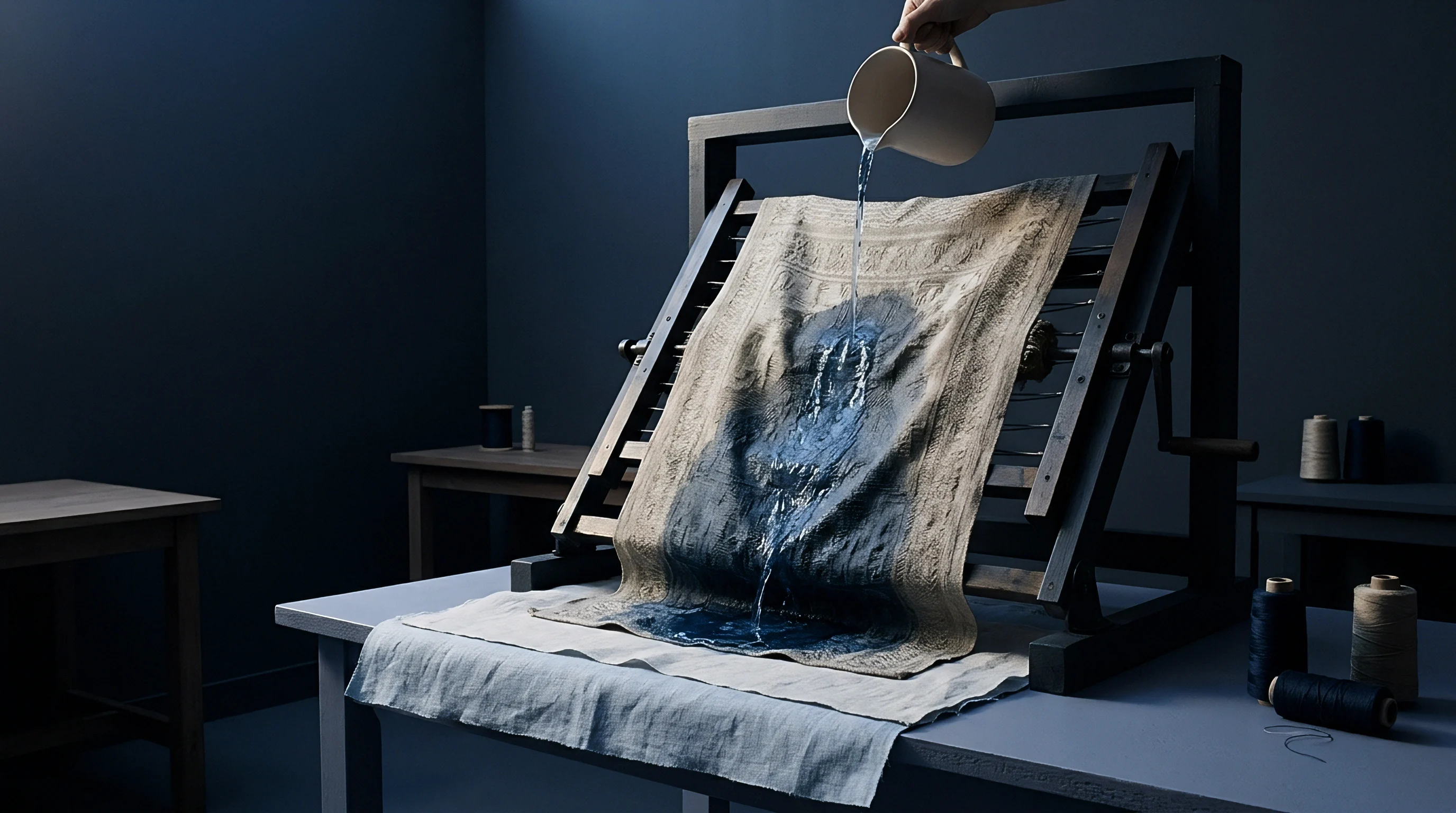
Strand
Technical flax bundles arriving at the initial drawing passage present a complex distribution of fibre length and fineness. Line flax demands exact gauge control. Long-staple hackled sliver contains composite fibre ribbons ranging from 250 millimetres to over 800 millimetres in length, held together by intercellular pectin matrices.
The linear density of hackled sliver typically ranges between 15 ktex and 25 ktex for primary draw frame passages, tapering to 2 ktex to 5 ktex at the roving frame. Linear density stability governs front-roller grip before mechanical draft occurs. Bundle fineness for high-count line yarn spinning relies on progressive separation during drafting, targeting an ultimate fibre fineness of Nm 200 to Nm 400 within the drafting zone.
Fibre bundle cohesion within the sliver directly influences drafting resistance. High friction between unretted or partially retted bast fibre bundles requires elevated draft forces, whereas over-retted material lacks the structural integrity to withstand roller drag without premature slippage. Short fibres create uncontrolled drafting waves.
The spatial density of fibres in the cross-section must remain uniform to prevent draft waves, which appear as periodic mass variations in the delivered roving. Evaluating the ratio of long technical fibres to short elemental fragments requires tuft analysis via comb sorter according to ISO 2370 methods, establishing the length distribution baseline before adjusting roller distances.
Sliver linear density stability governs front-roller grip before mechanical draft occurs.
The relationship between raw sliver parameters and target draft ratios determines machine loading across successive passages. Table 1 outlines typical strand dimensions and corresponding operational parameters for processing fine long-staple flax into high-count yarn.
| Passage Stage | Linear Density (ktex) | Mean Staple Length (mm) | Bundle Fineness (Nm) | Target Draft Ratio |
|---|---|---|---|---|
| First Preparation Draw Frame | 20.0 – 25.0 | 650 – 750 | 120 – 150 | 4.5 – 6.0 |
| Second Preparation Draw Frame | 8.0 – 12.0 | 500 – 600 | 180 – 220 | 6.0 – 8.5 |
| Finishing Draw Frame | 3.0 – 5.0 | 400 – 500 | 250 – 300 | 7.5 – 10.0 |
| Roving Frame | 0.8 – 1.5 | 300 – 400 | 350 – 450 | 9.0 – 12.0 |
Variations in harvest conditions directly alter the initial strand linear density profile. Cold damp field retting leaves tough outer bark fragments that increase inter-bundle friction during primary drawing. The mechanical resistance of the sliver shifts abruptly when encountering unretted patches.
Experienced frame tuners observe the feed creel tension indicators continuously to catch batch-to-batch density shifts. Setting draft frame parameters based on nominal supplier datasheets without verifying actual strand length distributions guarantees inconsistent attenuation. Fine counts punish small ratch errors.
Ratch settings govern fibre slippage. When adjusting back-roller distances, technicians align the mechanical gauge to the upper quartile fibre length rather than the mean length. Selecting a ratch that matches mean length breaks longer technical fibres, creating neps and weak points in the drawn strand.
Conversely, expanding the ratch beyond the maximum fibre length allows short bundle groups to move without restraint. This unrestrained movement generates drafting waves that degrade yarn evenness.
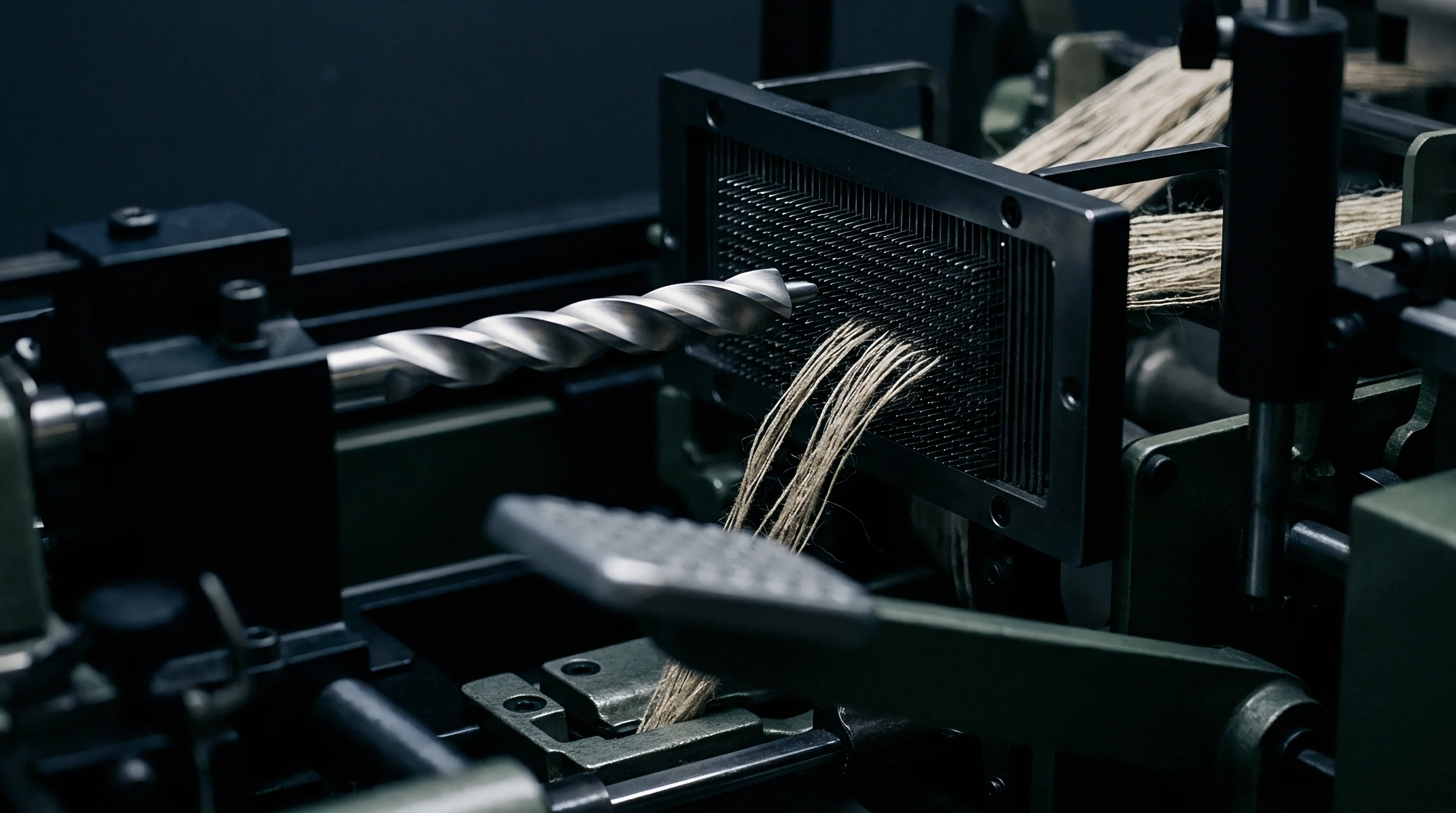

Reach
Adjustment of the distance between feed roller nips and drafting roller nips defines the mechanical reach of the draft frame. Line flax demands exact gauge control. Setting this distance, historically termed the ratch, depends strictly on the maximum fibre bundle length present in the prepared sliver.
In long-staple flax processing, the reach setting prevents mechanical fibre breakage while maintaining sufficient pinch to pull long bundles through the pinning field. The setting margin typically adds 10 to 20 millimetres to the longest measured technical fibre length, ensuring that individual filaments are never gripped simultaneously by back and front nip rollers.

What Governs Mechanical Reach Calibration?
Determining the precise nip-to-nip spacing requires quantitative assessment of sliver staple arrays. Tight settings cause severe strand breakage. When the distance between back and front rollers sits below the length of intact technical bundles, the front roller tears the fibre apart against the holding force of the back roller.
This mechanical rupture reduces average fibre length, increases short fibre content, and generates severe machine vibration. Excessive reach creates floating zones where unguided short fibres aggregate into thick slubs followed by thin, weak passages.
- Staple Span Assessment ~ Feed stock staple arrays measured by tuft sorting determine the base ratch setting.
- Fibre Mean Offset ~ Setting the nip distance ten percent above the maximum staple length prevents mechanical fibre rupture.
- Cohesion Margin Tuning ~ High inter-fibre friction requires slightly wider ratch spacing to avoid roller lap formation.
- Drafting Speed Scaling ~ Increased delivery velocity demands tighter nip clearance to prevent floating strand flutter.
Reach geometry varies significantly between dry preparation frames and wet spinning frames. Dry draft frames utilize longer reach zones to accommodate full-length technical flax bundles coming from hackling. Wet spinning frames operate with shorter reach settings because warm bath immersion softens inter-fibre pectins, allowing long composite bundles to slip apart into shorter elemental components during final drafting.
Adjusting reach on wet frames requires accounting for the degree of pectin breakdown achieved inside the roving bath.
Incorrect reach settings directly degrade yarn tensile strength and yield. Setting the reach too wide creates unguided floating zones, causing mass variations that lower yarn break force under ISO 2062 testing. Setting the reach too short fractures technical bundles, generating fly waste and short-fibre nep clusters that clog downstream spinning rings.
Mill managers operating with misaligned reach settings suffer elevated end-breakage rates, increased waste percentages, and higher raw material costs per delivered kilo of yarn.
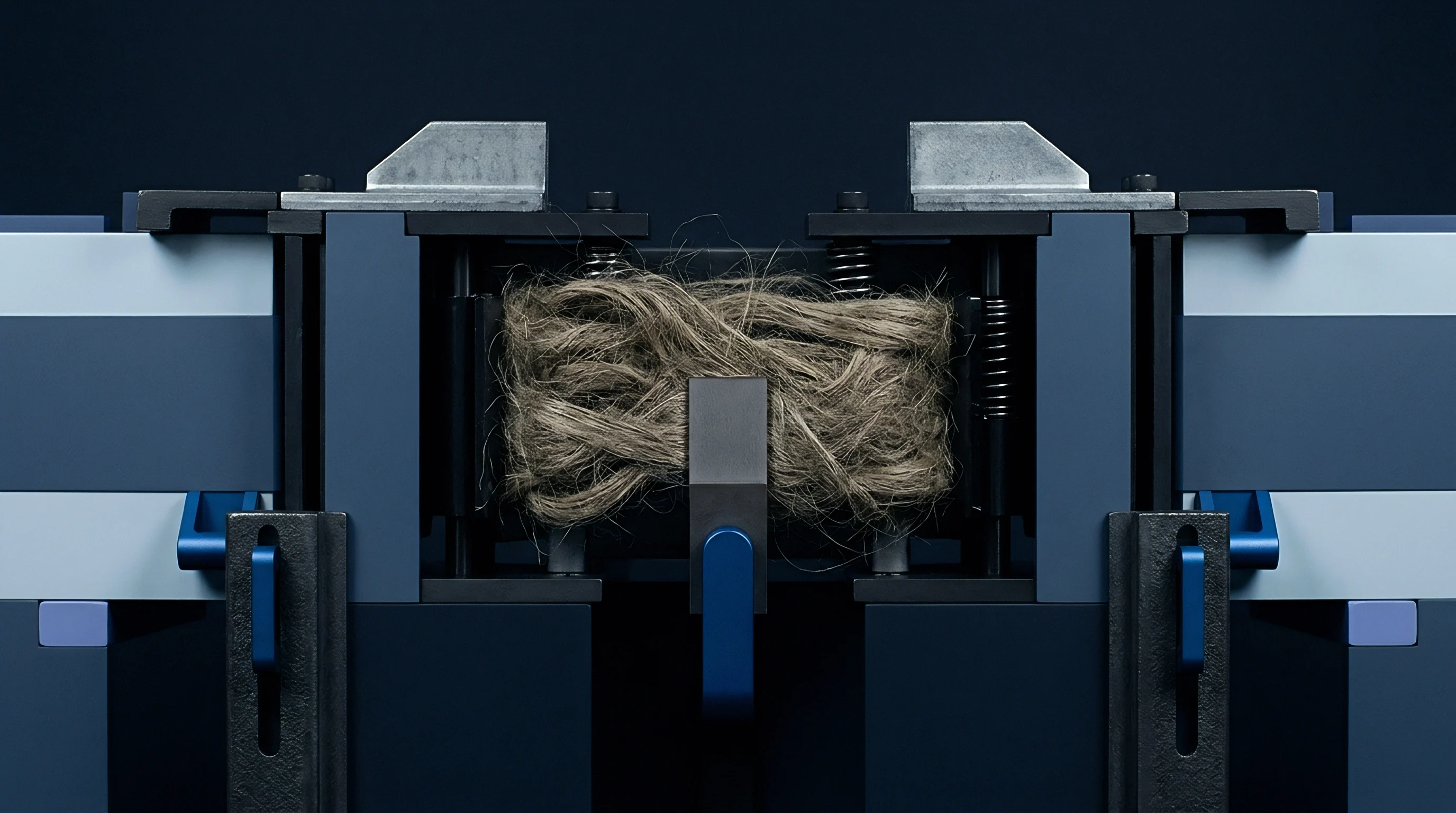
Pinning
Control of individual fibre movement within the drafting zone relies on the faller field pin density and geometry. Faller lead controls strand tension. As the strand moves from the back rollers to the front drafting nip, sets of pinned faller bars penetrate the fibre bed to restrain fast-moving bundles and ensure uniform attenuation.
Faller bars advance at a speed slightly greater than the surface speed of the back rollers, establishing a positive lead that keeps the fibre bed taut. Pin density, expressed as pins per centimetre, increases progressively across successive draw frame passages to accommodate the thinning sliver mass.
Fallers maintain control over short fibres while allowing long technical fibres to slide forward under front roller traction. Pin angle, tip profile, and projection depth determine the penetration efficiency into dense flax ribbons. Improper pin angle causes fibre accumulation.
Pins set at a forward angle of 3 to 5 degrees prevent the sliver from riding over the tops of the fallers during peak drafting loads. Damaged or bent pins disturb the uniform distribution of fibres, creating longitudinal streaks and periodic thin spots in the drawn web.
Faller lead ratios exceeding eight percent create excessive tension on fine flax bundles during pin egress.
Optimizing the pin field configuration requires balancing pin density against sliver volume. Table 2 details standard faller bar configurations for processing fine long-staple flax through three preparation passages and final wet spinning.
| Passage Type | Faller Pitch (mm) | Pin Density (pins/cm) | Pin Projection Angle (°) | Lead Ratio (%) |
|---|---|---|---|---|
| First Intersecting Frame | 8.0 | 4.0 – 5.5 | 93.0 | 3.5 – 5.0 |
| Second Intersecting Frame | 6.5 | 6.5 – 8.0 | 94.0 | 4.0 – 6.0 |
| Third Intersecting Frame | 5.0 | 9.5 – 12.0 | 95.0 | 5.0 – 7.0 |
| Wet Spinning Frame Gill Box | 3.5 | 14.0 – 18.0 | 95.0 | 6.0 – 8.5 |
Machinery vendors often claim that universal pin templates handle all flax grades without adjustments. This claim ignores the physical realities of fibre ribbon variation between dew-retted and water-retted flax. Heavy dew-retted strands require lower pin densities to prevent pin clogging and lap formation.
Dense pin arrangements applied to coarse strands push fibres over the pin tips, destroying drafting control completely. Tuners must adjust pin beds based on actual fibre ribbon thickness rather than relying on standardized factory defaults.
Pressure
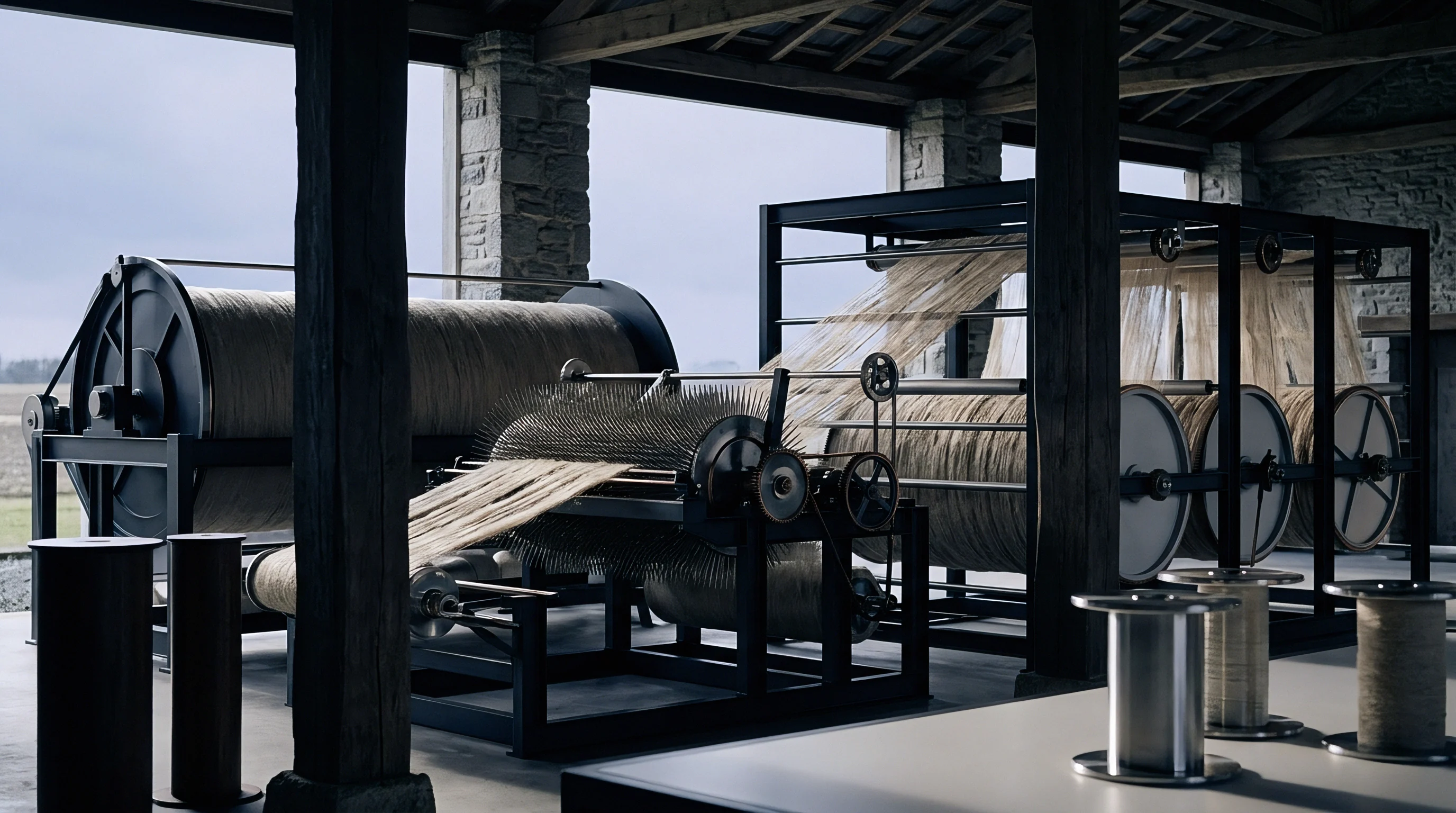
Clamping forces applied at the drafting nips dictate the transfer of motion from rollers to the fibre strand. Top roll hardness affects nip width. Front top rollers utilize synthetic elastomer covers or weighted metal bosses to grip the flax strand against bottom fluted steel rollers.
Front nip pressures on long-staple flax frames range from 40 decanewtons to over 80 decanewtons per arbor, far exceeding the clamping forces used in short-staple cotton or synthetic spinning. Flax bundles require firm nip loading. High clamping pressure prevents slippage of high-friction bast fibres under extreme drafting resistance.
Rubber cover hardness selection alters the nip contact zone width and pressure distribution. Covers with a hardness rating of 85 to 90 Shore A resist deformation under heavy loading, providing a narrow, concentrated nip footprint ideal for precise detachment lines in fine count spinning. Softer covers expand the contact area, reducing peak pressure and allowing high-density fibre bundles to slip through unattenuated.
Roller weighting system calibration demands routine verification using load cells to ensure equal pressure across both ends of the roller arbor.
- Clean top roller aprons and flutes using solvent to eliminate residual wax build-up before calibration.
- Apply pneumatic load gauges directly to front top roller arbors to verify load symmetry within two percent variance.
- Measure nip impression width across the rubber cover using tactile foil under full mechanical loading.
- Inspect bottom fluted rollers for micro-chipping that induces periodic yarn mass variance under heavy weighting.
ISO 2060 commercial moisture regain allowances for flax yarn modify calculated draft ratios during mill trials.
Contracts governing yarn delivery enforce strict limits on mass variation, directly traceable to nip pressure stability. Standard supply agreements specify compliance with ISO 2060 for linear density determination and ISO 2062 for single-end tensile testing. Under-weighted front rollers permit non-uniform slipping, which instantly violates commercial yarn CVm thresholds.
When front nip pressure drops below specified thresholds, yarn strength falls dramatically, triggering customer rejections, chargebacks, and commercial claim disputes.
Attemperation
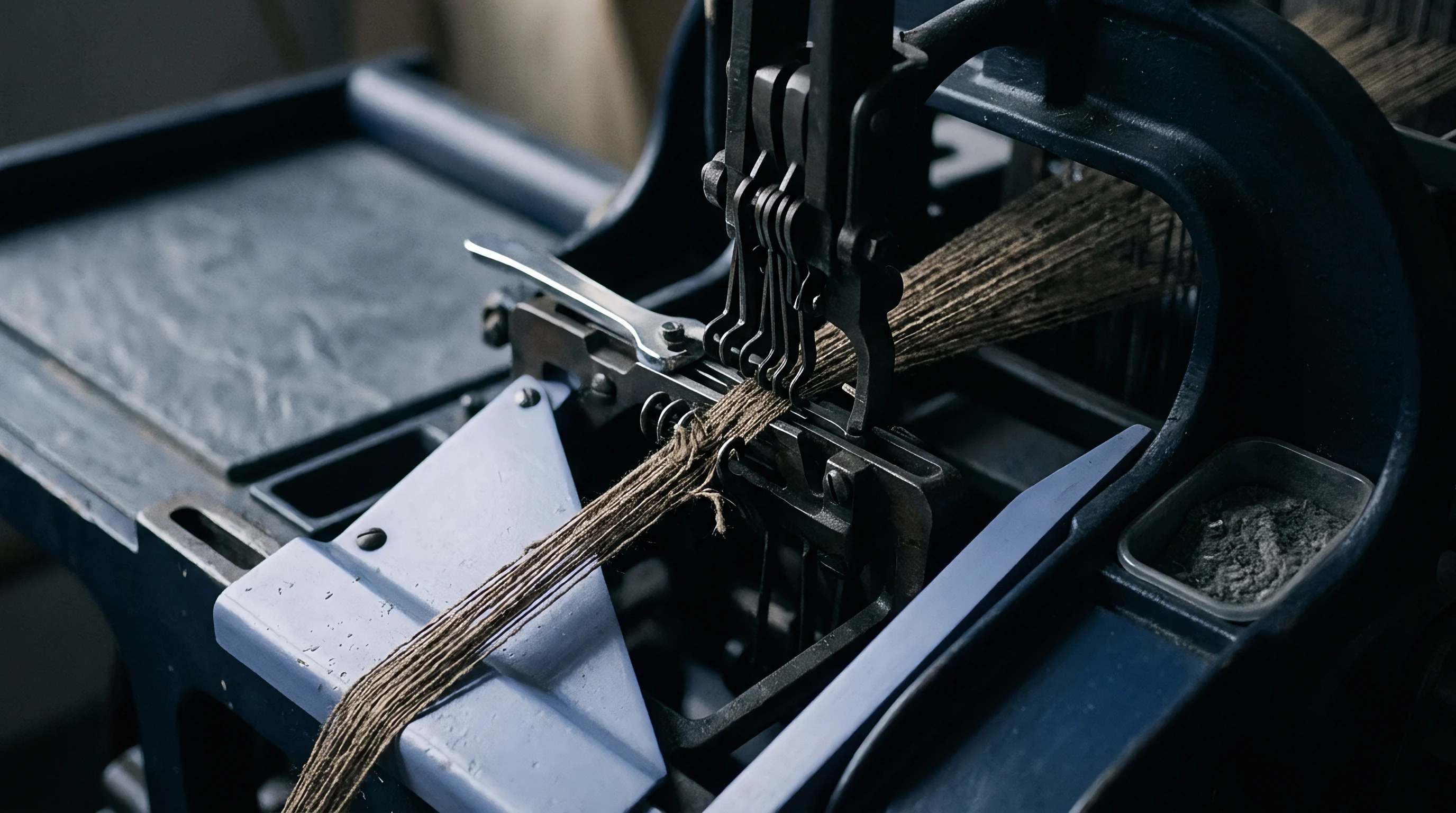
Thermal and chemical preparation of flax roving immediately prior to final drafting alters the physical properties of the bast fibre complex. Hot water softens natural plant pectins. In wet spinning of fine line flax, roving passes through a heated water bath located directly above the drafting zone.
Water temperatures maintained between 60°C and 75°C solubilize outer pectin binder layers, allowing technical fibre bundles to split into fine elemental fibres under the action of the drafting rollers. Draft forces peak during wet attenuation.
How Does Water Bath Temperature Alter Required Drafting Force?
Water bath conditions regulate the sliding resistance of elemental fibres within the wet strand. Cold water leaves pectin layers firm, requiring excessive drafting force that leads to front roller slippage or roving breakage. Overheated water dissolves pectins completely, causing the strand to lose cohesion entirely and drop out of the faller field.
Wetting agents added to the bath accelerate liquid penetration into the dense roving core, ensuring uniform softening during brief immersion periods.
| Yarn Target Count (Nm) | Water Temperature (°C) | Wetting Agent Concentration (g/L) | Trough Dwell Time (s) | Peak Drafting Force (N) |
|---|---|---|---|---|
| Nm 26 – Nm 39 | 55 – 60 | 0.5 | 4.0 – 5.0 | 12.5 – 15.0 |
| Nm 40 – Nm 59 | 62 – 67 | 1.0 | 3.5 – 4.5 | 9.0 – 12.0 |
| Nm 60 – Nm 79 | 68 – 72 | 1.5 | 3.0 – 4.0 | 6.5 – 8.5 |
| Nm 80 – Nm 110 | 73 – 78 | 2.0 | 2.5 – 3.5 | 4.0 – 6.0 |
Calculated draft differs from actual draft. Moisture absorption inside the bath swells individual fibres, increasing cross-sectional area while reducing overall strand length through swelling shrinkage. Machine operators must adjust nominal draft gear ratios to compensate for water-induced strand contraction.
Wet draft zone settings require continuous oversight to prevent accumulation of dissolved pectin sludge on draft rollers and faller tips.
The interaction between bath chemistry, temperature, and mechanical draft speed remains an active area of investigation for fine flax spinners. Unresolved questions persist regarding the exact chemical degradation rate of cell wall hemicellulose during extended high-temperature immersion. Fine wet-spun counts require minimal residual pectin to achieve smoothness, but excessive leaching compromises long-term fabric tenacity and color yield during wet processing downstream.
Variance
Drafting errors committed during draw frame and wet frame processing manifest as mass variations, structural defects, and yield losses in finished linen yarns. Uneven roving produces weak yarn spots. Mass coefficient of variation, measured via capacitive testing under ISO 16549, serves as the primary metric for evaluating drafting performance.
Poorly calibrated frame settings increase yarn CVm, introducing thin places that snap under weaving tensions and thick slubs that ruin fabric appearance.
High friction increases end breakage rates. A failure to synchronize faller lead, nip pressure, and ratch reach leads directly to characteristic yarn defect profiles. Table 3 breaks down common mechanical draft failures and their direct manifestation in yarn quality metrics.
- Periodic Draft Waves ~ Faulty ratch geometry generates short-term weight variations corresponding directly to front roller circumference.
- Fibre Plucking Rupture ~ Excessive nip clamping coupled with inadequate reach fractures long technical flax bundles into irregular lengths.
- Apron Slippage Delamination ~ Insufficient top-roll pressure lets dense fibre agglomerates pass unattenuated into the twisting zone.
- Gelling Slough Off ~ Sub-optimal bath temperatures leave unsoftened pectins that strip prematurely inside the pin field.
A two percent increase in yarn mass coefficient of variation doubles end-breakage rates on high-speed weaving looms.
The financial impact of drafting errors propagates directly to the landed cost per metre of woven fabric. Consider a commercial worked example producing Nm 60 fine line linen fabric at a targeted weight of 120 grams per square metre. A baseline spinning setup operating with optimal draft settings achieves a yarn mass CVm of 14.5 percent, yielding an end-breakage rate of 18 breaks per 1,000 spindle hours.
Under these conditions, weaving efficiency reaches 92 percent, producing fabric at a manufacturing cost of 4.15 USD per linear metre.
Relaxing draft settings increases yarn mass CVm from 14.5 percent to 17.2 percent due to drafting waves and floating fibre agglomerations. This increase in mass variance elevates wet-spinning end-breakage rates to 42 breaks per 1,000 spindle hours. The higher defect rate forces a reduction in spinning frame speed by 12 percent to manage piecing workloads.
Machine waste rises from 2.1 percent to 4.8 percent as broken ends create lap waste on front rollers.
When this lower-quality yarn enters the weaving mill, warp stop frequencies increase from 1.2 stops per machine hour to 3.8 stops per machine hour. Loom efficiency falls to 79 percent due to constant mechanical downtime for knotting broken ends. Increased fabric defect density elevates grey-cloth rejection rates from 1.5 percent to 6.2 percent during final perching inspection.
Calculating the combined cost of lost spinning capacity, increased fibre waste, lower loom efficiency, and mending labour adds 0.78 USD per linear metre, bringing the final landed cost to 4.93 USD per metre. Correct mechanical draft frame configuration preserves material yield and protects operating margins across the entire textile converting sequence.