Spinning Method
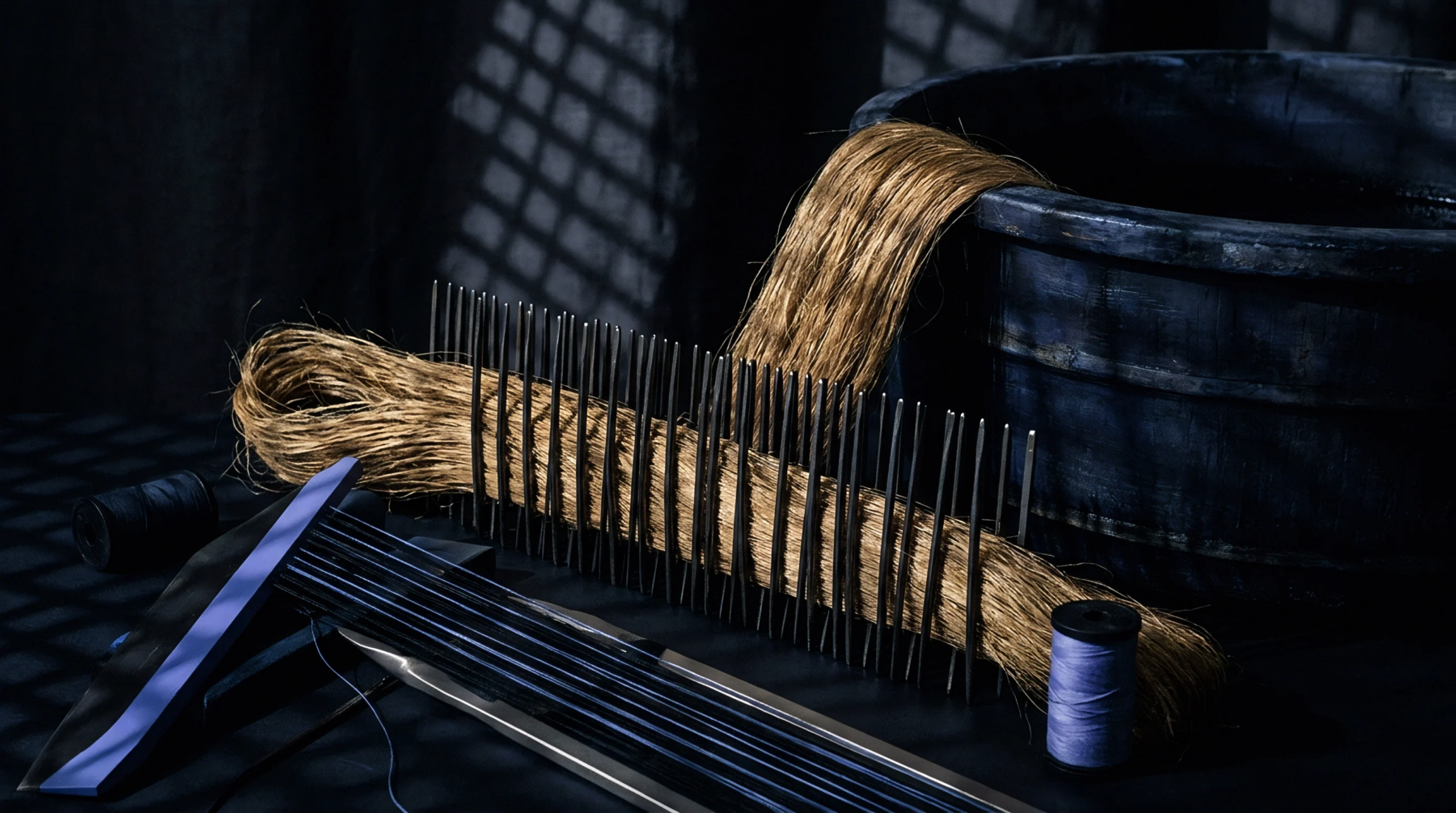
Wet drafting acts as a primary configuration for long staple flax fibres where water saturation softens pectin content to facilitate greater attenuation. This process occurs at the frame during the conversion of roving into yarn. Immersion in a trough at specified temperatures reduces the resistance of the internal adhesive structures within the strand.
High friction coefficients present in dry flax prevent the necessary fibre slippage required for fine count production. Controlled wetting permits the production of finer, uniform yarns that dry fibre processing cannot achieve. Tension regulation at the rollers ensures consistent linear density across the entire batch length.
Moisture Application
Water immersion troughs sit immediately behind the drawing rollers to prepare the fibre for mechanical extension. Operators maintain precise bath temperatures to optimize the softening rate of the plant gums. Stable immersion duration prevents excessive fibre degradation during the high speed transit from the drafting zone to the spindle.
Automated monitoring systems track bath conductivity to adjust replenishment cycles of treated fluid. Correct saturation levels prevent the snapping of brittle stalks while the drafting force pulls them toward the target fineness. Uniformity in the dampening stage reduces the frequency of end breaks during the subsequent winding phase.
Production Outcome
Fine linen count specifications depend upon the mechanical sliding enabled by this wet stage to achieve competitive commercial grades. Quality control records note the yarn uniformity achieved through this method as a verification of equipment efficiency. Spinning plants prioritize the synchronization of roller speed with the wetting rate to minimize mass variation in the final output.
Deviations in the liquid temperature or the duration of immersion appear as irregularities in the yarn surface profile during visual inspection. Standardized testing for tensile strength validates that the process maintains structural integrity after the drying cycle completes. The process represents the definitive limit for achieving high density, low diameter linen yarns at scale.