Mechanical Load
Tension applied to curved or crimped textile specimens removes structural wave without inducing elastic or plastic fibre elongation. Straightening pretension establishes the true axial length of yarns extracted from woven fabrics or coiled packages prior to twist or crimp measurement. Flax fibres possess high initial modulus and low elongation at break, which makes them sensitive to over-tensioning during physical evaluation.
The applied load must flatten fabric-induced bends while keeping the core yarn structure undisturbed. Precise pretensioning prevents length overestimation in automated testing equipment.
Load Application
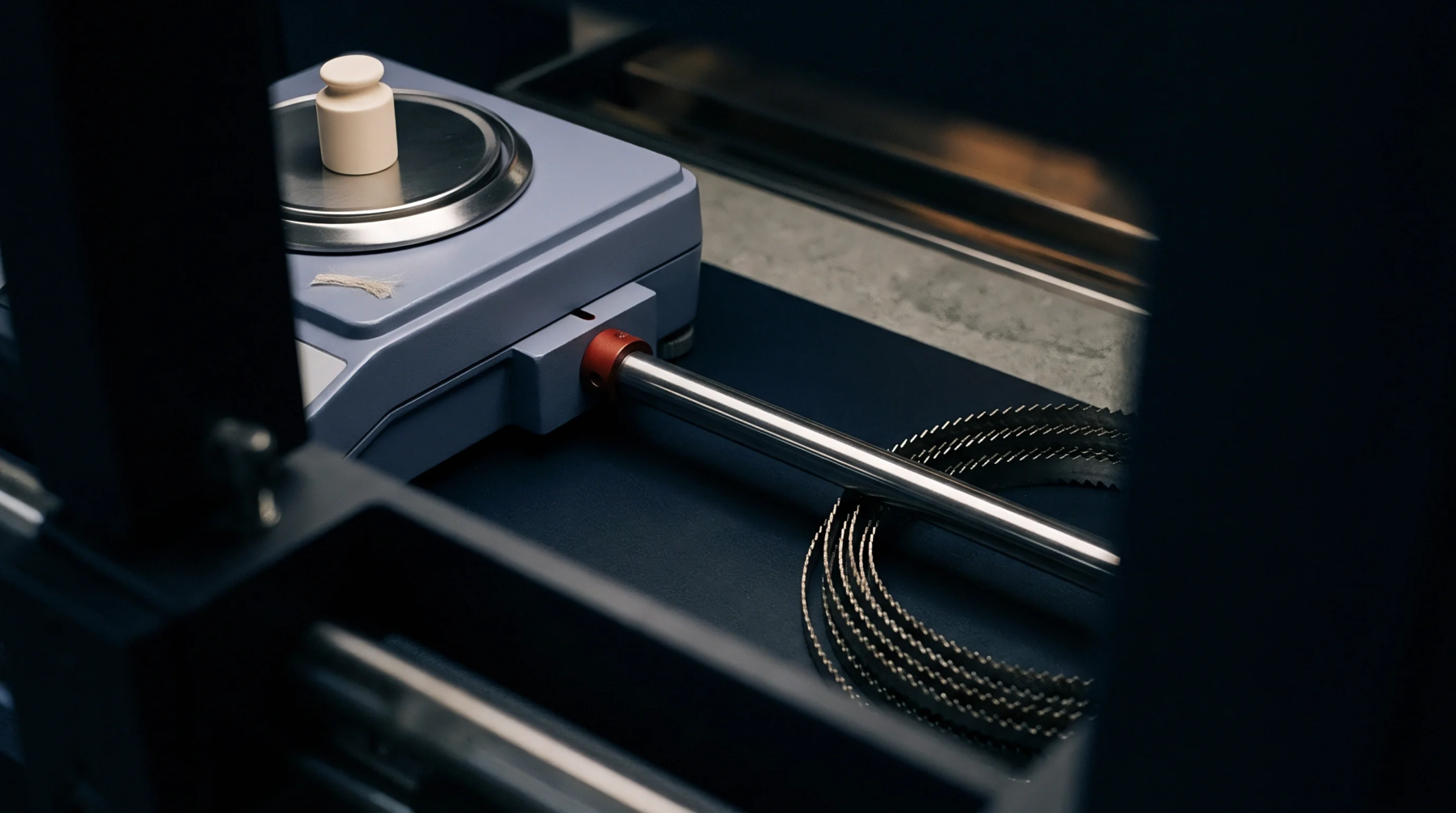
Testing equipment applies calibrated weights or motorized electromagnetic loads to clamp-held yarn ends. Technicians calculate pretension force based on yarn linear density, typically applying zero point five centinewtons per tex with an allowable deviation of zero point one centinewtons for spun bast yarns. The specimen rests horizontally in a twist counter or crimp tester clamp before the pretension device engages.
As the yarn straightens under this load, dial indicators or digital displacement sensors record the linear distance between gripping jaws. Excessive pretension elongates the low-twist flax matrix, introducing testing error into take-up calculations.
Standard Verification
Textile measurement standards mandate defined pretension parameters for linear density and yarn crimp determination. Laboratory testing under GB/T 29255 requires documented straightening pretension records to validate fabric take-up and contraction claims. Mill inspection labs verify load cell calibration on twist counters using certified analytical test weights.
When foreign linen buyers dispute delivered fabric pick counts or yarn weights, third-party laboratories verify that straightening pretension matched standard specifications. Straightening pretension ensures repeatability across textile structural tests.