Determining Customs Origin Rules for Woven Flax Textiles
Customs origin for woven flax textiles is determined by the country of loom formation under heading 5309, regardless of agricultural fiber source.


Transformation
Non-preferential origin determinations for flax textiles turn on the exact processing step that alters the raw plant fiber into an internationally traded commodity. Customs authorities classify raw, retted, and scutched flax under Harmonized System heading 5301. Spinning that fiber into single or multiple yarns shifts the classification into heading 5306, while interlacing those yarns into raw or finished cloth moves the product into heading 5309.
The country where this final heading shift occurs determines the non-preferential country of origin under United States and European Union customs statutes. If yarn spun in Jiangsu interlaces on local rapier equipment, origin remains Chinese regardless of where the agricultural flax grew.
United States Customs and Border Protection applies the substantial change principle codified in 19 CFR Part 102. Under these tariff-shift rules, goods of heading 5309 originate in the country where textile formation took place. A change from heading 5306 yarn to heading 5309 cloth satisfies the requirement: spinning European scutched flax into yarn in a Chinese facility confers Chinese origin on the yarn, and weaving that yarn on local looms cements Chinese origin on the fabric.
When an importer routes that fabric through a cutting facility in Vietnam, the garment retains Chinese origin unless subsequent assembly creates a new commercial entity under destination market rules.
A processor who alters surface appearance without shifting the mechanical structure retains the origin of the base yarn.
In wet spinning, an extraction yield of 58 percent dry flax fiber to line yarn rests on 2021 French ARVALIS scutched dew-retted straw trials. Excessive shive contamination or dew retting beyond twenty-eight days degrades the cellulose bundles, dropping recovery below 52 percent and distorting the raw material mass-balance calculations that border investigators examine during origin audits.
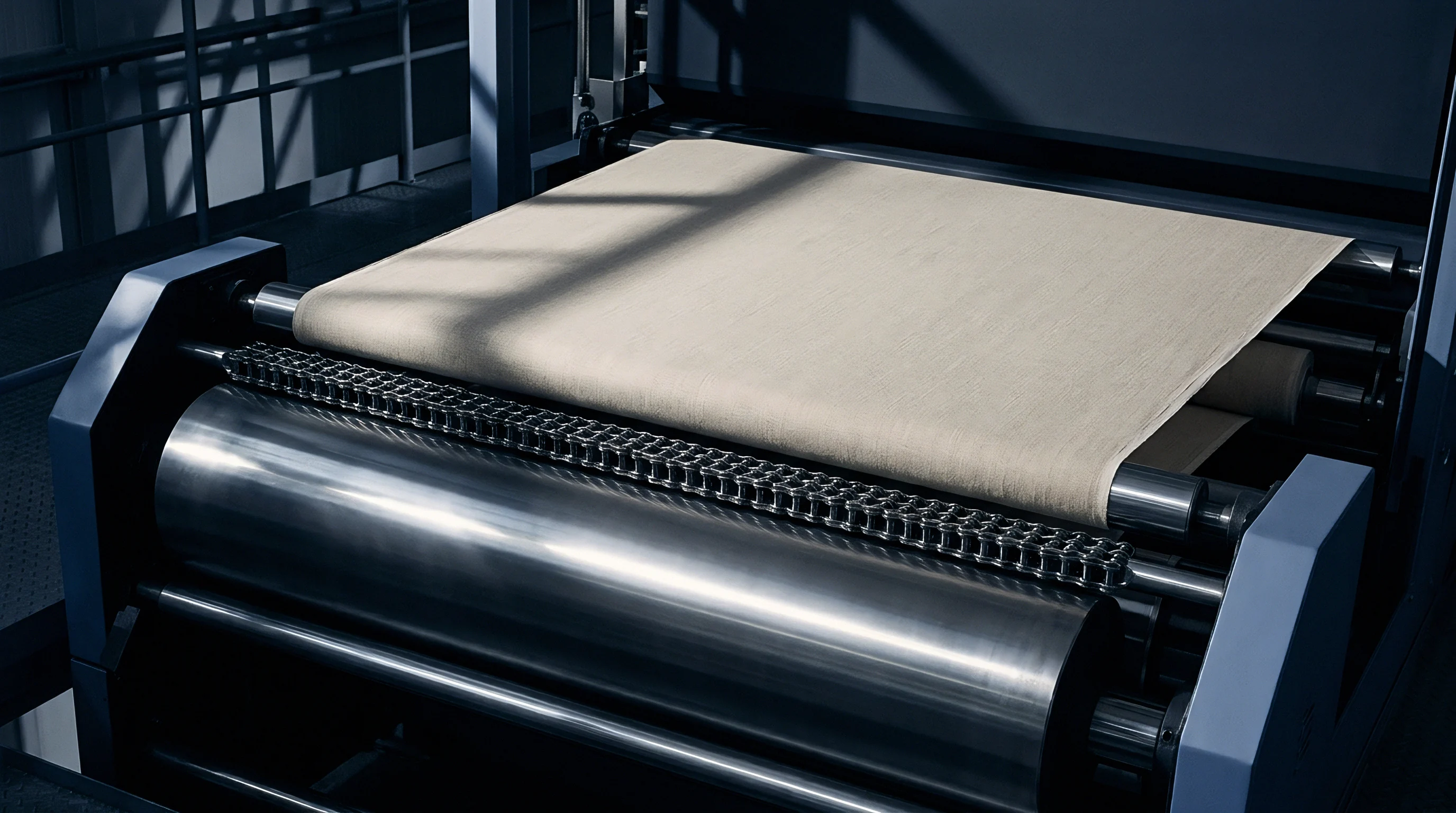
Tariff Heading Shifts under Non Preferential Rules
Under United States Customs and Border Protection regulations outlined in 19 CFR Part 102, customs officers assign origin through strict tariff classification movements. These rules prevent importers from claiming European origin based solely on fiber growth. The conversion of unspun flax tow into yarn represents one change, and the subsequent mechanical formation into linen cloth represents an independent tariff transformation.
- Classification Under Heading 5301 covers raw, retted, or scutched flax fiber arriving from agricultural cooperatives, establishing the botanical baseline for all subsequent processing stages.
- Tariff Shift To Heading 5306 marks the wet-spinning operation where drawn slivers become twisted yarn, moving the product into an intermediate industrial commodity.
- Transformation To Heading 5309 occurs on the loom floor where longitudinal warp threads interlace with transverse weft picks, conferring final non-preferential origin under standard customs rulings.
- Conversion To Chapter 62 Or 63 takes place in cut-and-sew workshops where finished cloth becomes commercial garments or household linen articles, determining apparel labeling status.
This progression through customs chapters shows that each stage creates a separate tariff classification. Missing mill records at any juncture invalidate the declared progression.

Substantial Operations and Added Value Thresholds
European Union Union Customs Code Delegated Regulation 2015/2446 Annex 22-01 dictates origin conferral through detailed processing checklists. Non-preferential origin for woven linen textiles classified within heading 5309 requires either a change of tariff heading or specific textile operations. Interlacing accompanied by printing or dyeing establishes origin when these finishing processes represent the primary commercial value of the finished bolt.
Simple bleaching or scouring never qualifies as a substantial processing stage.
| Jurisdiction | Governing Statute | Yarn-To-Cloth Rule | Finishing Conferral | Agricultural Fiber Weight |
|---|---|---|---|---|
| United States | 19 CFR Part 102 | Confers Origin | Excludes Finishing Alone | Zero Influence On Origin |
| European Union | UCC Annex 22-01 | Confers Origin | Printing With Prep Operations | Zero Influence On Origin |
| United Kingdom | Customs Regulations 2020 | Confers Origin | Dyeing With Two Prep Operations | Zero Influence On Origin |
| Canada | Customs Tariff Section 16 | Confers Origin | Requires Full Loom Processing | Zero Influence On Origin |
Importers who conflate agricultural provenance with customs origin incur heavy liabilities. Labeling a shirt as Made in France because the flax straw sprouted in Normandy violates trade regulations when spinning and mechanical textile formation occurred in Zhejiang. The Federal Trade Commission and national customs authorities assess provenance claims against the geographic site of physical manufacturing.


Reed
Mechanical loom operations convert spun flax yarn into structured textile webs under tension. The reed controls pick density, beating the transverse weft yarn into the shed formed by the longitudinal warp yarns. This mechanical interlacing constitutes the decisive non-preferential transformation point for customs bodies across the globe.
Greige linen emerging from the loom carries the definitive country of origin for tariff classification under heading 5309.
Bale tags and shipping containers arriving at a Chinese mill from European ports lose their legal identity once the flax slivers enter the gill box and draw frame. Even when a spinning mill tracks lot numbers through wet-spinning basins, customs authorities treat the resulting yarn as a product of China. Sourcing managers frequently pay a cash surcharge of 1.20 to 1.80 US dollars per kilogram for European Flax certified fiber, believing this certificate protects European origin declarations on customs entries.
The certificate establishes agricultural chain of custody, but it confers zero legal European customs origin on cloth interlaced outside the European Union.
Raw flax straw retains agricultural classification while interlaced greige cloth carries the definitive country of manufacture.
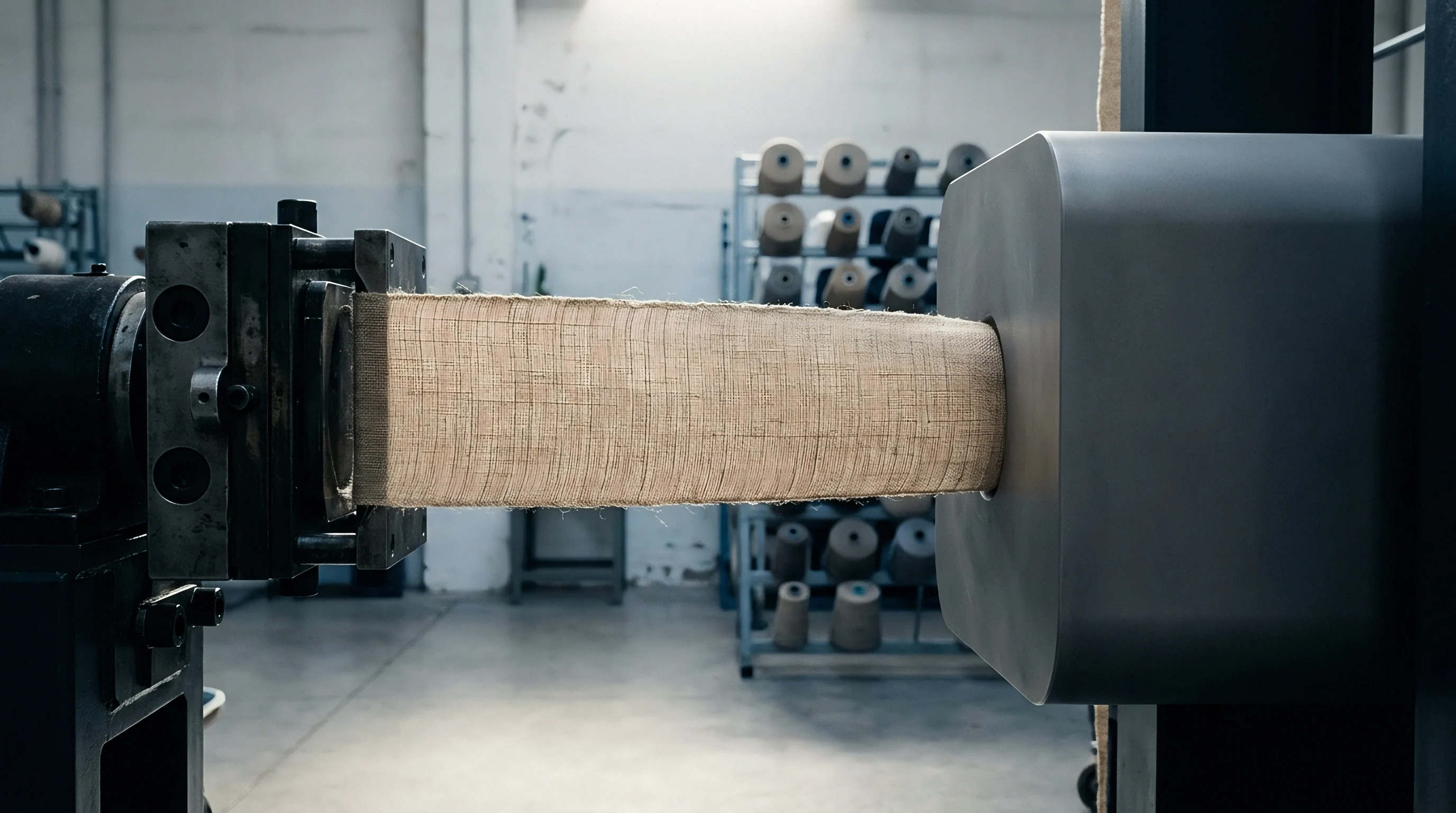
Loom Floor Execution and Fiber Lineage
Chinese mills frequently spin wet-spun flax yarns from imported French or Belgian dew-retted scutched tow. The spinning frames in Heilongjiang and Jiangsu operate at high humidity, drawing long-line flax through water troughs heated to 45 degrees Celsius to soften natural pectin before ring spinning. Once wound onto cones, the yarn passes to beam warping machines where thousands of individual ends are tensioned onto loom beams.
Inspection at the roll rack requires examining loom-state selvedge markings. A legitimate European origin claim demands that the warping, shedding, picking, and beat-up cycles take place within a registered European mill. An auditor confirms this by inspecting loom-shed production logs, tracking shift records, machine operating hours, and beam replacement tickets against total square meters billed on the commercial invoice.
If the square meters invoiced exceed the machine capacity of the European facility during the production window, the yarn traveled abroad for contract manufacture.

Is Finishing Sufficient for Origin Conferral?
Dyeing, scouring, and calendering modify the surface and handle of unbleached grey flax cloth without altering its country of origin. Under European Union UCC Annex 22-01 rules, finishing operations confer non-preferential origin only when dyeing or printing accompanies at least two substantial preparatory or finishing operations, such as bleaching, mercerizing, thermo-fixing, or decatizing, and the value of non-originating unadorned cloth does not exceed 50 percent of the ex-works price of the finished item. Customs auditors scrutinize finishing claims vigorously.
United States border personnel reject all finishing-based origin claims on heading 5309 goods, upholding the principle that loom interlacing fixes origin permanently.
A mill running European-imported greige linen through Chinese dyeing and softening ranges cannot declare Chinese origin to United States customs to bypass European trade duties, nor can an importer run Chinese greige cloth through Italian finishing houses to claim Italian customs origin upon arrival in New York. Customs authorities trace the greige cloth back to its loom shed.


Ledger
Tracing flax fiber through commercial hands demands documentary continuity across every boundary of ownership. The paper file begins with agricultural weighbridge tickets and ends with customs entry documentation. A break at any intermediate link converts certified linen into commodity cloth of uncertain heritage.
The certified chain of custody requires dual reconciliation: transactional paperwork matching volume mass balance, and lot traceability linking physical cones to loom beams. European Flax certificates verify agricultural origin in France, Belgium, or the Netherlands, issued by independent certification bodies such as Bureau Veritas. Masters of Linen goes further, requiring that spinning, loom production, and wet processing occur exclusively within European Union member states.
When a buyer contracts for Masters of Linen goods, the production ledger cannot leave Europe. When contracting for European Flax, the fiber may travel to Asian spinning facilities provided those facilities hold valid chain of custody scope certificates.
A contract warranty lacking mandatory transaction certificate verification leaves the buyer fully exposed to border origin seizures.
Dock inspections reveal mass-balance tolerance spreads between declared bale moisture regain and weighbridge receipts. Commercial trade terms follow ISO 6741 standards, allowing a standard moisture regain allowance of 12.0 percent for flax yarns. Desiccated containers arriving after forty days at sea often register fiber regain levels below 8.5 percent, producing a physical weight variance of up to 3.5 percent against packing lists.
Mill weighbridge data must adjust for this physical phenomenon, or internal mass-balance ledgers will display phantom raw fiber losses that raise red flags during customs origin inquiries.

Certificate Scopes and Certification Schemes
The European Flax standard verifies Western European origin for scutched flax fiber, leaving subsequent spinning and processing to independent chain of custody verifications. A scope certificate confirms that an enterprise possesses systems to process certified material, valid for twelve months. It certifies zero physical material by itself.
Each commercial shipment requires an accompanying transaction certificate identifying specific lots, weights, and transport document numbers.
Pharmaceutical active ingredient batch tracing mirrors this exact documentation protocol. In both sectors, mixing uncertified material into a certified processing line voids the legal status of the entire production run. Sourcing personnel must inspect every transaction certificate for the following specific data entries:
- Issuing Body Registration confirms the accredited third-party auditing firm authorized by the certification body to issue transaction documentation.
- Seller Operational Scope demonstrates that the vendor holds current valid certification covering the precise manufacturing stage executed for the shipment.
- Net Certified Fiber Mass records the exact weight in kilograms of qualified flax fiber transferred, net of core tubes and packaging.
- Previous Transaction Reference connects the immediate invoice directly to the input material purchased from the antecedent processor in the supply chain.
- Physical Delivery Document links the bill of lading, container seal numbers, and commercial carrier records directly to the certified goods.
The presence of these five verification points confirms transaction validity.

Mass Balance Audits and Weighbridge Data
Physical reconciliation matches incoming raw flax straw against outgoing yarn parcels. In a typical dry scutching operation, 100 tonnes of dew-retted flax straw yields approximately 16 tonnes of long-line flax, 10 tonnes of scutched tow, 35 tonnes of shives, and 39 tonnes of moisture loss and field dirt. An auditor checks mill ledgers for these exact output ratios.
A facility reporting a 30 percent yield of long-line flax from standard European straw indicates fraudulent volume inflation, likely achieved by blending uncertified domestic fiber into certified processing runs.
At the spinning level, converting long-line flax into Nm 26 wet-spun yarn produces hard yarn waste, fly waste, and tow re-combings. Documented waste ratios range between 18 and 24 percent depending on spinning efficiency and flyer speed. If a Chinese spinning facility purchases 50 metric tonnes of European Flax scutched line and delivers 48 metric tonnes of certified finished yarn to a partner loom shed, the ledger defies mechanical reality and invites immediate rejection.
The insertion of contract clause 14B shifts all economic loss from customs detention directly to the exporter when transaction certificates show mismatched scutching dates.


Freight
Shipping containers arriving at destination ports face immediate customs scrutiny under Harmonized System Chapter 53. Entry specialists examine the commercial invoice, packing list, bill of lading, and country-of-origin declaration to determine applicable duties. Flax textiles classified under HS 5309 attract standard most-favored-nation duties, anti-dumping measures, or retaliatory tariffs depending on the declared country of production.
A buyer importing unadorned flax cloth into the United States under HS subheading 5309.11.00 pays a basic general duty rate of 0.8 percent ad valorem if the goods originate in Europe. If the non-preferential origin of that same cloth is determined to be China because the yarn was interlaced on Chinese looms, the importer pays the 0.8 percent column one rate plus an additional 25 percent retaliatory duty under Section 301 of the Trade Act of 1974. A clerical error in determining customs origin inflates the import tax on a single 40-foot container of linen cloth by over 25,000 US dollars.
A container of linen cloth entering under misdeclared origin incurs retroactive duty adjustments plus mandatory commercial carrier demurrage fees.
Freight insurance broker loading factors for unverified country-of-origin audits fluctuate between 3.5 and 5.0 percent of landed cargo value. Underwriters treat this spread as discretionary rather than fixed, applying differing actuarial weights across carrier agreements. Prudent buyers escrow equivalent capital reserves to absorb sudden bond adjustments when customs inspectors issue detention orders at the quay.

Preferential Trade Rules and Yarn Forward Provisions
Free trade agreements impose distinct constraints that diverge from non-preferential customs standards. Under preferential rules, tariff exemptions depend on strict regional value content or origin transformation rules, commonly known as yarn-forward or fabric-forward provisions. The European Union-Vietnam Free Trade Agreement permits preferential duty-free entry into Europe for apparel only if the underlying cloth was formed and finished in Vietnam or the European Union under specific cumulation rules.
An importer shipping French flax fiber to China for spinning, sending that yarn to Vietnam for interlacing, and exporting the finished cloth to Rotterdam cannot claim preferential origin under the EVFTA. The yarn stage breaks the preferential chain. Preferential determinations require compliance across every processing tier.
Customs officers reject preferential claims that fail the following common operational criteria:
- Yarn Forward Compliance requires that spinning and subsequent interlacing take place entirely within the designated free trade signatory territory.
- Direct Transport Rules disqualify shipments that transit third countries without formal customs surveillance or bonded warehouse control.
- Non Alteration Provisions prohibit intermediate repacking, finishing, or cutting operations outside member free trade zones.
- Cumulation Proof Files demand cross-border supplier declarations confirming certified regional inputs before preferential tariff preferences apply.
The forwarder must retain the complete evidentiary package.
Are Origin Determinations Altered by Bleaching?
Chemical bleaching agents lighten the natural tan color of flax pectin without moving the textile into a new four-digit heading. Bleached, semi-bleached, or piece-dyed linen cloth remains classified within heading 5309, sub-divided only at the six-digit and eight-digit statistical level, such as HS 5309.19. Under United States rules, an operation that fails to trigger a four-digit heading shift does not confer non-preferential origin.
Bleaching grey linen cloth in Italy does not transform Chinese-loomed cloth into Italian-origin merchandise for United States customs entry.
European Union non-preferential rules set out in UCC Annex 22-01 present a narrow exception. If unbleached linen cloth undergoes bleaching accompanied by dying or printing, alongside at least two preparatory operations like desizing, tentering, and scouring, origin shifts to the finishing country, provided the added value exceeds 50 percent of the finished product value. Proving this added-value threshold requires certified cost accountant records, chemical expenditure logs, and energy consumption statements.
European customs auditors routinely reject finishing-based origin claims when the cost of European finishing labor fails to outweigh the base cost of imported Asian greige goods.

Landed Cost Modeling across Three Sourcing Routes
Tariff exposure directly dictates the net landed expenditure per linear meter of flax cloth. Consider a commercial procurement model evaluating 10,000 linear meters of 140 grams per square meter plain flax cloth measuring 150 centimeters in width, requiring approximately 2,100 kilograms of finished line yarn. The comparative economics demonstrate the financial impact of customs origin rules across three real-world production configurations.
| Production Route | Fiber Source | Spinning And Loom Site | Ex-Works Cost | Duty Rate | Landed Cost |
|---|---|---|---|---|---|
| Route A: Fully European | France (Certified) | Northern France | $8.50 / m | 0.8% (MFN) | $9.22 / m |
| Route B: Hybrid Asia | France (Certified) | Jiangsu, China | $4.80 / m | 25.8% (MFN+301) | $6.69 / m |
| Route C: Regional Assembly | European Yarn | Guangdong Loom / VN Finish | $5.40 / m | 25.8% (China Origin) | $7.44 / m |
| Assumptions: Ex-works costs reflect average 2023 mill quotations; freight and insurance fixed at $0.65 per meter; US Section 301 tariffs applied to Chinese non-preferential origin goods. | |||||
Route B presents the lowest base ex-works price, though Section 301 retaliatory duties eliminate much of the initial cost advantage. Route C fails to escape Chinese origin because interlacing occurred in Guangdong, triggering full Section 301 exposure upon arrival in the United States despite downstream Vietnamese finishing and pushing duties past twenty percent. A misdeclared tariff classification triggers retroactive duties, cargo detention at the quay, and statutory penalty assessments that exceed the commercial margin of the goods.


Penalty
Customs authorities actively inspect shipping documentation to identify false origin declarations. Border officials examine country-of-origin marking on bolt wrappers, inner cores, and commercial shipping cartons. Discrepancies between the shipping manifest and commercial invoices trigger automatic entry hold notices at the mill’s expense.
Non-preferential origin errors generate civil enforcement actions under 19 U.S.C. Section 1592 in the United States, or under national customs codes across European member states. Fines range from domestic forfeiture values to multiple times the lost revenue depending on whether customs identifies negligence, gross negligence, or intentional fraud. Importers found to have falsely labeled Asian-loomed linen as European based solely on raw fiber inputs face mandatory audits extending back five shipping years.
Customs holds all pending consignments during the investigation.

Enforcement Mechanisms under Customs Border Protection
United States port directors issue formal CF 28 requests for information when origin paperwork appears deficient. An importer receiving a CF 28 must submit complete production documentation within thirty calendar days. This submission demands mill floor records, fiber procurement invoices, spinning logs, and loom allocation charts confirming where the mechanical cloth formation occurred.
Failure to provide verified production logs results in the issuance of a CF 29 Notice of Action, reclassifying the goods and assessing retroactive duties. If customs suspects deliberate transshipment, such as moving Chinese greige linen through Malaysia or Singapore to obtain false certificates of origin, Homeland Security Investigations initiates criminal proceedings. Penalties extend to commercial debarment, permanent loss of import privileges, and statutory seizures of non-compliant inventory.

Commercial Indemnification and Buyer Recourse
Procurement purchase contracts assign financial damages when imported goods face customs detention or seizure. Sourcing teams protect capital by drafting strict origin warranties that hold the selling mill financially liable for tariff reclassifications arising from inaccurate origin declarations. A standard purchase agreement must define the required non-preferential origin explicitly, barring the mill from subcontracting loom operations across regional borders without prior authorization.
Commercial contracts stipulate that if customs authorities reject the declared country of origin, the vendor forfeits all unpaid balances and reimburses the buyer for legal expenses, demurrage fees, and tariff penalties. When buying from Asian mills claiming European Flax status, buyers require the mill to deposit proof dossiers, including valid transaction certificates and spinning run numbers, with an escrow agent prior to final letter of credit settlement. Border authorities have not yet decided whether digital product passports will replace physical mill audit dossiers or merely add another conflicting verification layer at the port of entry.