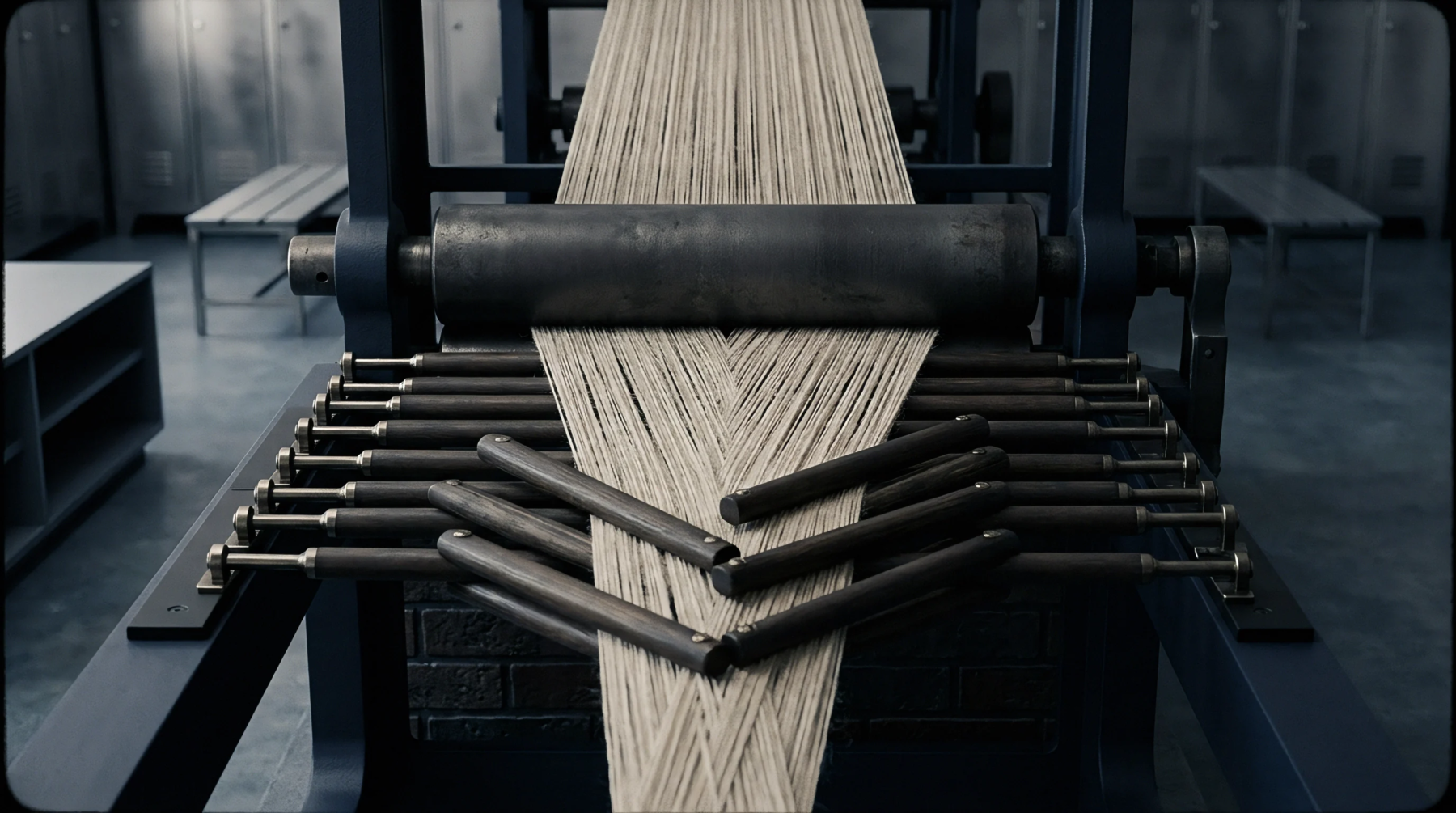
Mechanical Linkage
Industrial weaving systems rely on high-tensile connection lines to transfer motion from the shedding mechanism to individual warp threads. A harness cord forms the physical bridge between the jacquard hooks and the heddles that lift the flax yarns in a high-speed linen loom. Millions of cycles accumulate during the production of fine linen fabrics, demanding a construction that resists elongation under load.
Standardized diameters for these components ensure uniform resistance across the loom width.
Friction Exposure
Friction during high-speed operation generates localized heat and wear along the guide board. Because each harness cord rubs continuously against the comber board, protective coatings are applied to prevent fraying.
Tension Resistance
Dynamic load fluctuations occur with every pick as the heddles return to their resting position. If the harness cord stretches unevenly, the shed opening becomes irregular, causing the insertion mechanism to snag the linen warp yarns. This structural change results in weaving defects or line stoppages that lower the fabric yield from the weaving machine.
Mill operators verify the tensile stability of the cord under simulated operating temperatures before equipping a loom. Over time, cumulative creep in the cord material leads to misalignment of the shed, requiring manual adjustment or premature replacement of the entire harness assembly. In high-efficiency mills, monitoring the tension profile prevents these sudden failures.