Quantifying Loom Downtime Cost Recovery from Friction Defect Induced Warp Breaks
Excess warp breaks from friction defects add unabsorbed loom downtime costs recoverable through measured stop logging and laboratory coefficient of friction proof.
Friction
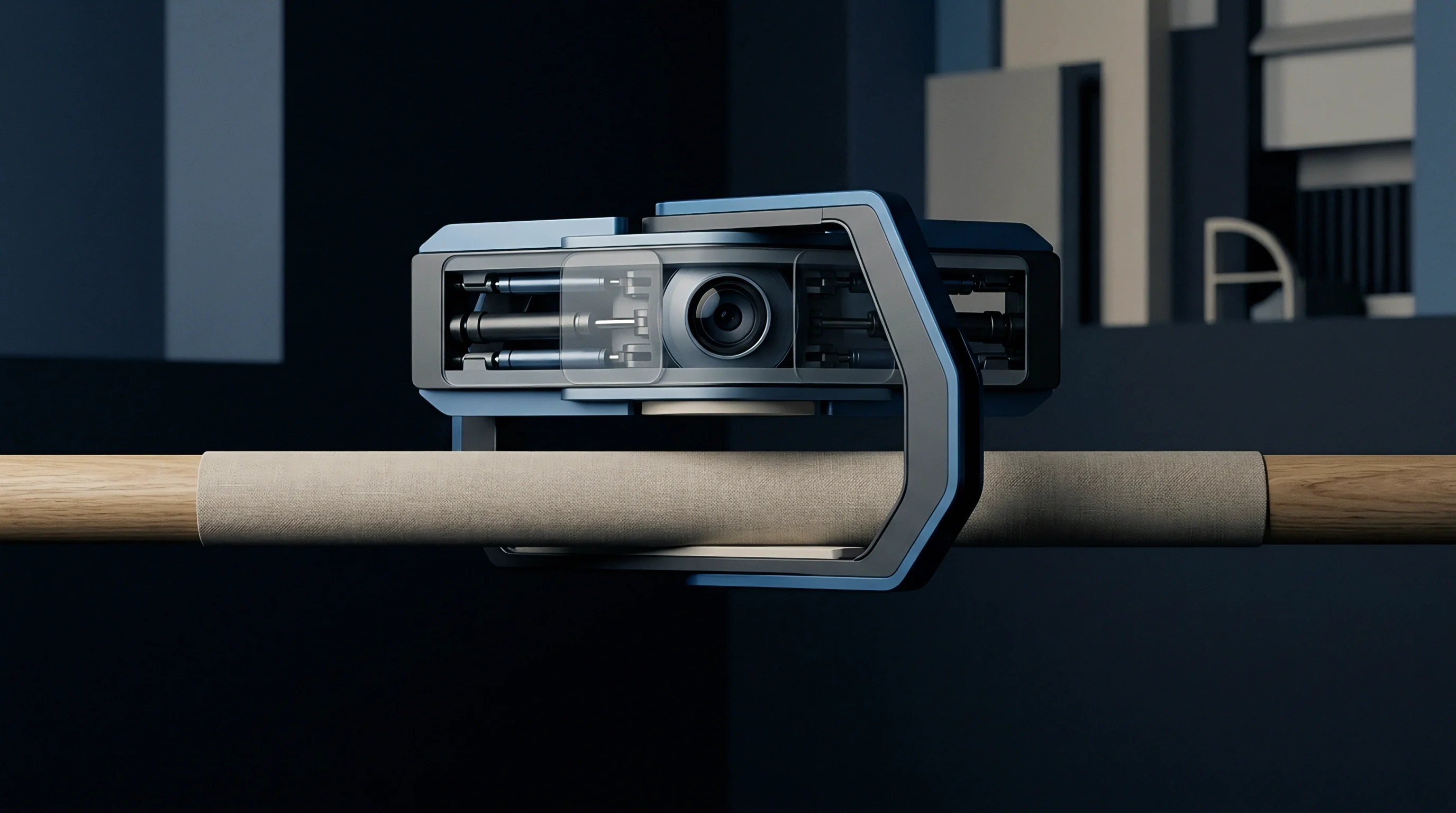
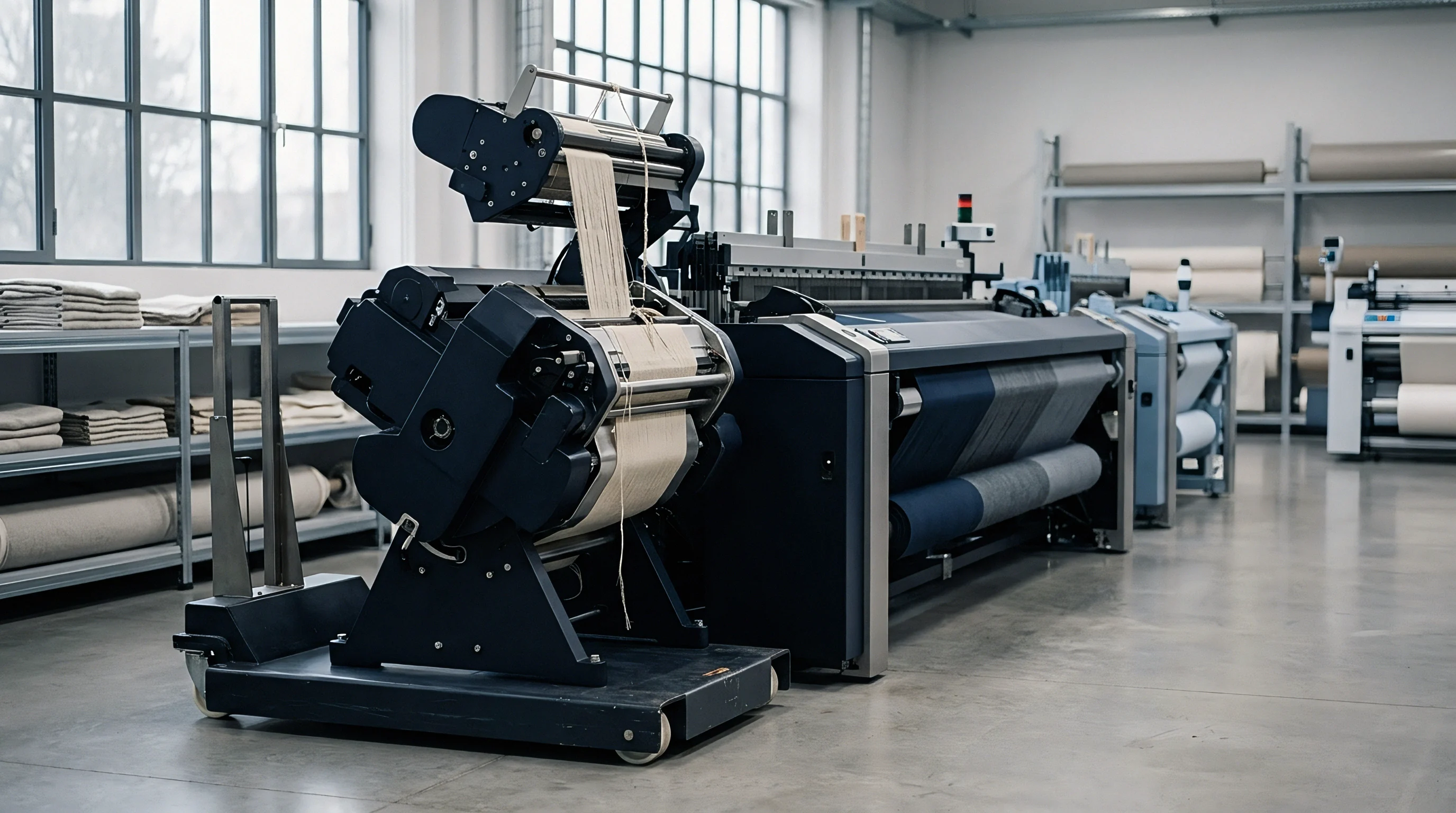
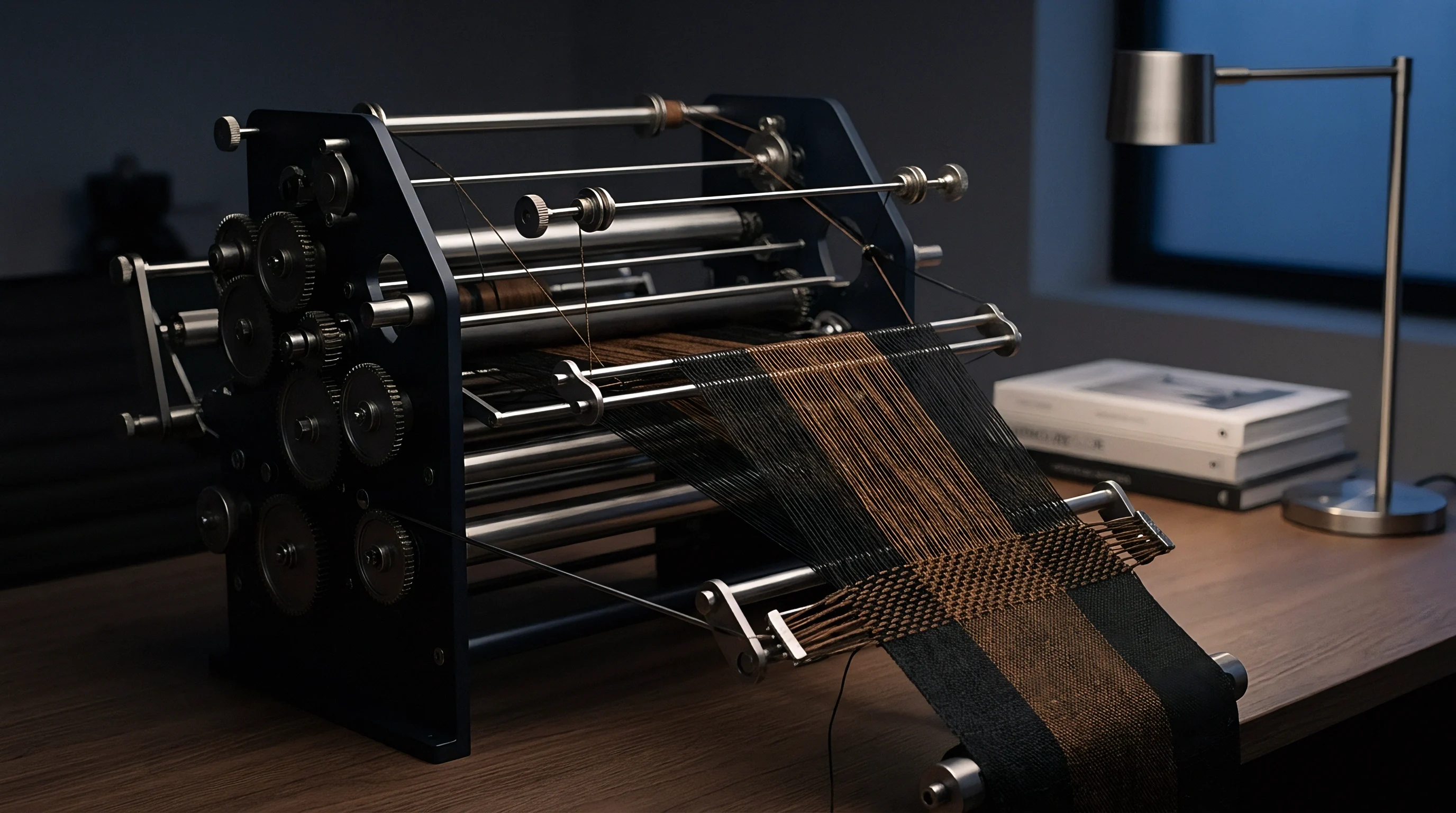
During shedding, warp threads endure continuous abrasive contact against drop wires, heald eyes, and the reed. On modern rapier and air-jet looms running past twelve hundred picks per minute, yarns accumulate thousands of friction cycles every minute. When yarn hairiness rises or the size film fractures, friction coefficients jump, cutting localized micro-abrasions into the yarn body.
High kinetic friction between adjacent ends then triggers end cling, where protruding fibers interlock as the shed alternates between open and closed positions. The resulting obstruction prevents clean separation, causing false warp stops or outright breaks as the insertion element drives through an incompletely formed shed.
Persistent boundary friction across the warp sheet eventually forces loom stoppages and beam replacement.
Yarn tribology across the shed resolves into three contact zones: yarn-on-metal at drop wires and heald eyes, yarn-on-reed friction during beat-up, and yarn-on-yarn contact throughout the dense warp sheet. Each zone subjects the protective size coat to repeated shear stress. If the sizing lacks adequate lubricant or fails to anchor into the fiber core, the outer film shears off.
The bare filaments then grind against steel guides, pulling out loose fibers and spinning up micro-snarls that choke the heald eyes.
Mechanical Stress Points across the Shed
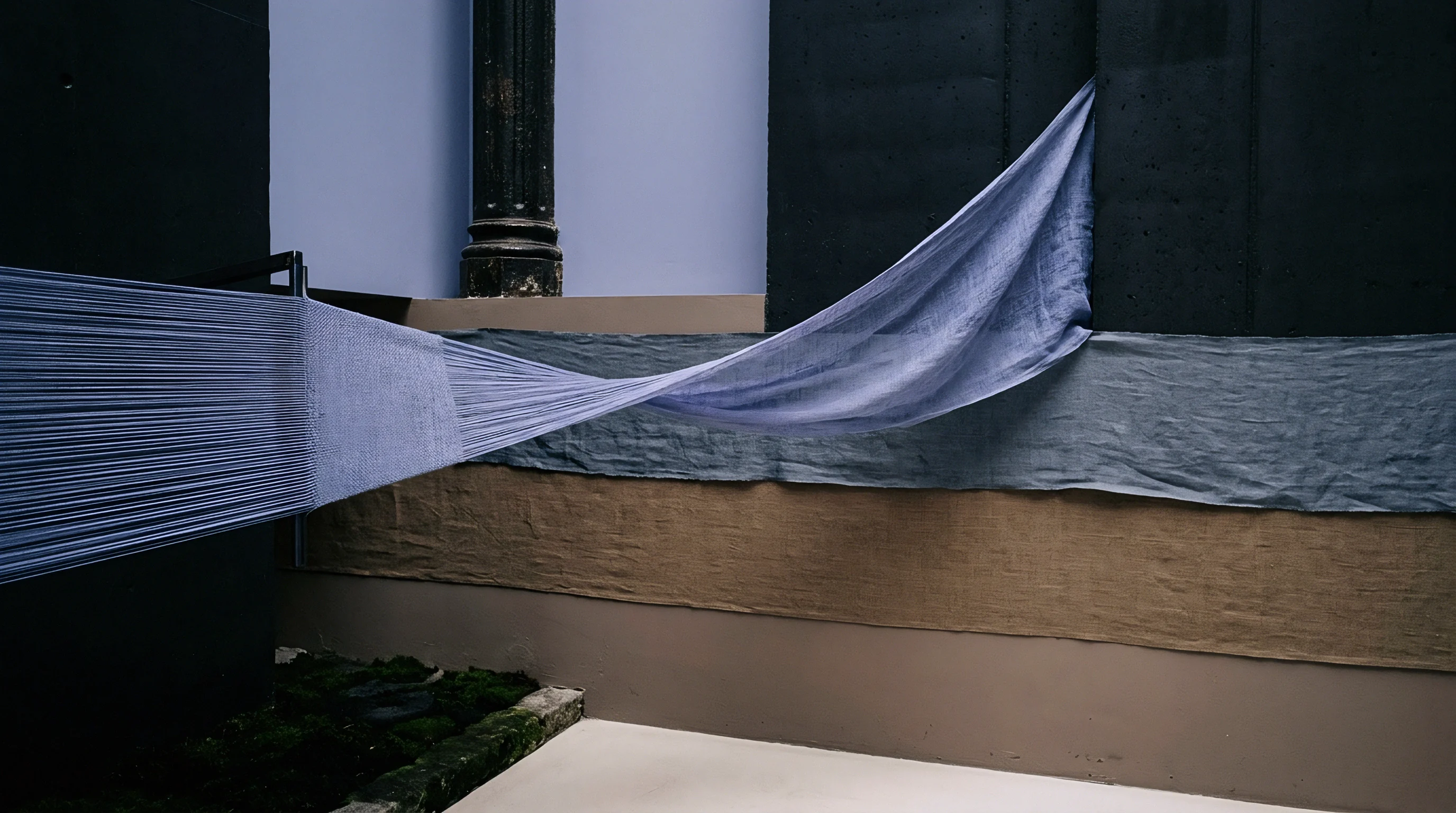
Tension peaks at shed opening, when the yarn path deflects through steep angles. Drop wires rest on the warp ends under constant vertical load, generating fixed drag as the warp advances. Meanwhile, the harness motion drives yarn back and forth through the steel heald eyes at high speed.
This concentrated contact builds localized friction and heat over a narrow yarn segment, stripping un-sized fiber bundles ~ a condition aggravated in dense setts where adjacent threads crowd one another.
Yarn hairiness indices above four S3 units elevate yarn-to-yarn cling within the shed harness.
Continuous boundary friction degrades warp tensile strength well before the yarn reaches the cloth fell. In ring-spun linen, slubs and diameter variations create irregular friction spikes across the width of the beam. When one of these rough sections encounters the shock load of beat-up, yarn elongation limits are reached almost immediately.
Abrasion Kinetics and Sizing Film Degradation
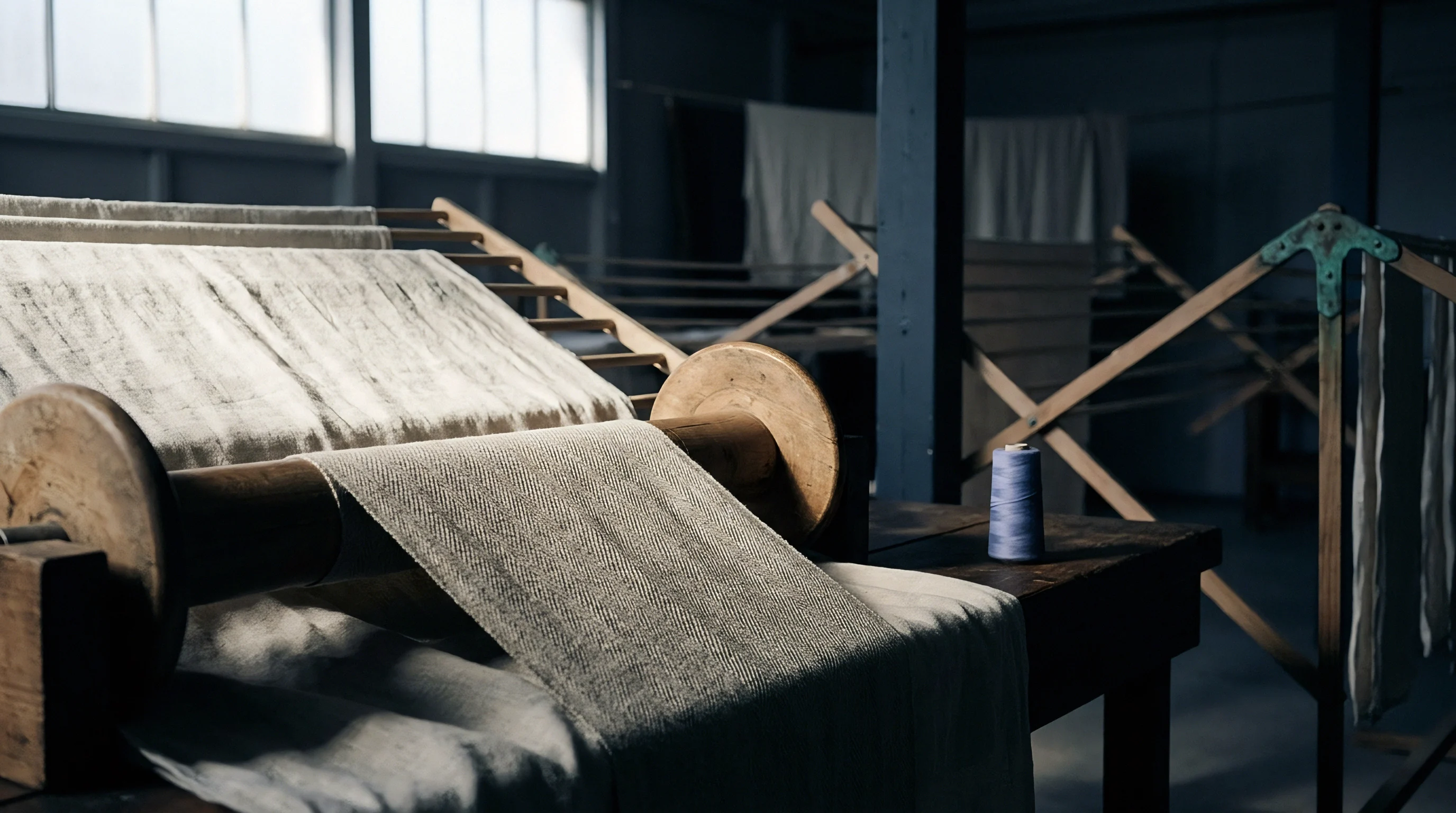
Sizing polymers degrade through cyclic rubbing against guide surfaces. How fast that protective film breaks down depends on its adhesion to the cellulosic fiber core, whether formulated from starch or polyvinyl alcohol. Formulations mixed with inadequate wax or cooked off-viscosity produce brittle coatings that shed micro-dust around the drop wires and harnesses.
Over time, that accumulated powder fouls drop-wire pivots and turns smooth sliding contacts into abrasive, particle-laden pinch points.
- Yarn Hairiness Interlock occurs when protruding fibers from adjacent warp ends entangle, forming physical bridges across the open shed that obstruct pick insertion.
- Size Film Desquamation develops when brittle sizing coats flake off under cyclic bending, exposing raw un-sized yarn cores to direct metal friction.
- Heald Eye Chafing results from high surface roughness on steel harness eyes, stripping outer fiber wraps and creating localized weak points.
- Reed Blade Scraping emerges when high warp density forces threads against reed wires during beat-up, inducing lateral shear stresses that sever outer filaments.
Operating at higher shed speeds compounds each of these mechanical stresses.
Disputes over elevated break rates typically pit machine tension settings against yarn surface roughness as the primary cause.
Stoppage
Automated drop-wire sensors tied into central Monitoring and Control Systems record every shed interruption. When a friction-weakened warp end snaps, the drop wire drops onto the contact rail, closing an electrical circuit. The loom controller detects the fault and triggers electromagnetic brakes, stopping rotation within a single pick to prevent structural fabric flaws.
Downtime starts the moment the machine stops and runs until the weaver pieces the end and restarts the drive.
Unplanned machine stops steadily erode operating margins.
Every stoppage absorbs time across several distinct steps: mechanical braking, operator response, finding the broken end, knotting or drawing through the drop wire and heald eye, re-denting the reed, and inching the loom back into registration. Mean Time To Repair depends heavily on aisle width, loom assignment ratios, and yarn characteristics. Fine linen yarns demand careful knotting to pass tight heald eyes, naturally taking longer to mend than coarse synthetic filaments.
Automated Sensor Logging and Downtime Metrics
Central monitoring units log the timestamp, machine speed, and harness location for every stop, converting idle time directly into uninserted picks. Weaving efficiency targets normally build in an expected baseline break rate based on yarn count, weave pattern, and running speed. Friction breaks driven by defective yarn quickly push stop counts past those assumptions, depressing shed efficiency metrics and backing up downstream finishing schedules.
Standard weaving agreements stipulate a maximum allowance of two warp stops per hundred thousand picks before downtime penalties apply.
Frequent stops often force technicians to drop running speeds to prevent cascade breaks across adjacent ends. When break rates stay elevated, supervisors must assign fewer machines to each weaver, driving up direct labor costs per linear metre.
Weaver Allocation and Repair Time Variance
Weaver efficiency shifts with aisle layout, patrol routes, and individual skill. When multiple looms in a set stop at once from recurring friction faults, queue times multiply. Looms remain stopped simply waiting for operator attention, transforming short physical repairs into protracted stretches of unabsorbed downtime.
- Automated drop-wire closure signals the loom controller to engage the main brake within fifteen milliseconds.
- The weaver identifies the broken warp end using optical location indicators along the harness frame.
- Manual knotting or piecing connects the broken yarn tail through the correct drop wire, heald eye, and reed dent.
- Loom inching verifies correct shed alignment before restarting production at nominal pick insertion rates.
A stopped loom produces no output while continuing to accrue overhead.
| Loom Technology | Operating Speed (PPM) | Baseline Breaks (per 10^5 picks) | Average Repair Time (seconds) | Lost Picks per Break Event | Hourly Efficiency Impact (%) |
|---|---|---|---|---|---|
| High-Speed Air-Jet | 850 | 1.2 | 45 | 637.5 | 1.06 |
| Flexible Rapier | 600 | 1.5 | 55 | 550.0 | 0.92 |
| Projectile | 420 | 1.8 | 70 | 490.0 | 0.82 |
| Positive Rapier | 380 | 2.0 | 75 | 475.0 | 0.79 |
Unrecorded downtime distorts plant capacity planning, effectively absorbing losses that belong with the yarn vendor.
Computation
Assessing financial loss involves translating lost loom revolutions into unabsorbed fixed overhead and unrealized machine contribution. Standard cost recovery models weigh direct labor, utilities, machinery depreciation, floor space allocation, and target margins against actual running hours. When defective yarn pushes downtime beyond contract thresholds, each lost hour represents unrecoverable capital that cuts straight into gross margin.
Automated monitoring logs maintain an unbroken record of every interruption.
Total recoverable loss combines unabsorbed overhead, surplus labor, and scrap losses from fabric starting marks. A loom’s hourly operating cost accrues at roughly the same rate whether it is weaving at speed or waiting on a dropped warp end. In standard cost accounting, standing machine hours during defect stops sit as unrecoverable variances unless purchase agreements explicitly tie downtime recovery formulas to supplier quality.
Unabsorbed Overhead and Variable Cost Formulas
Recovery calculations start with fixed hourly operating costs: machinery depreciation over its service life, floor space lease allocations, climate control, lighting, central lubrication, and supervisory overhead. To this are added the variable costs of diverted labor ~ operators spending time knotting repeated breaks rather than managing routine patrols ~ along with idle energy draw.
Financial claims rest on four variables: allowable baseline stops, actual recorded stops, net downtime hours, and the standing hourly loom rate. Baseline allowances are set per hundred thousand picks according to yarn grade and fabric construction, with excess stops defined as the gap between measured machine events and that agreed baseline.
Setting the standing loom rate as the total of hourly fixed overhead, direct weaver labor, and expected machine contribution gives the basis for recovery. If yarn defects drive warp stops from an allowable 1.5 to an actual 6.8 per hundred thousand picks on a loom running at 600 picks per minute, the machine logs 3.18 excess stops every operating hour. At an average Mean Time To Repair of 55 seconds, downtime reaches 295.9 seconds per loom hour ~ an efficiency penalty of 8.22 percent.
A sixty-minute cumulative downtime extension on a high-speed air-jet loom generates twenty-eight dollars in unabsorbed fixed overhead at standard shed utility rates.
Applying this loss over a 20,000 metre order of high-density linen illustrates the financial impact. At 24 picks per centimetre, the order requires 48,000,000 picks. At a nominal speed of 600 picks per minute, theoretical running time is 1,333.3 machine hours.
With a standard allowance of 1.5 stops per 10^5 picks, expected interruptions total 720, accounting for 11.0 machine hours of allowable repair downtime.
With friction defects pushing the rate to 6.8 stops per 10^5 picks, recorded stops climb to 3,264, taking up 49.86 hours in repair time. The resulting excess downtime comes to 38.86 loom hours. At a standard standing loom rate of $24.50 per hour, the unabsorbed overhead claim alone stands at $952.07, before adding markdowns for starting marks created during repeated restarts.
How Does Downtime Arithmetic Translate to Debit Notes?
To convert raw downtime into a formal claim, cost accountants filter Monitoring and Control System logs by fault code, separating warp drop-wire events from weft insertion stops. The mill then matches excess downtime hours against specific yarn lot numbers to tie financial losses directly to the offending shipment.
Off-quality fabric woven right after a restart compounds the cost. When high-speed rapier looms stop under full warp tension, the sudden deceleration leaves starting marks and density banding across the pick line. Under ASTM D5430 four-point inspection, these flaws register as major defects.
Downgrading cloth from First Quality to Second Quality generally strips 30 to 50 percent off wholesale value, a loss that weaving mills regularly pass back to the yarn vendor.
| Cost Component | Baseline Allowance Rate | Friction Defect Measured Rate | Financial Impact per Loom Hour (USD) | Net Claim Value per 10,000 Metres (USD) |
|---|---|---|---|---|
| Direct Weaver Labor | $3.20 / hour | $5.80 / hour | $2.60 | $260.00 |
| Fixed Shed Overhead | $12.50 / hour | $12.50 / hour (unabsorbed) | $4.10 | $410.00 |
| Unearned Machine Margin | $8.80 / hour | $0.00 / hour (idle) | $2.89 | $289.00 |
| Greige Starting Mark Markdown | 0.5% lot value | 3.8% lot value | $3.45 | $345.00 |
| Total Cost Allocation | $24.50 / hour rate | Defect Cost Rate | $13.04 | $1,304.00 |
| Assumes 600 PPM rapier loom, 24 picks/cm, 160 cm fabric width, standard standing loom rate of $24.50/hour, baseline break rate of 1.5 stops/10^5 picks versus actual defect rate of 6.8 stops/10^5 picks. | ||||
Consistent yarn quality protects scheduled production shifts from compounding delays.
Attempting to claim total downtime rather than the net excess above contractual baselines guarantees rejection in commercial arbitration.
Diagnostics
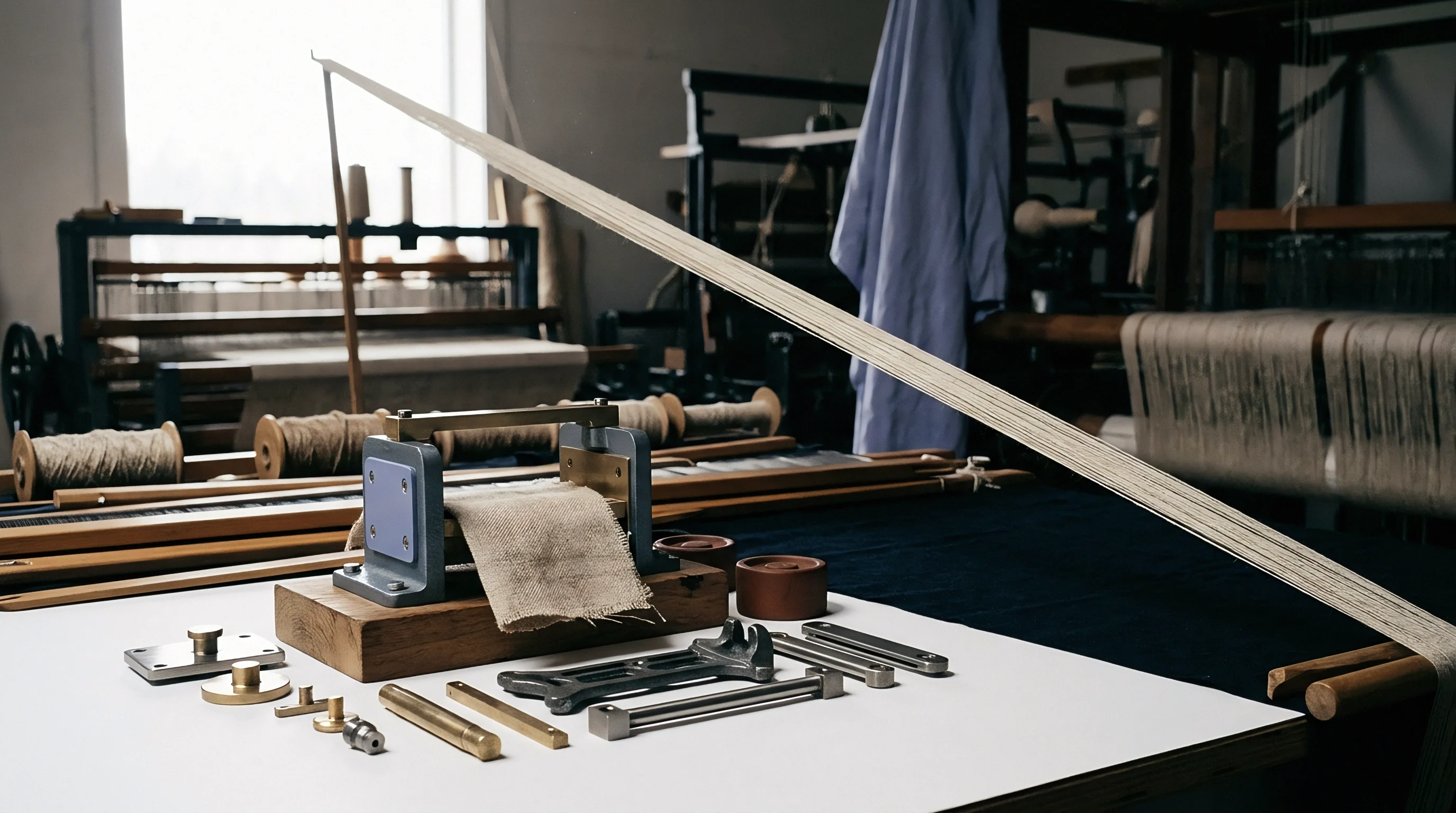
Distinguishing yarn friction issues from mechanical misalignment requires lab testing of both greige yarn packages and size application. When a shed reports sudden spikes in warp breaks, technicians pull samples directly from the creels and warp beams. Physical and tribological testing then isolates whether the problem originates in the spun yarn, the size formulation, or worn loom guides.
Objective test data resolves competing claims between the spinning mill and the weaving shed.
Tribological testing evaluates dynamic friction coefficients under speed and tension conditions matched to the shed. Tests run under ASTM D3108 determine the yarn-to-metal coefficient of friction by pulling yarn over polished chrome pins at fixed wrap angles, while ISO 8295 protocols measure yarn-to-yarn static and dynamic friction. Dynamic friction readings climbing past 0.35 COF correlate closely with end cling and high drop-wire stop frequencies.
Laboratory Friction and Hairiness Profiling
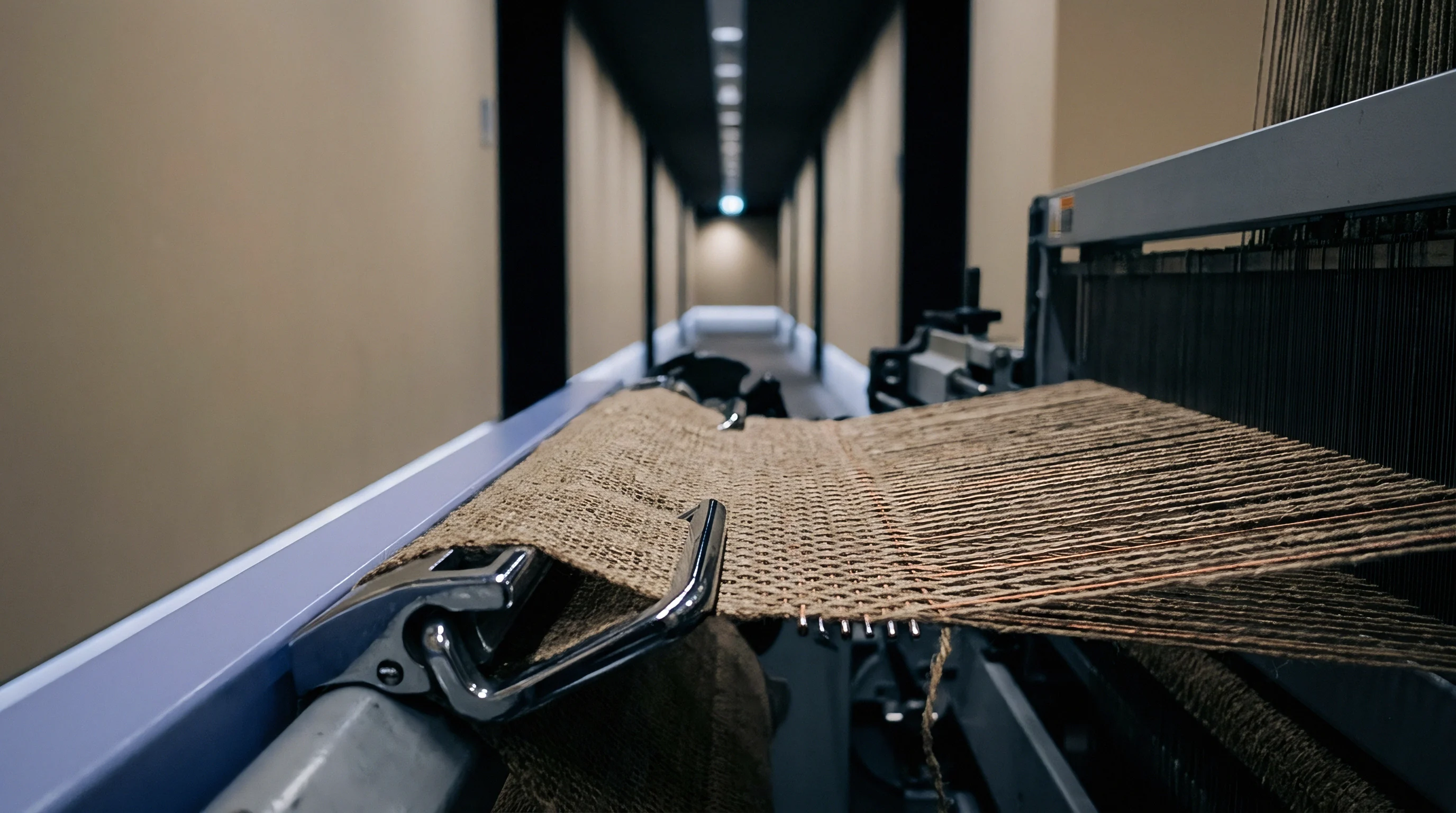
Standard friction instruments record sliding resistance across polished chrome pins while optical sensors map the hairiness profile, logging protruding fibers per metre. High S3 values ~ representing fibers longer than three millimetres ~ are particularly prone to bridging adjacent ends and tangling within the shed.
Elevated yarn friction measured on raw supply packages points directly to spinner lubrication omissions rather than sizing room failure.
Uster Classimat profiling sorts yarn imperfections by cross-sectional size and length. Short thick places and extended thin spots create sudden resistance changes as they pass through drop wires and heald eyes. Pairing Classimat flaw distributions with friction test values provides clear evidence when supply lots fail to meet agreed specifications.

Sizing Film Extraction and Mechanical Verification
Chemical desizing per ISO 2060 isolates the size film to confirm add-on percentages across the warp sheet. Uneven size distribution leaves isolated bands under-protected, creating distinct clusters of friction breaks during a run.
- Dynamic Friction Coefficient Testing per ASTM D3108 measures yarn sliding resistance over standardized metal pins to identify un-lubricated supply lots.
- Size Film Pick-Up Analysis via chemical desizing per ISO 2060 quantifies total protective polymer mass applied to the warp sheet.
- Optical Hairiness Quantification using photo-electric sensor arrays measures S3 fiber protrusion counts that drive yarn-to-yarn shed interlock.
- Tension Trace Logging utilizes digital tension meters mounted behind the drop wires to capture real-time shedding stress profiles.
Uncontrolled tension spikes quickly erode overall shed efficiency.
Whether international standards bodies will eventually write dynamic yarn-to-metal friction thresholds into standard purchasing rules remains an open question.

Recovery
Recovering losses from spinning mills or sizing houses requires clear contractual mechanisms backed by verifiable operating logs. Without documented evidence of friction non-conformity, mills absorb these downtime costs themselves. Effective supply contracts set specific limits on friction coefficients, hairiness indices, and baseline warp stop allowances per hundred thousand picks.
Formal debit notes serve as the mechanism for enforcing agreed quality baselines.
If break counts exceed contractual limits, the accounting department prepares a formal claim dossier assembling machine logs, lab friction reports, and unabsorbed overhead tallies. Debit notes then deduct the calculated recovery total directly from open yarn invoices. Standard terms typically enforce a seventy-two-hour window from defect detection to file formal notice.
Contractual Liability Clauses and Allowance Baselines
Purchase agreements benchmark acceptable performance in warp stops per hundred thousand picks, adjusting allowances for yarn type, count, and fabric complexity. Break rates exceeding baseline levels by more than twenty percent generally unlock immediate claim rights, allowing mills to invoice back unabsorbed overhead and incremental weaver labor.
Commercial supply contracts stipulate that formal debit notes require mill logs, laboratory friction reports, and third-party sample retains.
Clear contract language specifies the diagnostic protocols used to settle friction disputes. Relying on accredited third-party testing facilities removes bias, ensuring that friction coefficients and size add-on data withstand scrutiny in formal arbitration.
Dossier Construction and Debit Note Mechanics
A complete claims package pairs loom monitoring files and lab test results with yarn lot invoices. Tying stoppage timestamps directly to physical beam numbers prevents suppliers from deflecting blame onto shed humidity swings or mechanical maintenance.
| Quality Parameter | Standard Specification | Defect Threshold | Commercial Remediation Action | Landed Cost Adjustment (%) |
|---|---|---|---|---|
| Yarn-to-Metal Friction (COF) | 0.22 – 0.28 COF | > 0.35 COF | Full Lot Rejection & Downtime Claim | 8.5 – 15.0 |
| Hairiness Index (S3 Count) | < 2.5 per metre | > 4.2 per metre | Debit Note for Weaver Labor Surcharge | 3.0 – 5.5 |
| Size Pick-Up Variation | 10.0% +/- 0.8% | < 7.5% Pick-Up | Sizing Contractor Re-Sizing Reimbursement | 4.0 – 8.0 |
| Warp Stop Frequency | 1.5 / 10^5 picks | > 3.5 / 10^5 picks | Unabsorbed Overhead Cost Bill-Back | Calculated per Loom Hour |
Unsized or poorly lubricated spun yarns inevitably break down under cyclic shed abrasion.
Under standard purchasing clause 14B, all unabsorbed loom downtime costs transfer to the yarn supplier once warp stops cross three per hundred thousand picks.