Frictional Degradation
Tribological loss processes govern how textile surfaces shed mass, fray, and break down under repeated mechanical rubbing against adjacent materials or guide surfaces. In bast textiles, abrasion mechanics dictate yarn endurance during high-speed shed formation and downstream laundering cycles. Flax filaments exhibit a fibrillar, highly crystalline microstructure that responds to friction through surface fibrillation, shear-induced peeling of outer microfibrils, and eventual transverse cleavage of the cell wall.
Frictional resistance ceases to govern fabric performance once tensile loads exceed the ultimate yield point of the primary load-bearing bundles, transferring failure modes to pure tensile rupture.
Surface Wear
Loom components inflict relentless frictional shear on warp ends through repetitive contact with drop wires, heddles, and reed dents. Contact surfaces during wet or dry flax weaving generate localized shear stresses that strip pectinaceous binding agents from individual fiber bundles, causing lint shedding and yarn hairiness. Wet processing alters these abrasion mechanics fundamentally by softening the secondary cell wall matrix, which lowers dry contact friction while simultaneously increasing vulnerability to fibrillar peeling under flexural rubbing.
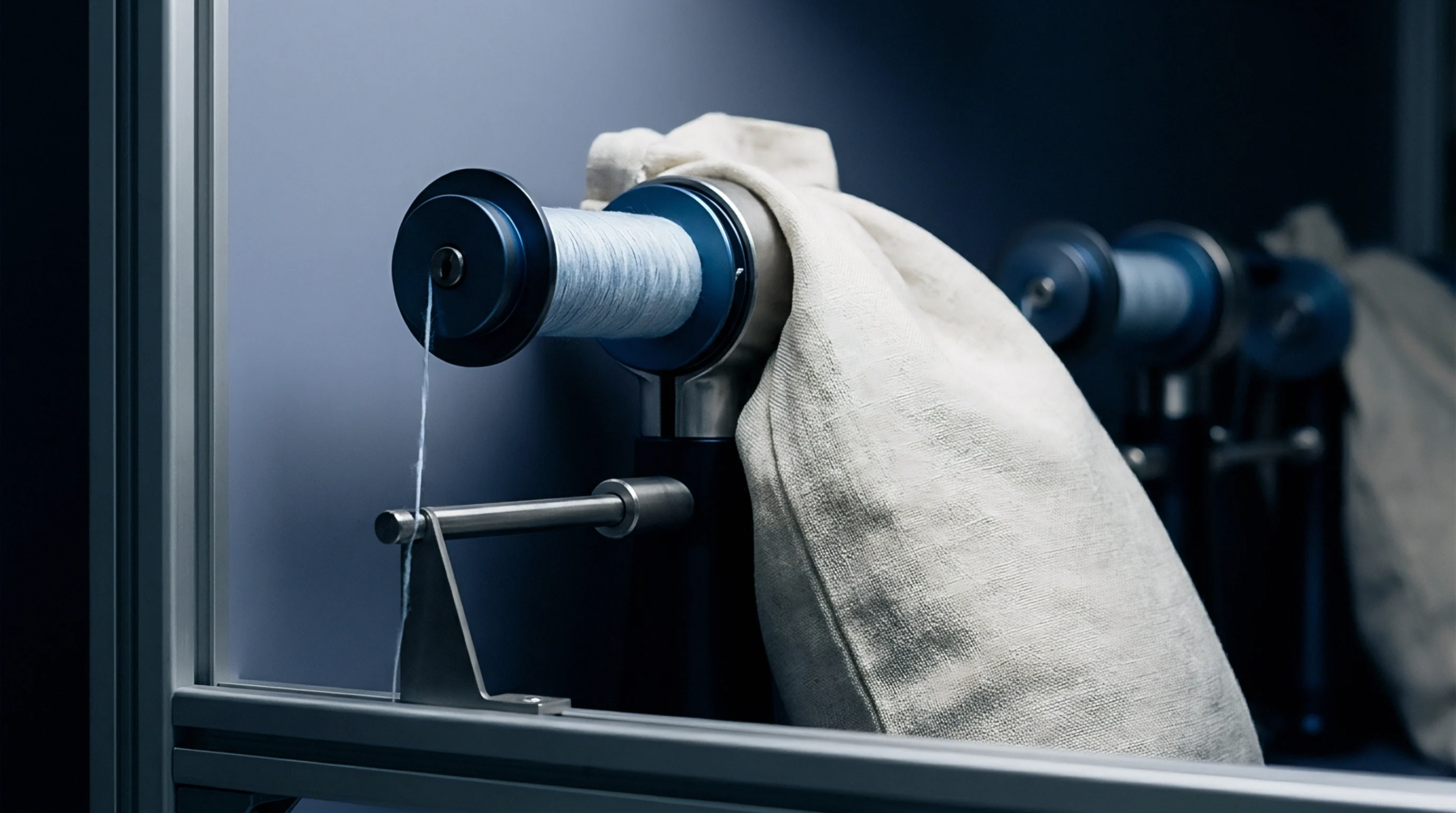
Standardized verification in laboratory environments employs oscillatory flat abrasion instruments or rotating multi-directional wheels according to methods such as ISO 12947. Mill laboratory reports compile rubbed cycle thresholds alongside mass loss measurements, verifying whether fabric lots satisfy commercial end-use specifications before finished goods clear export release.
Structural Resistance
Loom efficiency drops sharply when abrasive damage strips sizing agents before the shed opens fully. Yarn hairiness increases frictional snagging between adjacent ends, creating structural clings that trip optical warp stop motions. Fiber bundles with irregular cross-sections suffer concentrated local wear against metal contact points, while well-aligned, uniform ring-spun yarns distribute contact friction over a larger surface area to survive higher cycle counts.
Finishing chemistry alters this interaction through crosslinking resins, polyurethane coatings, or silicone emulsions that reduce yarn-to-metal friction coefficients. Sizing recipes formulated with modified starches or polyvinyl alcohol protect outer flax fibers against abrasive peeling, shielding the primary cell wall throughout insertion. Frictional wear limits also determine whether heavy apparel or upholstery weights clear international trade standards without showing premature fuzzing, pilling, or yarn thinning under abrasion testing.
Acceptance depends on balancing yarn twist levels against yarn flexibility, because excessive twist increases internal contact pressure and accelerates internal shearing during cyclic abrasive bending.