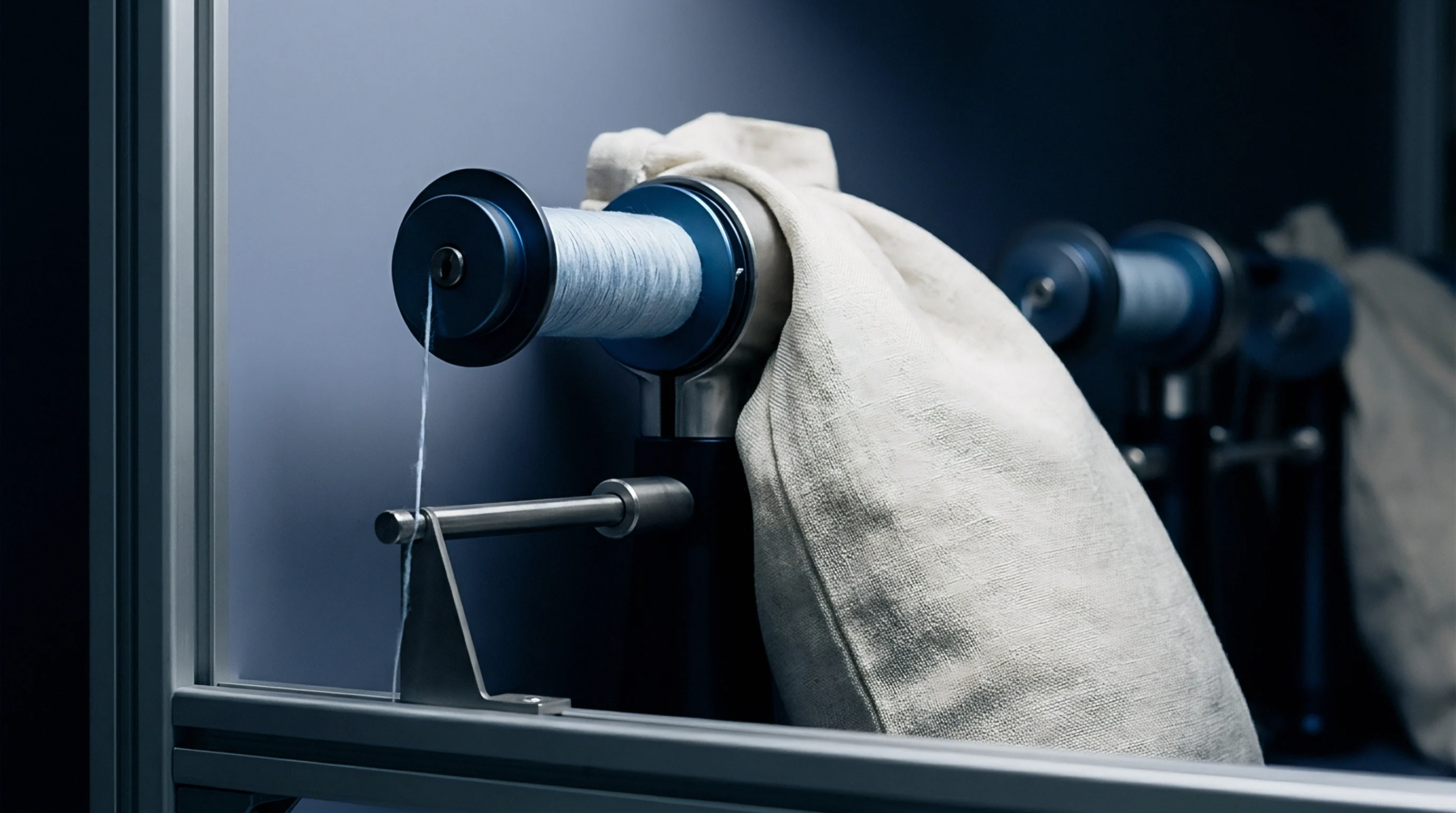
Tensile Measurement
The mechanical load experienced by a moving strand of yarn during winding or weaving processes defines yarn tension under active run conditions. In linen manufacturing, yarn dynamic tension monitors real-time forces acting on flax yarn during high-speed processing. Operators track these fluctuations on winding frames.
Weaving Analysis
Unlike static strength, yarn dynamic tension changes rapidly due to yarn thickness variations and machinery acceleration. High spikes in this tension can exceed the low elasticity of wet-spun linen yarn, causing frequent thread breaks that interrupt production. Analyzing these tension profiles helps engineers optimize the speed of the winding or warping creel without risking yarn damage.
By maintaining tension within a stable window, the mill prevents structural micro-damage that weakens the final woven fabric, ensuring high-strength outputs from the looms.
Process Adjustment
The technical setup sheet for the warping machine defines the target tension ranges for each yarn count. These settings are calibrated during trial runs and logged in the mill’s process optimization database to ensure batch-to-batch consistency. Buyers review these production charts during technical audits to ensure the yarn has not been over-stretched or weakened during preparation.
Controlling this tension prevents the formation of uneven selvedges and striping in the finished linen fabric.