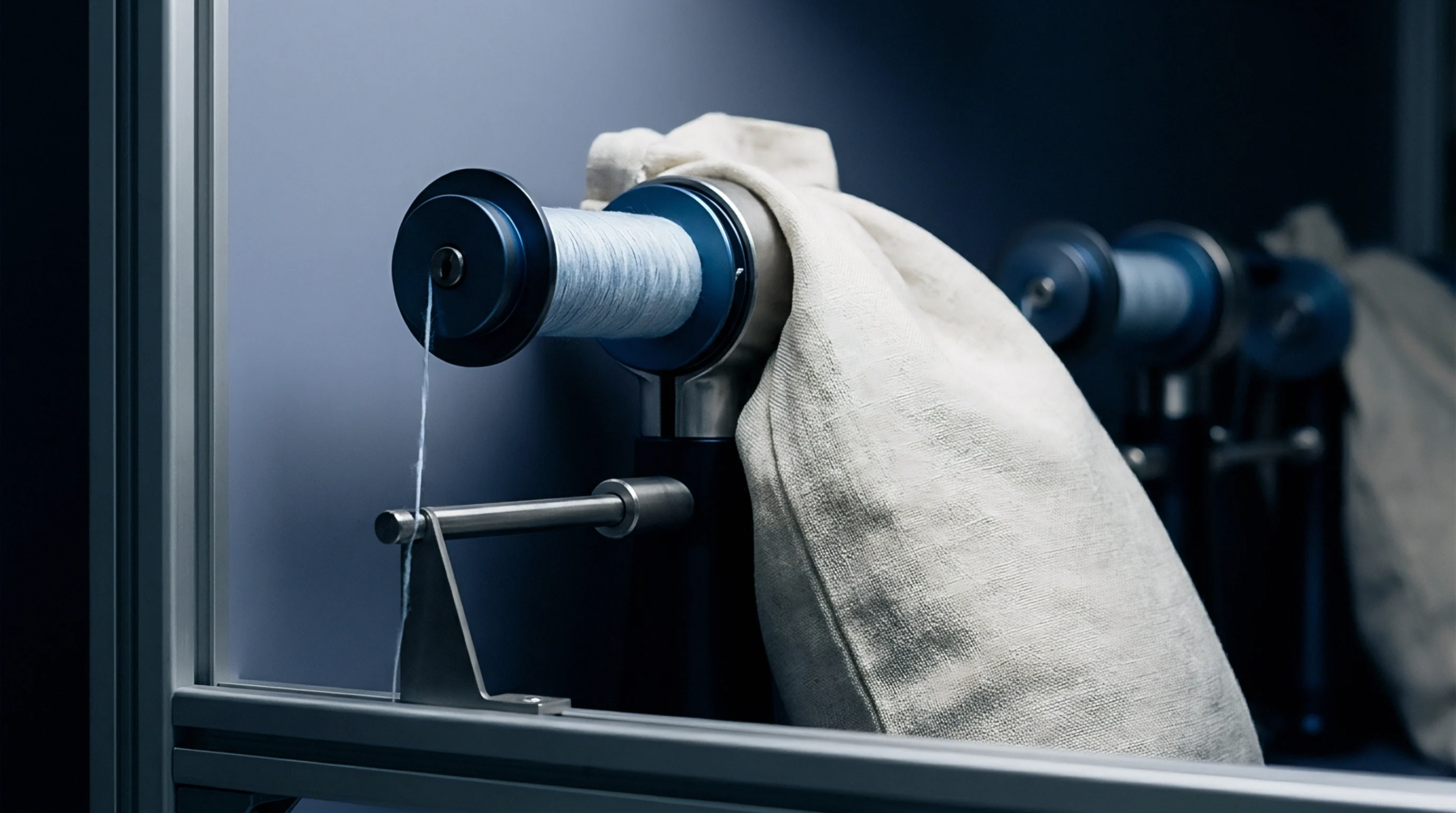
Film Tenacity
Water soluble polymer binders provide a mechanical resistance profile that governs the integrity of warp yarns during sizing operations in high speed weaving. The pva film strength defines the load bearing capacity of the synthetic sizing agent before the physical rupture of the coating under mechanical stress. This physical property prevents the abrasion of individual flax fibres when the harness sheds during loom cycles.
Precise control of this value dictates the efficiency of shedding and reduces the occurrence of broken ends on the warp beam.
Coating Performance
Manufacturers evaluate this resistance in controlled humidity environments to simulate the moisture absorption of sized linen yarns. An increase in ambient humidity lowers the toughness of the binder as the polymer matrix softens. Analysts calculate the tensile load at the point of fracture to verify that the sizing remains intact during the rapid oscillation of the heddles.
Maintaining a stable threshold ensures that the warp remains protected against the scraping action of the reed.
Process Integration
Technical quality manuals for weaving facilities set target ranges for these binders to ensure compatibility with specific flax fibre counts. Procurement managers align these specifications with the yarn preparation department to avoid adhesion failure during the drying phase of the sizing process. Higher concentrations of the sizing material lead to a rigid barrier that guards the fibre against friction.
Lower resistance levels create brittle coatings prone to cracking when the warp undergoes tension cycles. Optimal film toughness provides the physical stability required to maintain yarn continuity throughout the entire weaving sequence.