Determining Non Preferential Origin Rules for Import Duty Assessment
Determining non-preferential origin for import duty assessment requires applying tariff shift and substantial transformation rules to mill transformation records.


Scope
Import duty calculation under Most-Favoured-Nation tariffs rests on the non-preferential origin assigned to imported merchandise. Customs authorities enforce non-preferential origin rules to evaluate tariff eligibility, assess trade remedy duties such as anti-dumping actions, establish quantitative quotas, and verify country of origin marking tags on commercial goods. Preferential trade agreements reduce duties through bilateral tariff concessions, whereas non-preferential mechanisms function as the base regulatory benchmark applied to standard customs entries across international borders.
Duty rates shift immediately.
Determining non-preferential origin for flax and linen products classified under Chapter 53 of the Harmonized System requires identifying where the final substantial economic transformation occurred. Raw flax harvested in Western Europe that travels to Asia for spinning, weaving, and wet processing loses its agricultural origin status once it undergoes manufacturing operations that convert raw fibre into yarn and woven cloth. Customs administration across major import markets relies on statutory frameworks such as Article 60 of the European Union Customs Code and Title 19 of the United States Code of Federal Regulations to trace these physical shifts.
Failure to present a valid non-preferential certificate of origin upon customs entry defaults the tariff calculation to column one general rates and triggers port storage surcharges.
Discrepancies in non-preferential determinations frequently emerge when importers confuse commercial quality marketing certificates with statutory customs declarations. A certificate declaring European flax provenance establishes the agricultural harvest location of the raw fibre, yet it carries zero legal weight in determining the tariff classification origin of a dyed woven fabric if the yarn spinning and fabric weaving took place outside Europe.

Distinguishing Non Preferential Origin from Preferential Frameworks
Statutory customs compliance separates baseline tariff administration from preferential trade programs. Non-preferential origin rules establish the baseline nationality of goods for General Agreement on Tariffs and Trade Most-Favoured-Nation duties, safeguard measures, countervailing actions, and trade statistics. Preferential frameworks operate under reciprocal trade treaties that require strict compliance with specific rules of origin to earn reduced or zero-duty tariff preferences.
Origin defines tariff liability.
Customs officials examine non-preferential entries through objective legal tests defined by the importing country. While preferential trade rules permit cumulation across participating partner states, non-preferential regulations mandate that a single country receive origin designation based on where the product underwent its last major processing stage. For linen textiles, this boundary separates agricultural raw material origin from industrial manufacturing origin.

Statutory Jurisdictions and Import Assessment Standards
Customs clearance requirements for linen products vary across national customs borders. United States Customs and Border Protection enforces non-preferential origin rules for textiles under 19 CFR 102.21, which prioritizes the physical location of fabric weaving over subsequent dyeing, printing, or finishing steps. European Union customs authorities apply UCC Regulation 952/2013 alongside Delegated Regulation 2015/2446 Annex 22-01, enforcing specific processing thresholds for yarn spinning and fabric formation.
Overseas suppliers frequently claim that washing and finishing greige fabric in their local mill converts imported greige linen into local origin goods because the wet processing adds forty percent to the fabric invoice value.


Loom
Woven linen classified under Harmonized System tariff line 5309 undergoes its primary physical transformation when warp and weft yarns interlace. Non-preferential origin regulations evaluate whether processing raw flax into spun yarn under heading 5306, or weaving yarn into grey cloth under heading 5309, constitutes the primary origin-conferring activity. In major customs jurisdictions, weaving greige fabric on a textile frame establishes the definitive origin of the unfinished fabric.
Weaving confers non-preferential status.
Retting leaves raw fibre unchanged.
Converting scutched flax into spun yarn creates a tariff heading change from 5301 to 5306. Spinning yarn establishes non-preferential yarn origin in the spinning mill’s territory. When that spun yarn moves to a secondary country for fabric production, the mechanical weaving process creates a further tariff shift from 5306 to 5309.
Under US 19 CFR 102.21(c)(2), the country where the fabric is woven confers non-preferential origin for the unbleached, dyed, or printed cloth, overriding the origin of the input yarn.
| HS Code | Processing Stage | EU UCC Annex 22-01 Rule | US 19 CFR 102.21 Rule | Origin Conferred Stage |
|---|---|---|---|---|
| 5301.29 | Scutched / Hackled Flax | Harvest and retting location | Harvest and retting location | Raw Agricultural Harvesting |
| 5306.10 | Single Flax Yarn | Spinning from unspun fibre | Spinning from unspun fibre | Mechanical Yarn Spinning |
| 5309.11 | Unbleached Woven Linen | Weaving from spun yarn | Weaving from spun yarn | Mechanical Fabric Weaving |
| 5309.92 | Dyed Woven Linen | Weaving or complete dyeing with specific finishing | Weaving location exclusively | Fabric Formation (Weaving) |
Bale tags and scutcher delivery receipts prove where raw agricultural flax was harvested, but mill audit steps examine weaving room shift sheets and beam records to confirm physical cloth formation. A mill operating in a secondary country cannot claim non-preferential fabric origin if it merely re-beams or singes imported greige fabric woven elsewhere.
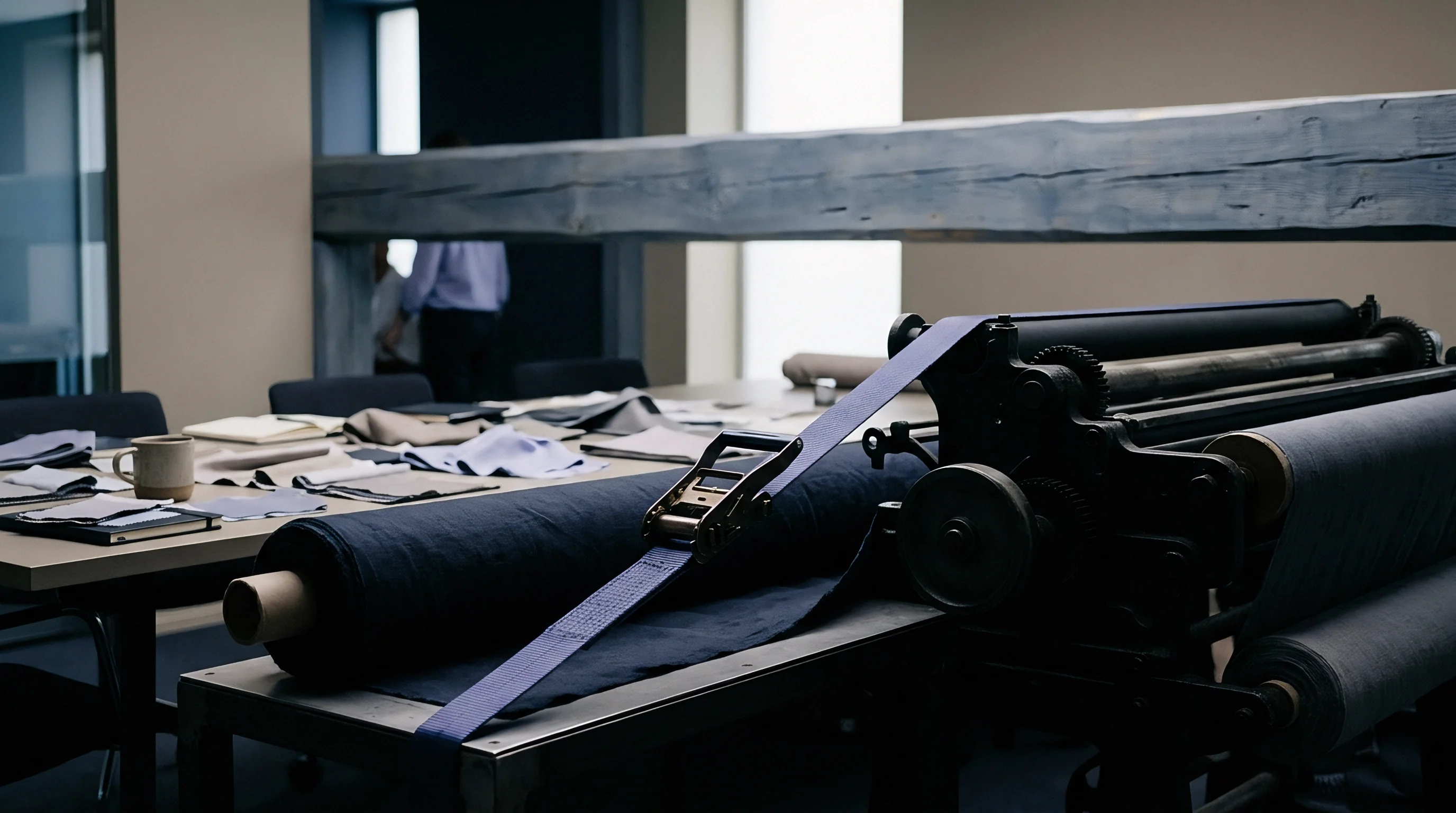
Tariff Classification Shifts across Chapter 53
Harmonized System rules track mechanical transformation across explicit numeric steps. The conversion of raw unspun flax under heading 5301 to yarn under heading 5306 represents a substantial change in material state. A secondary change occurs when heading 5306 yarn enters a weaving facility and emerges under heading 5309 as woven linen fabric.
Yarn spinning creates heading 5306.
Non-preferential regulations treat these tariff shifts as objective indicators of processing depth. Importers submitting customs entries must verify that the declared country corresponds precisely to the factory location where the tariff heading shift occurred. Simple packaging, rolling, or inspection steps produce no tariff shift and confer no origin.

Transformation Criteria for Multi Country Manufacturing
Complex supply chains distribute textile production across multiple sovereign territories. Raw fibre grown in France may travel to China for yarn spinning, move to Vietnam for fabric weaving, and enter Italy for garment dyeing and softening. Determining non-preferential origin requires isolating the specific factory process designated as origin-conferring under the importing country’s customs code.
- Harvesting and Scutching establishes agricultural origin for raw unspun flax under tariff heading 5301.
- Mechanical Yarn Spinning converts unspun flax fibre into spun yarn under heading 5306, conferring yarn origin in the spinning country.
- Fabric Weaving Operations interlace warp and weft yarns into greige fabric under heading 5309, conferring fabric origin under US and EU rules.
- Wet Processing and Dyeing modifies fabric color and hand feel without shifting non-preferential origin away from the weaving location under standard US rules.
Origin evaluation remains tied to physical manufacturing steps rather than commercial finishing locations when determining baseline customs duties.

Arithmetic
Customs authorities calculate ad valorem origin thresholds using precise financial formulas that isolate foreign material inputs from local processing costs. When non-preferential rules utilize a value-added test instead of a pure tariff shift rule, the percentage of local content determines whether the final country of processing confers origin status. The standard formula measures the ex-works price of the finished fabric against the customs value of non-originating inputs.
Importers pay the difference.
Price breakdowns reveal origin gaps.
Consider a practical cost breakdown for 100% linen woven fabric entering an ad valorem origin audit under European Union non-preferential valuation rules. Assume a mill in Country A imports single flax yarn classified under HS 5306.10 at a cost of $4.20 per meter of finished fabric equivalent. The mill incurs $1.80 per meter in direct weaving labour and electricity, $0.90 per meter in dyeing and chemical finishing, and adds a $0.60 per meter factory profit margin, yielding an ex-works price of $7.50 per meter.
Non-preferential origin classification for woven linen under tariff code 5309.50 requires a minimum local value-added contribution of forty-five percent when processing imported greige yarn.
To calculate the non-originating material ratio, divide the non-originating yarn cost of $4.20 by the ex-works price of $7.50. This yields a foreign content ratio of 56 percent, leaving local value addition at 44 percent. If the applicable non-preferential customs rule sets a maximum foreign material threshold of 50 percent, this specific fabric batch fails the value-added test and defaults to the non-preferential origin of the imported yarn.
| Manufacturing Component | Processing Country | Input Value ($/m) | Share of Ex-Works (%) | Origin Classification Contribution |
|---|---|---|---|---|
| Imported Flax Yarn (HS 5306) | Country A (Foreign) | $4.20 | 56.0% | Non-originating input cost |
| Direct Weaving Labour & Power | Country B (Local) | $1.80 | 24.0% | Local manufacturing cost |
| Dyeing & Chemical Finishing | Country B (Local) | $0.90 | 12.0% | Local processing cost |
| Mill Overhead & Profit | Country B (Local) | $0.60 | 8.0% | Local ex-works value addition |
| Total Ex-Works Fabric Price | Country B (Factory) | $7.50 | 100.0% | Basis for origin percentage calculation |
Varying the input cost parameters demonstrates how quickly origin status flips under customs scrutiny. If raw yarn prices rise to $4.80 per meter while local processing costs remain fixed, the ex-works price moves to $8.10 per meter, shifting the foreign content ratio to 59.2 percent. An importer relying on static supplier cost declarations risks submitting incorrect non-preferential origin figures when global yarn markets fluctuate.
- Verify the ex-works purchase invoice from the direct fabric manufacturer, ensuring all non-factory delivery fees and export tariffs are deducted from the base price.
- Obtain itemized bills of materials detailing the net weight and purchase value of all imported non-originating yarns used in the specific production batch.
- Reconcile factory labour, overhead, and energy expenditures against localized cost records to establish legitimate processing expense additions.
- Calculate the final non-originating cost percentage against the net ex-works value to determine compliance with statutory non-preferential thresholds.
Relying on unverified supplier profit margins to satisfy local content percentages exposes importers to immediate duty re-assessments and retroactive interest charges during customs audits.


Evidence
Documentary dossiers submitted to customs brokers connect individual shipping containers directly to mill execution records. Proof of non-preferential origin requires a clear chain of custody spanning raw material procurement, spinning mill batch sheets, loom weave schedules, and final commercial shipping invoices. Customs authorities inspect these physical records during post-clearance audits to verify declarations.
Paper records face strict audits.
Certificate scopes expire annually.
A standard Non-Preferential Certificate of Origin issued by a regional Chamber of Commerce acts as an initial entry document. Customs inspectors review underlying transaction documents including mill weight scale tickets, yarn lot certificates, and bill of lading container numbers. If a mill claims domestic fabric origin but cannot produce weaving room yarn consumption logs matching the shipped yardage, customs auditors reject the certificate.
| Document Type | Issuing Entity | Core Data Points Captured | Customs Audit Focus Area |
|---|---|---|---|
| Certificate of Origin | Chamber of Commerce | Exporter, consignee, declared origin, HS code | Authorization stamp and underlying invoice cross-reference |
| Mill Invoice & Packing List | Fabric Manufacturer | Roll numbers, net weight, fabric construction, ex-works price | Verification of ex-works valuation and product description |
| Weaving Master Logs | Weaving Shed Manager | Loom identification, shift dates, yarn lot numbers, greige meters | Proof of physical fabric weaving at declared facility |
| Yarn Purchase Receipts | Yarn Spinning Mill | Fibre type, yarn count, spinning location, lot weight | Verification of origin status of input raw materials |
Transaction certificates issued by private verification bodies validate environmental or geographic provenance claims for raw flax. These certificates do not replace official customs certificates of origin. Importers must assemble a complete documentation binder linking private scheme certificates to statutory customs declarations before lodging import entries.

Verification Dossiers for Customs Clearances
Customs authorities mandate that importers of record maintain origin documentation files for five years following port entry. A complete dossier contains raw material purchase receipts, factory processing logs, sub-contractor wet processing invoices, and transport bills of lading. Missing documentation allows customs officials to reclassify goods under default high-duty tariff lines.
Audit logs survive five years.
Importers conducting supplier qualification verify that overseas mills maintain traceable lot tracking systems inside their production facilities. Physical roll tags attached to greige fabric bolts must contain batch numbers that map directly back to spinning yarn receipts and loom production sheets.
Scope and Limitations of Chamber Certificates
Chamber of Commerce certificates of origin attest only to the information presented on the accompanying commercial invoice. Chambers perform administrative validation of signatures and exporter registration status, but they rarely execute physical audits of textile weaving sheds.
Importers cannot treat a Chamber certificate as absolute immunity against customs audits. Customs administrations reserve full legal authority to challenge Chamber certificates by requesting direct mill audit logs and cost accounting proof from the manufacturing plant.
“Seller warrants that all merchandise supplied under this contract carries non-preferential country of origin designations matching the physical location of fabric weaving, and agrees to deliver complete mill manufacturing logs within ten business days of a customs audit demand.”


Exposure
Misdeclaring the country of origin on import documentation triggers immediate customs holds and administrative financial penalties. Customs enforcement agencies use automated risk-profiling algorithms to flag textile shipments arriving from transshipment hubs known for origin falsification. Importers operating with unverified supplier declarations face severe legal and operational challenges when custom inspections occur.
Penalties multiply original duty debts.
Dyeing alone confers no origin.
Customs holds freeze port deliveries.
Under United States customs law 19 U.S.C. 1592, submitting false non-preferential origin statements leads to civil monetary penalties ranging from two times the duty loss for negligent misstatements up to the domestic value of the merchandise for fraudulent entries. European customs authorities apply comparable administrative sanctions, recovering unpaid duties alongside punitive interest charges dating back to the initial entry date.
Customs authorities inspect mill electricity bills and loom maintenance logs to disprove fraudulent certificates of origin.
Transshipment fraud represents the highest exposure risk in global linen trading. Transshipment occurs when fabric woven in Country X enters Country Y for simple repacking or false relabelling to evade country-specific anti-dumping duties or import quotas. Customs authorities deploy physical auditors overseas to check loom capacity against export volumes, exposing transshipment operations through electricity usage logs and employee payroll checks.

Does Off-Shed Finishing Alter Non Preferential Country of Origin?
Off-shed wet finishing operations alter fabric surface properties through washing, bleaching, dyeing, or applying mechanical hand-feel softeners. Under United States 19 CFR 102.21, wet finishing steps executed on imported greige fabric do not shift non-preferential origin away from the country where the greige cloth was woven.
European Union non-preferential rules under Annex 22-01 permit certain combined wet-processing operations to confer origin only when accompanied by complete finishing that causes a structural shift in the underlying fabric. Importers bringing dyed linen fabric into the United States must declare the origin of the weaving loom state, regardless of where the subsequent dyeing and washing occurred.

Operational Failure Modes in Origin Claims
Origin declaration failures stem from systemic supply chain blind spots and unverified vendor promises. Sourcing teams frequently accept generic origin statements without auditing actual mill manufacturing steps.
- Transshipment Routing Errors happen when intermediate logistics hubs re-bill goods and claim local origin without executing origin-conferring physical processing.
- Commercial Marketing Confusion occurs when teams mistake agricultural fibre certifications for statutory customs country of origin compliance declarations.
- Static Value-Added Assumption failures arise when fluctuating raw material market prices push foreign content ratios above statutory non-preferential thresholds during production.
- Omitted Mill Documentation leaves importers unable to present required loom weaving records within statutory customs audit response windows.
What legal remedies remain available to an importer of record when a foreign supplier fraudulently presents Chamber of Commerce certificates for transshipped linen woven in an embargoed country?

Recourse
Sourcing contracts shift customs liability from the importer of record back to the textile manufacturer through formal origin warranty provisions. Importers protect their financial interests by incorporating explicit origin compliance terms into commercial purchase orders, manufacturing agreements, and letter of credit payment conditions. These legal provisions establish direct seller financial accountability for customs fines, unpaid duty adjustments, and legal defence expenses arising from invalid origin statements.
Seller warranties transfer fiscal risk.
Commercial contracts include mandatory origin indemnification clauses that survive payment and delivery cycles. The clause binds the foreign mill to supply complete batch-level manufacturing dossiers, including loom shed records and yarn purchase invoices, within ten days of a written request by customs authorities. Payment terms tied to irrevocable letters of credit specify that presentation of fraudulent or inaccurate certificates of origin constitutes a material breach, authorizing the buyer to freeze letter of credit draws pending customs clearance validation.
Escrow mechanisms provide additional risk mitigation for large-volume fabric procurements. Importers withhold a designated percentage of the total order value until the merchandise passes import customs inspections and clears post-entry verification windows. When customs authorities flag a consignment for origin audits, the retained funds cover potential duty adjustments and legal representation expenses while the seller works to produce verified factory records.
Importers structure supplier qualification audits to include physical verification of manufacturing infrastructure prior to issuing purchase orders. Qualified auditors examine factory floor loom capacities, review localized power utility bills, and reconcile historical production volumes against export invoice logs to confirm that the mill possesses the operational machinery required to execute declared weaving runs. Suppliers that refuse on-site physical audits or decline to provide unredacted bill of materials breakdowns are excluded from the sourcing roster before commercial capital is committed.