Measuring Flax Bundle Diameters Using Optical Cross Sections
Optical cross section analysis determines true flax bundle diameter by calculating equivalent circle dimensions from segmented polygon areas in cured epoxy mounts.


Geometry
Flax bundles are never round. In raw technical bast, twenty to forty polygonal elementary cells sit bonded by pectinaceous middle lamellae, which means an offer sheet quoting a mean fineness of 2.5 tex or a 28 micrometres diameter obscures a heavily asymmetric transverse profile. Pull a bundle from a scutched line strick and it looks more like a flattened polygon or an uneven ribbon, its major transverse axis running three to four times wider than the minor axis.
Only direct optical cross-sectioning captures the actual spatial boundary required to model drafting resistance through roving frames.
The gravimetric approach under ISO 1973 cuts fibres to fixed lengths, weighs them, and calculates linear density in tex. Because that bulk measurement lumps elementary fibres, intact technical bundles, and coarse bast slivers into one mass, it cannot distinguish between a uniform parcel centered around 30 micrometres and a split lot mixing 15-micrometre filaments with 70-micrometre shive-encrusted blocks. Optical profiling isolates that split directly, recording the perimeter, area, and orthogonal axes of every bundle across the mount.
Transverse optical microscopy reveals that true bast bundles consist of polygonal elementary cells separated by dense middle lamellae rather than cylindrical filaments.

Bast Cell Organization and Technical Bundle Dimensions
Flax stems develop concentric rings of bast tissue holding thirty to forty technical units around the perimeter. Each unit gathers multiple thick-walled elementary fibres around an extremely narrow central lumen. These elementary cells run 10 to 25 micrometres across, with wall thicknesses between 5 and 12 micrometres.
How cleanly they separate during mechanical decortication and hackling depends on the retting.
Under-retted straw still carries calcium pectate complexes through the middle lamellae, locking elementary cells into coarse clusters that often exceed 80 micrometres in equivalent diameter. Over-retting lets cellulolytic action chew into the secondary cell walls, leaving bundles prone to crushing during scutching. Transverse mounts let a classer count the surviving elementary cells directly: a well-retted hackled line lot generally averages seven to twelve cells per bundle, giving an equivalent circular diameter of 22 to 35 micrometres.
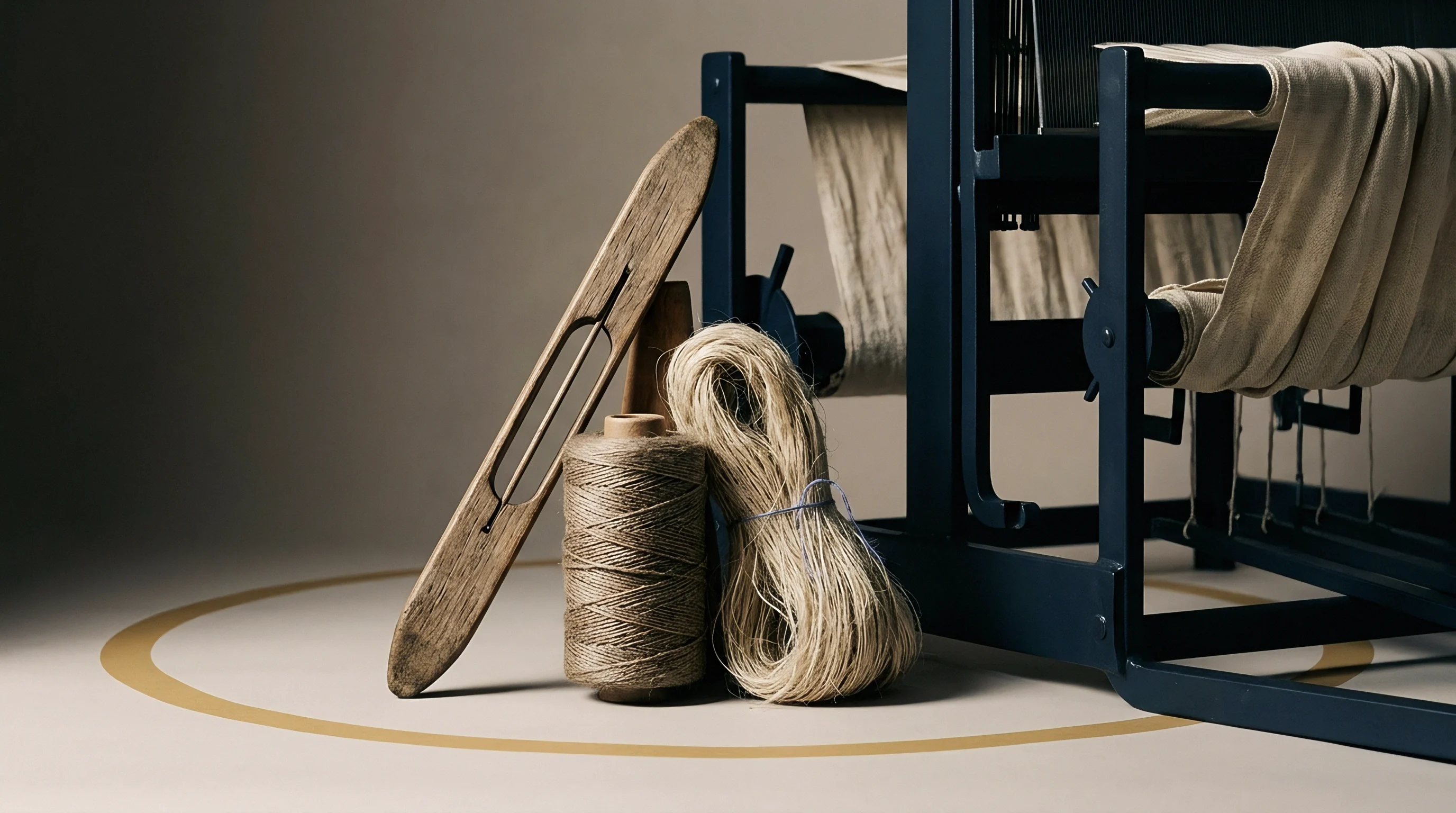
Cross Section Area versus Gravimetric Fineness
Automated analysis traces the true polygonal perimeter and integrates the enclosed area in square micrometres. Translating that figure into an equivalent diameter models the bundle as an ideal circle of matching area, providing spinning mills with a working metric to set drafting roll clearances and gauge sliver cohesion.
| Processing Stage | Mean Bundle Area (μm²) | Equivalent Diameter (μm) | Major-to-Minor Ratio | Elementary Cells per Bundle |
|---|---|---|---|---|
| Scutched Long Line | 1840 | 48.4 | 2.85 | 18 to 26 |
| First Hackling Pass | 1120 | 37.8 | 2.32 | 11 to 16 |
| Dressed Line Sliver | 680 | 29.4 | 1.78 | 6 to 10 |
| Machine Hackled Tow | 1460 | 43.1 | 3.10 | 14 to 22 |
| Values represent arithmetic means from 600 individual bundle measurements per stage drawn from dew-retted Western European straw. | ||||
In wet spinning, warm troughs dissolve the peripheral pectins cementing the technical fibres, allowing elementary cells to slide past one another under the drafting rollers. If inbound bundles remain too coarse, drafting tension cannot break that internal cohesion, snapping the roving and driving up end-break frequencies. Misjudging the cross-sectional distribution locks the mill into draft ratios that shear the sliver during wet drawing, turning fine yarn production into floor waste.


Mount
Cutting uncompressed transverse sections requires immobilising every filament. Without firm external support, lateral knife forces twist and collapse thin-walled bast cells, so technicians embed conditioned stricks into rigid resin before microtomy. The resin must wet and fill the voids between adjacent bundles without altering the hydration of the cell walls.
Paraffin wax is unsuited to bast fibres because it contracts by up to fifteen percent during solidification, pulling away from bundle margins and leaving unsupported voids that cave in under the knife. Low-shrinkage epoxy resins and methacrylate media bypass this issue, curing at temperatures that preserve the natural polygonal geometry of the bast tissue.

Epoxy Infiltration and Curing Parameters
Low-viscosity aliphatic amine hardeners can penetrate tight middle lamellae under moderate vacuum. Dry bundles are aligned straight in the embedding mold under a five-gram preload weight before degassed epoxy is introduced at 0.8 bar. The negative pressure draws air from the micro-voids between tightly packed elementary fibres, eliminating the bubbles that create false boundaries during thresholding.
Standard cycloaliphatic resins cure over twenty-four hours at room temperature, followed by two hours of post-curing at 60 degrees Celsius to reach a Shore D hardness of 82 to 86. A block that cures softer than this yields under the knife edge, inducing elliptical distortion along the cutting vector; cure it too hard and the knife chatters, leaving transverse fracture lines across the face of the bundle.
Dew-retted dressed line flax conditioned at 20 degrees Celsius and 65 percent relative humidity displays an average equivalent bundle diameter of 42.6 micrometres across three hundred measured cross sections.

Can Cold Mounting Resins Prevent Bundle Compression?
The exothermic reaction in standard polyethylene embedding cups can spike to seventy degrees Celsius, driving moisture out of elementary cell walls and artificially shrinking the cross-sectional area. Cold-curing methyl methacrylates and modified polyesters keep temperatures lower by shedding heat across shallow aluminum moulds.
Even with careful preparation, mechanical sectioning can introduce distinct flaws that compromise subsequent image analysis:
- Transverse blade compression ovalises circular bundles along the axis of knife travel when cutting clearance angles fall below four degrees.
- Peripheral resin delamination produces artificial halos around the bundle perimeter when moisture content in raw fibre exceeds nine percent.
- Middle lamella fracture separates elementary cells prematurely during slicing, presenting fragmented subunits as false technical bundles.
- Chatter mark striations generate periodic optical density bands that confuse automated edge detection algorithms.
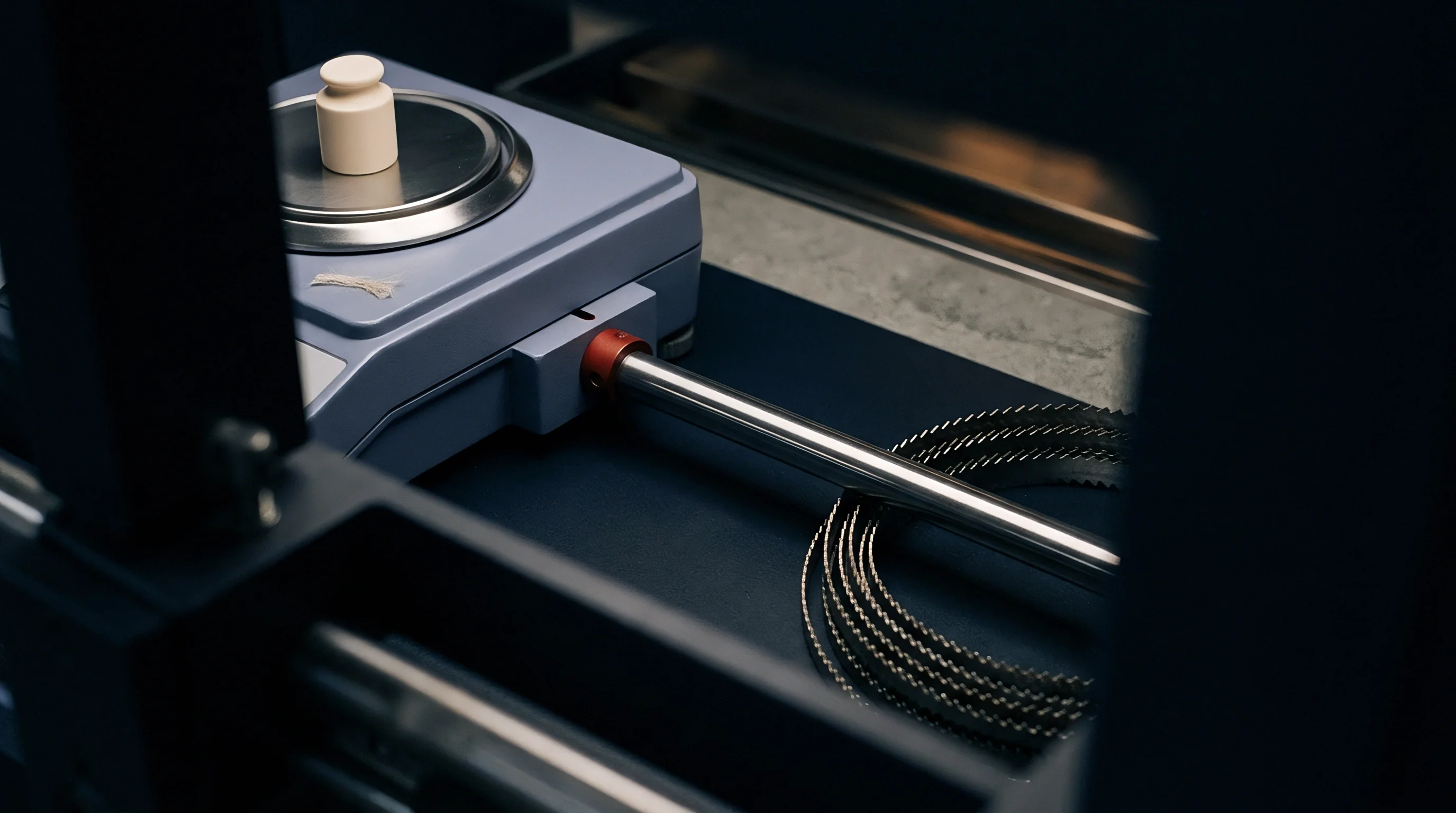
Rotary Microtome Slicing Mechanics
Tungsten carbide knives set at a five degrees clearance angle yield five-micrometre sections without crushing the bundles. Diamond edges produce cleaner surfaces but are expensive to maintain when slicing through abrasive silica residues on scutched flax. Standard steel knives dull after thirty to forty cuts, leaving rough tears along the bundle perimeter that can inflate measured dimensions by twelve percent.
| Resin System | Viscosity (mPa·s) | Curing Temp (°C) | Cure Time (hr) | Edge Integrity Rating | Transverse Artifact Bias (%) |
|---|---|---|---|---|---|
| Cycloaliphatic Epoxy | 280 | 22 to 60 | 26.0 | Superior | +1.2 |
| Low-Viscosity Methacrylate | 120 | 20 | 12.0 | Good | +2.8 |
| Polyester Casting Resin | 450 | 25 | 8.0 | Moderate | +5.4 |
| Paraffin Embedding Wax | 45 | 58 | 2.5 | Poor | +14.6 |
Fresh glass knives prepared at a 45-degree angle offer a practical middle ground for qualification work, yielding clean three-micrometre slices through epoxy. Sections are floated onto a 42 degrees Celsius water bath so surface tension can pull out minor wrinkles, dried on slides at 50 degrees Celsius, and coverslipped in a medium matched to the refractive index of the resin.
Dull microtome knives can compress the softer outer parenchyma cells during slicing, broadening the cross section and artificially inflating perimeter measurements past true commercial values.


Threshold
Digital measurement maps light transmission directly into spatial coordinates. Mounted sections sit under a calibrated plan-apochromatic objective that projects the specimen onto an optical sensor. The software identifies bundle perimeters by tracing brightness transitions between the clear embedding resin, pale cellulosic walls, and darker middle lamellae.
Under transmitted illumination, open lumens show up bright, secondary cell walls appear semi-opaque, and lignin deposits along the lamellae scatter light into dark interstitial tracks. Fixed single-threshold binarization fails across bast tissue because a single cutoff either merges neighbouring bundles or erodes the delicate outer cell walls into the background. Multi-stage segmentation isolates these structures with far fewer boundary errors.

Grayscale Binarization and Edge Detection
A charge-coupled sensor records 12-bit transmission data at four hundred times magnification. Calibrating the optics against a certified stage micrometer establishes a spatial resolution between 0.12 and 0.18 micrometres per pixel. At that scale, an average 30-micrometre bundle spans roughly two hundred pixels across its major axis, giving enough resolution to resolve fine perimeter contours.
The standard Otsu method calculates an optimal global threshold by minimizing intensity variance between foreground and background, but where illumination drifts across the mount, local adaptive thresholding proves more reliable. By calculating individual cutoffs based on a thirty-pixel local radius, adaptive routines neutralize background shading caused by slight variations in slice thickness.
The image pipeline resolves individual bundles through a series of discrete filters:
- Spatial noise filtration applies a 3×3 median filter to eliminate high-frequency electronic noise without blurring the sharp outer boundary of the technical bundle.
- Adaptive gradient computation executes a Sobel or Canny operator to locate maximum intensity transitions along cell boundaries.
- Morphological hole closing fills internal lumen cavities, converting hollow annular structures into unified solid bundle areas.
- Watershed boundary separation applies distance transform maps to segment joined adjacent bundles along thin middle lamella valleys.
- Object feature extraction measures pixel area, convex perimeter, and oriented bounding boxes for every confirmed discrete bundle.

Lumen Exclusion and Boundary Separation
Central lumens make up between two and eight percent of total elementary cell volume. If the segmentation pipeline leaves these cavities as background pixels, the calculated technical bundle area drops, distorting equivalent circle conversions and leading spinning planners to assume a finer fibre than the physical material provides. Routines must identify and fill these inner perimeters before summing bundle area.
When bundles sit in contact within the matrix, simple thresholding lumps them into single continuous shapes. Watershed algorithms resolve this by treating the inverted Euclidean distance map of the binary image as a topographic surface; boundaries rise from local distance maxima, cleaving touching bundles cleanly along the intercellular middle lamella.
Specification clauses invoking ISO 2370 for fibre fineness enforce commercial rejections whenever bundle diameter variance across five production slivers exceeds eighteen percent.
Shifting the binarization cutoff by just five intensity values can alter measured perimeters by up to eight percent. Laboratories counter this drift by running optical density calibration slides before every shift, though debate continues over whether aggressive digital erosion truly separates adjacent bundles or merely pares away legitimate perimeter wall.


Spread
Flax populations show wide dimensional dispersion across every lot. Unlike synthetic filaments formed through calibrated spinneret orifices, natural bast bundles exhibit high coefficients of variation: a single strick of dressed line flax can hold everything from 12 micrometres split fibrils to 90 micrometres unretted vascular bundles. Sourcing desks evaluate skewness and tail distributions rather than relying on simple averages.
Production slivers rarely display normal distributions; they skew log-normally toward the coarse end. A parcel with a compliant mean diameter of 32 micrometres can easily conceal a ten percent tail of unhackled bundles exceeding 65 micrometres, which choke gill pins during drafting, producing yarn slubs and uneven sliver.

Ellipticity and Aspect Ratio Distributions
Bundle cross sections routinely display ribbon profiles whose major axis is more than three times the minor axis. Fitting an ellipse to the bundle profile establishes this aspect ratio, where 1.0 represents a circular section and values past 2.5 indicate flat ribbons. Highly elliptical bundles align along the drafting plane under tension, changing inter-fibre friction and altering drafting force requirements.
Classers track the 10th, 50th, and 90th percentiles of equivalent bundle diameter to quantify dispersion. A tight spread between the 10th and 90th percentiles reflects thorough retting and balanced hackling, whereas a broad spread flags uneven straw, mixed lots, or worn comb pins during line preparation.
Bundles presenting flattened polygonal boundaries divide unevenly across gill pins, creating drafting waves that thin the roving core.
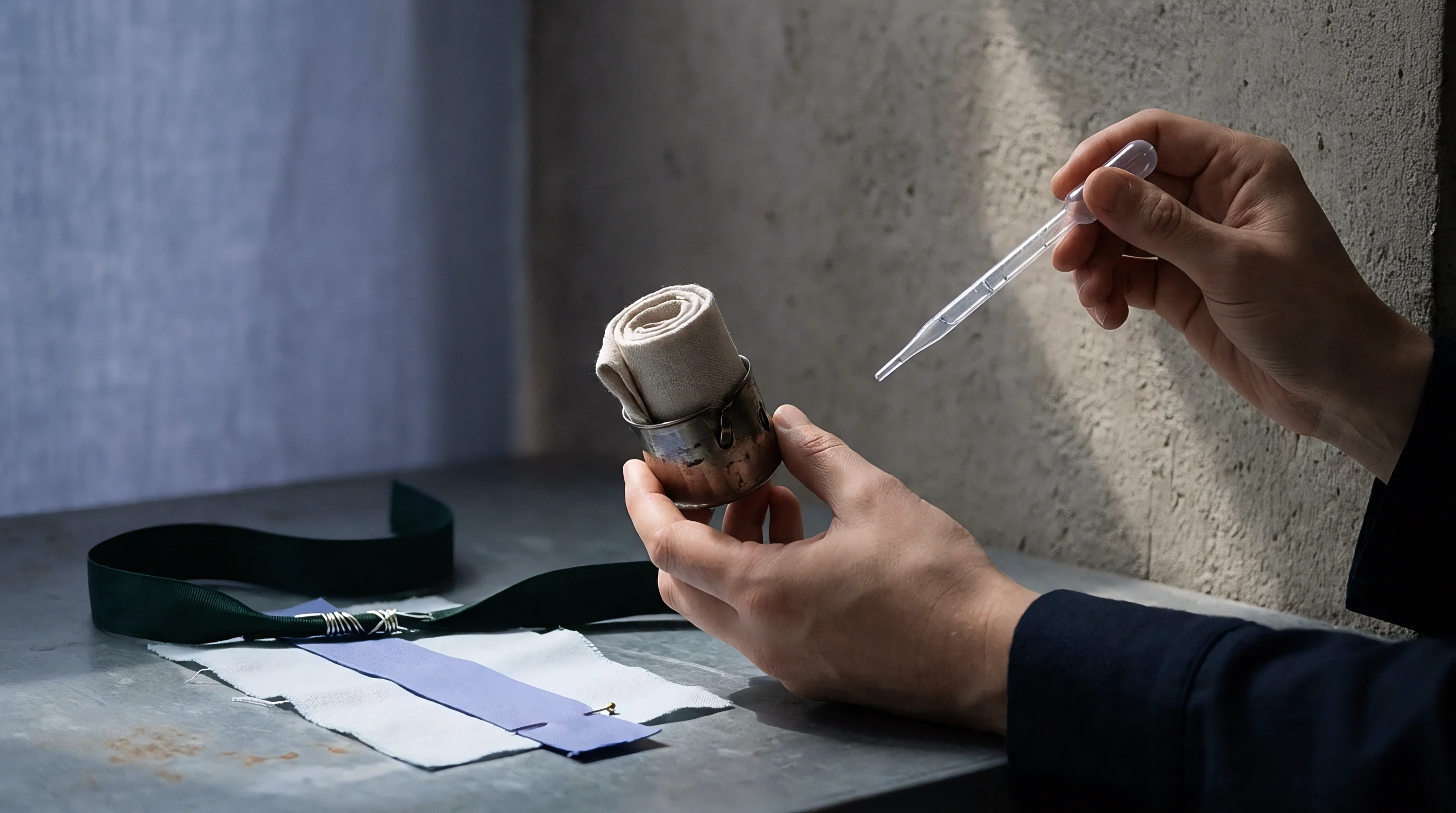
Will Transverse Ellipticity Distort Equivalent Circle Diameters?
Equivalent circle diameter underestimates the resistance flat ribbons encounter in the drafting zone. An elliptical bundle measuring 60 micrometres by 15 micrometres resolves to an equivalent diameter of 30 micrometres, but across drafting pins it bends reluctantly along its major axis, behaving mechanically like a much stiffer 50-micrometre round fibre. Mill drafting setups require both the equivalent diameter and the aspect ratio to set drafts correctly.
Inbound quality control applies several specific criteria before releasing a shipment to drawing:
- Sampling stratification review confirms that test specimens draw evenly from top, middle, and bottom sections of at least ten bales per container.
- Boundary segmentation inspection verifies that automated threshold masks follow true cell wall perimeters without clipping external elementary cells.
- Tail fraction threshold check mandates rejection if bundles exceeding 55 micrometres equivalent diameter constitute more than seven percent of total measured area.
- Aspect ratio verification audits whether the median transverse major-to-minor axis ratio remains below 2.2 across the specimen population.

Cumulative Area Fraction in Hackled Slivers
Ranked by cross-sectional area, the coarsest twenty percent of bundles often account for half the total sliver mass. Fibre count in fine linen yarn depends on bundle cross-sectional area rather than absolute filament count; if thousands of fine fibrils are outweighed by forty percent of mass tied up in coarse, unhackled bundles, the yarn will develop severe count irregularity and periodic faults.
Cumulative area fraction curves determine yarn count suitability by plotting equivalent circle diameter against cumulative cross-sectional area. The diameter where the curve crosses fifty percent cumulative area defines the effective commercial diameter of the parcel. For wet-spun yarns targeted at metric count 60 or higher, this threshold cannot exceed 34 micrometres.
Writing an explicit variance limit under ISO 2370 into the supply agreement prevents suppliers from blending coarse tow into high-grade line sliver under cover of an acceptable mathematical mean.
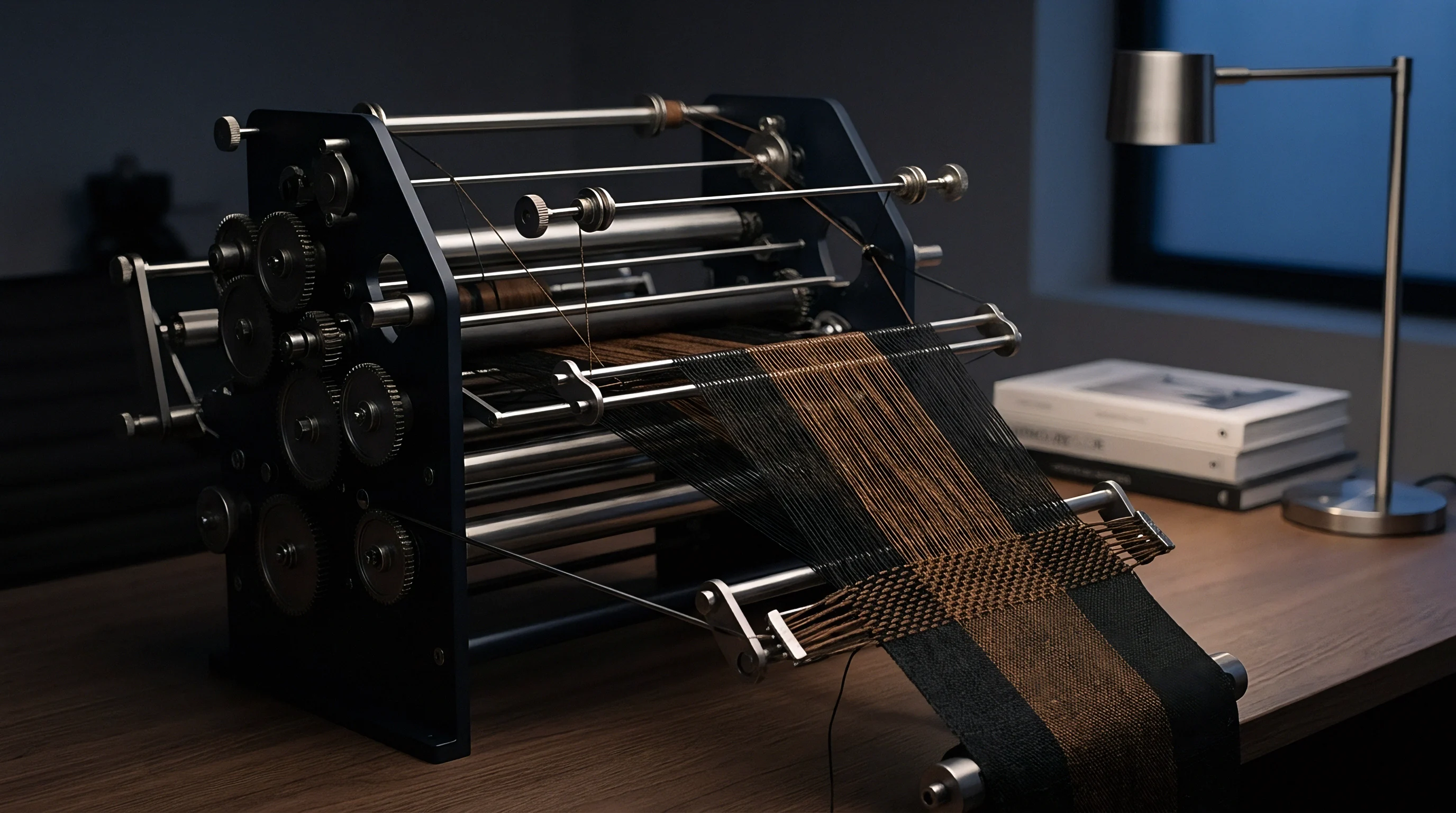
Spindle
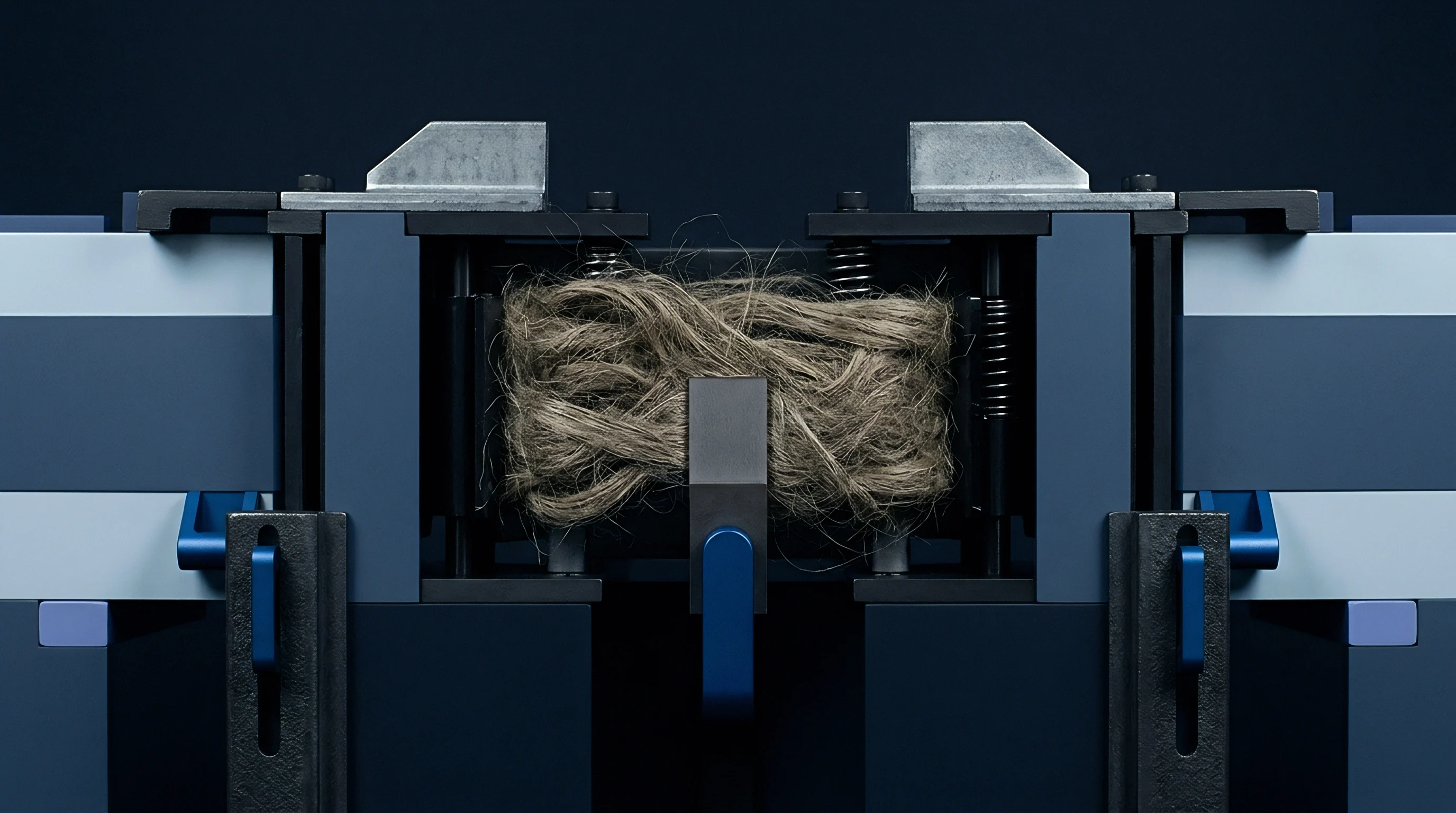
The drafting zone draws roving down to final yarn count through differential roller speeds. In wet spinning, hackled line sliver passes through roving frames, takes on protective twist, and runs through a hot-water trough before entering the front drafting rollers. The bath softens middle lamella pectins, allowing bundles to separate into finer strands under tension.
Optical cross sections establish the practical limit of that division before strands pull apart.
When an inbound lot carries unretted bast fragments, drafting tension exceeds the cohesion of the softened sliver and breaks the strand before it reaches the spindle eyelet. A mill running five thousand spindles cannot operate profitably once end breakage passes twenty-five breaks per thousand spindle hours.

Drafting Limits in Wet Spinning
Trough water heated to sixty degrees Celsius softens intercellular pectins during drafting, with dissolution driven by temperature, immersion dwell time, and water hardness. Fine bundles hydrate quickly and divide into elementary fibrils over short spans. Coarse bundles, by contrast, keep dry internal cores that resist drafting and pass through the nip as solid slubs, degrading yarn uniformity.
| Median Diameter D50 (μm) | Coarse Tail D90 (μm) | Max Target Count (Nm) | Equivalent Lea | Roller Gauge (mm) | Breakage Rate (per 1000 Sp hr) |
|---|---|---|---|---|---|
| 24.2 | 42.5 | Nm 68 | 115 Lea | 38 | 14 |
| 28.5 | 48.0 | Nm 50 | 85 Lea | 42 | 18 |
| 33.0 | 56.2 | Nm 36 | 60 Lea | 45 | 27 |
| 39.4 | 68.5 | Nm 24 | 40 Lea | 52 | 46 |
Running drafts above fifteen on coarse material loads tension onto the remaining fine bundles, generating drafting waves and thin spots. Spinning technicians open the roller gauge to accommodate the commercial diameter determined by optical analysis; lots with higher median diameters require wider settings to prevent fibre breakage, limiting the achievable yarn count.

Metre Pricing and Mill Rejections
Cross-sectional variation cuts straight into spinning margins by seeding warp yarns with slubs. Take a 20-tonne shipment of French scutched line flax purchased at 5.40 Euros per kilogram. The contract specifies dressed line suited for metric count Nm 50 plain weave apparel fabric at 140 grams per square metre with a finished width of 150 centimeters.
Weaving requires warp yarns with a count coefficient of variation under twelve percent to suppress stripiness and keep loom efficiency above ninety percent.
If optical inspection finds a median bundle diameter of 34 micrometres rather than the contracted 28 micrometres, the spinner cannot spin Nm 50 yarn without excessive breaks. The parcel must be downgraded to Nm 30 yarn for heavy furnishing fabric consuming 280 grams of yarn per linear metre. That 20-tonne lot yields roughly 64,000 linear metres of furnishing cloth at 8.20 Euros per metre, compared to 130,000 linear metres of fine apparel fabric selling at 11.50 Euros per metre.
The resulting revenue shortfall exceeds 900,000 Euros across the shipment. Running optical cross-section checks on incoming sliver costs less than 0.1 percent of that exposure, intercepting off-spec lots at receiving before unspinnable fibre reaches the frames. Polygonal bundles draft smoothly through the hot-water bath only when the surrounding pectin matrix hydrates and yields completely before reaching the front nip.