Standardizing Ammonium Oxalate Extraction Regimes for Microbalance Linear Density Audits
Ammonium oxalate extraction at ninety degrees solubilizes middle lamella pectins to isolate elementary flax fibres for accurate microbalance decitex audits.


Foil
Gravimetric linear density testing of elementary flax fibres requires the complete removal of inter-cellular pectins. Raw flax bast arrives at testing laboratories as complex technical bundles in which individual elementary fibres are bound together within a non-cellulosic matrix of pectin, hemicellulose, and lignin. Determining true elementary fibre linear density in decitex requires breaking down this binder without damaging the structural cellulose walls.
Because pectin anchors elementary fibres within multi-cellular bundles, unextracted gum distorts the apparent fibre diameter. When laboratories attempt single-fibre microbalance weighing on poorly separated bundles, the resulting mass measurements reflect composite structures rather than individual cells. This error propagates through all downstream calculations for spinnable limit, yarn count potential, and draft ratios in high-count wet spinning.

Inter-Cellular Pectin Matrix and Fibre Bundles
The middle lamella separating individual flax cells consists primarily of insoluble calcium and magnesium pectate complexes. Scutched flax line fibre contains between four and eight percent total pectin by dry weight, depending on how thoroughly it was retted. Dew-retted Heilongjiang stock and water-retted European flax exhibit distinct pectin solubilization profiles under chemical treatment, but standard gravimetric protocols require fully stripping these binding polymers before single-fibre specimens reach the microbalance pan.
Specimen carriers made of ultra-thin aluminum foil hold individual fibre bundles through pre-weighing, chemical bath immersion, and post-drying cycles. Thermal transfer through the carrier wall dictates how quickly the sample reaches bath temperature; if the foil boats insulate the sample, internal bath temperatures lag behind sensor setpoints, leaving core pectins intact within dense technical strands.

Gravimetric Errors in Non-Standardized Bundles
Incomplete separation produces a bimodal distribution during single-fibre linear density audits. True elementary flax fibres display linear density values from 1.2 to 2.8 decitex, whereas unseparated doublets and triplets yield cluster readings between 3.5 and 7.2 decitex. An unstandardized extraction regime skews the sample mean upward, which can lead buyers to reject high-grade long-staple lots on false coarse-count indications.
- Incomplete middle lamella dissolution leaves technical fibre strands clumped together, resulting in multi-cell gravimetric measurements that skew fineness metrics toward artificially coarse counts.
- Cellulosic acid hydrolysis occurs when excessive thermal exposure degrades structural microfibrils, removing non-pectic cell mass and understating true elementary linear density.
- Precipitate re-deposition happens when cooling extraction liquors deposit insoluble calcium oxalate crystals onto washed fibre surfaces, adding unrepresentative tare mass to the sample.
- Inadequate rinsing cycles retain dissolved organic salts within the internal fibre lumen, artificially inflating the dry microbalance mass reading.
Incomplete pectin extraction flatters fibre bundle thickness, forcing mills into under-drafting frames and generating unrecoverable yarn thick places.


Digest
Aqueous ammonium oxalate selectively chelates divalent calcium ions that anchor middle-lamella pectins in bast bundle structures. Converting insoluble calcium pectate into soluble ammonium pectate renders the middle lamella water-soluble without depolymerizing crystalline cellulose microfibrils. Achieving this selective cleavage requires tight control over reagent concentration, solution pH, bath temperature, and extraction duration.
Reaction temperature governs chelating speed, with weight loss stabilizing at two hours, though excessive boiling hydrolyzes crystalline cellulose. Because deviations in reagent purity directly alter extraction kinetics, commercial ammonium oxalate monohydrate, (NH4)2C2O4·H2O, must carry an analytical grade purity above 99.5 percent. Impurities like trace heavy metals or residual chloride ions catalyze thermo-oxidative degradation of the primary cell wall during extended boiling.
A two-hour extraction in zero point five percent ammonium oxalate at ninety degrees Celsius removes ninety-four percent of middle-lamella pectins without hydrolyzing primary wall cellulose.
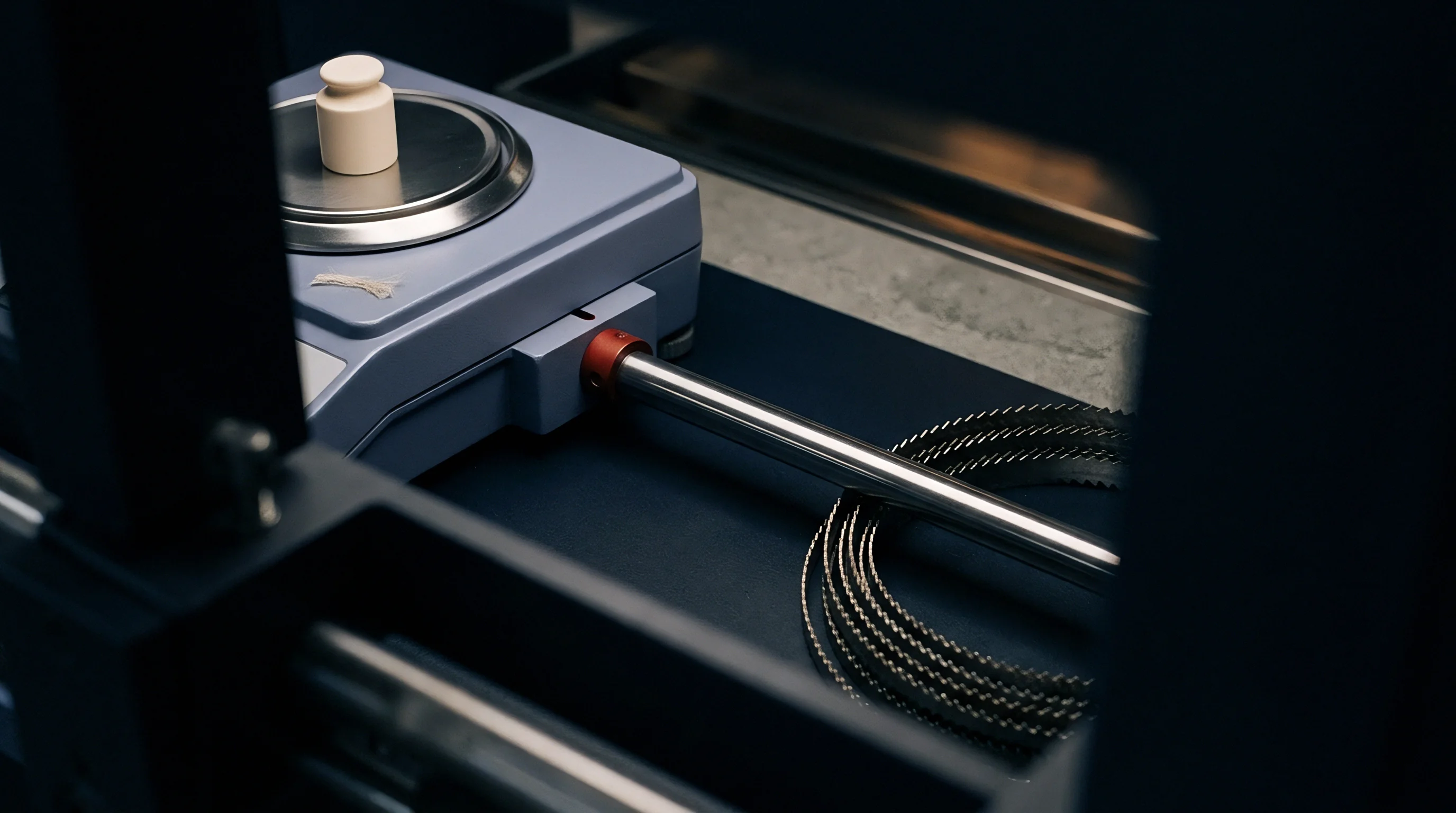
Ammonium Oxalate Reaction Kinetics and Solubilization
The extraction proceeds as a pseudo-first-order reaction in which calcium chelation is the rate-limiting step. Maintaining a solution pH between 5.0 and 5.5 maximizes active oxalate anion concentration while suppressing acid hydrolysis of cellulosic microfibrils. Below pH 4.5, hydronium ion activity accelerates glycosidic bond cleavage along cellulose chains, reducing single-fibre mass and tensile integrity.
Above pH 6.5, chelation efficiency drops, demanding longer exposure times that cause fibre swelling and lumen distortion.
| Extraction Concentration (%) | Temperature (°C) | Duration (min) | Pectin Solubilization (%) | Gravimetric dtex Bias (%) |
|---|---|---|---|---|
| 0.10 | 75 | 60 | 52.4 | +18.6 |
| 0.25 | 85 | 90 | 81.2 | +6.1 |
| 0.50 | 90 | 120 | 95.8 | -0.2 |
| 0.50 | 100 | 180 | 99.1 | -4.7 |
| 1.00 | 100 | 240 | 99.6 | -8.3 |
| Reference values generated under ISO 2370 test conditions at 100:1 liquor-to-specimen ratio on dew-retted long-staple flax. | ||||

Bench Extraction Procedure and Thermal Profile
Standardizing the extraction regime requires an unbroken bench sequence. The laboratory technician controls the thermal profile using sealed reflux condensers to prevent concentration increases through evaporative water loss.
- Desiccate raw scutched flax specimens in a vacuum oven at sixty degrees Celsius for four hours to establish baseline dry weight.
- Prepare a zero point three percent aqueous ammonium oxalate solution using deionized water adjusted to pH five point two.
- Immerse fibre bundles at a liquor-to-specimen ratio of one hundred to one within a thermostatically controlled bath maintained at ninety degrees Celsius.
- Maintain gentle thermal agitation for precisely one hundred and twenty minutes to selectively solubilize middle-lamella calcium pectates.
- Filter the extracted elementary fibres through a coarse glass fritted crucible and rinse three times with boiling deionized water.
- Perform a final wash using absolute ethanol to displace residual aqueous solution and accelerate ambient conditioning stability.
Adhering to ISO 2370 extraction parameters prevents false linear density classifications that trigger contractual price rejections on high-count wet-spun yarns.
Residual gum content provides necessary lubricating strength during dry hackling operations.


Residue
Verifying chemical extraction completeness requires analyzing the non-cellulosic matter left behind after aqueous processing. Incomplete removal leaves residual pectin layers on the elementary fibre surface, altering both dry specimen mass and cross-sectional profile. Technical laboratories combine analytical gravimetry with spectroscopic validation to confirm complete middle-lamella dissolution before placing fibres on microbalance sensors.
Spectroscopic verification focuses on carbonyl absorption bands specific to esterified and unesterified polygalacturonic acids, where infrared peaks confirm structural breakdown and ensure clean washing prevents salt accumulation. The absence of the 1600 cm-1 carboxylate stretching band confirms that the extraction bath successfully removed all binding calcium pectates, preventing residual pectin from inflating gravimetric mass.

Analytical Verification of Extraction Completeness
Gravimetric residue tracking measures the mass differential between untreated technical bundles and extracted elementary fibres. Fully retted and properly extracted long-staple flax exhibits a cumulative mass loss between twelve and sixteen percent. Loss figures below twelve percent point to incomplete gum removal, while losses exceeding seventeen percent indicate severe cellulosic hydrolysis or excessive hemicellulose leaching.
Elementary fibre fineness determines the finest spinnable yarn count long before the sliver reaches the drafting zone.

Impact of Pectin Removal on Decitex Calculations
Single-fibre linear density calculation follows the direct ratio of dry mass to cut length, expressed in decitex (grams per 10,000 meters). Residual pectin acts as non-structural mass. A residual pectin layer measuring just 50 nanometers thick across a 15-micrometer elementary fibre increases calculated decitex by roughly 0.25 units.
In fine wet-spinning calculations, this shift drops the predicted maximum metric count (Nm) from Nm 80 down to Nm 68.
- Carboxylate absorbance profiling via Fourier-transform infrared spectroscopy verifies the complete disappearance of the 1600 cm-1 pectin peak prior to microbalance weighing.
- Gravimetric mass loss tracking confirms that solubilized non-cellulosic matter matches the expected twelve to sixteen percent retting band for long-staple flax.
- Microscopic bundle separation verification ensures that no residual middle-lamella bridges join adjacent elementary cells under forty-times optical magnification.
- Ash content analysis measures inorganic mineral residues to guarantee that ammonium oxalate rinsing removed all chelated metal complexes.
Clear washing water and stable dry sample mass mark the boundary between complete pectin removal and destructive cellulosic attack.


Balance
High-precision quartz transducers and microgram-scale gravimetric instruments require strict environmental stabilization during fibre mass determination. A microbalance capable of resolving 0.1 microgram increments provides the sensitivity needed to weigh elementary flax fibres weighing between 1.5 and 15.0 micrograms per 10-millimeter cut section. Thermal drafts, electrostatic charges, and ambient humidity shifts displace balance equilibrium, introducing random variance into linear density records.
Because microbalances require vibration isolation and static charges easily displace single fibres, electrostatic dissipation units using ionizing radiation sources are used to prevent force distortion on microbalance pans. Reaching moisture equilibrium takes four hours. Individual elementary fibres act as electrostatic dipoles, creating false mass offsets exceeding two micrograms when ungrounded operators transfer specimens using synthetic forceps.

Microgram Mass Measurement and Conditioning Protocols
Environmental control in the testing facility strictly follows ISO 139 standards, maintaining 20 °C (±1 °C) and 65 percent relative humidity (±2 percent). Extracted elementary fibre samples must reach moisture equilibrium within the conditioned space before cut-length preparation. Weighing unconditioned or thermally unstable specimens invalidates linear density audits, as dry cellulose absorbs up to three percent moisture mass within ninety seconds of atmospheric exposure.
| Flax Origin and Retting Method | Hackling Yield Grade | Mean Elementary dtex | Weibull Shape Parameter (k) | Metric Fibre Number (Nm) |
|---|---|---|---|---|
| French Dew-Retted Long Line | Grade 106 / Superfine | 1.42 | 2.15 | 7042 |
| Belgian Water-Retted Line | Grade 104 / Fine | 1.68 | 2.38 | 5952 |
| Dutch Dew-Retted Line | Grade 102 / Medium | 1.95 | 1.98 | 5128 |
| Chinese Green Scutched Tow | Grade 820 / Commercial | 2.45 | 1.62 | 4081 |
| Egyptian Dew-Retted Tow | Grade 805 / Coarse | 2.88 | 1.45 | 3472 |
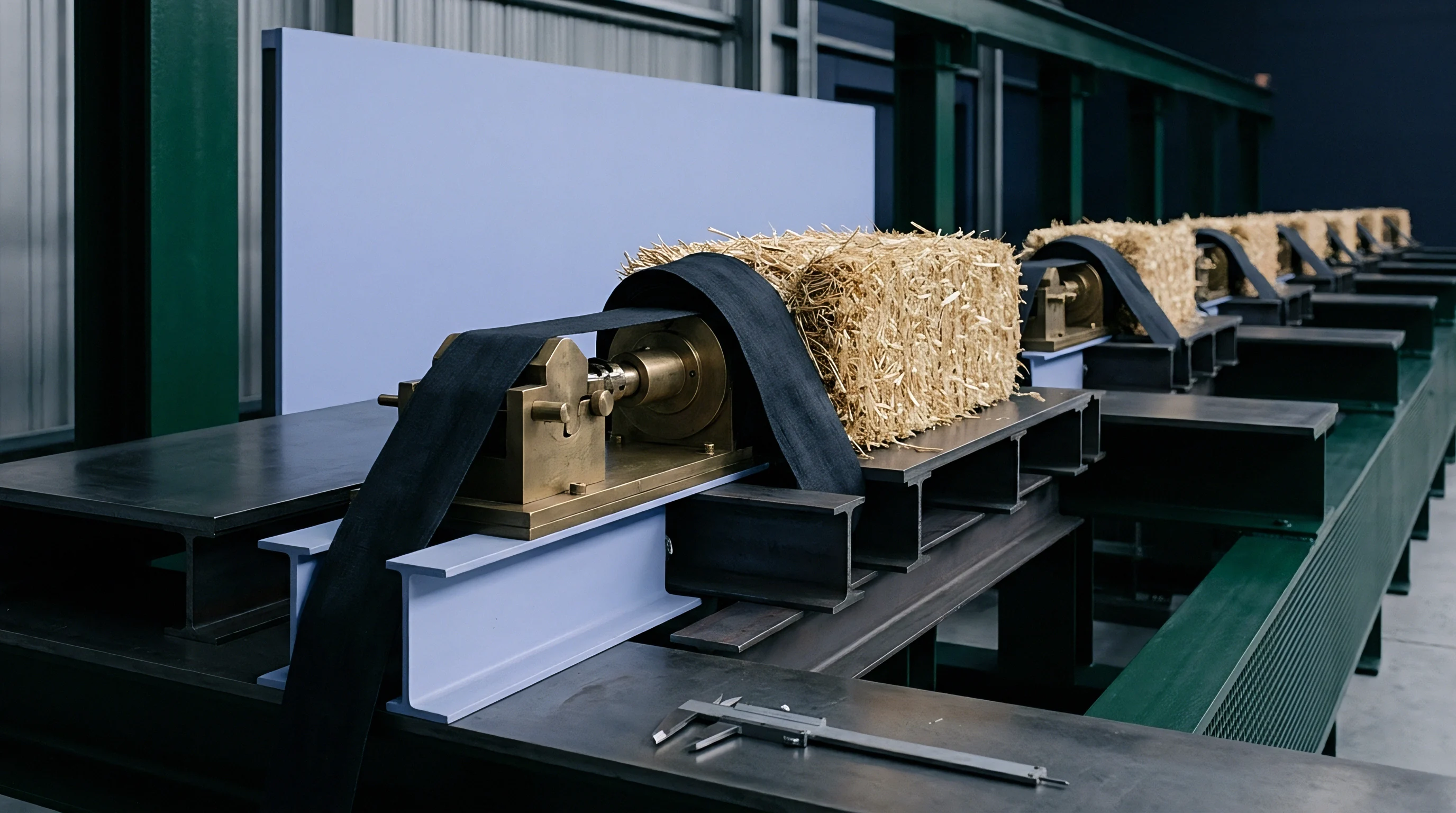
Weibull Distribution of Elementary Fibre Fineness
Elementary fibre linear density does not follow a symmetrical Gaussian distribution. Population data skew rightward, requiring a two-parameter Weibull distribution model to characterize population variance. The scale parameter (alpha) defines nominal population fineness, while the shape parameter (beta) quantifies retting and extraction uniformity.
A low shape parameter below 1.8 indicates severe bundle inhomogeneity, pointing to incomplete ammonium oxalate extraction or inconsistent retting across the field crop.
The exact extent to which ambient humidity fluctuations during microbalance transfers induce electrostatic bias in single-fibre gravimetry remains disputed across international testing laboratories.


Draft
Translating elementary fibre fineness into wet-spinning parameters dictates frame attenuation ratios and roller nip settings. Wet spinning relies on water immersion at 60 °C within the spinning trough to temporarily soften residual pectins in rove strands during drafting. If audited elementary linear density is coarser than declared offer specifications, spinning frames experience excessive end breaks due to insufficient fibre counts in the yarn cross-section.
Because fibre fineness governs drafting limits and coarser cells increase end breakage, accurate decitex data is essential for protecting yield calculations. Maintaining at least 35 to 40 elementary fibres within the yarn cross-section prevents drafting waves and structural weak spots. For an Nm 50 (20 tex) wet-spun yarn, an audited elementary fineness of 1.5 dtex places 133 individual fibres in the yarn cross-section, guaranteeing stable drafting.
If incomplete extraction leads an auditor to measure 2.5 dtex, the calculated cross-sectional count drops artificially to 80 fibres, triggering unnecessary adjustments to roving twist and draft zone gauge blocks.
Unextracted pectins inflate measured decitex readings and disguise poor retting uniformities in commercial flax lots.

Spinning Frame Settings and Attenuation Ratios
Audited linear density data directly feed spinning mill settings. Fine elementary fibres require narrower reach settings between draft rollers to prevent floating fibre uncontrolled slippage. Coarser elementary fibres require higher break-draft tension to split residual bundle structures during attenuation.
Precise ammonium oxalate extraction regimes remove testing ambiguity, allowing mill technicians to configure draft zone geometry based on true cell dimensions rather than aggregate bundle diameters.

Commercial Yield Accounting and Count Guarantees
Raw flax purchasing contracts tie pricing directly to spinnable count capacity and hackling yield. Inaccurate linear density audits distort commercial valuation. A miscalculation of 0.3 dtex on incoming scutched flax translates to a five percent error in predicted yarn yield per metric tonne of raw fiber.
Standardizing chemical extraction regimes ensures that buyer and seller rely on identical gravimetric baselines during contract qualification and invoice settlement.
Incorporating ISO 2370 ammonium oxalate extraction compliance into yarn purchase contracts shifts financial liability for count variation back to the raw fibre supplier.