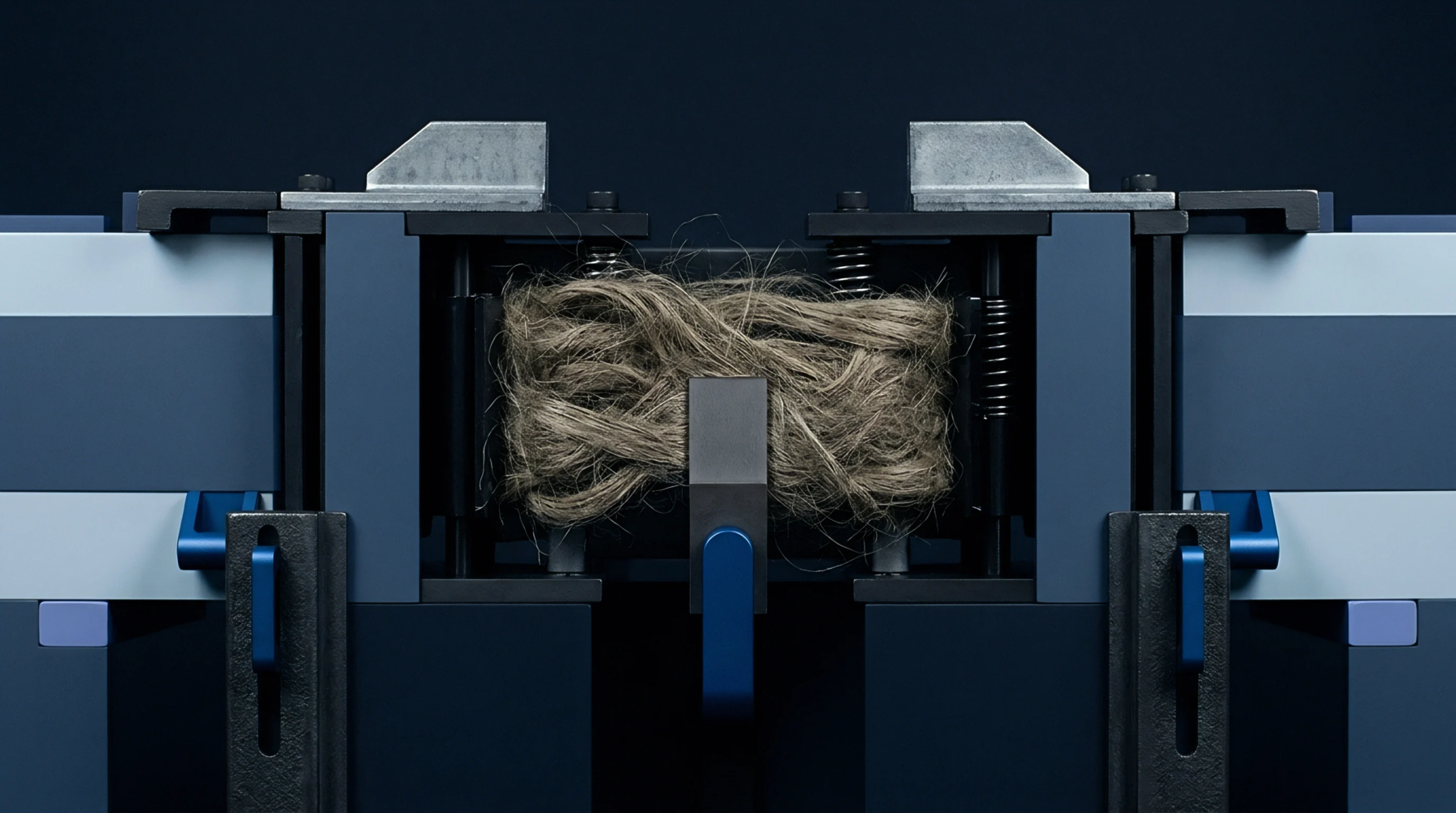
Fibrous Degradation
The chemical breakdown of pectin and hemicellulose binders within flax stalks occurs during wet trough dissolution. Controlled submersion in a heated aqueous medium facilitates the enzymatic loosening of bundles from the woody core. Mill operators monitor the liquor concentration to ensure the structural integrity of the long fibre remains within technical limits.
Excess alkalinity during this stage weakens the cellulose polymer chains and reduces the eventual yield of high grade line flax.
Chemical Maintenance
Temperature regulation of the immersion bath prevents inconsistent softening across the fibre batch. Maintaining a constant pH allows for predictable extraction speeds regardless of seasonal fluctuations in raw flax composition. Technicians adjust the feed rate based on the liquor saturation levels to avoid premature degradation.
Sudden increases in heat output cause uneven swelling that creates weak spots in the yarn.
Acceptance Criteria
Buyer specifications for export fabric define the maximum allowable fibre damage resulting from immersion. Quality auditors review the tensile strength reports produced by the finishing plant after the drying phase concludes. Standardized tests distinguish between natural fibre variations and defects caused by improper control during the dissolution process.
Mills providing consistent test results obtain higher valuation because the uniform strength profile reduces downtime in downstream weaving operations.