
Enzymatic Degumming Effects on Bast Fiber Drafting Resistance
Enzymatic degumming cleaves middle lamella pectins to drop fiber drafting resistance from 38 down to 12 N/ktex, enabling high-speed spinning up to Nm 60.
Enzymatic degumming cleaves middle lamella pectins to drop fiber drafting resistance from 38 down to 12 N/ktex, enabling high-speed spinning up to Nm 60.

Optimizing wet spinning trough fluid drag through 72°C temperature control and surfactant addition reduces drafting tension, lowering fine yarn breaks.
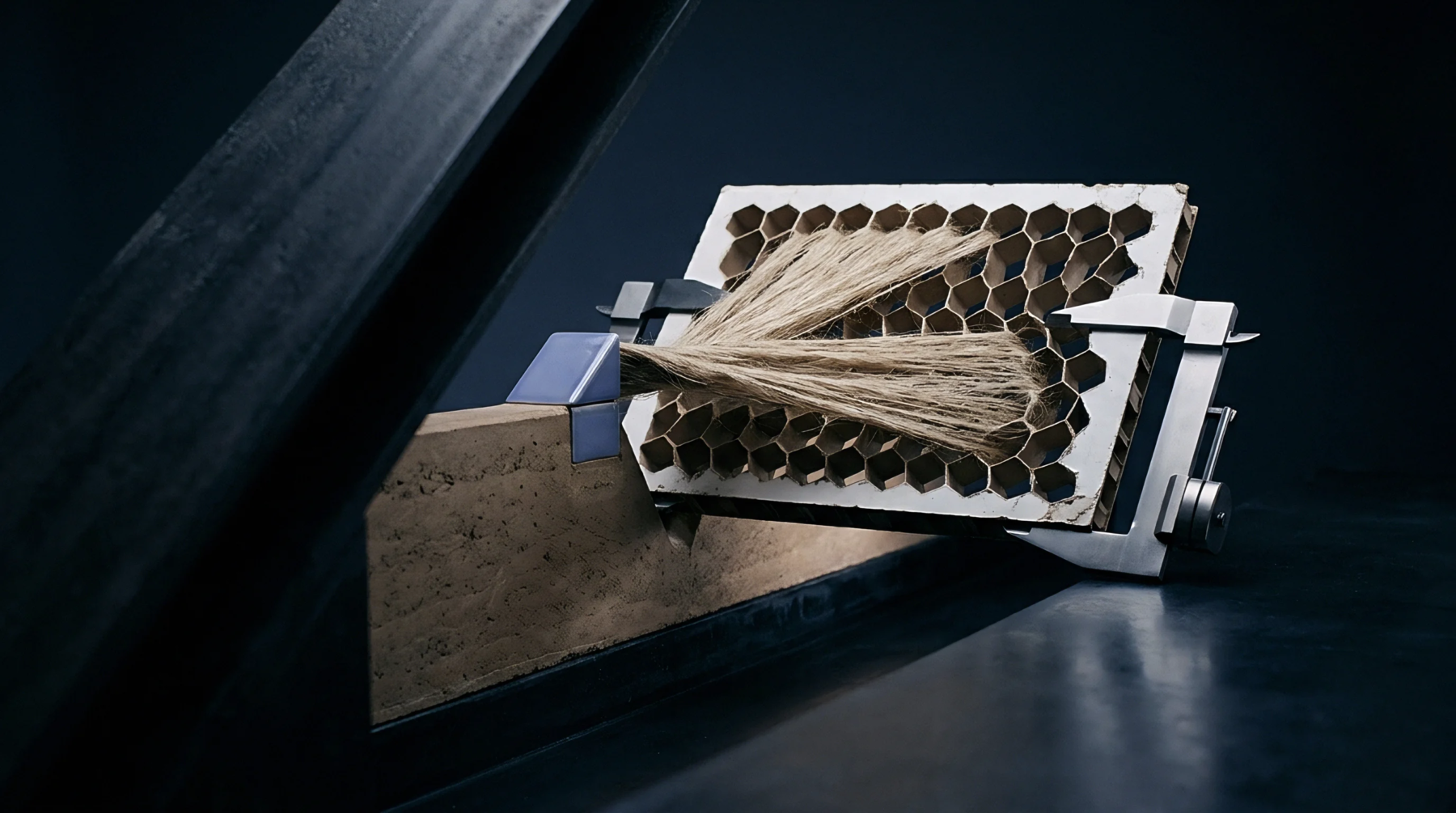
Radial cell wall swelling compresses bed voids non-linearly, requiring sorption-corrected Kozeny-Carman transforms to prevent false coarse grading in line flax.

Gravimetric cut-and-weigh bundle testing under ISO 2370 defines line flax linear density in tex, controlling hackling yield and wet-spinning count limits.

High-speed wet spinning requires trough bath temperature control above 65°C and pH 5.5 to sustain homogalacturonan demethylesterification before drafting.
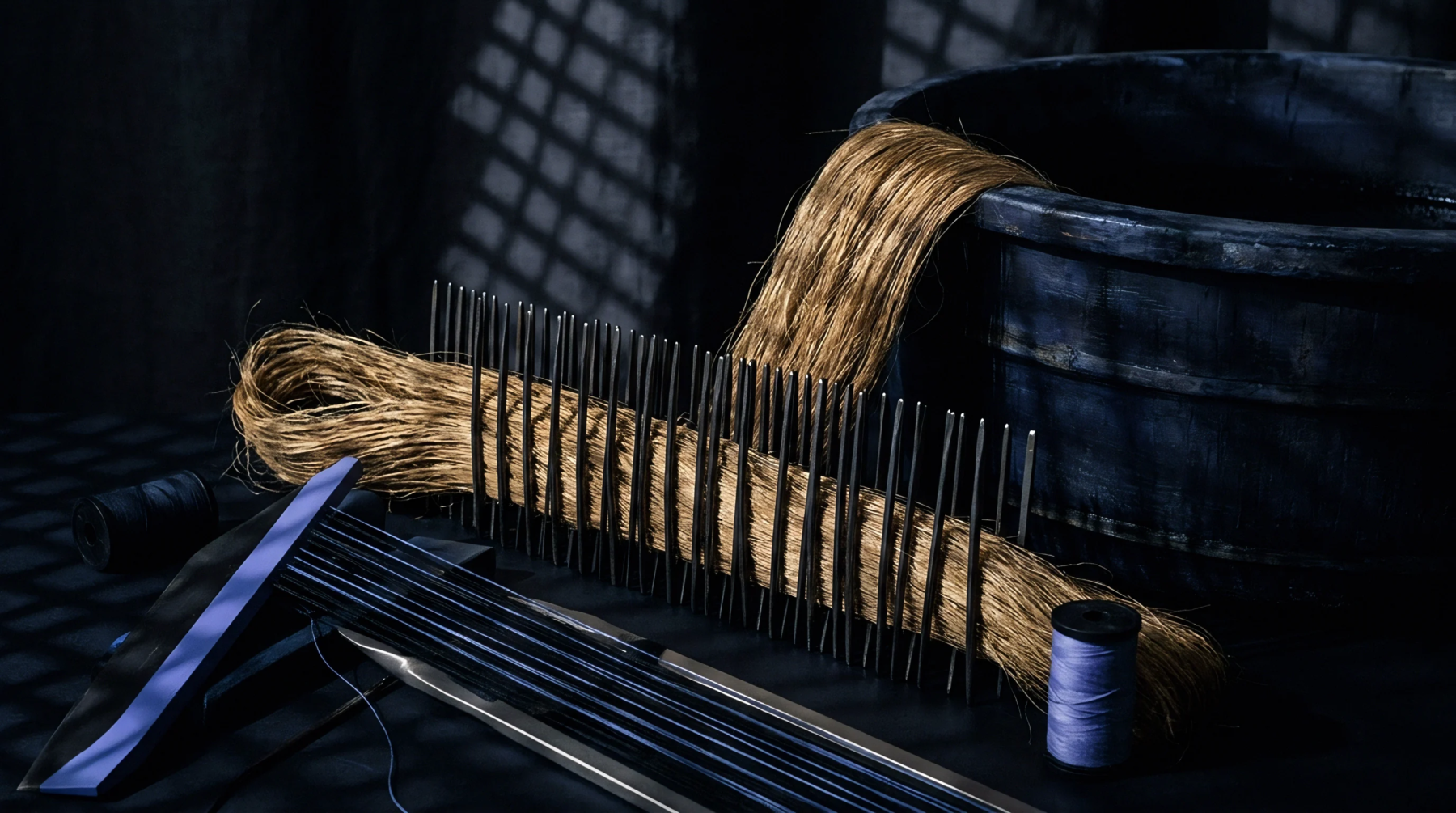
Cross sectional fineness variation in flax bundles dictates wet spinning draft limits, yarn mass evenness, end breakage rates, and delivered metre costs.
Expertise is a utility, not a secret. sentiention™ publishes its working knowledge as open reference: intelligence layer covering the materials it sources, the markets it enters, and the reference that serves both.