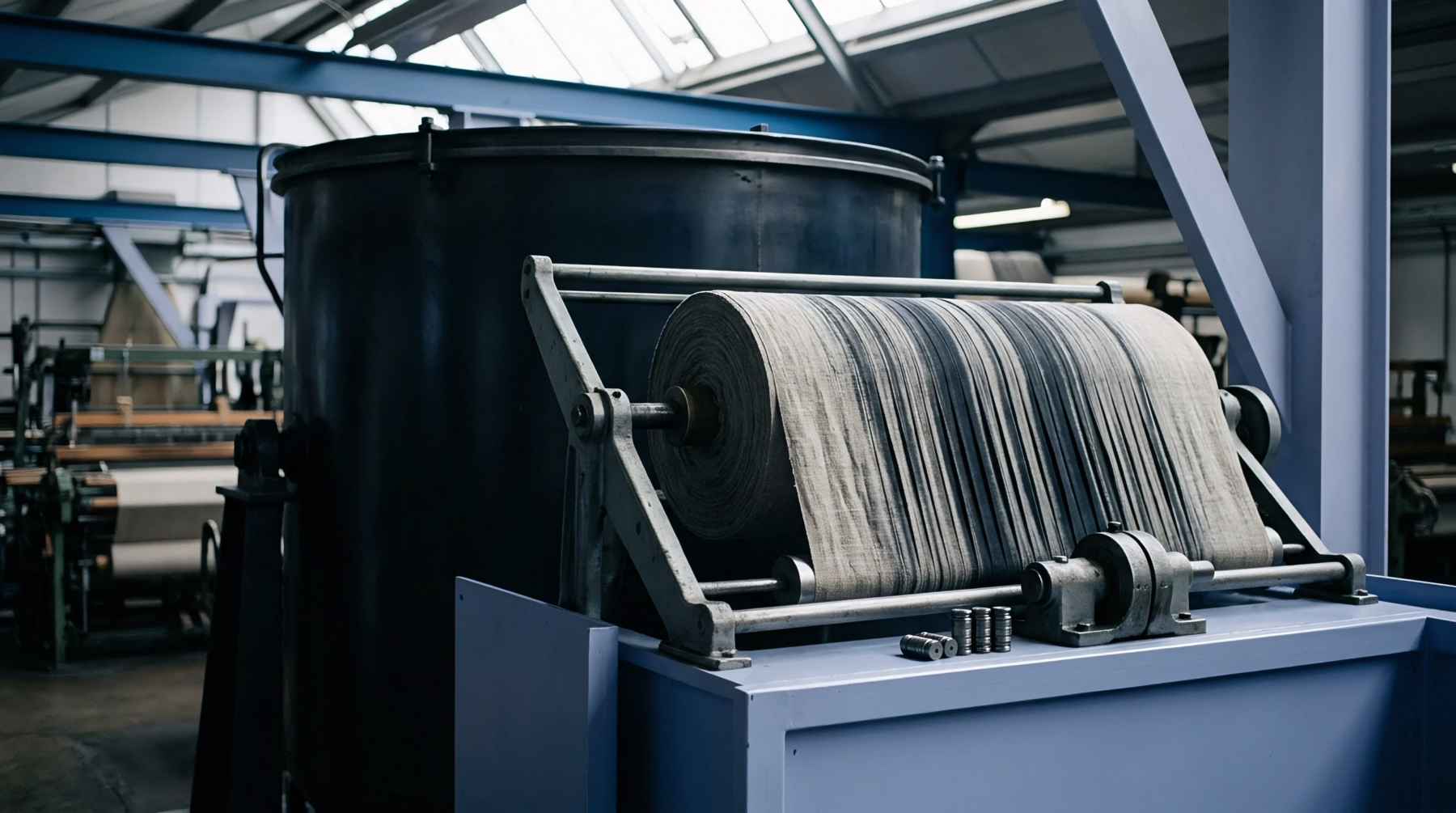
Initial Defect
Weaving loom stoppage marks form during the mechanical interruption of flax yarn feed on high speed pneumatic equipment. A starting mark defect represents an abrupt line across greige fabric caused by tension relaxation in warp threads during lengthy loom idle cycles. Production supervisors grade this horizontal distortion at the grey inspection stage before wet processing begins in Chinese export mills.
Handlers record the physical frequency of the flaw inside daily loom shed audit logs. Standard mill acceptance thresholds tolerate minor tension lines within interior home textiles yet reject identical faults destined for fine European shirting orders. Buyer contracts usually specify stricter limits than internal mill quality guidelines.
Tension Mechanics
Machine operators prevent warp relaxation by applying precise beam braking torque during emergency stops. Automatic controllers adjust pneumatic pressure values immediately after startup to eliminate uneven yarn elongation across the reed width. Mechanical backlash inside the take up roller assembly frequently triggers residual slip during the initial pick insertion cycle.
Workers calibrate clutch mechanisms every shift to minimize the physical displacement distance of the shedding motion. Proper warp tension maintenance stops the propagation of permanent density variations through subsequent finishing stages.
Commercial Impact
Exporters classify flawed pieces as seconds and apply heavy price deductions before shipping merchandise to international buyers. Garment makers discard damaged yardage during automated cutting operations to maintain garment structural integrity. Strict grading protocols protect the reputation of regional producers handling organic flax fibers from northern cultivation provinces.
Quality inspectors verify defect severity against standardized physical swatches kept in factory archives. Careful adjustment of start stop sequences reduces waste percentages across commercial production runs.