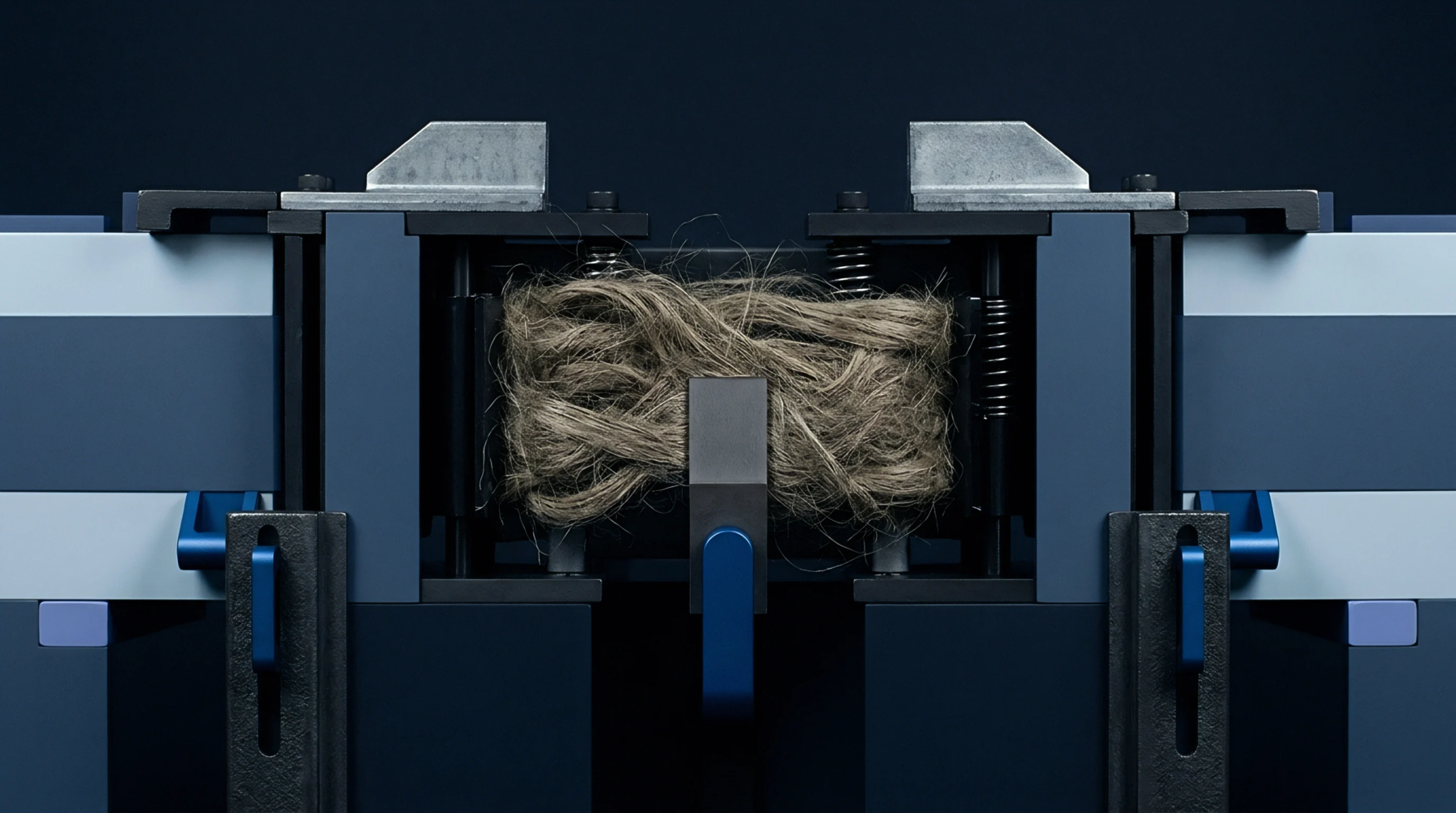
Saturation Operation
Liquid saturation of twisted flax roving inside temperature-controlled hot water baths softens middle-lamella pectins prior to roller drafting. Designated as roving impregnation, this preparatory wetting step replaces air pockets within the fibrous core with water containing surfactant chemistry. The operational boundary covers the fluid entry path through dip immersion rollers, capillary wick zones, and bath guide bars inside wet spinning frames.
The definition terminates where the saturated roving enters the back feed nip of the drafting assembly.
Penetration Mechanics
Twist levels, bundle diameter, liquor surface tension, and bath temperature govern the rate of fluid penetration into the roving body. When bath liquid is maintained at sixty-five degrees Celsius, roving impregnation plasticizes inter-fibre pectic binders within seconds of transit through the trough. Uniform saturation ensures uniform drafting force along the roving length, preventing hard, dry roving cores from entering the drafting rollers.
Insufficient liquor dwell time produces dry cores that fail to draft, creating thick bundle defects and yarn breakage. Excessive immersion or chemical aggressiveness weakens natural bundle cohesion, generating excessive floating fibre waste and slub formations. Spinning technicians evaluate roving wettability through sinking tests and moisture regain measurements logged on daily machine setting cards.
They inspect impregnation guides continuously to eliminate roving chafing and uneven liquid pick-up across running spindles.
Acceptance Conditions
Yarn count cv percent and overall tensile strength correlate directly with fluid saturation uniformity across multiple spindle banks. Export yarn quality contracts define strict limits on mass variations originating from deficient roving impregnation during wet spinning runs. Stable liquid absorption across the roving core maintains consistent drafting tension during wet yarn production.