
Non Linear Deformability and Pectin Softening Dynamics in High Speed Shedding
Dynamic pectin plasticization causes non-linear warp elongation in high-speed shedding, requiring precise humidity bounds and sizing chemistry to prevent breaks.
Dynamic pectin plasticization causes non-linear warp elongation in high-speed shedding, requiring precise humidity bounds and sizing chemistry to prevent breaks.
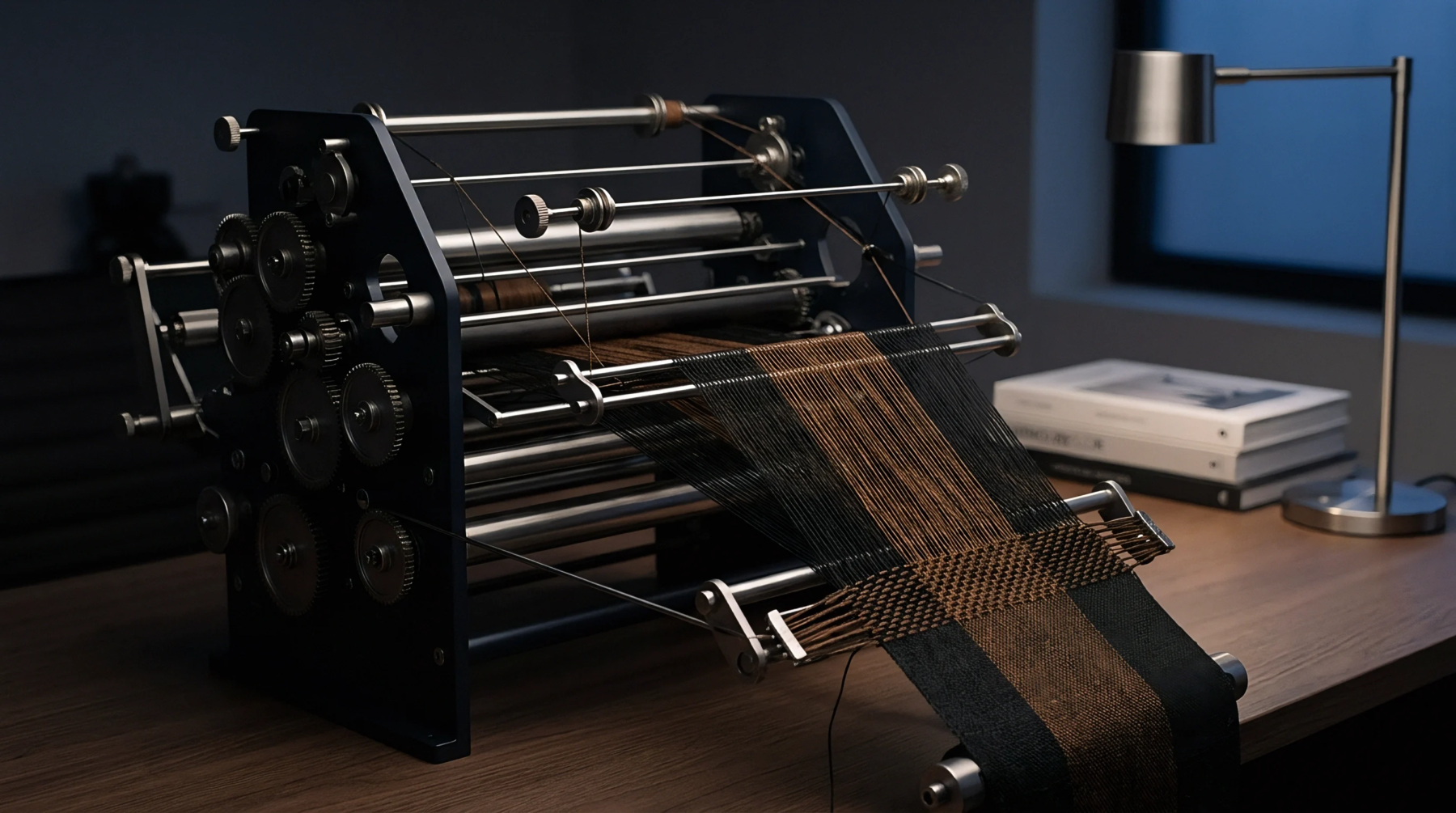
Flax yarn stiffness forces dynamic crimp interchange during beat-up, where warp tension directly converts warp curvature into weft deflection.

Nonlinear crimp interchange in heavy bast finishes stems from elastoplastic bundle flattening and pectin glass transitions, demanding exact loom-hour planning.
High warp tension on rapier looms stabilizes heavy linen shed clarity but causes fell rebound, edge-to-center pick density variance, and off-loom width contraction.
Limiting fine flax warp elongation below two percent through asymmetric shed geometry preserves loom speeds above five hundred picks per minute.

Active ease-off calibration couples positive mechanical linkages to shed timing, absorbing shedding peaks to keep low-extension flax warps below yarn break limits.

Stepped nozzle pressure profiles paired with high-film-strength size formulations reduce aerodynamic shear forces below wet-spun flax surface bundle cohesion.
Expertise is a utility, not a secret. sentiention™ publishes its working knowledge as open reference: intelligence layer covering the materials it sources, the markets it enters, and the reference that serves both.