Fineness Standard
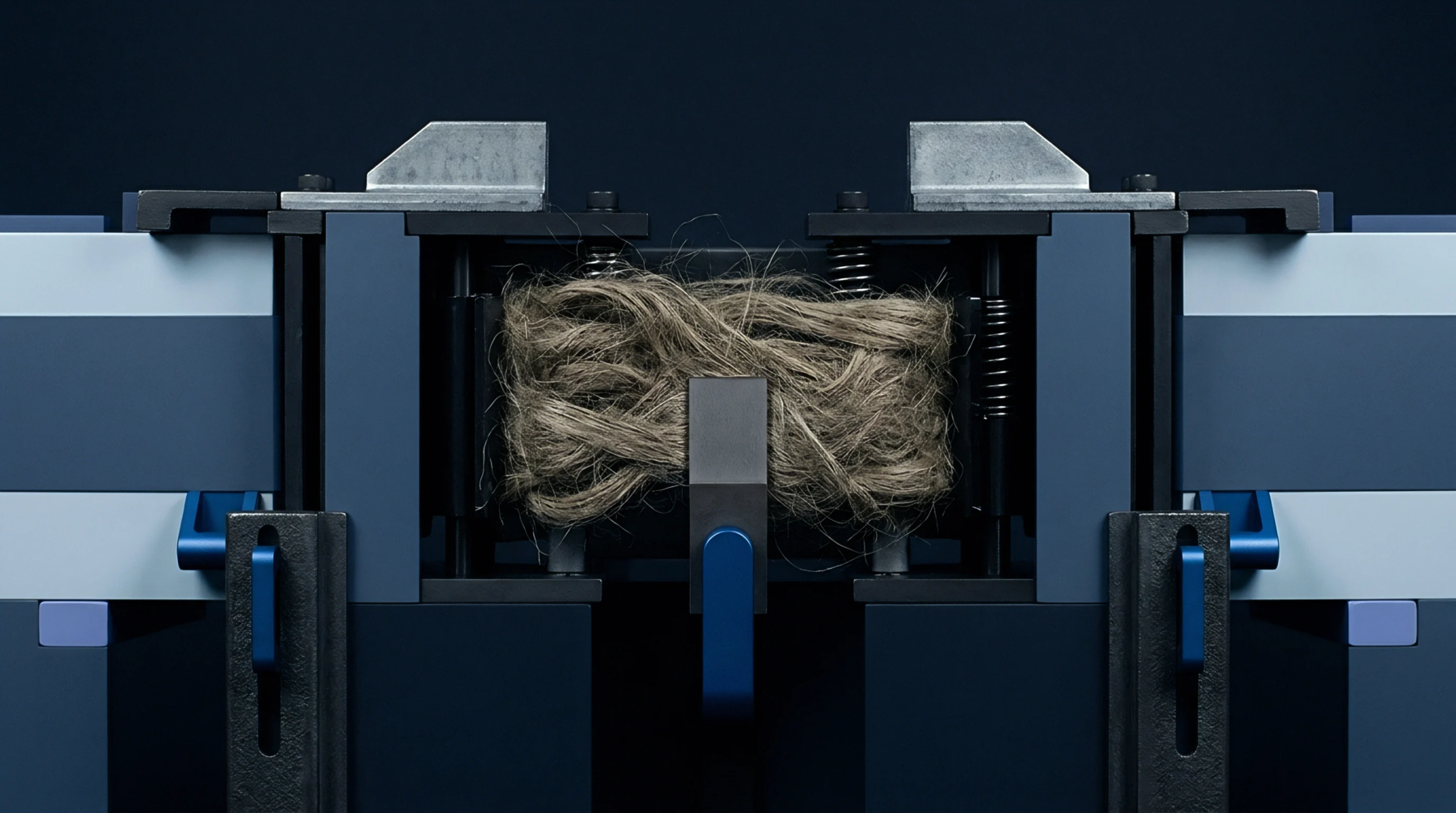
International testing protocols for determining the average diameter of flax fibres by airflow measurement establish a consistent baseline for trade transactions. Adherence to the ISO 2370 fineness test enables spinning mills to verify the micron rating of incoming flax consignments before processing. This standard measures the resistance of a compressed pack of flax fibres to a controlled stream of air.
Results are expressed as a specific permeability value that correlates with the average thickness of the flax fibres.
Measurement Mechanism
Operation of the test apparatus requires a dry, loose mass of flax fibres prepared to a specific weight and compressed to a precise volume. Air is drawn through the sample chamber, and the pressure drop across the bed of fibres is registered on a graduated manometer. Fine fibres present a greater total surface area, which restricts airflow and produces a higher pressure drop.
Coarse fibres allow the air to pass with less resistance, resulting in a lower pressure drop on the scale. Technicians must conduct multiple tests on each lot to account for the natural variation in flax fibre structures.
Commercial Valuation
Spinning mills use the airflow data to group flax bales into compatible blending lots that ensure consistent yarn properties. A raw material batch that meets the fineness criteria allows the mill to spin fine, high-count yarns for premium linen fabrics. The test certificate issued under this international standard prevents disputes between flax growers and spinning mills by providing an objective, verifiable measurement.