Roller Separation
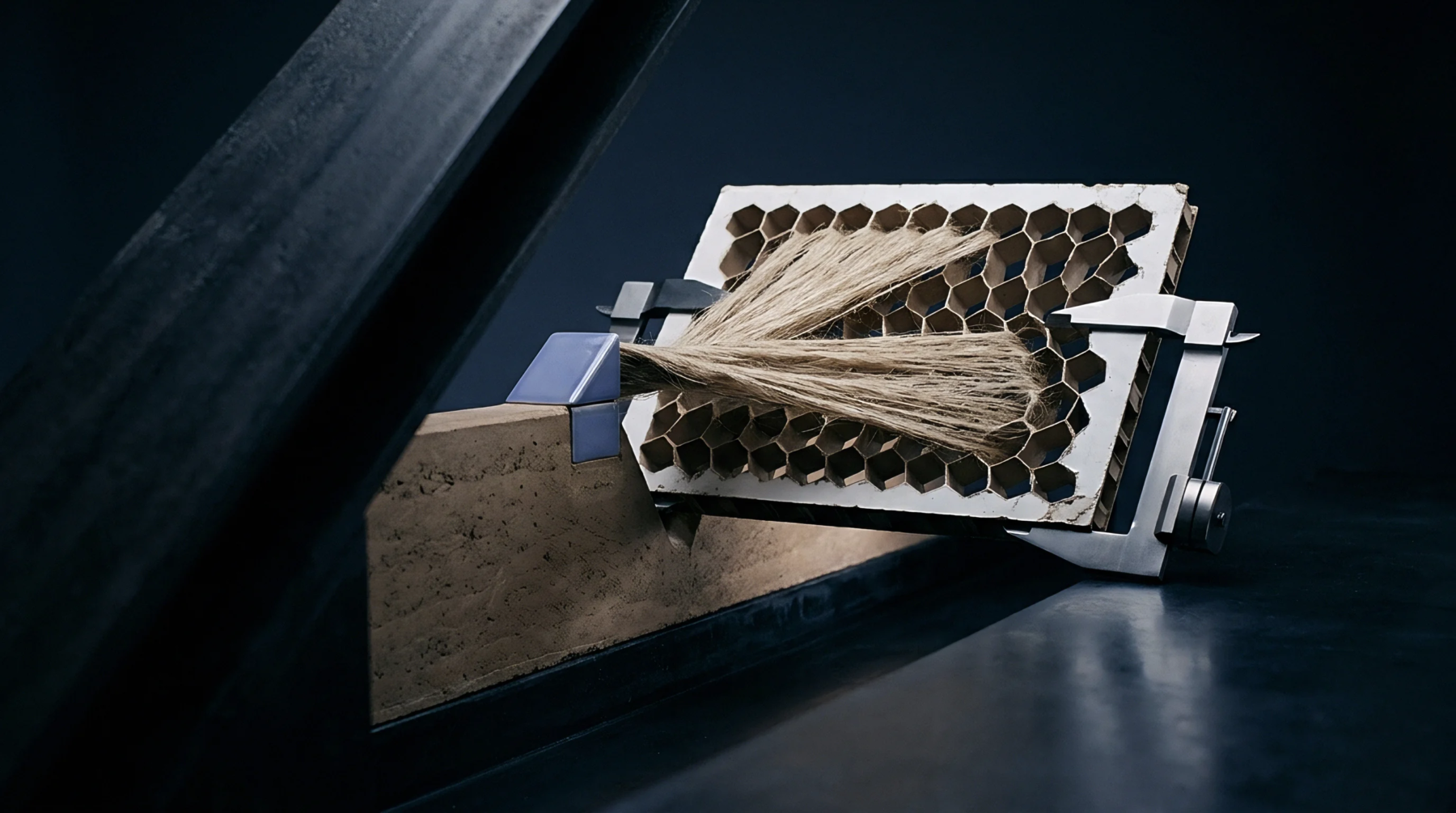
Mechanical pull applied between consecutive drawing frame delivery rolls determines drafting zone tension during flax sliver attenuation in Chinese spinning mills. Slippage occurs immediately when fiber friction falls below the tractive force exerted by the faster rotating front cylinder pair. Excessive drawing load strips short staple components from the parallelized bundle and leaves thick slubbing defects in the product.
Shandong processing facilities record this operational parameter on daily production logs alongside ambient relative humidity percentages.
Draft Resistance
Fiber slippage thresholds depend directly upon strand density, roller weighting values and the linear speed differential maintained across the porcelain break bar. Unprocessed flax roving exhibits higher internal cohesion than cotton stocks because natural pectin residues bind adjacent elementary cells together within the technical fibers. Modern automated drawing machinery incorporates piezo electric sensors to monitor slippage rates continuously during high speed sliver consolidation runs.
Mill technicians adjust weighting arm pressure whenever raw material moisture content deviates from standard processing baselines.
Stretch Allowance
Residual elongation capacity remaining after fiber slippage determines whether final yarn exhibits adequate tensile strength for high speed weft insertion on air jet looms. Excessive mechanical drag during drawing stretches individual elementary cells beyond elastic recovery limits and leaves the yarn permanently weakened. Quality control inspectors verify conformity against buyer purchase specifications using standard dynamometer breaking length tests on conditioned samples.
Final product grading separates high density export warp yarns from weaker filling yarns based upon uniform elongation measurements recorded in the mill laboratory.