Needle Pitch Configuration
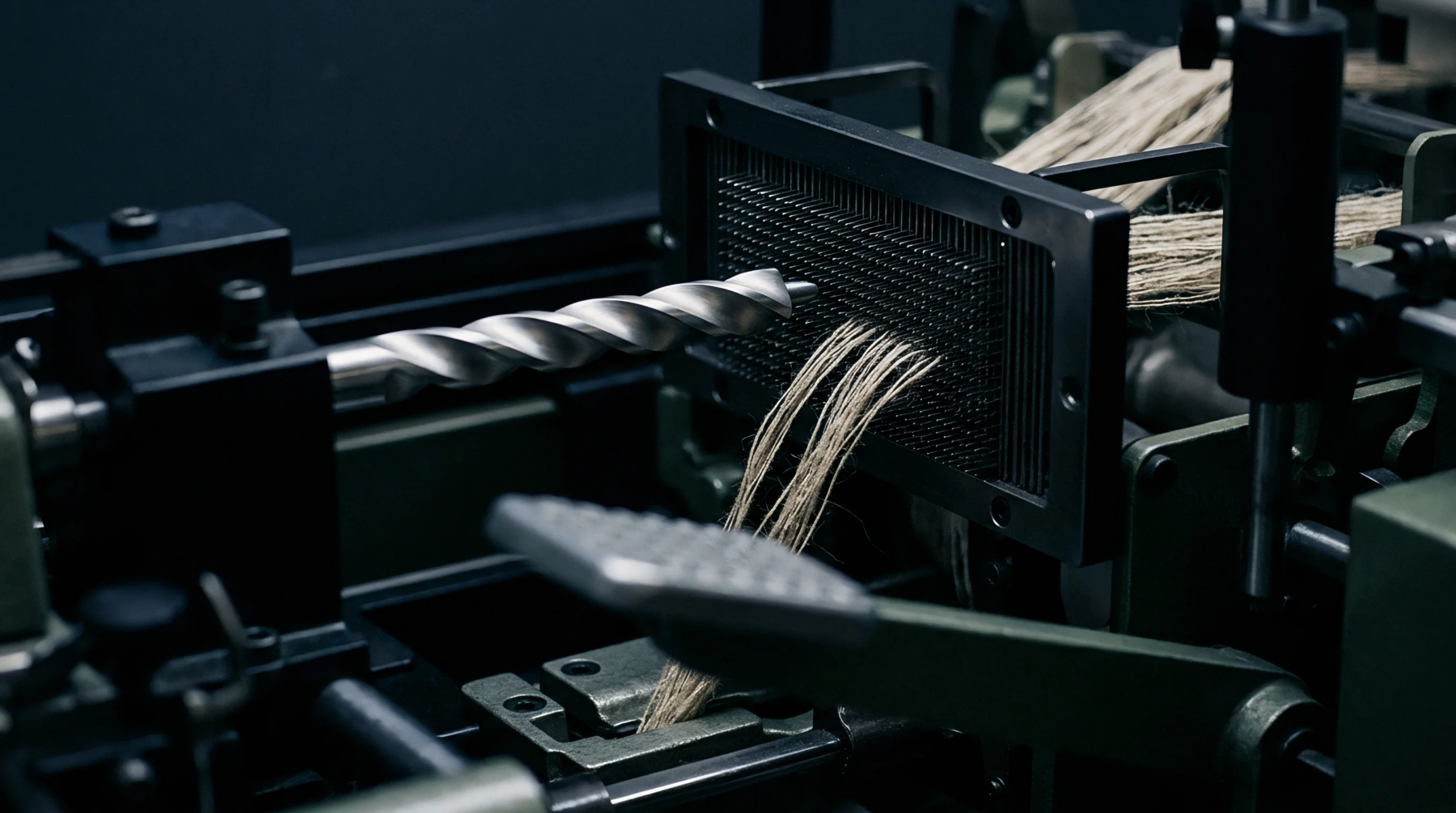
Mechanical specifications for hackling machinery determine the effectiveness of fiber parallelization during the initial stages of flax processing. Comb pin density describes the number of needles per unit of length along the gill bar or comb. This arrangement dictates the degree of trash removal and the separation of short fibers from long line flax.
High concentrations of pins allow for finer separation but increase the risk of fiber breakage if the input material is too coarse or tangled. Parallelism is the goal.
Hackling Throughput Regulation
Efficient processing of scutched flax depends on the resistance encountered as the fiber bundle passes through the pins. When comb pin density is too low, the machinery fails to remove sufficient shive or nep, leading to lower yarn quality. Conversely, excessive density generates heat through friction and can damage the brittle flax stems.
The interaction between the pins and the flax bundles creates a physical barrier that traps impurities and ensures the fibers are evenly spaced. Mill technicians calculate the optimal load to prevent the machine from clogging during high volume production runs. Managers in Chinese mills adjust these settings based on the moisture content and fiber diameter of the incoming lot.
A denser configuration is typically reserved for the final stages of a multi-stage hackling process.
Maintenance Frequency Limit
Regular inspection of the combs ensures that individual pins remain straight and sharp. Bending or blunting of the needles occurs more frequently when comb pin density is high due to the increased lateral pressure of the fiber mass. Damaged pins create streaks or unevenness in the sliver that persist through to the spinning stage.
This wear is monitored through periodic visual checks and replacement cycles documented in the mill maintenance log.