Wet Spun Linen Yarn Tensile Testing Standards
Testing wet spun linen yarn under ISO 2062 requires pneumatic horn clamps and sixty-five percent relative humidity to achieve accurate tenacity measurements.

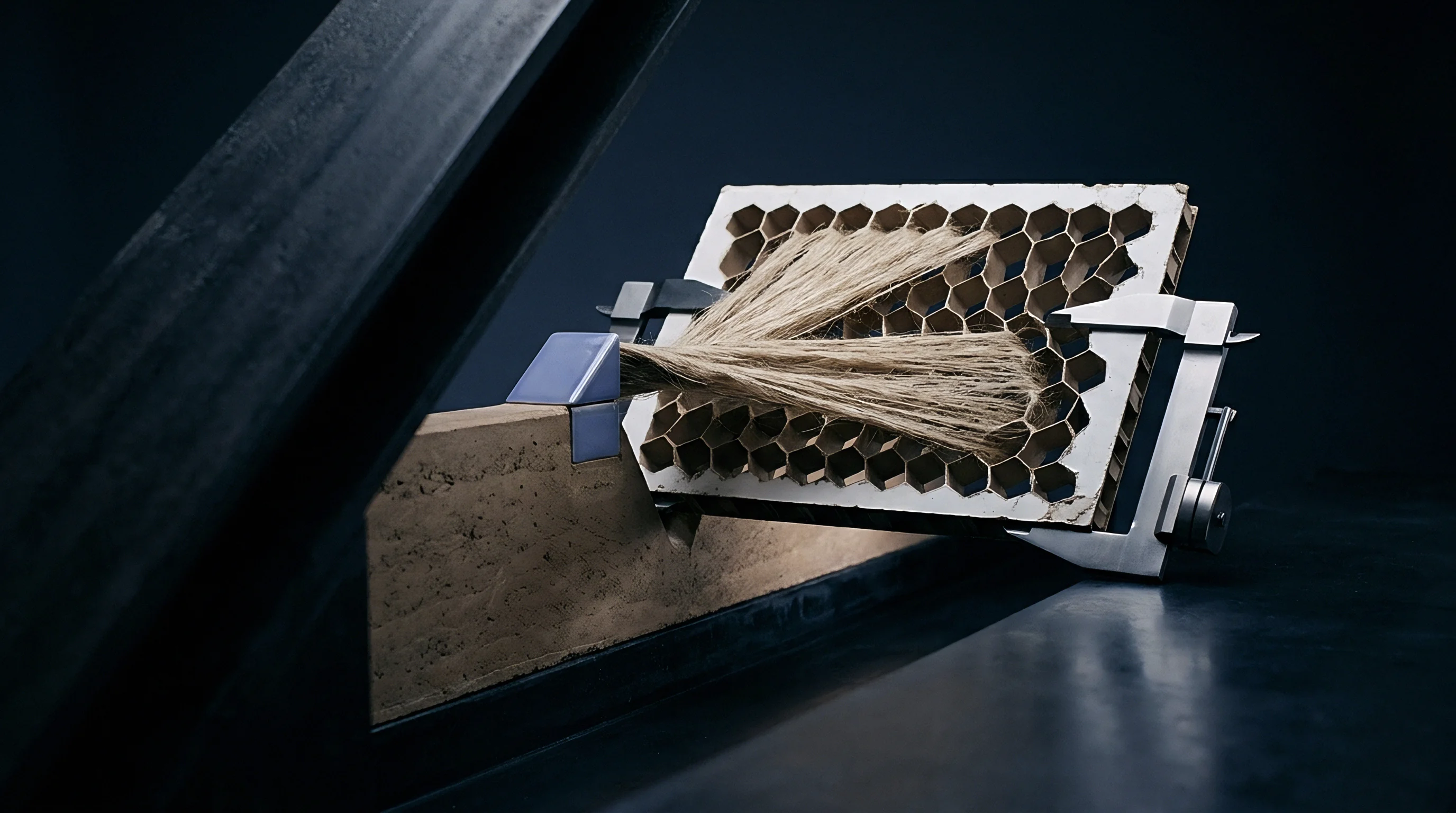
Clamp
Securing wet-spun flax in a tensile testing frame presents clear mechanical challenges. These yarns have a high initial modulus paired with very low elongation at break ~ typically between 1.5% and 2.8%. Unlike soft-spun cotton or synthetic filaments, bast fiber bundles offer little transverse compressibility.
Standard flat jaws create high stress concentrations right at the clamping edge, causing the rigid cellulose structure to snap at the grip line long before the free span reaches its true breaking load. Reliable testing requires a jaw geometry that eliminates these edge breaks while holding the yarn without slippage.

Jaw Geometry and Gripping Mechanics
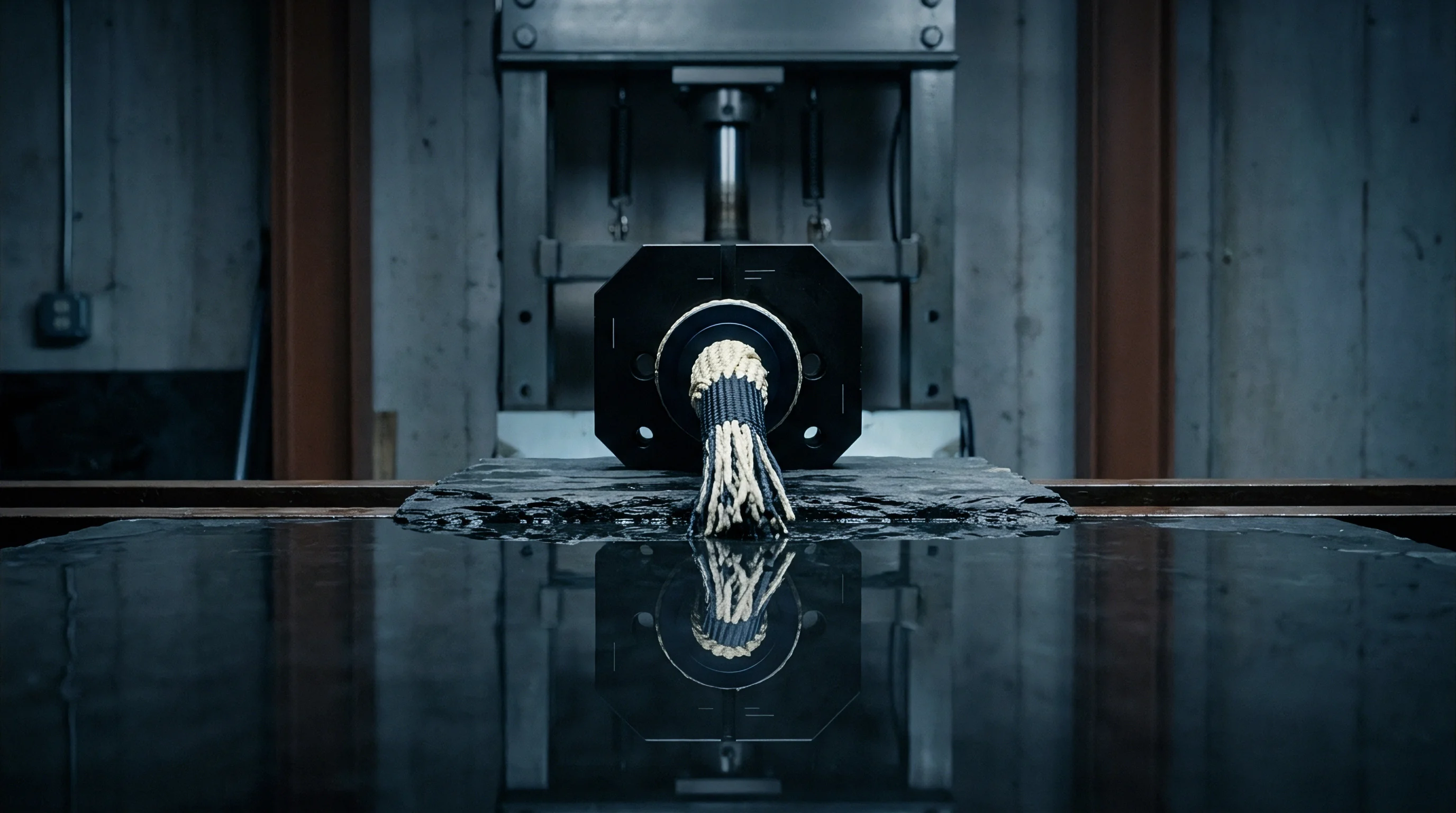
Flat metal plates crush crystalline bast fibers, creating stress points that cause premature breaks near the grip line. Capstan jaws and pneumatic horn grips prevent this by wrapping the yarn around a curved surface before pinching the end. That contact arc relies on friction to bleed off tension along the strand, lowering the clamping force needed at the terminal pinch point.
Lining the smooth anvil faces with vulcanized rubber or high-density polyurethane accommodates minor diameter changes along the yarn, preventing local point loading.
Jaw face selection determines whether tensile failures occur within the gauge length or inside the clamps. ISO 2062 mandates discarding any test break occurring within 5 mm of the jaw face if the recorded force falls below the sample population average. Capstan clamps with a 12 mm or 25 mm barrel diameter reduce edge-effect jaw breaks ~ which invalidate the test specimen ~ to below three percent across large sample sets.
Pneumatic clamping at 0.5 MPa on capstan faces reduces jaw-line specimen breakage below three percent during ISO 2062 testing of wet spun flax.
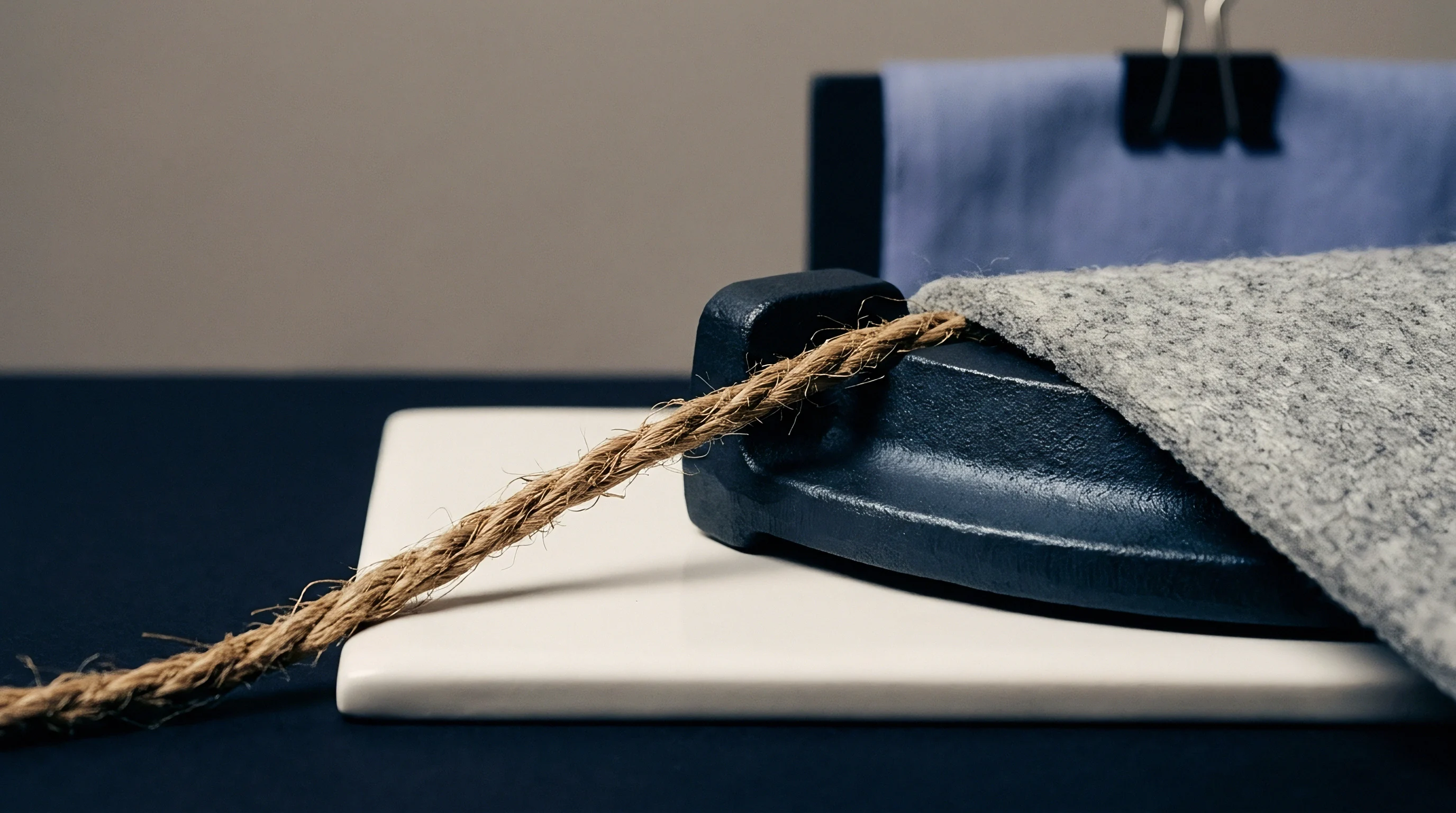
Pneumatic Pressure Limits
Modern holding assemblies use compressed air to maintain uniform lateral force throughout crosshead displacement. Mechanical screw clamps rely on operator feel ~ over-tightening crushes fine yarns, while under-tightening permits strand slippage. Pneumatic horn grips supplied with constant line pressure between 0.4 MPa and 0.6 MPa maintain stable holding forces on flax counts from Nm 10 to Nm 80.
As the yarn thins under load, pneumatic actuators continuously adjust jaw spacing to keep normal force constant.
Pectin binding governs yarn cohesion, so if line pressure is too low, thick slubs or dry retting nodes pull through the grips, producing artificially extended force-elongation curves and invalid strain figures. Conversely, clamping pressure above 0.7 MPa shears outer cortical fibers in wet-spun yarns, creating premature failure points. Standard laboratory protocols fix pneumatic line pressure based on yarn linear density, ensuring grip stability across all test cycles.
- Jaw fracture occurs when excessive holding pressure crushes brittle bast bundles directly at the mechanical contact boundary.
- Specimen slippage develops under insufficient pneumatic force, producing artificially elevated extension figures and distorted load-extension curves.
- Transverse shear arises from misaligned face plates that concentrate tensile stresses unevenly across the yarn cross section.
- Capstan friction pinch happens when yarn turns bind against fixed guide pins prior to engaging the primary load sensing zone.
Misaligned contact faces generate false drops in measured tenacity, which can lead to rejecting conforming yarn lots and incurring unnecessary re-testing fees.

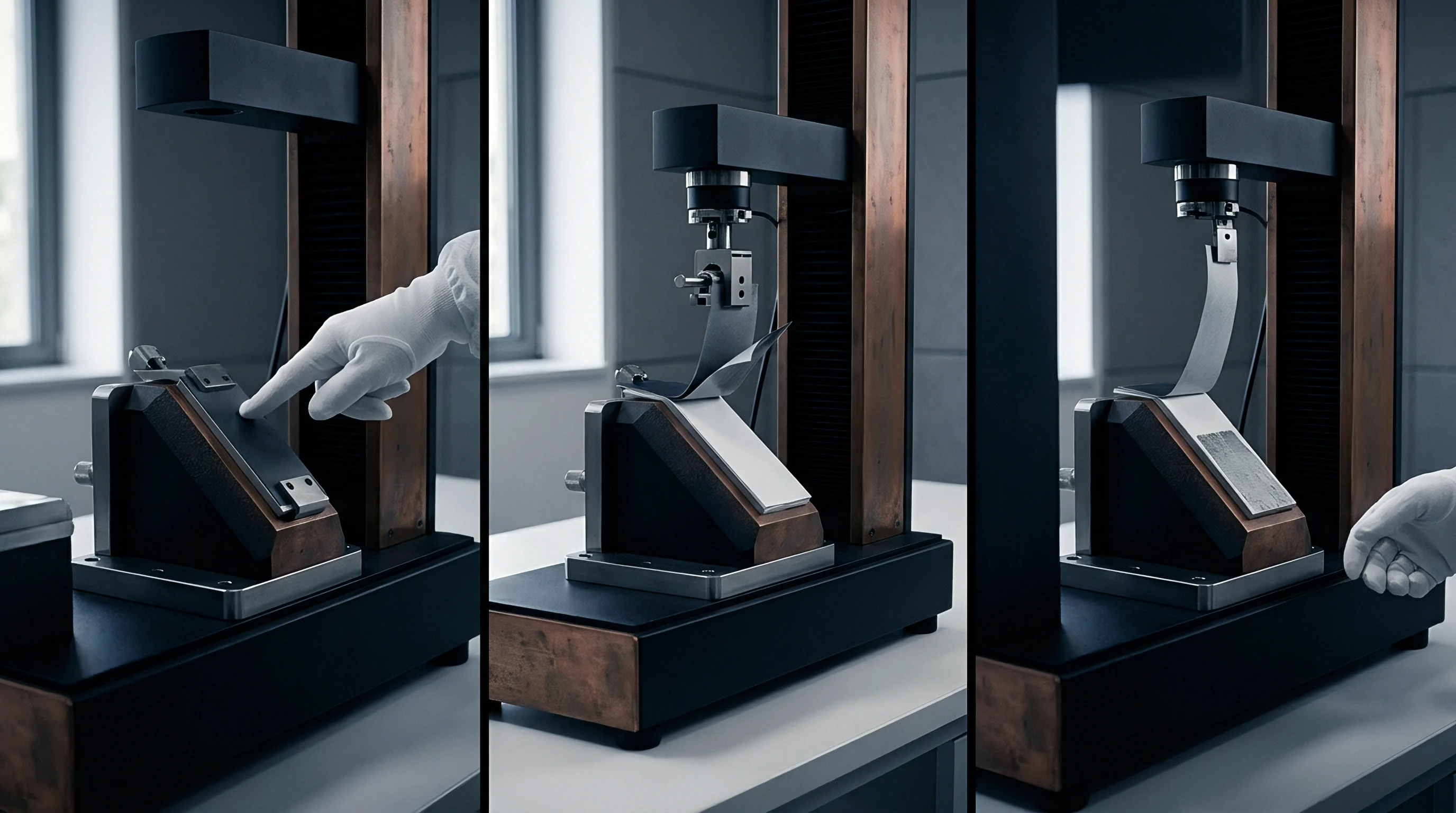
Moisture
Relative humidity inside the laboratory alters the mechanical behavior of flax yarns far more than synthetic filaments. Elementary flax fibers consist of highly oriented crystalline cellulose I microfibrils embedded within a matrix of amorphous hemicellulose and pectin. Water molecules enter this non-crystalline matrix as a natural plasticizer, reducing internal friction while strengthening intermolecular hydrogen bonding.
As a result, wet-spun linen displays a trait rare among textile structures: tensile strength increases as moisture content rises up to its equilibrium saturation limit.
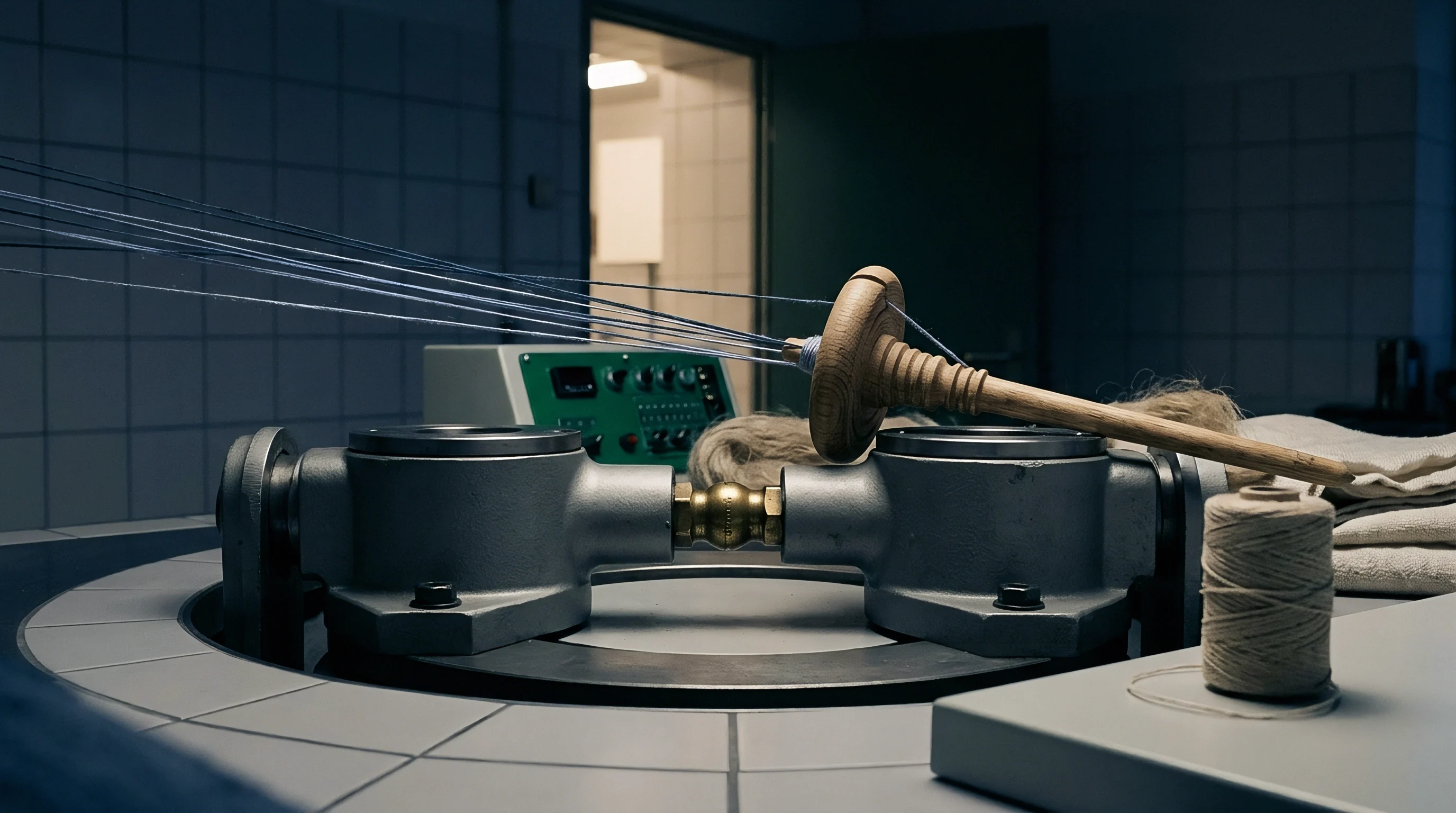
Standard Conditioning Regimes
Equilibrating yarn packages in controlled environments ensures reproducible force readings across independent test facilities. ISO 139 specifies a standard atmosphere of 20 °C ± 2 °C and 65% ± 4% relative humidity. For wet-spun linen yarn, conditioning requires stripping outer layers from the bobbin to expose fresh material to ambient airflow.
Testing packages straight from dry shipping containers without adequate conditioning yields artificially low tenacity figures.
Conditioning times vary depending on package density and winding tension. Loose skeins reach moisture equilibrium in about 6 hours, whereas dense cross-wound bobbins require up to 48 hours in continuous airflow. Mass equilibrium serves as the physical proof of readiness: consecutive weighings spaced 2 hours apart must show less than 0.1% change.
Testing unconditioned wet spun linen below forty percent relative humidity underestimates ultimate breaking tenacity by up to fifteen percent.

Hydration and Cellulose Strength Response
Water molecules penetrate amorphous regions within flax cell walls, plasticizing hemicellulose matrix polymers and enabling microfibrils to realign under load. This realignment distributes applied stress across a larger number of parallel cellulose chains, raising yarn tenacity by 10% to 20% compared to bone-dry specimens. Modulus decreases slightly during initial hydration, permitting greater elastic elongation before fiber-to-fiber slippage occurs within the bundle.
| Standard Code | Temperature Target | Humidity Target | Pre-Conditioning Limit | Minimum Conditioning Time |
|---|---|---|---|---|
| ISO 2062 | 20 °C ± 2 °C | 65% ± 4% RH | 50 °C max, 10%–25% RH | 24 Hours |
| ASTM D2256 | 21 °C ± 1 °C | 65% ± 2% RH | Not Mandated | 24 Hours |
| ISO 6939 | 20 °C ± 2 °C | 65% ± 4% RH | Optional | 12 Hours (Skein) |
Testing wet-spun linen under bone-dry conditions ~ where yarn snaps without warning ~ misrepresents shed performance, as sizing rooms and loom sheds operate at elevated humidity levels to protect warp ends during heavy shedding cycles.
- Atmospheric stabilization confirms ambient test chamber conditions remain strictly within twenty degrees Celsius and sixty-five percent relative humidity.
- Moisture equilibrium verification checks that package mass changes stay below one tenth of a percent over two consecutive hourly measurements.
- Pre-tension calibration adjusts initial strand loading to exactly half a centinewton per tex prior to initiating crosshead movement.
- Specimen conditioning duration holds wound yarn packages on open wire racking for at least twenty-four hours before testing.
Applying ISO 139 clause 5.2 enforces a twenty-four hour environmental soak, which often shifts disputed strength values back into contract compliance before financial penalties take effect.

Tenacity
Breaking force measurements for wet-spun linen reflect both elementary fiber strength and inter-fiber cohesion generated during hot water drafting. Hot water treatment softens pectins, enabling individual flax ultimates to slip, align, and consolidate into a dense yarn structure. Tensile testing verifies whether this cohesion withstands high-speed weaving stresses.
Standard units use centinewtons per tex (cN/tex) or breaking length in kilometres (km or RKM) to normalize force against linear density across fine and coarse counts.

Does Gauge Length Alter Measured Flax Tenacity?
Testing strands at two hundred fifty millimetres yields higher breaking loads than testing identical yarns across five hundred millimetre spans. This strength distribution follows classic Weibull statistics governing brittle materials containing structural flaws. Wet-spun linen inherently contains natural irregularities such as shive remnants, thick slubs, thin spots, and retting variations.
Longer gauge lengths increase the statistical probability that a critical weak link falls within the tested span, triggering failure at a lower overall breaking force.
ISO 2062 designates 500 mm as the standard gauge length for single yarn tensile testing, with 250 mm permitted for specific machine configurations or high-extensibility yarns. Gauge length must be verified when comparing supplier datasheet values against incoming inspection data. An Nm 30 wet-spun flax yarn tested at 250 mm gauge length displays tenacity values up to 8% higher than the same package tested at 500 mm gauge length.
- Mount the yarn package on a free-running creel pin situated directly beneath the pretension guide assembly.
- Thread the single strand through smooth ceramic guides to prevent surface abrasion along the specimen length.
- Set the upper pneumatic horn grip to engage automatically at five bars of line air pressure.
- Extend the crosshead at a constant speed of five hundred millimetres per minute until complete strand rupture.
- Record peak breaking force, total elongation percentage, and initial modulus from the digital load cell output.
Yarn lot tenacity averages mask localized thin places where peak shedding stress causes clean warp breaks.
Single Strand versus Lea Strength Testing
Skein methods record aggregate bundle resistance across multiple wrapped loops, masking individual weak points along the strand. ISO 6939 defines the determination of breaking load by the skein method, yielding a Lea Count Strength Product (LCSP). While skein testing offers rapid feedback in traditional spinning mills, single-strand testing per ISO 2062 using Constant Rate of Extension (CRE) testers yields actionable engineering data for modern rapier and air-jet loom sheds.
Single-end CRE testing records breaking force, elongation at break, work to break, and tensile variation (CV%). A low coefficient of variation in breaking force matters more to loom efficiency than a high mean tenacity. A yarn lot with an average tenacity of 28 cN/tex and a force CV of 18% causes frequent warp stops, whereas a lot with 24 cN/tex average strength and an 8% CV runs efficiently at full loom speed.
| Yarn Count (Nm) | Linear Density (Tex) | Target Tenacity (cN/tex) | Mean Breaking Force (N) | Acceptable Force CV (%) | Elongation at Break (%) |
|---|---|---|---|---|---|
| Nm 10 | 100 Tex | 18.0 cN/tex | 18.00 N | 12.5% | 2.4% |
| Nm 26 | 38.5 Tex | 22.5 cN/tex | 8.66 N | 11.0% | 2.1% |
| Nm 39 | 25.6 Tex | 26.0 cN/tex | 6.65 N | 10.5% | 1.9% |
| Nm 60 | 16.7 Tex | 29.0 cN/tex | 4.84 N | 9.5% | 1.8% |
| Nm 80 | 12.5 Tex | 32.0 cN/tex | 4.00 N | 9.0% | 1.6% |
| Data measured under ISO 2062 conditions at 500 mm gauge length, 500 mm/min test speed, 0.5 cN/tex pretension. | |||||
Higher single end break variability across a warp lot reliably signals high loom stop rates regardless of average force figures.
Beam
Warp preparation transforms individual yarn packages into dense parallel sheets under uniform mechanical tension. During warping and beaming, wet-spun linen yarns endure cyclic abrasion and sudden tension spikes. The single strand tensile test provides baseline static numbers, but actual loom performance depends on how yarn tenacity withstands dynamic fatigue during harness frame separation, beat-up reed impact, and rapier insertion cycles.

Shedding Tension and Warp Break Statistics
Peak warp tension on rapier looms operating at 400 picks per minute reaches twice the static off-loom setting, testing the lower limits of yarn breaking force. If a wet-spun yarn exhibits a wide strength distribution tail, strands falling two standard deviations below mean tenacity break during shedding, making yarn uniformity critical for high-speed weaving.
Analyzing tensile test histograms reveals lower-bound force limits. For high efficiency weaving on plain or twill constructions, the minimum breaking force at minus three standard deviations must exceed peak dynamic shedding tension. When single end test data reveals a left-skewed force distribution, warps experience elevated break rates regardless of high average tensile strength.
Proper sizing encapsulation elevates wet spun warp weaving efficiency far more than increasing raw fiber bundle tenacity.
Sizing Pickup and Abrasion Resistance
Protective film coatings surround wet-spun fibers, locking loose surface hairs into the core structural body. Formulations based on native starch, modified carboxymethyl cellulose (CMC), or polyvinyl alcohol (PVA) penetrate outer fiber layers without reducing natural bundle flexibility. Effective sizing increases yarn breaking tenacity by 15% to 25% while reducing force CV by smoothing out localized weak spots.
| Yarn Count | Mean Tenacity | Breaking Force CV | Sizing Pickup | Warp Stops / Loom Hour | Shed Efficiency |
|---|---|---|---|---|---|
| Nm 26 | 22.5 cN/tex | 14.5% | 6.0% | 3.8 Stops | 82.4% |
| Nm 26 | 22.5 cN/tex | 10.2% | 8.5% | 1.1 Stops | 91.8% |
| Nm 39 | 26.0 cN/tex | 13.8% | 7.0% | 4.2 Stops | 79.6% |
| Nm 39 | 26.0 cN/tex | 9.1% | 10.0% | 0.6 Stops | 94.2% |
By binding loose surface fibers, sizing increases fiber-to-fiber friction stability and prevents short ultimate fibers from slipping under dynamic loads. Tensile verification on sized greige warp ends validates sizing film integrity before committing warp beams to production loom slots.
- Lot origin data identifies the specific flax retting batch, spinning frame number, and mill production date.
- Tenacity distribution metrics records mean breaking force, standard deviation, and coefficient of variation across fifty breaks.
- Moisture regain certificate confirms package moisture content at the exact time of laboratory tensile testing.
- Grip style specification documents jaw surface lining material, pneumatic pressure, and test speed parameters.
Elevated warp stops can stem from improper shedding setup rather than substandard coating or poor force consistency.

Dispute
Commercial conflicts regarding linen yarn quality center on discrepancies between mill certificates and independent laboratory verification reports. When a weaver experiences excessive warp breakage, technical investigation starts with single end tensile testing per ISO 2062. Resolving commercial claims requires comparing historical lot data against incoming inspection results, ensuring test parameters match precisely across both test sets.
Certificate Analysis and Acceptance Thresholds
Quality documentation accompanying shipped yarn lots details specific test parameters, including ambient relative humidity and clamp configuration. Mill certificates listing tenacity without defining gauge length, test speed, or atmospheric conditioning offer no legal protection during quality arbitrations. Buyer specifications specify exact compliance ranges for breaking force, elongation, and CV% using ISO standard frameworks.
Standard commercial tolerance thresholds permit a maximum 5% negative deviation from contracted mean breaking force. However, if breaking force CV exceeds contract limits by more than 1.5 percentage points, buyers retain rights to reject the shipment or claim re-sizing subsidies to offset loom efficiency losses.
Commercial Claim Limits and Rejection Rules
Contracts establish maximum allowable variances in mean breaking force and coefficient of variation before triggering batch return rights. Dispute resolution frameworks mandate re-testing by an accredited neutral laboratory using joint sampling protocols. Sampling plan design follows ISO 2859-1, taking packages randomly from at least 10% of shipped boxes to construct a representative test lot.
Because short warps increase weaving costs per metre, mill certificates require laboratory cross-verification. Re-testing requires strict adherence to standardized conditioning times and capstan pneumatic clamp setups to prevent false test failures from clouding contractual liability.
Current evaluation methods leave open whether automated high speed single end trials can fully replicate the complex cyclic fatigue wet spun flax faces during rapier insertion.