Managing Polymer Size Degradation during Wet Desizing of Linen Fabrics
Manage wet desizing by matching size chemistry to bath temperature and pH while auditing cellulose degree of polymerization to prevent loss of fiber strength.

Hydrolysis
Protective polymer films applied to flax warp yarns before weaving alter their solubility under warm aqueous conditions. Sizing agents for linen warp yarns predominantly combine modified starches, polyvinyl alcohol, carboxymethyl cellulose, and cold-water-soluble polyacrylates. These polymers coat the exterior of dry-spun or wet-spun flax bundles, binding superficial fibrils down to prevent end breaks caused by shedding friction on rapier or air-jet looms.
Wet desizing breaks these high-molecular-weight surface films into low-molecular-weight soluble fragments that wash out of the porous cellulosic structure. When thermal energy, chemical cleavage, or enzymatic action operates without tight parameter boundaries, the reaction degrades the size polymer alongside the structural flax fiber.
Enzymatic breakdown of starch-based sizes relies on bacterial alpha-amylase to scission alpha-1,4-glucosidic bonds. Viscosity drops rapidly. The starch macromolecule fragments into water-soluble dextrins and maltose units.
Native flax non-cellulosic constituents, including pectins, hemicelluloses, and lipophilic waxes, coat the primary wall of the ultimate flax fiber cells. Highly purified alpha-amylase preparations target starch linkages without attacking the beta-1,4-glucosidic bonds of native flax cellulose. Commercial enzyme formulations contaminated with cellulase side-activities scission the crystalline and amorphous regions of the flax yarn, causing irreversible loss of bundle tenacity.
Alpha-amylase activity drops fifty percent when bath temperature exceeds seventy-five degrees Celsius at neutral pH.
Oxidative desizing methods utilize sodium persulfate, hydrogen peroxide, or potassium peroxymonosulfate to cleave synthetic and natural sizing polymers simultaneously. Oxidative radical generation breaks polymer chains uniformly across polyvinyl alcohol and starch blends, enabling rapid continuous open-width processing. The hydroxyl radicals generated during thermal cleavage of persulfate ions attack the hydroxyl groups at the C2, C3, and C6 carbons of the anhydroglucose units in flax cellulose.
Uncontrolled oxidation causes chain scission in the primary fiber wall. The degree of polymerization of the underlying flax drops below acceptable manufacturing thresholds, rendering the woven structure susceptible to tender spots and tear strength failure during subsequent bleaching or dyeing runs.
- The operator dissolves size-bound greige fabric in a liquor containing non-ionic wetting agents to ensure uniform wet-out across dense woven yarn intersections.
- Thermal energy accelerates chemical activation, initiating cleavage along the backbone of the sizing polymer.
- Enzymatic or radical species lower the molecular weight of the hydrophobic film, transforming insoluble surface coatings into hydrophilic solutes.
- Mechanical agitation lifts degraded polymer fragments away from yarn interstices into the bulk wash liquor.
- High-temperature aqueous rinses prevent the degraded polymer fragments from cooling, gelating, and redepositing on the flax fiber surface.
The operational risk during wet desizing stems from imprecise chemical dosing and unbuffered bath temperatures. Incomplete size removal leaves hydrophobic patches that block dyestuff penetration, producing cloudiness in piece-dyed goods. Excessive polymer scission via over-oxidized baths damages the primary cell walls of the flax fiber, reducing finished tensile capacity and causing warp-wise split faults under commercial tension.
Bath
Controlling process parameters inside the wet desizing vessel maintains molecular breakdown within safe mechanical boundaries. Wetting agents added to the processing liquor drop surface tension below thirty dynes per centimetre, facilitating rapid penetration into dense linen plain weave constructions. Linen fabrics constructed with high cover factors, such as twenty-four ends per centimetre and twenty-two picks per centimetre of Nm 26 wet-spun flax, present tight yarn packing that resists aqueous liquor exchange.
Without uniform wetting, outer yarn surfaces undergo excessive chemical exposure while core warp yarns retain un-hydrolyzed size binder.

Which Size Formulations Protect Flax against Enzymatic Damage?
Formulations based on high-degree-of-hydrolysis polyvinyl alcohol blended with carboxymethyl cellulose demand elevated bath temperatures rather than enzymatic attack. Polyvinyl alcohol size does not respond to alpha-amylase. Dissolving fully hydrolyzed polyvinyl alcohol requires water temperatures above eighty-five degrees Celsius combined with high mechanical action.
Alkali additions of two to four grams per litre of sodium hydroxide saponify residual fats and expand the polyvinyl alcohol film, accelerating dissolution. High bath temperatures approaching ninety-five degrees Celsius risks thermal shrinkage in unconstrained linen grey goods, changing cloth width and increasing pick density per centimetre beyond target specification.
| Size Base Component | Desizing Mechanism | Optimal Bath Temperature | Optimal Bath pH | Flax Degradation Exposure Risk |
|---|---|---|---|---|
| Native or Modified Starch | Enzymatic (Alpha-Amylase) | 60 to 70 °C | 5.5 to 6.8 | Cellulase side-activity causing fibrillar loss |
| Polyvinyl Alcohol (PVA) | Thermal Solvation & Alkali Wash | 85 to 95 °C | 9.0 to 11.0 | Thermal shrinkage and warp density alteration |
| Carboxymethyl Cellulose (CMC) | Aqueous Extraction | 70 to 80 °C | 7.0 to 8.5 | Low risk; polymer washes out without chemical cleavage |
| Starch / PVA / Acrylic Blends | Oxidative (Persulfate Cleavage) | 80 to 90 °C | 10.0 to 11.5 | Oxycellulose formation reducing bundle tenacity |
Liquor ratio selection dictates chemical concentration dynamics throughout the process dwell time. Long liquor ratios of twelve to one dilute degraded size fragments, minimizing the thermodynamic drive for polymer redeposition onto the raw flax bundles. Short liquor ratios of four to one on continuous pad-steam desizing lines conserve thermal energy and water but yield concentrated size suspensions inside the fabric matrix.
Continuous liquor extraction and high-efficiency squeegee rollers are necessary to remove saturated liquor before the fabric enters the hot washing compartments.
Operating a wet desizing bath outside chemical design limits creates distinct cloth defect profiles.
- Enzyme Inactivation Flaws produce patchy starch retention that manifests as blotchy pick-up during reactive piece dyeing.
- Oxidative Over-Degradation causes localized drops in fiber degree of polymerization, resulting in pinholes during subsequent peroxide bleaching.
- Redeposited Polymer Scum forms insoluble complexes with calcium and magnesium ions in hard water, leaving stiff gray streaks along the selvedges.
- Alkaline Yellowing occurs when unbuffered caustic baths exceed seventy degrees Celsius on raw unbleached flax, darkening natural lignified non-cellulosic impurities.
Chemical chemical suppliers often assert that modern enzyme complexes automatically self-limit and cannot attack natural flax cellulose under any plant conditions. Field reality demonstrates that uncalibrated enzymatic baths containing broad-spectrum cellulase impurities strip up to eight percent of the total fiber mass within thirty minutes, destroying the structural integrity of thin wet-spun yarns.
Scour
Post-desize washing stages remove dissolved polymer fragments out of the yarn core into the effluent stream. Mechanical wash boxes equipped with high-impact spray jets, tight-strand vertical liquor loops, and counter-current water flow maximize mass transfer off the moving fabric web. Water turbulence shears the boundary layer of stagnant liquor clinging to high-density linen plain weave or 2/2 twill fabrics.
Squeezing nip rolls operating at four bar pneumatic pressure force excess liquor out of the yarn interstices between wash compartments, ensuring that downstream wash water receives minimal contamination carryover.
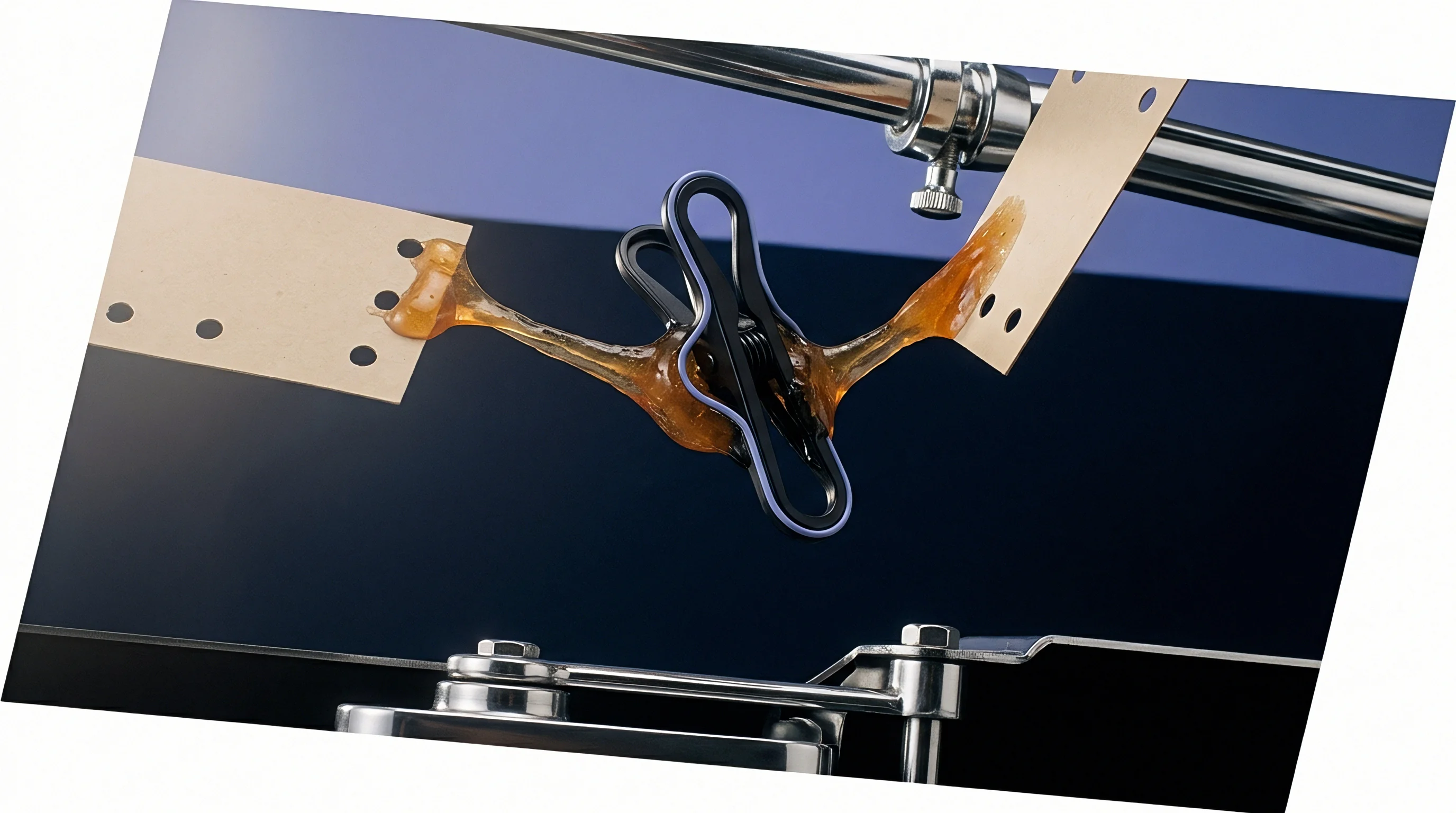
Steam injection within the initial scour compartments maintains wash temperatures above the gelation threshold of polyvinyl alcohol. If wash temperatures drop below sixty-five degrees Celsius before polyvinyl alcohol is completely flushed from the open-width fabric, the polymer transitions from a soluble liquid into a high-viscosity gel phase. Hydrophobic gelated size redeposits into the interfibrillar spaces of the flax bundles, setting permanently during stenter drying.
Redeposited gel resists subsequent scouring routines, impairing fabric absorbency, stiffening the finished drape, and causing uneven resin absorption during non-iron finishing treatments.
Thermal wash sequences must maintain open-width fabric speeds above forty metres per minute to prevent uneven chemical dwell.
Fabric speed through the wash box must balance mechanical agitation against dwell time. High line speeds reduce total residence time inside the chemical bath, requiring higher chemical concentrations or elevated wash temperatures to achieve complete size removal. Water volume flows in counter-current configurations, entering at the final rinse box and flowing backwards toward the initial desize padder.
Counter-current washing cuts total fresh water usage while maintaining a steep chemical concentration gradient between the clean rinse water and the wet fabric entering the terminal washing stage.
Effective open-width scouring removes size without applying longitudinal tension that deforms the natural crimp of linen warp yarns.
Verification
Confirming size removal while auditing fiber preservation requires systematic laboratory testing on every desized batch. The Tegewa purple scale provides a rapid qualitative measurement of residual starch size across the fabric surface. Potassium iodide and iodine reagent dropped onto the desized grey linen generates a color response ranging from pale yellow, indicating complete size removal, to deep violet blue, indicating heavy residual starch presence.
A Tegewa rating of six to seven meets standard commercial thresholds for light-colored piece dyeing, whereas dark shades require a minimum Tegewa rating of eight to ensure uniform dyestuff exhaustion.
| Test Parameter | Standard Reference Method | Target Metric Threshold | Fault Condition Indication |
|---|---|---|---|
| Residual Starch Content | ISO 2267 / Tegewa Scale | Grade 7 to 9 (Colorless to Pale Pink) | Grade 1 to 5 indicates incomplete starch removal |
| Intrinsic Viscosity / DP | ISO 5351 (CED Solution) | DP > 1800 for unbleached flax | DP < 1400 indicates severe oxidative cellulose damage |
| Strip Tensile Strength | ISO 13934-1 | Maximum 5% loss against greige fabric | Strength loss > 10% indicates chemical or fiber degradation |
| Water Absorbency Rate | AATCC Test Method 79 | Drop absorption < 3 seconds | Absorption > 10 seconds indicates residual film barrier |
Determining the degree of polymerization of native flax cellulose measures structural fiber degradation caused by aggressive desizing chemistry. Dissolving desized flax fiber samples in cupriethylenediamine (CED) solution per ISO 5351 allows capillary viscometry to measure intrinsic viscosity. Unprocessed native flax exhibits a degree of polymerization value between 2000 and 2400.
Reductions in degree of polymerization below 1600 indicate that oxidative radical attack or cellulase contamination degraded the cellulose molecular chains. Reduced degree of polymerization correlates directly with lower tear strength, poor flex abrasion resistance, and premature garment degradation along folded seams.
Auditing procedures require a formal technical record prior to releasing desized cloth to bleach ranges.
- Sampling Frequency Protocols stipulate taking one full-width swatch per two thousand metres of continuous desized cloth.
- Gravimetric Size Extraction via Soxhlet hot-water or solvent extraction quantifies total residual size solids below 0.5 percent of total fabric mass.
- Tensile Retention Benchmarks demand testing warp and weft strip specimens on an automated tensile tester to confirm compliance with ISO 13934-1 strength limits.
- Absorbency Drop Mapping places deionized water drops across five widthwise positions to ensure uniform wetting performance across the center and selvedges.
A contract clause specifying ISO 5351 viscosity verification protects the buyer against latent fiber tendering that only manifests after final bleaching.
When the purchase agreement incorporates a mandatory drop in degree of polymerization tolerance of less than seven percent relative to greige controls, the mill assumes full financial liability for fabric batches tendered through excessive chemical exposure.
Tariff
The economic balance between desizing throughput, energy consumption, and finished cloth quality dictates profit margins per linear metre. High-temperature washing units running at ninety-five degrees Celsius consume large volumes of thermal energy, requiring steam generation inputs that increase finishing costs. Reducing bath temperatures lowers utility bills but demands longer dwell times or higher enzyme concentrations to reach acceptable size removal ratings.
Fast line speeds cut loom-hour overhead allocations but elevate the risk of incomplete desizing, leading to costly re-processing or batch rejections.
Consider a continuous desizing run processing ten thousand metres of heavy linen plain weave fabric weighing 240 grams per square metre at a finished width of 150 centimetres. The fabric holds eight percent size solids on warp yarn mass, representing approximately ninety-six kilograms of total polymer size to solubilize and flush out. Running an enzymatic continuous pad-steam line at sixty metres per minute consumes approximately 0.4 kilowatt-hours of energy and twelve litres of water per kilogram of processed fabric.
Transitioning to an aggressive sodium persulfate oxidative desizing line increases chemical additive expenses by fifteen percent while lowering thermal steam demands through shorter wash box residence times.
Water treatment surcharges for handling high biological oxygen demand (BOD) effluent directly impact total processing cost calculations. Starch-based desizing liquors yield high BOD loading, increasing municipal discharge fees or requiring capital-intensive on-site aerobic digestors. Synthetic polyacrylate and polyvinyl alcohol sizes exhibit lower biological oxygen demand but high chemical oxygen demand (COD), requiring specialized membrane filtration or chemical coagulants to clear wash streams before environmental release.
What optimal balance between chemical cost, line speed, and wastewater surcharges preserves linen yarn strength while maintaining profit margins across seasonal volume fluctuations?