Flax Warp Sizing Physics and Penetration Fundamentals
Controlled bast sizing demands twenty-five percent liquor penetration to anchor elementary fibrils alongside a ductile surface coating to prevent shed shedding.


Bundle
A twenty-six lea wet-spun flax yarn displays twenty-eight turns per decimetre on the twist counter, carrying an initial moisture content of nine percent off the creel. Elementary bast cells, measuring ten to thirty millimetres in length with cross sections of fifteen to twenty micrometres, cohere along the yarn axis through a middle lamella rich in calcium pectate and hemicellulose. Flax bundles hold twenty elementary cells.
Commercial wet spinning compresses these bundles into a dense, polygonal cross section with minimal air volume between constituent filaments. This dense packing creates a profound physical obstacle during liquid sizing. Cotton ring yarns present a porous cross section with internal air volume exceeding fifty percent, permitting rapid radial fluid suction.
Wet-spun bast structures offer less than fifteen percent internal void space. Capillary transport through the inter-fiber channels therefore depends entirely on the displacement of entrapped air across exceptionally narrow channel radii.
Surface characteristics compound the resistance of the bast strand to liquid impregnation. Elementary fibers possess a primary wall coated in cuticular waxes, lignified secondary layers, and discrete transverse dislocations called dislocations or nodes. Residual wax repels aqueous size formulations.
These nodal deformations create localized swellings along the yarn perimeter, causing diameter variations up to forty percent over centimetre lengths. Hairiness in flax does not consist of uniform fiber ends distributed along the axis. Bast yarn hairiness arises from detached bundle ends, split elementary fibers, and stiff mechanical splinters that project outwards at severe angles.
Yarn elongation rarely reaches three percent. Without an external binding sheath, these projecting bundle tips catch on adjacent ends during shed opening, tearing the middle lamella apart before reed beat-up occurs.
| Yarn Classification | Typical Count System | Tensile Tenacity (cN/tex) | Elongation at Break (%) | Internal Void Ratio (%) | Equilibrium Regain (%) |
|---|---|---|---|---|---|
| Wet-Spun Flax (Long Line) | 26 Lea (64 Tex) | 38.5 to 52.0 | 1.8 to 2.4 | 10 to 14 | 10.5 to 12.0 |
| Dry-Spun Flax (Tow) | 14 Lea (118 Tex) | 22.0 to 31.0 | 2.1 to 2.8 | 22 to 28 | 10.0 to 11.5 |
| Carded Ring-Spun Cotton | 20 Ne (30 Tex) | 14.0 to 18.5 | 6.0 to 7.5 | 45 to 55 | 7.5 to 8.5 |
| Rotor-Spun Viscose | 30 Ne (20 Tex) | 18.0 to 22.0 | 11.0 to 14.0 | 30 to 40 | 12.5 to 13.5 |
Chemical sizing on bast warps resolves two conflicting structural demands. The yarn interior requires sufficient binder penetration to anchor the elementary fibers against axial slippage, while the exterior demands a continuous, flexible protective coating to flatten projecting splinters. Excessive penetration without adequate surface coverage leaves external fibers exposed to heald eyelet friction.
Complete surface coating without penetration creates a brittle, hollow jacket that cracks and peels under cyclic warp tension.
Dry bast yarn exhibits an irregular polygonal profile that prevents uniform circumferential liquid contact during high-speed travel through the vat.
Loom performance records correlate end break distributions directly with binder distribution across the yarn radius. Microscopic cross-sectional analysis using iodine staining identifies whether starch adhesives have occupied the inter-bundle voids or remained stranded as an outer crust. The structural vulnerabilities of flax manifest in distinct breakdown mechanisms under mechanical action:
- Axial bundle slippage originates from insufficient adhesive penetration into the inter-bundle lamella, causing internal elementary fibers to telescope under cyclic tension before reaching twenty percent of rated yarn breaking strength.
- External film spalling occurs when high molecular weight polymers form a thick exterior mantle without mechanical anchorage into the outer fiber nodes, flaking off as powder within the drop wire zone.
- Splinter cling arises from unbonded transverse fibrils protruding through thin, discontinuous chemical films, locking adjacent warp ends together behind the reed during heald motion.
- Flexural fatigue failure develops when over-sized, stiffened bast bundles travel around reciprocating whip rolls, snapping cleanly at nodal dislocations without prior necking.
Improper binder placement transforms minor shedding resistance into catastrophic warp tear-outs, forcing the loom shed to run at fractional speeds while producing second-choice cloth loaded with missing ends and starting defects.


Liquor
Viscosity control dictates whether an aqueous sizing compound flows into the inter-bundle channels or forms an external barrier. Sizing baths for bast yarns combine modified starches, carboxymethyl cellulose, and low-hydrolysis polyvinyl alcohols with lubricating fats. Native potato starch demonstrates high swelling capacity, yielding long-chain amylose networks that create high dynamic viscosity at low shear rates.
Thin-boiling, oxidized starches or potato dextrins lower the molecular weight, reducing shear viscosity to allow capillary suction into the yarn core. Potato starch forms retrogradation gels rapidly. When the bath drops below fifty-five degrees Celsius, amylose chains retrograde into insoluble aggregates, causing viscosity spikes that halt fluid penetration.

Fluid Mechanics in Bast Capillaries
Fluid motion through the internal voids of a moving yarn follows the Lucas-Washburn equation for capillary flow, where penetration depth relates to capillary radius, surface tension, dynamic contact angle, viscosity, and contact duration. Capillary suction drives radial liquor migration. The contact angle between the sizing solution and raw flax fiber depends on residual surface wax.
Scoured and bleached yarns exhibit a contact angle approaching thirty degrees, drawing aqueous liquor rapidly into interstitial channels. Grey, unboiled flax carries wax concentrations between one and two percent by weight, producing contact angles exceeding seventy degrees. This low wettability halts spontaneous capillary entry during the half-second passage through the size box.
| Binder Chemistry Base | Solids Concentration (%) | Bath Temperature (°C) | Viscosity (mPa·s at 100 s⁻¹) | Penetration Ratio (% Yarn Radius) | Film Tensile Strength (MPa) |
|---|---|---|---|---|---|
| Oxidized Potato Starch | 10.0 | 85 | 28 to 34 | 20 to 25 | 22.4 |
| Low-Viscosity PVA (88% Hyd.) | 6.5 | 70 | 18 to 24 | 35 to 45 | 48.2 |
| Carboxymethyl Cellulose (CMC) | 5.0 | 75 | 45 to 55 | 15 to 20 | 31.0 |
| Starch / Acrylic Hybrid | 8.5 | 80 | 22 to 28 | 30 to 40 | 36.5 |
| Native Corn Starch (Unmodified) | 7.0 | 90 | 95 to 130 | 5 to 10 | 16.8 |
Surface tension of pure water stands at seventy-two millinewtons per metre at room temperature, declining to sixty-two millinewtons per metre at eighty-five degrees Celsius. Commercial size preparations incorporate non-ionic wetting agents, typically ethoxylated fatty alcohols, to lower bath surface tension below thirty-eight millinewtons per metre. Viscosity drops as bath temperature climbs.
Lower surface tension reduces the energetic barrier for wetting lignified bast surfaces, increasing capillary suction speed tenfold according to Washburn kinetics.
At sixty degrees Celsius, a modified potato starch formulation at eight percent solids delivers a kinematic viscosity of forty-two centipoise.
The penetration ratio expresses the depth of the sized annular ring divided by total yarn radius, determined through cross-sectional optical microscopy. Commercial wet-spun linen warps require a penetration ratio between twenty-five and thirty-five percent. Penetration levels below twenty percent fail to bind internal fiber splices, leaving the center weak under tension.
Penetration above fifty percent saturates the interior, turning the bast bundle into an inflexible rod that fractures during cyclical bending over the backrest roll.
A contested operational parameter concerns the precise equilibrium between chemical penetration depth and dynamic shear thinning inside the squeeze zone. Mill trials testing potato dextrin formulations record thirty percent penetration variance between five hundred and six hundred metres per minute line speeds, yet laboratory rheometers operating under steady shear fail to replicate this steep drop. The discrepancy leaves open the question of whether high-speed bast sizing is governed by transient dynamic wetting angles or by instantaneous viscoelastic recovery within the fiber bundle.


Nip
Mechanical pressure inside the sizing box squeeze zone governs the split between absorbed liquid and surface film thickness. The warp sheet passes between a steel immersion roll and rubber-covered squeeze rollers under pneumatic loading. Squeeze rolls strip surface liquor films.
Standard configurations utilize a hard rubber compound with a hardness between sixty-five and seventy-five Shore A. Softer coverings widen the nip contact width, lowering peak hydraulic pressure and leaving heavy, non-uniform surface deposits on thick bast slubs. Harder coverings concentrate load into an intense, narrow zone that drives fluid inward while scraping loose elementary fibers from the yarn perimeter.

What Controls Liquor Penetration in Low-Twist Bast Yarn?
Hydrodynamic pressure in the roll convergence zone forces liquor into yarn voids before capillary absorption completes. This forced impregnation behaves according to porous media compaction mechanics. High nip pressure flattens wet yarn.
As the wet bast bundle enters the nip, roll convergence compresses the yarn cross section, reducing pore diameter while displacing fluid forward against the direction of travel. Squeeze force ranges from five to twenty kilonewtons per linear metre across the roll face. The effective liquid pickup calculates through the dry solids add-on formula:
Pickup percentage equals wet liquor weight divided by dry yarn weight, multiplied by bath solids concentration. Wet pickup for long-line flax warps targets eighty to ninety percent, depositing six to eight percent dry size solids onto the yarn. Dry-spun tow warps possess looser bundle structures with higher internal volume, absorbing one hundred ten percent wet pickup to deposit nine to eleven percent dry solids.
Similar consolidation physics govern fluid movement during liquid resin transfer moulding of structural aerospace composites, where high-pressure resin flow compresses dry fiber preforms and causes micro-void entrapment when injection rates exceed the capillary wetting velocity. In bast yarn sizing, excessive nip velocity creates identical micro-voids beneath the yarn skin, stranding air pockets between the elementary fibers.
- Immersion roll submergence establishes the initial fluid dwell time, submerging the running ends for zero point four to zero point eight seconds to achieve surface wetting before pressure application.
- Primary nip loading applies six kilonewtons per metre to expel entrapped air pockets from the outer inter-bundle voids while the yarn remains saturated.
- Secondary nip regulation delivers fourteen kilonewtons per metre to express excess surface chemistry, setting final wet pickup tolerance within two percentage points across the beam width.
- Cylinder entry tension holds the wet sheet at sixty centinewtons per end, preventing slack yarn loops from twisting together prior to the initial drying face.
- Contact drying control scales steam pressure across six consecutive Teflon-coated cylinders, maintaining eighty degrees Celsius on the initial cylinder to avoid blister formation before elevating downstream drums to one hundred twenty degrees.
Moisture removal after the squeeze roll presents severe thermal challenges unique to bast structures. Overdrying induces severe bast fiber brittleness. Exposure to drying temperatures exceeding one hundred thirty degrees Celsius desiccates the natural moisture held within the elementary fiber lumens, degrading hemicellulose bonds and causing permanent embrittlement.
Warp moisture exiting the sizing head must measure between nine and eleven percent regain. Exiting moisture below seven percent produces immediate filament fracture in the drop wires. Exiting moisture above twelve percent causes yarn mildew and adhesive blocking on the loom beam.
When sized beams arrive at the shed with excessive yarn hairiness and low breaking force, sizing machine operators invariably attribute the fault to irregular raw fiber wax content rather than improper squeeze roll Shore hardness or unbalanced drying cylinder temperature profiles.

Shed
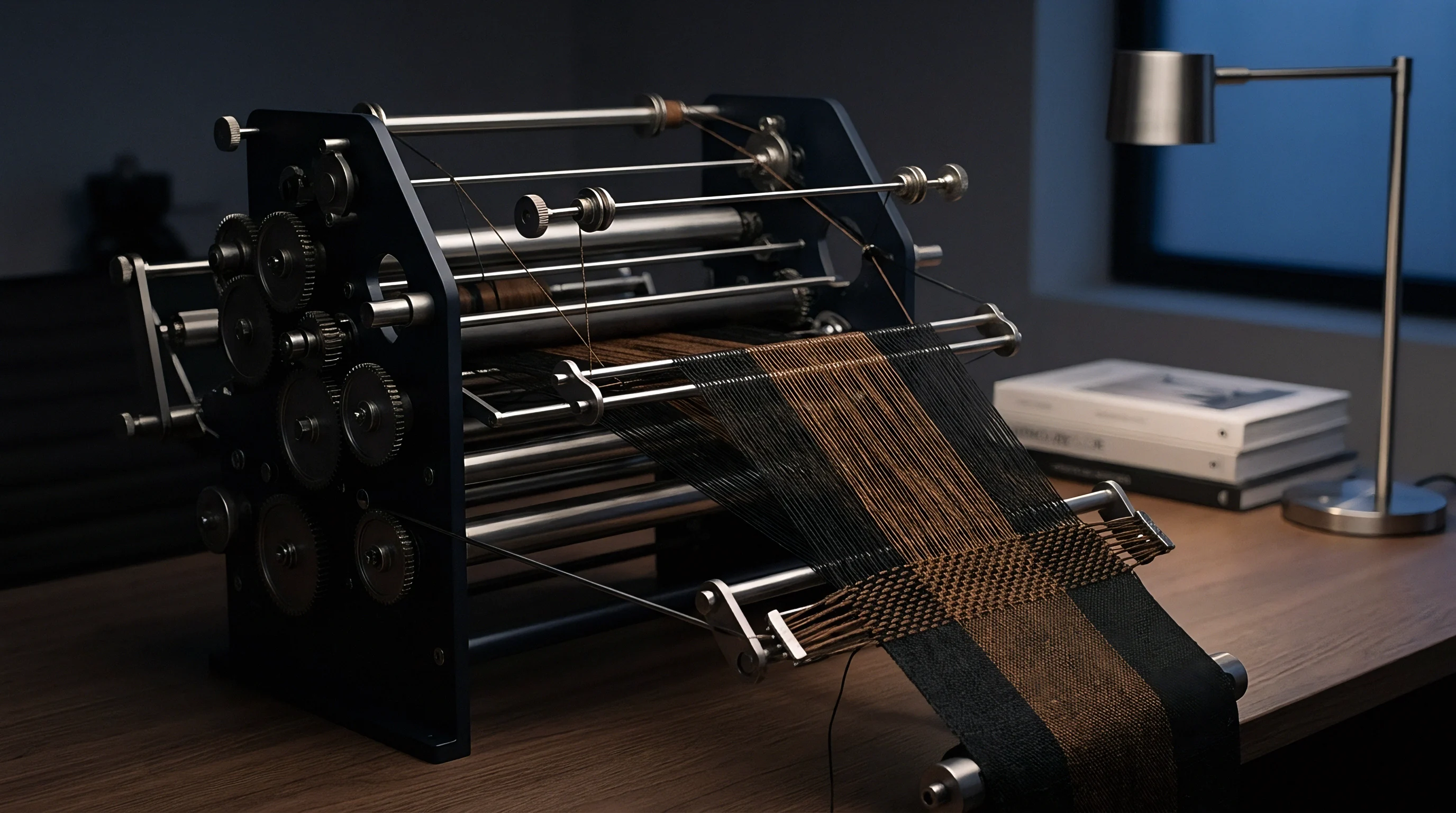
Dynamic forces inside the loom shed expose sizing failures through rapid end breakage. The sizing film must survive repeated mechanical stresses: cyclical tension variation from the backrest, friction against drop wires and heald eyelets, lateral rub between adjacent warp ends during harness crossing, and reed beat-up abrasion. Drop wires fall on broken ends.
High-speed rapier and air-jet machines impart cyclic elongations between zero point five and one point two percent at frequencies exceeding six hundred cycles per minute. Unsized flax breaks under these conditions within ten minutes because dry bast yarn cannot accommodate cyclical shock loads without progressive fiber slippage.
Abrasive Stresses across Machine Elements
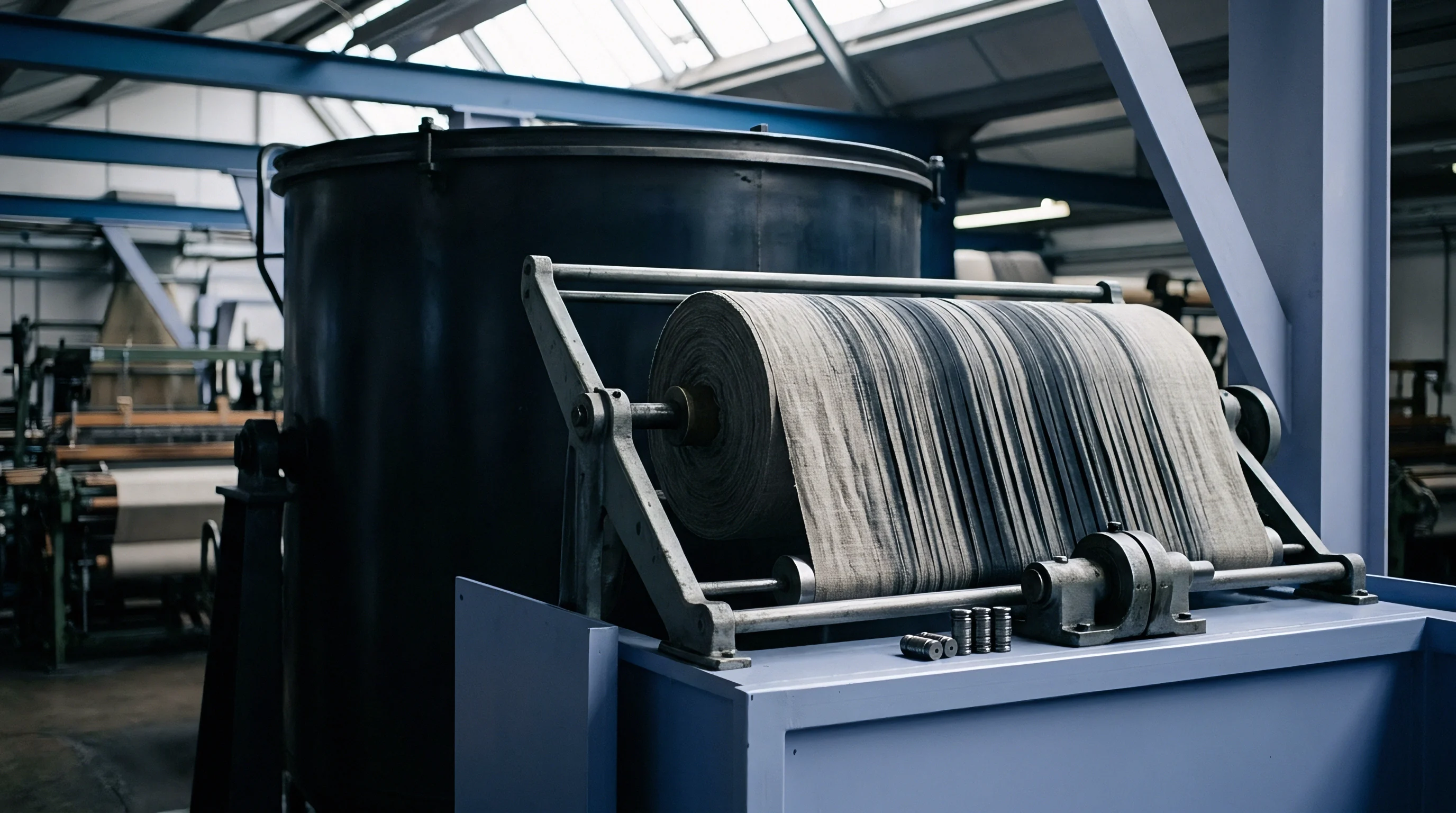
Frictional abrasion concentrates within the heald eyes, where the yarn changes direction twice per shed opening cycle. Steel heddles exert severe abrasive shear against the yarn surface. Reed friction abrades protruding bundle tips.
Sizing films formulated with insufficient synthetic lubricant generate dynamic friction coefficients above zero point thirty-five against polished steel, stripping the protective starch mantle within two hundred picks. The addition of refined tallow, synthetic wax emulsions, or polyethylene glycols lowers the yarn-to-metal friction coefficient below zero point twenty-two, preventing film peeling.
Under ASTM D5430 four-point inspection, warp fuzz clusters exceeding three millimetres in length convert continuous production into penalty points that devalue entire piece lengths.
Hairiness development during shedding tracks directly with adhesive film ductility. Flax bundles possess high bending stiffness. When a stiffened yarn passes through harness split rods and lease rods, brittle starch films crack transversely.
Elementary fibers spring outward from these fractures, creating fuzz clusters that intertwine behind the reed. Heddle eyelets slice dry hairiness knots. The resulting entanglements hold adjacent ends in the wrong shed line, creating float defects, warp stops, and broken filaments.
Specification checklists for sizing quality verification govern beam acceptance before mounting onto high-speed rapier equipment:
- Target dry add-on verification measures total chemical deposit via desize boil-off according to ISO 105-C06 methods, validating dry solids content between seven point zero and eight point five percent.
- Tensile strength retention testing evaluates treated yarn strength gains on constant-rate-of-extension instruments, confirming a minimum twenty percent increase over raw singles yarn.
- Elongation preservation checks verify that sized yarn retains at least eighty-five percent of its greige breaking elongation, rejecting beams with break extensions below one point six percent.
- Abrasion resistance cycles record cycles to failure on Zweigle or Shirley testing units, demanding a threefold increase in cycle endurance relative to unsized bast stock.
Uncertainty persists regarding the maximum tolerable size add-on for high-sett plain interlacements versus loose twill constructions. Data from commercial mills remains divided: one faction claims that eight percent add-on represents the absolute ceiling for plain cloth to prevent warp stiffness jams, while another faction routinely runs nine point five percent add-on to maximize rapier efficiency on sixty-end-per-centimetre constructions. Careful cloth buyers resolve this divergence by requiring the mill to execute a five-hundred-metre pilot warp change under recorded shedding tensions before signing full-volume delivery contracts.
Purchase contracts enforcing ISO 13934-1 tensile retention clauses penalize mills when delivered cloth manifests warp-way tensile deficits traceable to excessive sizing temperature degradation.


Ledger
Sizing expenditures represent a modest fraction of raw material cost but dictate overall production economics. Warp stops consume expensive machine hours. In a rapier shed running fifty machines at four hundred eighty picks per minute on a twenty-four-pick-per-centimetre linen cloth, each loom generates twelve linear metres of cloth per hour at one hundred percent theoretical output.
Production stops directly erode these hours. A shed averaging four warp stops per loom hour at three minutes repair time per stop loses twenty percent of its operating capacity, dropping actual output to nine point six metres per loom hour.

Loom Hour Accounting across Sizing Regimes
Financial performance hinges on the trade-off between chemical sizing cost per kilogram of yarn and recovered loom efficiency. Sizing costs follow raw potato prices. Formulations based on native starches cost approximately zero point eighty euros per kilogram of dry compound, yielding an add-on expense of six euro cents per kilogram of sized yarn.
Modified potato ethers, water-soluble polyesters, and low-viscosity polyvinyl alcohols cost between two point fifty and four point twenty euros per kilogram, lifting chemical expenses to twenty-eight euro cents per kilogram of yarn.
| Operational Variable | Native Starch Baseline | Modified Starch / Wax | Engineered PVA / Dextrin Hybrid |
|---|---|---|---|
| Sizing Chemical Cost (€/kg yarn) | 0.06 | 0.14 | 0.28 |
| Warp Stop Rate (stops/loom hour) | 5.2 | 2.1 | 0.8 |
| Average Loom Efficiency (%) | 74.0 | 89.5 | 96.0 |
| Cloth Output per Loom Hour (m) | 8.88 | 10.74 | 11.52 |
| Fixed Loom Hour Operating Cost (€) | 18.50 | 18.50 | 18.50 |
| Loom Cost per Linear Metre (€/m) | 2.08 | 1.72 | 1.61 |
| Added Chemical Cost (€/m cloth) | 0.015 | 0.035 | 0.070 |
| Net Production Cost (€/m cloth) | 2.095 | 1.755 | 1.680 |
The economic ledger demonstrates that spending an extra five point five euro cents per metre on advanced hybrid sizing chemistry generates forty-one point five euro cents per metre in machine operating cost reductions. Greige scrap eliminates initial chemical savings. Sheds running sub-optimal sizing face secondary financial penalties beyond lost output: excessive starting marks, reed abraded grease contamination, and irregular tension streaks downgrade up to six percent of total production to second-grade cloth sold at thirty percent commercial discounts.
Desizing economics further influence buyer selection of sizing polymers. Starch-based formulations demand enzymatic desizing baths operating at sixty-five to seventy-five degrees Celsius with sodium chloride catalysts, followed by high-temperature alkaline washing. Polyvinyl alcohol and carboxymethyl cellulose dissolve in neutral hot water at eighty-five degrees Celsius without enzymatic digestion, reducing finishing plant wastewater chemical oxygen demand by up to forty percent.
Cloth buyers factoring water treatment levies into finished metre prices realize direct finishing discounts from water-soluble warp formulations.
Chemical expenditure in sizing remains recoverable through reduced downtime on high-speed projectile and rapier mechanisms.
Warp sizing operates as an insurance policy where chemical investment at the preparation stage protects production capacity inside the shed.