Correlation between Bast Fiber Pectin Degraded States and Cyclic Dynamic Load Failures
Degraded bast fiber pectin weakens intercellular bonding, accelerating inter-bundle micro-slippage and dynamic fatigue failure under cyclic loading.

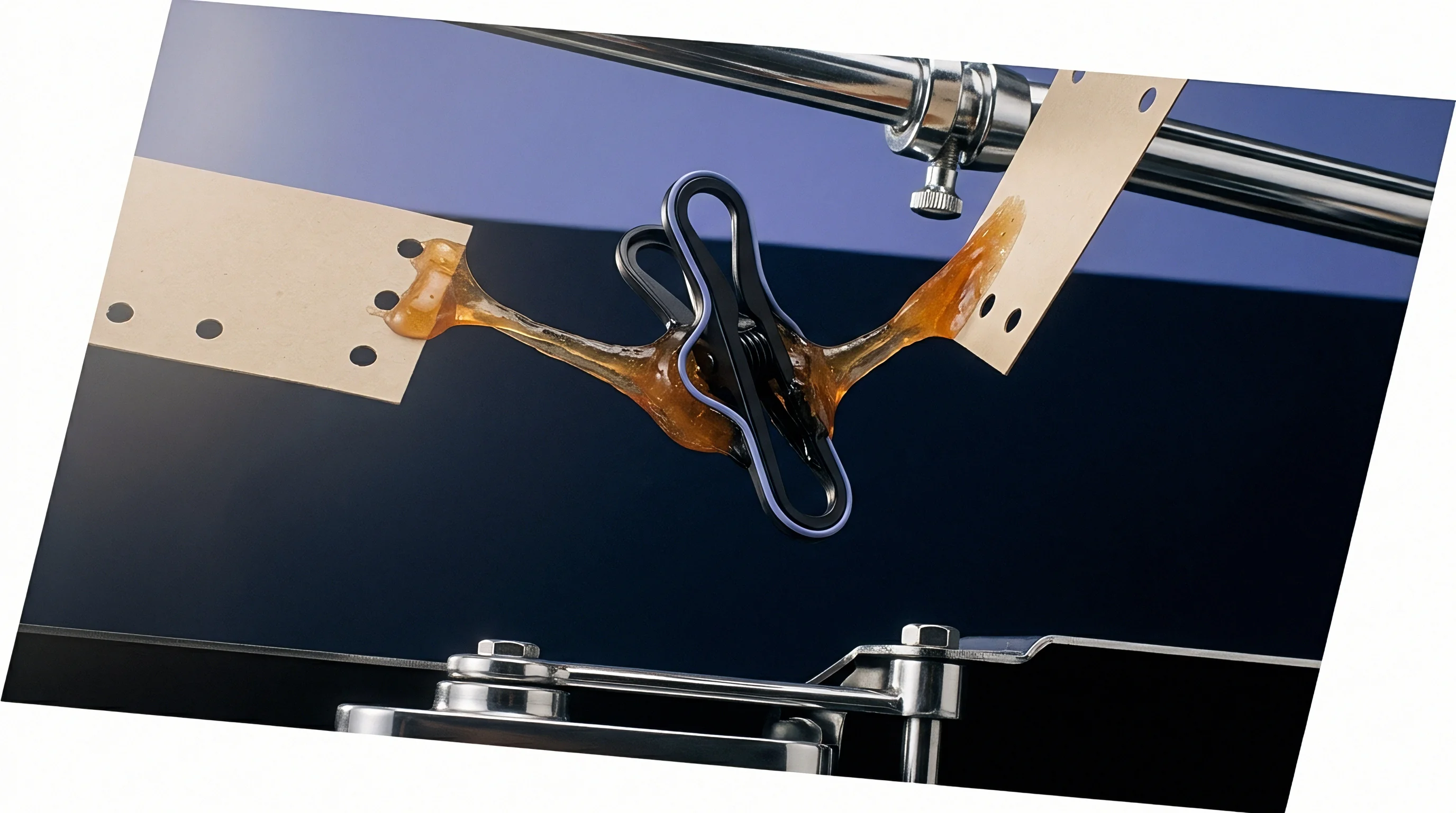
Lamella
Intercellular polysaccharides binding individual flax elementary fibers determine shear transfer between adjacent ultimate filaments. Technical fibers inside the bast bundle consist of single elementary fibers held together by a pectin-rich matrix in the middle lamella. This intercellular region is built mainly of homogalacturonan, rhamnogalacturonan I, and branched arabinan or galactan side chains cross-linked by divalent calcium ions.
Under dynamic deformation, the matrix transmits axial tension across micro-fibrillar interfaces. When natural retting, chemical processing, or weathering degrades these pectic polymers, cohesion between elementary fibers drops, causing localized micro-slippage before bulk tensile yielding.

Polygalacturonan Backbone Integrity
Structural stability within bast fiber bundles relies heavily on continuous pectic acid chains and calcium cross-linking. Enzymatic cleavage of α-1,4-D-galacturonosidic linkages in homogalacturonan smooth regions lowers the average molecular weight of the matrix phase, reducing its shear modulus and altering strain distribution across individual elementary fiber walls. Highly esterified pectins offer fewer free carboxyl groups for calcium bridging, yielding a flexible matrix with low shear strength.
Demethylated pectins form rigid egg-box structures with divalent cations that raise initial shear yield strength. Under repetitive stress cycles, however, rigid non-degraded networks undergo brittle micro-fracture, while partially degraded matrices accumulate plastic flow and internal friction.

Micro-Slippage Mechanisms in Bast Bundles
Uniaxial dynamic stress causes individual ultimate fibers to slide past one another once matrix shear yield fails. As dynamic axial tension cycles between lower and upper limits, micro-cracks form along pectin-depleted boundaries in the fiber bundle, creating micro-voids that disrupt load sharing across the yarn cross-section. Elementary fibers next to these voids carry disproportionate stress, triggering sequential fiber rupture long before reaching the theoretical ultimate tensile strength of an intact bundle.
The transition from elastic matrix shear to dynamic micro-slippage alters damping in raw and processed flax yarns. In un-retted or mildly degraded fibers, high pectin density maintains tight packing, yielding sharp, linear elastic stress-strain curves with negligible phase lag. Severe matrix depletion allows fibers to reorient and slide longitudinally under dynamic loads.
This sliding generates internal heat through friction between cellulose cell walls, degrading remaining inter-bundle linkages and accelerating fatigue failure under cyclic flexural and tensile loading.
The chemical state of homogalacturonan dictates the threshold at which cyclic dynamic loads convert elastic shear strain into irreversible inter-bundle damage.


Degumming
Chemical and enzymatic extraction protocols targeted at non-cellulosic constituents govern final residual binder levels in bast fibers. Dew retting relies on environmental fungal action, predominantly Epicoccum nigrum and Cladosporium herbarum, to break down outer cortical tissues and pectin binders. Controlled industrial water retting and hot-alkali bath extraction yield uniform chemical profiles but risk over-processing if temperature and pH fluctuate.
Excessive removal of intercellular polysaccharides leaves longitudinal cavities along the elementary fiber interface and lowers ultimate tensile capacity. Maintaining an optimal residual pectin fraction between 3.5% and 5.0% by weight provides the structural cohesion needed to withstand high-frequency mechanical oscillation without premature fibrillar splitting.

Residual Binder Thresholds and Structural Voids
When pectin content falls below 2.0% by weight, elementary fibers lose lateral support, causing technical fiber bundles to disintegrate into short, weak elements during yarn spinning and dynamic loading. Conversely, residual pectin concentrations above 7.0% create stiff, coarse bundles whose high bending rigidity concentrates stress during yarn flexing on weaving looms and in dynamic industrial applications.
Quantifying pectin degradation requires multi-analytical verification. Fourier-transform infrared spectroscopy evaluates carboxylate peak ratios at 1600 cm⁻¹ and 1740 cm⁻¹ to determine esterification levels, while gravimetric mass-loss methods combined with ammonium oxalate extraction measure residual pectin percentages directly. The table below outlines how specific processing routes impact residual pectin fractions, fiber bundle shear yield strength, and dynamic fatigue loss rates.
| Processing Route | Residual Pectin (% weight) | Degree of Esterification (%) | Bundle Shear Yield (MPa) | Fatigue Loss Rate (% per 10⁵ cycles) |
|---|---|---|---|---|
| Under-retted (Field Dew) | 7.8 – 9.2 | 65 – 75 | 42.5 | 14.2 |
| Standard Dew Retted | 4.2 – 5.5 | 45 – 55 | 38.0 | 6.8 |
| Controlled Water Retted | 3.5 – 4.8 | 35 – 45 | 39.5 | 5.2 |
| Enzyme Assisted (Pectinase) | 2.8 – 3.4 | 20 – 30 | 31.0 | 11.5 |
| Over-retted (Alkali Boiled) | 1.2 – 1.9 | 10 – 18 | 18.5 | 28.4 |

Do Residual Pectins Accelerate Dynamic Inter-Fiber Slippage?
Laboratory dynamic loading trials show that unextracted rhamnogalacturonan matrix components absorb initial viscoelastic strain. Under sustained high-frequency cyclic loading, however, unextracted pectin blocks retain bound moisture that acts as a plasticizer under localized shear. This softened pectin permits micro-fiber migration within the yarn core, accelerating inter-fiber slippage.
Dynamic load tests at 5 Hz reveal that fibers with incomplete pectin removal suffer early stiffness drop-off due to moisture-driven matrix softening, whereas uniformly degummed fibers maintain stable dynamic modulus values until macroscopic fatigue fracture.
Evaluating raw material processing conditions highlights four primary structural failure modes encountered when pectin-degraded fibers undergo dynamic cyclic strain:
- Inter-Bundle Shear Separation, occurring when hydrolyzed pectin networks fail under longitudinal tension and cause ultimate fibers to detach laterally within the yarn core.
- Fibrillar Splitting, resulting from the loss of calcium-bridged homogalacturonan, which permits individual elementary walls to splay under flexural fatigue.
- Micro-Void Nucleation, caused by enzymatic over-digestion of middle lamella regions, generating stress concentration points along the fiber axis.
- Hysteretic Matrix Softening, driven by moisture absorption within residual non-crystalline pectin zones under high-frequency tension-tension cycling.
Variable field retting conditions produce wide fluctuations in fiber cohesion across standard raw material trade lots.


Hysteresis
Cyclic tension testing of continuous flax yarns reveals progressive widening of the viscoelastic stress-strain loop during low-frequency axial oscillations. When subjected to repetitive load cycles between 15% and 55% of ultimate tensile strength, bast yarns exhibit non-linear elastic behavior governed by crystalline cellulose orientation and matrix binder viscosity. In fibers with well-preserved pectin networks, energy dissipation per cycle remains low and stable.
As pectin degradation advances, internal friction between sliding elementary fibers increases, expanding the hysteresis loop and converting mechanical strain energy into localized thermal energy.

Viscoelastic Damping and Dissipative Heat
Internal friction between elementary filaments transforms mechanical strain energy into localized thermal gradients during rapid flexing. In high-frequency applications operating between 5 Hz and 20 Hz, internal temperature within dry flax yarn bundles rises by up to 14 degrees Celsius above ambient conditions. This thermal rise further softens heat-sensitive pectin fractions, creating a feedback loop that accelerates inter-fiber displacement.
Higher energy dissipation correlates directly with reduced dynamic cycle life as thermo-mechanical degradation degrades remaining polysaccharide bridges.
At 100,000 tension cycles under a 30 MPa dynamic load at 50% relative humidity, flax yarns with less than 2.5% residual pectin maintain 88% of initial static modulus.

Strain Accumulation under Cyclic Loads
Permanent elongation builds progressively with every dynamic tension pulse applied to the yarn architecture. Cumulative plastic strain ~ often termed cyclic creep or ratcheting ~ develops rapidly in over-retted or chemically degraded fibers. This accumulated strain reduces yarn cross-sectional area, increasing effective stress on remaining intact elementary fibers until fatigue fracture occurs.
Dynamic modulus degradation under cyclic load follows an exponential decay pattern linked to pectin matrix intactness. In pristine bast fibers, the dynamic modulus decays by less than 5% over 10⁶ cycles at moderate stress levels. In pectin-depleted yarns, it decays by over 30% within the first 10⁵ cycles, driven by continuous micro-slippage and internal wall separation.
Yarn twist can partially offset low pectin shear strength, but high twist levels introduce compressive shear stresses that accelerate flexural fatigue failure.
In yarn structural design, lower residual pectin matrix fractions require higher mechanical twist to maintain cyclic stability under dynamic tension.


Clamp
Jaw pressure settings on hydraulic and pneumatic testing frames dictate stress localization where the sample meets the fixture. Testing dynamic fatigue properties in pectin-degraded bast yarns requires precise control over gripping mechanisms to avoid pre-test jaw breakage. Flat steel jaw faces induce severe lateral compression, crushing fragile elementary fiber bundles whose protective pectin sheath was stripped during degumming.
Dynamic fatigue stress profiles must differentiate between true mid-span bundle failure and premature failure from jaw-induced stress concentration.

Jaw Interface Stress Localization
Flat metal gripping surfaces introduce severe compression gradients across fragile bast fiber yarns. While pneumatic jaws prevent slip at high frequencies, excessive clamping pressure causes local transverse crushing of elementary fibers, initiating micro-fractures in pectin-depleted zones before axial cyclic testing even begins. Using capstan-style pneumatic grips or smooth, high-friction polyurethane jaw linings distributes holding forces over an extended contact arc, dampening stress concentrations at the specimen boundary.
ISO 13934 test protocols reject dynamic tensile runs where more than 10% of specimen fractures occur within 10 millimetres of the clamp face.

Testing Standards for Fatigue Characterization
Standardized protocols require continuous monitoring of crosshead displacement and load relaxation curves under steady cyclic frequencies. Dynamic tension-tension testing of bast fiber yarns operates under modified ISO 13934 and ASTM D3039 guidelines, following a strict laboratory sequence:
- Condition raw yarn samples at 20 degrees Celsius and 65% relative humidity for 24 hours prior to mounting.
- Mount the yarn specimen into capstan pneumatic grips set to 3.5 bar clamp line pressure to eliminate end slipping.
- Apply a static pre-tension of 0.5 centinewtons per tex to straighten the yarn axis without straining the matrix.
- Initiate sinusoidal dynamic axial loading at a fixed frequency of 2.0 Hz between lower and upper stress thresholds.
- Record real-time force-displacement curves and dynamic modulus values at logarithmic cycle intervals up to 10⁶ cycles or total yarn rupture.
Testing parameters must reflect end-use dynamic conditions while minimizing clamping artifacts. The table below outlines standard testing configurations, jaw pressure specifications, and typical failure distributions for bast fiber dynamic fatigue evaluations.
| Test Protocol | Grip Type | Jaw Pressure (bar) | Test Frequency (Hz) | Gauge Length (mm) | Mid-Span Failure Rate (%) |
|---|---|---|---|---|---|
| Modified ASTM D3039 | Flat Serrated Steel | 5.5 | 5.0 | 250 | 42 |
| Modified ISO 13934-1 | Smooth Polyurethane | 4.0 | 2.0 | 200 | 78 |
| Pneumatic Capstan Standard | Curved Smooth Rubber | 3.5 | 1.0 | 500 | 94 |
| High-Frequency Flex Fatiguer | Pin V-Groove Clamp | 2.5 | 10.0 | 100 | 61 |
Standard purchasing specifications mandate that any dynamic tension test series yielding less than 85% mid-span gauge fractures invalidates the sample batch qualification dossier.


Specification
Structural weave parameters convert raw filament properties into distributed load-bearing geometry across warp and weft systems. When designing technical woven linen fabrics for dynamic load environments, yarn-level pectin degradation must be countered through precise loom settings, weave architecture selection, and cover factor optimization. Plain weave patterns maximize yarn crimp and structural float interlocks, creating high inter-yarn friction that compensates for lower intra-yarn pectin shear strength.
Twill and satin constructions offer higher fabric density and smoother surfaces, but their longer floats allow un-retted or degraded fibers to flex repeatedly across float crowns, accelerating flexural fatigue failure.

Weave Geometry and Stress Redistribution
Interlacing patterns dictate how dynamic impact loads propagate through adjacent thread crowns during service. In a balanced 1/1 plain weave construction (e.g. 18 ends/cm by 18 picks/cm using 100 tex flax yarn), warp and weft crimp levels equalize around 7.5%.
This geometry forces applied dynamic tensile loads to deform the weave crown before loading the yarn axis directly. Crown deformation absorbs energy, protecting weak intercellular pectin bonds from sharp dynamic peaks.
A comparison of two 220 gsm technical flax fabrics woven on a 190 cm rapier loom operating at 420 picks per minute illustrates the effect of weave pattern:
Construction A uses a 1/1 plain weave with 16 ends/cm and 16 picks/cm, using a 100 tex yarn with 3.2% residual pectin. Construction B uses a 2/2 twill weave with 22 ends/cm and 22 picks/cm with the identical 100 tex yarn lot. Under a cyclic multi-axial fatigue test delivering 1.5 kN dynamic pulses at 2 Hz, Construction A lasts 250,000 cycles before fabric rupture.
Construction B, despite higher static tensile strength from its greater thread density, fails after only 110,000 cycles. The long floats in Construction B permit localized yarn bending and inter-fiber friction, rapidly destroying the degraded pectin binder within unsupported float segments.
Balanced plain weave structures suppress dynamic micro-slippage more effectively than high-float satin weaves under multi-axial cyclic loading.

Loom Shed Tension Control Parameters
Maintaining constant warp sheet tension during shedding prevents localized micro-fatigue on high-speed weaving equipment. Air-jet looms present unique challenges for pectin-degraded bast yarns, as high-velocity air nozzles can strip loose fibers from low-pectin yarn surfaces, causing shedding accumulation and reed clogging. Rapier looms apply sharp tension spikes during insertion shedding, while moisture absorption shifts S-N curves downward.
Loom settings must be fine-tuned to accommodate low-pectin yarn lots:
- Backrest Roller Positioning raised by 15 millimetres above the breast beam level to equalize warp tension between upper and lower shed openings.
- Shed Opening Timing delayed to 300 degrees of mainshaft rotation to reduce peak tension exposure on weak warp threads during reed beat-up.
- Asymmetric Heald Frame Levelling configured to minimize abrasive friction on pectin-depleted warp yarns running through high-density steel reeds.
- Relative Humidity Control maintained strictly between 68% and 72% within the loom shed to keep residual pectin flexible without causing warp sizing tackiness.
Selecting an inappropriate weave architecture for pectin-depleted bast yarn lots leads to premature product fatigue and structural failures under dynamic service conditions.


Disbursement
Financial settlement schedules for commercial technical flax shipments reflect the risk of unexpected dynamic fatigue failure in high-cycle industrial uses. Sourcing technical-grade bast fibers requires commercial qualification frameworks that link chemical pectin integrity to landed unit costs. Mills supplying over-retted or unevenly degummed fiber lots often offer material based solely on static dry tensile certificates.
However, static tensile figures obscure low cyclic fatigue life, transferring long-term performance risks to the buyer and end integrator.

Loom Hour Accounting and Batch Risks
Machine operational cost calculations incorporate speed deratings required by inconsistent fiber cohesion. While greige inspection catches severe thick ends early, unexpected warp breakages halt the shed automatically. Running pectin-degraded yarns forces weaving mills to reduce rapier loom speeds from 500 picks per minute down to 360 picks per minute to avoid catastrophic warp shed breakages.
This 28% drop in loom speed elevates fixed machine-hour costs per linear metre, while landed costs also account for beam preparation fees.
Loom hour accounting allocates beam setup costs directly to the buyer when yarn pectin variability forces shedding speed reductions.
Contractual Defect Allowances
Purchase agreements for industrial bast fabrics establish precise yield penalties based on raw fiber degradation metrics, with price adjustments indexed directly to residual pectin percentages and dynamic fatigue compliance. When incoming yarn lots fall below the contractually specified 3.5% residual pectin threshold, automated debit notes reduce the invoice price per metre to offset anticipated loom downtime and shorter product life.
The economic model in the table below shows how yarn pectin degradation states impact loom efficiency, finishing scrap rates, and final commercial pricing per metre.
| Pectin Quality Grade | Residual Pectin Range (%) | Max Loom Speed (PPM) | Shed Efficiency (%) | Scrap Allowance (%) | Landed Metre Premium/Discount (%) |
|---|---|---|---|---|---|
| Grade A (Technical Dynamic) | 3.8 – 4.8 | 480 | 91.5 | 2.0 | +12.5 (Premium) |
| Grade B (Standard Commercial) | 3.0 – 3.7 | 420 | 86.0 | 4.5 | Baseline Price |
| Grade C (Degraded / Over-retted) | 2.0 – 2.9 | 350 | 74.5 | 11.0 | -18.0 (Discount) |
| Grade D (Non-Compliant Sub-Standard) | < 2.0 | 280 | 58.0 | 24.5 | Rejected / Full Refund |
Commercial contracts for high-performance flax reinforcements explicitly state that chemical pectin profile verification data must accompany every warp beam delivery dossier before invoice clearance occurs. Technical buyers who audit raw material retting parameters prior to beam sizing protect their landed margins against hidden shed stoppages and downstream dynamic fatigue failures.
Standard procurement agreements require buyers to retain 5% of lot value until dynamic sample fatigue testing confirms compliance with structural cyclic standards.