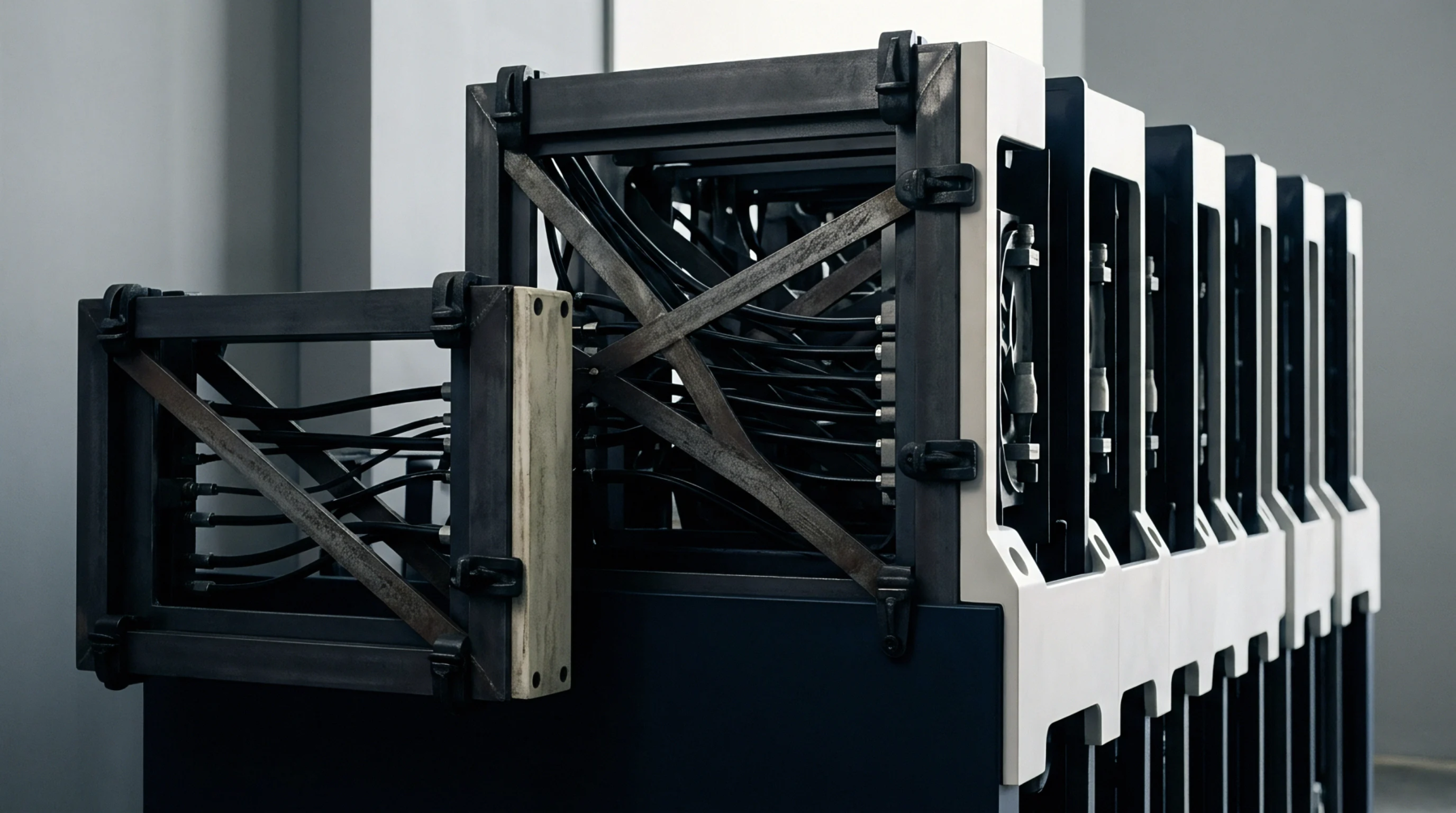
Mechanical Modulation
High-frequency cyclical displacement defines the eccentric bearing actuation mechanism used to control warp tension during the final stages of high-speed linen loom operation. This system employs an off-centre rotating inner race within the bearing housing to produce a constant stroke distance for the shedding harness. Engineers calibrate the throw of the rotation to dictate the depth of the shed, which determines the clearance allowed for the insertion of the weft.
Strict tolerances for this component prevent irregular tension in the linen warp that otherwise causes fabric defects like broken yarns or inconsistent beat-up marks.
Operational Calibration
Technical staff adjust the angular position of the eccentric shaft to synchronize movement with the main drive of the loom. Precise positioning ensures the harness reaches the full open position exactly when the shuttle or rapier moves through the warp. Correct alignment prevents damage to the delicate flax fibres by minimizing unnecessary abrasion during the shedding cycle.
Misalignment leads to uneven wear on the harness frames and increases the frequency of required machine maintenance.
Production Verification
Inspection protocols for this hardware involve checking for play within the bearing assembly that could introduce vibration into the loom frame. Workers compare the measured stroke against the manufacturer output specification to ensure that the shed geometry remains consistent across multiple production batches. Documentation of these checks provides a record for quality assurance teams to verify that machinery configuration meets the requirements for processing heavy-weight linen grades.
A stable actuation assembly ensures that the fabric retains uniform density from the first pick to the last.