Dew Retting Moisture Management and Scutching Yield Optimisation Protocols
Controlling dew retting moisture between 14% and 16% optimizes scutching long-fibre yield while preserving European Flax lot origin reconciliation.


Swath
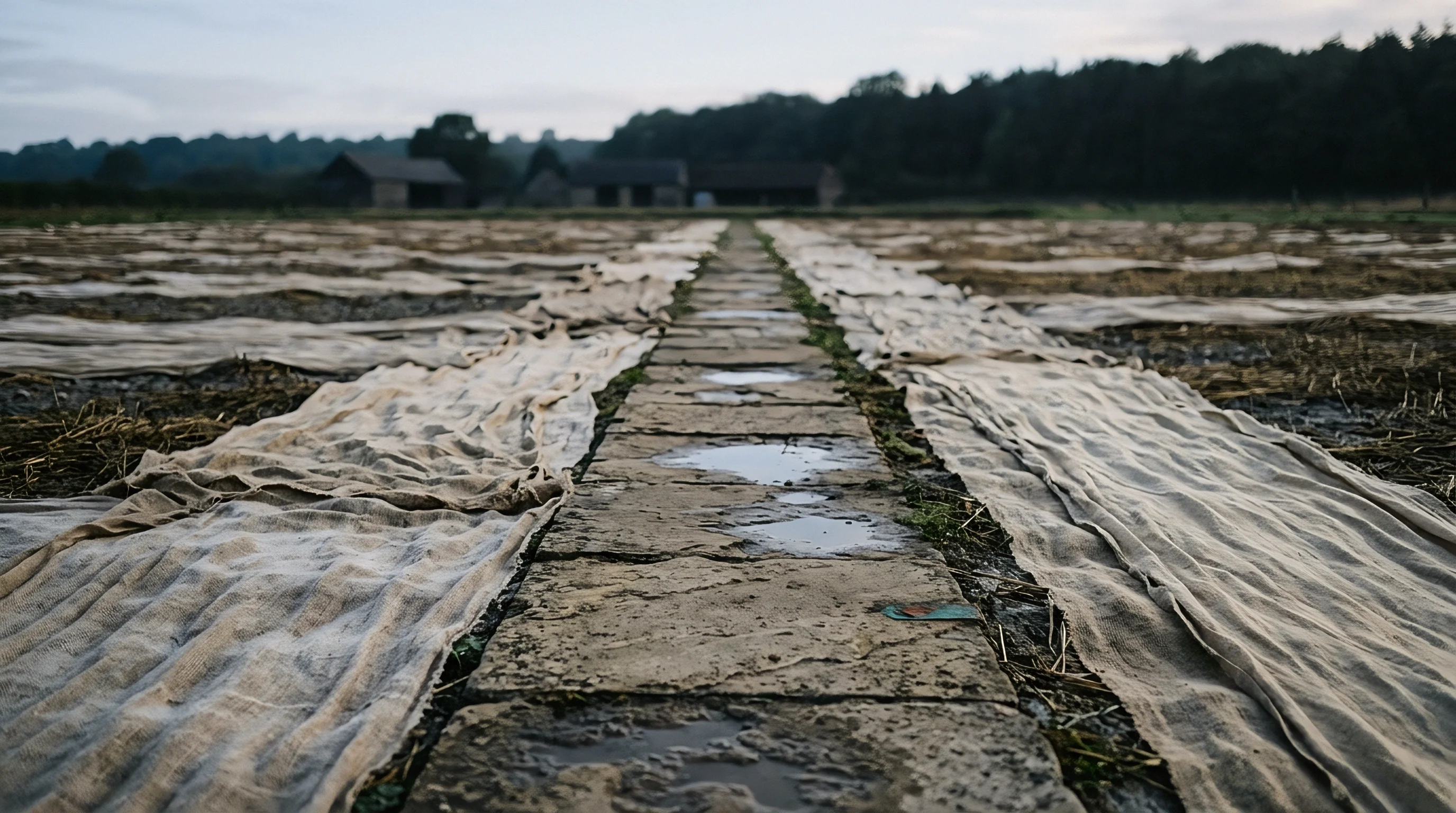
Biological breakdown of flax straw resting on agricultural soil depends on microclimatic moisture. Rain events, heavy nocturnal dew, and soil capillary water supply the liquid medium required for saprophytic fungi to colonize the unharvested or pulled stems. Species such as Cladosporium herbarum, Epicoccum nigrum, and Alternaria alternata establish micro-colonies within the cortical parenchyma.
Fungal hyphae colonize the parenchyma. These organisms release extracellular enzymes, predominantly polygalacturonases and pectin lyases, which target the calcium-pectate complexes binding phloem fibre bundles to the surrounding epidermis and inner xylem cylinder. Precise hydration control during field standing dictates whether pectin solubilization proceeds without degrading structural cellulose filaments.

Field Moisture Dynamics during Fungal Retting
Atmospheric precipitation and nocturnal dewfall supply the water necessary for fungal spore germination. Stem moisture levels must fluctuate between critical boundaries to maintain microbial activity without inducing anaerobic decay. Below 14 percent stem moisture content, fungal metabolism halts completely, freezing the biochemical retting state.
Fungal hyphae enter dormancy when free water disappears from the intercellular voids. Conversely, continuous stem moisture exceeding 28 percent encourages anaerobic bacterial colonization, notably by Clostridium felsineum, which produces butyric fermentation and non-specific degradation of middle lamellae pectins. Moisture drives biological cleavage.
| Retting Phase | Stem Moisture Range (% RH) | Dominant Microflora | Enzymatic Action | Fibre Structural Risk |
|---|---|---|---|---|
| Initial Hydration | 30 – 45 % | Bacteria (Pectobacterium spp.) | Soluble sugar leaching | Parenchyma softening |
| Active Fungal Colonization | 18 – 26 % | Epicoccum nigrum, Cladosporium | Polygalacturonase release | Optimal cortical separation |
| Over-Retting Danger Zone | > 28 % (Extended) | Clostridium felsineum | Cellulase secretion | Cell wall cellulolytic degradation |
| Desiccation / Completion | 12 – 15 % | Dormant spores | Enzymatic arrest | Mechanical brittleness if under 10% |
Field mechanical turning flips the aligned stems, balancing sun exposure and soil moisture contact between the top and bottom layers of the windrow. Desorption proceeds unevenly. If the upper surface dries rapidly under solar radiation while the lower surface remains saturated against damp earth, scutching yields drop dramatically due to mixed retting states within the same bale.
Managing this moisture gradient across the field profile ensures uniform pectin degradation across the entire stem length.
Enzymatic Pectin Cleavage Thresholds
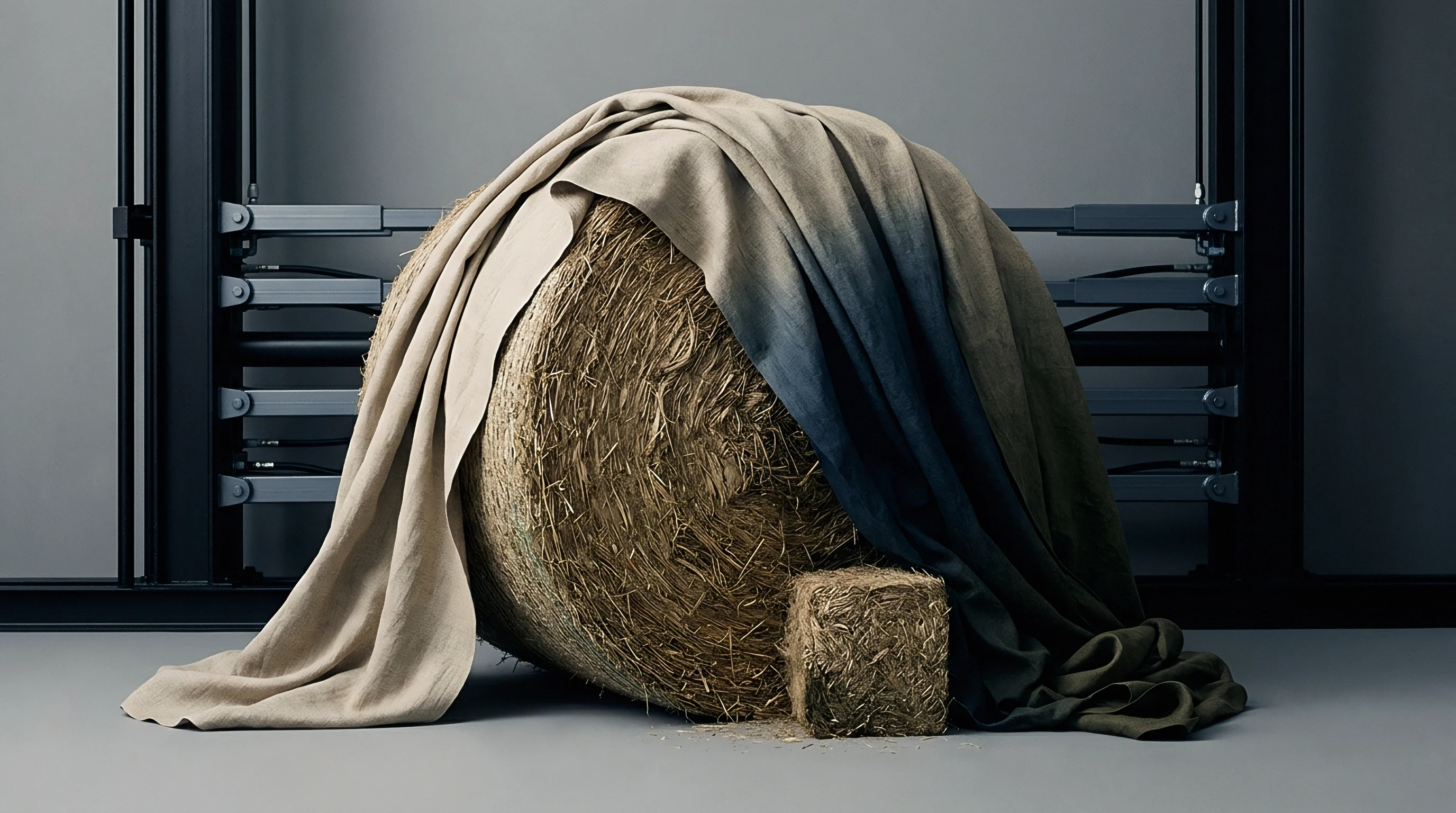
Filamentous fungi secret polygalacturonase and pectin lyase into intercellular spaces of the cortex. The primary objective is the targeted cleavage of alpha-1,4-galacturonan linkages in the middle lamella. Cellulose microfibrils remain untouched.
When enzyme concentrations peak at stem moisture levels of 22 percent, pectin dissolution reaches its highest selectivity index. If moisture remains above 24 percent after middle lamella collapse, fungi shift metabolic pathways to produce endo-1,4-beta-glucanases, an enzyme group that attacks the crystalline cellulose core of individual elementary fibres. Over-retting weakens technical fibers.
Controlled field hydration between 18% and 22% relative humidity optimizes fungal pectinase secretion while halting cellulase production.
Monitoring weather windows prior to mechanical pulling and swathing prevents over-retting. Field operators utilize portable infrared moisture sensors alongside ambient wet-bulb hygrometry to time the mechanical turning of the swaths. Turning the crop at 16 percent moisture halts aggressive fungal action while allowing air drying to stabilize the crop for bale wrapping.
Whether field microflora populations can be standardized through artificial inoculation without disrupting regional ecosystem balances remains an unproven question for commercial growers.


Hygrometry
Accurate water content determination across stored straw bales protects fibre integrity prior to decortication. Bales entering storage carry residual moisture from the field, creating internal moisture gradients between the outer core and the high-density center. Dielectric sensors detect core dampness.
Standardized testing protocol ISO 139 dictates that physical samples undergo equilibrium conditioning at 20 degrees Celsius and 65 percent relative humidity before lab verification. High-density square bales stored above 15 percent moisture generate heat through residual saprophytic respiration, risking spontaneous ignition and thermal fibre degradation.

Capacitive Probe Depth Calibration
Handheld dielectric instruments register electrical permittivity across the densely packed stalk core. Permittivity scales non-linearly with volumetric water content. Calibration curves developed for loose straw fail when applied to 300-kilogram high-density bales, where compaction density alters the background dielectric constant.
Technicians adjust probe resistance scales based on measured bale volume and weight metrics to avoid underestimating core moisture levels.
- Operators insert capacitive moisture meters into five distinct points across the harvested straw bale.
- Testers record relative humidity readings alongside ambient air temperature to establish dew point differentials.
- Technicians transfer core samples into sealed containers for oven drying verification at 105 degrees Celsius.
- Processors calculate dry mass fractions against initial wet weights to determine true moisture content.
- Facility managers log values into the lot traceability database prior to warehouse stack placement.
Internal moisture variation creates operational challenges during mechanical processing. When the core retains 18 percent moisture while outer layers drop to 11 percent, breaker rollers crush the outer dry stems into dust while failing to detach the damp bark from the core. Core moisture retards decortication.

Bale Core Moisture Equilibration Kinetics
Water vapor migration inside compressed agricultural packages follows vapor pressure gradients between internal core zones and storage facility ambient air. Moisture diffusion through dense flax straw is exceptionally slow, governed by anisotropic permeability along the longitudinal axis of the stems. Warehouse ventilation systems must maintain active air movement across stack rows to prevent moisture accumulation in cold boundary layers.
ISO 139 standard atmosphere conditioning rules enforce a 24-hour equilibration period before scutching mass verification tests.
Enclosed storage facilities utilize dehumidification circuits to draw bale moisture down to the 12 percent equilibrium target. Accelerated drying using hot air streams above 55 degrees Celsius causes rapid surface desiccation, locking moisture inside the stem core while embrittling the exterior bast fibres. Stalks stored at ambient moisture equilibrium break cleanly under the turbine blades without shredding long filaments into short tow.


Decortication
Mechanical extraction of phloem fibre bundles relies on differential stiffness between the woody core and peripheral bast tissues. The scutching turbine utilizes a pair of counter-rotating drums fitted with steel blades that strike the flax stems at high velocity. Dry stalks shatter under impact.
If the straw moisture drops below 10 percent, the impact energy shatters the bundle structure, shortening long fibre length and generating excess short tow. Conversely, straw entering scutching turbines above 15 percent moisture exhibits damp wood elasticity; the blades fail to snap the xylem core, resulting in high shive contamination in the final scutched sliver.

Fluted Roll Breaking Action and Cell Wall Shearing
Stalks entering the breaker unit experience repeated bending stresses between intermeshing gear teeth. The mechanical action breaks the inner woody xylem into small fragments called shive without fracturing the continuous phloem fibre ribbons. Fluted roller pressure setting correlates directly with stem moisture content.
Wet stems require higher compressive forces to fracture the pliable xylem, increasing the risk of flattening the hollow fibre lumens. Turbine blades strip outer cortex.
Consider a commercial scutching run processing a 10,000-kilogram lot of dew-retted straw under varying moisture conditions. At optimal 13.5 percent straw moisture, processing yields 1,800 kilograms of long scutched flax (18.0% yield), 1,200 kilograms of short tow (12.0% yield), and 6,000 kilograms of shive (60.0% yield), with the remaining mass lost to dust and moisture evaporation. If the same straw lot enters the breaker units over-dried at 9.5 percent moisture, increased bundle friction and brittleness shift the outcome: long fibre yield drops to 1,350 kilograms (13.5% yield), short tow increases to 1,600 kilograms (16.0% yield), and fine shive dust generation rises by 350 kilograms.
Calculating landed fibre value under these parameters reveals a direct financial penalty of over 2,200 EUR per 10-tonne straw lot processed at sub-optimal moisture levels, assuming long fibre trades at 4.50 EUR per kilogram and short tow at 1.40 EUR per kilogram.
When Does Moisture Imbalance Cause Fibre Damage during Scutching?
Excessive drying below target thresholds turns cellulose microfibrils brittle, causing catastrophic filament snapping under high-speed turbine impacts. When relative humidity in the processing shed falls below 50 percent, dry ambient air strips surface moisture from the exposed fibre ribbons within minutes. The loss of bound water between elementary fibres reduces interfacial sliding capacity, forcing technical bundles to shear internally rather than separating into smooth ribbons.
| Input Moisture (% RH) | Breaker Roll Gap (mm) | Turbine RPM | Long Fibre Yield (%) | Short Tow Yield (%) |
|---|---|---|---|---|
| 8.0 – 10.0 % (Dry) | 2.8 mm | 210 RPM | 13.5 % | 16.2 % |
| 11.0 – 13.5 % (Target) | 2.2 mm | 240 RPM | 18.4 % | 11.8 % |
| 14.0 – 16.0 % (Damp) | 1.8 mm | 265 RPM | 15.1 % | 14.5 % |
| > 16.5 % (Wet) | 1.5 mm | 290 RPM | 11.2 % | 18.0 % |
Pneumatic extraction lines remove shive fragments as turbine blades scrape the held flax bundles. Damp shive possesses higher specific gravity, requiring elevated air suction velocity to prevent shive re-entanglement in the long fibre heads. Adjusting air extraction velocity prevents secondary contamination of scutched slivers.
Processing over-dried straw through aggressive scutching turbines reduces long-fibre yield by five percentage points, shifting tons of premium material into low-value shive and dust.

Comb
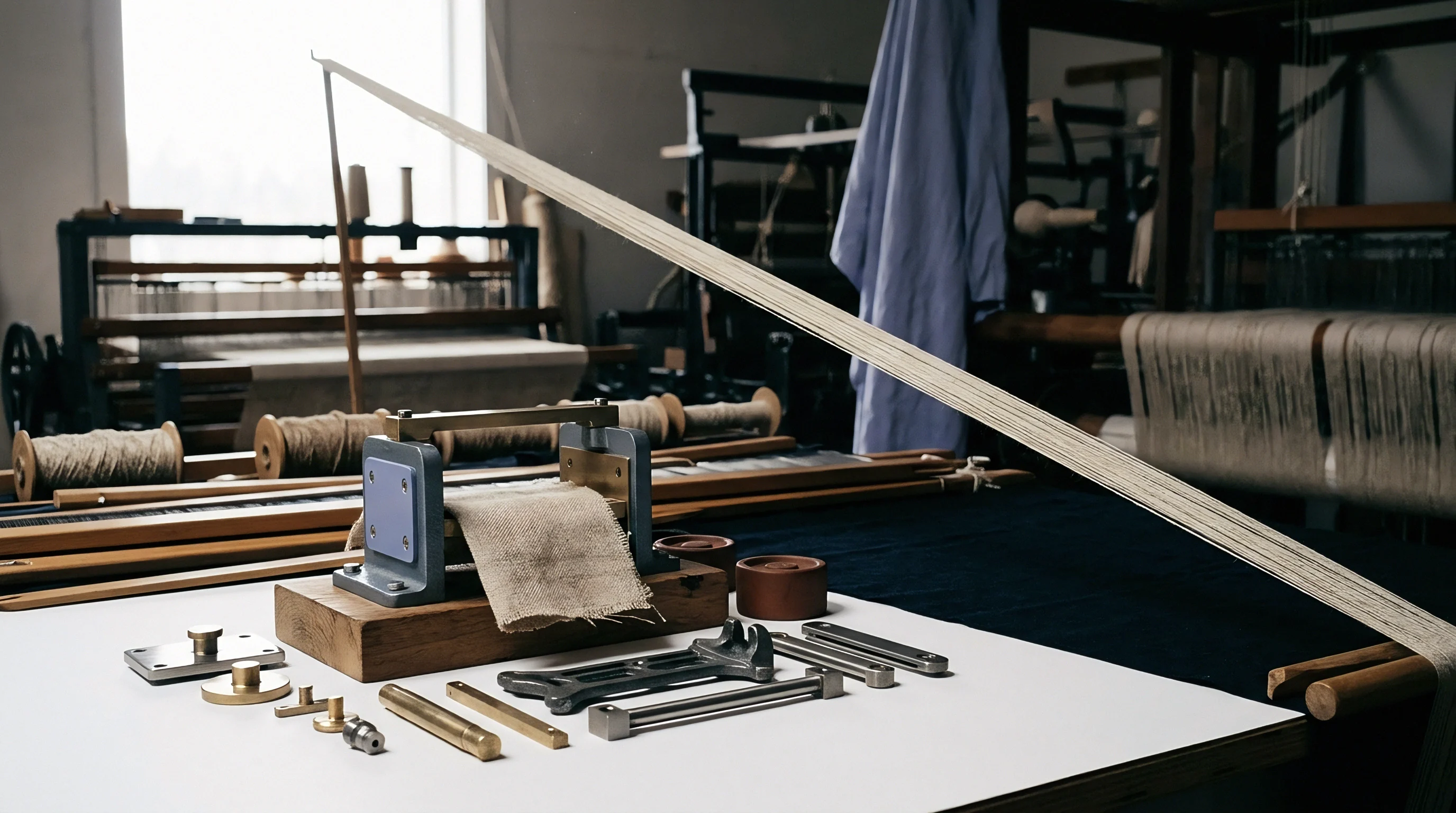
Hackling processes divide thick scutched bundles into fine, parallel technical slivers ready for spinning. Hackling pins separate long bundles. Steel pins mounted on circulating aprons penetrate the fibre mass, combing out residual shive, short tangled fibres, and un-retted cortical fragments.
Residual pectins increase bundle stiffness. If the ambient relative humidity inside the hackling room drops below 65 percent, static electricity accumulates rapidly across the non-conductive cellulose strands, causing fibre ballooning and severe machine lap-ups.

Hackling Pin Resistance and Bundle Splitting
Steel pins penetrating the fibre mass experience friction governed by residual cortical gums. Moisture acts as an internal plasticizer within the amorphous hemicellulose matrix. At 14 percent fibre moisture, technical bundles yield flexibly to the pinning action, splitting longitudinally into finer elementary fibre groupings without transverse fracture.
Yield losses compound at combing.
Over-retted straw degrades into short tow under the scutching turbine long before moisture equilibrates across the bale core.
Pin density increases progressively across successive hackling stages, from 2 pins per centimeter on the coarse intake boards up to 28 pins per centimeter on the finishing comb heads. Operating fine hackling pins on low-moisture fibre causes extensive pin bending and needle breakage, forcing frequent mill stoppages. Conditioning rooms equipped with ultrasonic humidifiers preserve the 13 to 14 percent moisture plateau required for high-density pinning.

Sliver Uniformity Parameters
Linear mass variation along combed ribbons dictates eventual yarn strength and thread evenness. Combing machines form continuous slivers by overlapping the heads of hackled long fibre stricks. Moisture variations along the strick length cause uneven drafting ratios during sliver formation, producing thick and thin places in the drawn sliver.
- Turbine Speed Modulation Adjustable frequency drives match rotor velocity to incoming stalk moisture readings.
- Fluted Roller Pressure Adjustment Mechanical compression recalibrates automatically when stalk moisture drops below target bands.
- Ambient Relative Humidity Controls Conditioning units inject fine water mist to maintain scutching shed equilibrium.
- Shive Extraction Velocity Settings Pneumatic suction streams ramp up speed during processing of brittle batches.
Automated drafting heads utilize capacitive sensors to measure sliver mass per unit length in real time. Damp fibre bundles alter capacitance readings independently of fiber mass, throwing off autoleveler calibration cycles. Maintaining constant moisture eliminates mass-measurement errors during sliver preparation.
Mills frequently claim that poor hackling yield stems entirely from field retting irregularities rather than improper humidity control inside the combing room.


Reconciliation
Accounting for mass balance throughout mechanical processing relies on dry-basis corrections across all material fractions. Bale tags track lot origin. Raw flax contains variable water percentages, making gross weight comparisons between field delivery and scutched output commercially inaccurate.
Mass balance reconciles yard inputs. The textile trade relies on standard commercial regain values to establish true commercial weight for trade settlements.

Commercial Moisture Regain Standard Calculation
Official trade agreements base contract invoicing on standard dry weight plus an agreed percentage allowance. According to the International Bureau for the Standardisation of Man-Made Fibres (BISFA) and ISO rules for natural fibres, the official commercial moisture regain for scutched flax fibre is fixed at 12.0 percent. Any water mass delivered above this standard represents unpayable weight that must be deducted from the invoice.
To perform mass reconciliation on a processed batch, calculate dry mass (Mdry) using oven test sample dry fraction (wd):
Mdry = Mgross × wd
Then apply the official commercial regain factor (Rcomm = 0.12) to establish commercial payable mass (Mcomm):
Mcomm = Mdry × (1 + Rcomm)
| Material Stream | Gross Mass (kg) | Measured Moisture (%) | Oven Dry Mass (kg) | Commercial Weight (12% Regain) |
|---|---|---|---|---|
| Incoming Field Straw | 100,000 kg | 15.5 % | 84,500 kg | 94,640 kg |
| Scutched Long Fibre | 17,200 kg | 13.0 % | 14,964 kg | 16,760 kg |
| Short Tow Fraction | 12,500 kg | 12.5 % | 10,938 kg | 12,250 kg |
| Shive Output | 58,000 kg | 11.0 % | 51,620 kg | N/A (Industrial Byproduct) |
| Dust & Unrecovered Loss | 12,300 kg | Evaporated/Dust | 6,978 kg | N/A |
| Audit Reconciliation | 100,000 kg | Variance: 0.0% | 84,500 kg Total | Mass Balance Reconciled |
Documentary Audit Trail across Scutching Units
Provenance claims under European Flax certification demand unbroken batch tracking from plot pulling records to finished sliver bale tags. Certified scutchers maintain serial identification logs matching every field weighbridge ticket to specific processing runs. If mass balance calculations show long fibre yields exceeding 22 percent on a single straw lot, auditors flag the run for potential mixing with uncertified raw straw.
- Field Harvesting Log Book Recording plot coordinates, pulling dates, swath turning timestamps, and weather observation notes.
- Weighbridge Delivery Receipts Stamping raw straw mass upon entry into the scutching facility yard before storage.
- Scutching Yield Run Sheets Tracking shift input mass against long fiber, short tow, and shive output totals.
- Certified Origin Transaction Papers Linking European Flax chain of custody lot numbers directly to outbound bale tags.
Uncertified origin claims on scutched flax sliver breakdown immediately upon cross-referencing field weighbridge receipts against spinning mill lot numbers.
Audit gaps occur frequently during intermediate storage where bales from multiple farms undergo blending to achieve target moisture averages. Segregating certified lots into distinct storage bays prevents chain-of-custody contamination. Standard purchasing contract clause ISO 139 section 6 governs dry-weight commercial regain adjustments, converting gross weighbridge totals into net payable fibre balances.

Margin
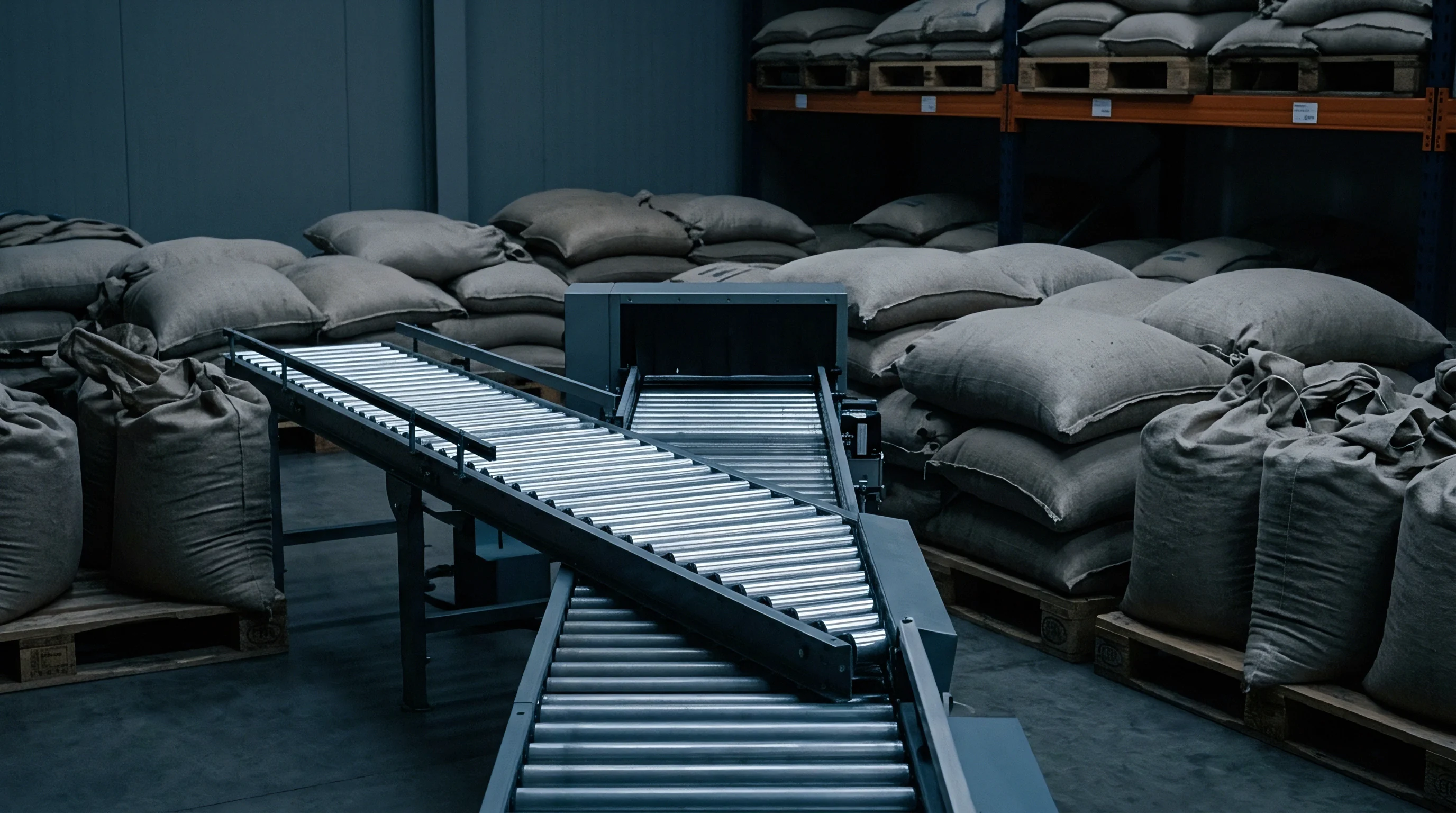
Financial performance in linen yarn production reflects raw material yield efficiency and strict landed weight verification. Uncertified sliver carries high risk. Raw flax purchases represent up to 60 percent of total yarn manufacturing cost, making scutching yield optimization the primary driver of operational profitability.
Uncontrolled moisture variations erode margins through hidden water surcharges, degraded fibre yields, and increased toll-spinning losses.

Moisture Surcharge Formulas in Raw Fiber Procurement
Procurement contracts enforce direct monetary penalties when delivered shipment water content exceeds specified contractual limits. Buyers reject shipments exceeding 16 percent moisture or apply weight adjustments that deduct excess water weight plus a processing penalty fee. Tariff rates depend on decortication.
Customs audits review weighbridge receipts. Uncertified lots lose pricing power.
A standard contractual weight adjustment formula calculates payable net weight (Wnet) from delivered gross weight (Wgross), actual measured moisture (Mact), and contract base moisture (Mbase):
Wnet = Wgross × left
When Mact exceeds Mbase by more than 2.0 percentage points, an additional handling surcharge of 1.5 percent per extra moisture point is assessed against the invoice total. This financial mechanism protects buyers from paying fibre prices for excess water weight while penalizing suppliers for poor drying practices.
Landed Cost Sensitivity and Tariff Qualification
Duties levied under international customs schedules vary depending on whether flax has undergone simple scutching or secondary hackling. Under the Harmonized System (HS) code framework, raw or scutched flax falls under HS 5301.10 and 5301.21, whereas hackled or combed fibres qualify under HS 5301.29. Incorrect classification triggered by poor processing differentiation leads to severe customs penalties and duty re-assessments at the importing port.
Offshore processing locations, particularly toll-spinning facilities in China, require exact yield documentation before accepting European-grown flax sliver. Conversion efficiency contracts establish baseline yarn output thresholds per metric tonne of imported sliver; if high moisture content or fiber brittleness reduces actual yarn yield below contractual benchmarks, the spinner levies conversion deficit penalties back on the fibre supplier. The resulting margin calculation confirms that controlling moisture during retting and scutching provides the primary defense against raw material yield loss.