Analytical Isotope Ratio Verification for Origin Claims on Blended European Flax Yarns
Isotope ratio mass spectrometry establishes European flax provenance in blended yarns by mapping stable isotope values against regional geographic baseline databases.


Soil

Geographic Isotope Baselines across Flax Regions
Geographical provenance claims for agricultural textile fibers rely on the persistent isotopic imprint left by local climate, hydrology, and geology while Linum usitatissimum is growing. Flax grown along the coastal belt of Western Europe ~ northern France, Belgium, and the Netherlands ~ absorbs rain heavily influenced by North Atlantic weather systems. This rainfall delivers a distinct stable isotope signature in hydrogen (δ2H) and oxygen (δ18O), separating Atlantic coastal regions from interior continental land or low-latitude irrigated basins.
Atmospheric carbon dioxide uptake through C3 photosynthetic pathways sets the carbon baseline (δ13C) for virgin flax cell walls within a narrow window of minus 28.5 to minus 26.0 per mil against the Vienna Pee Dee Belemnite standard. Continental regions like Heilongjiang or the Altai territory show enriched oxygen and hydrogen values from high evapotranspiration during short, hot growing seasons. Irrigated basins in Egypt or South Asia present distinct nitrogen (δ15N) and bio-available strontium (87Sr/86Sr) ratios, shaped by synthetic fertilizer use and ancient alluvial deposits.
The isotopic signature of genuine Western European flax exhibits delta oxygen values strictly constrained between 18.5 and 22.0 per mil VSMOW.
Mapping these terrestrial baselines precisely requires multi-element isotope ratio analysis. Bio-available strontium isotopes reflect bedrock weathering into soil, moving without biological fractionation from groundwater directly into the stem’s vascular tissue. Paleogene and Neogene sedimentary soils in Flanders and Normandy yield lower 87Sr/86Sr ratios than the Precambrian cratons beneath major flax regions in interior northern Asia.
Because Western European cultivation is rain-fed, leaf water enrichment stays within narrow limits compared to flood-irrigated areas where evaporation concentrates heavy isotopes before root uptake.
| Growth Origin Region | δ13C VPDB (‰) | δ18O VSMOW (‰) | δ2H VSMOW (‰) | δ15N AIR (‰) | 87Sr/86Sr Ratio |
|---|---|---|---|---|---|
| Western Europe (France/Belgium) | -28.2 to -26.4 | +18.8 to +21.5 | -72.0 to -58.0 | +2.1 to +4.8 | 0.7088 to 0.7105 |
| Northeast China (Heilongjiang) | -26.1 to -24.3 | +23.2 to +26.8 | -48.0 to -35.0 | +5.2 to +8.1 | 0.7118 to 0.7142 |
| Nile Delta (Egypt) | -25.5 to -23.8 | +27.0 to +30.5 | -22.0 to -10.0 | +7.8 to +12.4 | 0.7072 to 0.7085 |
| Central Asian Steppe (Kazakhstan) | -27.0 to -25.1 | +24.1 to +27.3 | -52.0 to -38.0 | +4.5 to +7.2 | 0.7108 to 0.7129 |

Terrestrial Hydrology and Isoscape Mapping
Isoscape maps combine spatial precipitation data with terrain evaporation models to predict local plant tissue isotope profiles. Rain-fed European flax grows in a maritime zone where monthly precipitation values stay steady from spring sowing through the mid-summer harvest. This stable hydrology prevents wild swings in cellulose oxygen enrichment, leaving an isotopic signature that survives mechanical scutching and hackling intact.
Commercial fraud frequently relies on routing Asian or Eastern European raw fiber through Western European trading houses to secure European Flax certification. Multi-isotope testing exposes these origin swaps regardless of what the paperwork says. High-resolution isotopic databases map grid cells down to ten square kilometers, making it straightforward for labs to verify if a sample matches declared coordinates.
A lot claiming European origin while showing oxygen values above 23 per mil VSMOW fails origin qualification outright.
Isotopic profiles from rain-fed maritime fields do not match the enriched oxygen values found in continental irrigation schemes.


Fractionation
Retting Processes and Isotopic Alterations
Field retting exposes pulled flax stems to dew, rain, and soil microbes to break down the pectin binding bast fiber bundles to the woody shive. Solubilizing pectin and enzymatic degumming strip out non-cellulosic carbohydrates, shifting bulk fiber oxygen and carbon isotope ratios slightly compared to unretted stems. Dew-retting in Western Europe takes place on the ground, where fungi drive controlled decay over three to six weeks depending on weather.
Water retting in tanks or slow rivers ~ now mostly restricted by European environmental laws ~ alters isotopic distribution differently through anaerobic bacterial pathways. Hydrogen values in structural cellulose resist exchange during dew retting because carbon-bound hydrogen atoms do not swap with environmental moisture at ambient temperatures. Oxygen in hydroxyl groups does undergo minor exchange during long submersion, leaving a local water signature if the process water is isotopically heavy.
Enzymatic breakdown of cell wall polysaccharides alters bulk tissue values slightly, but not enough to hide the underlying geographic climate signal.

Isotopic Mechanics of Yarn Blending
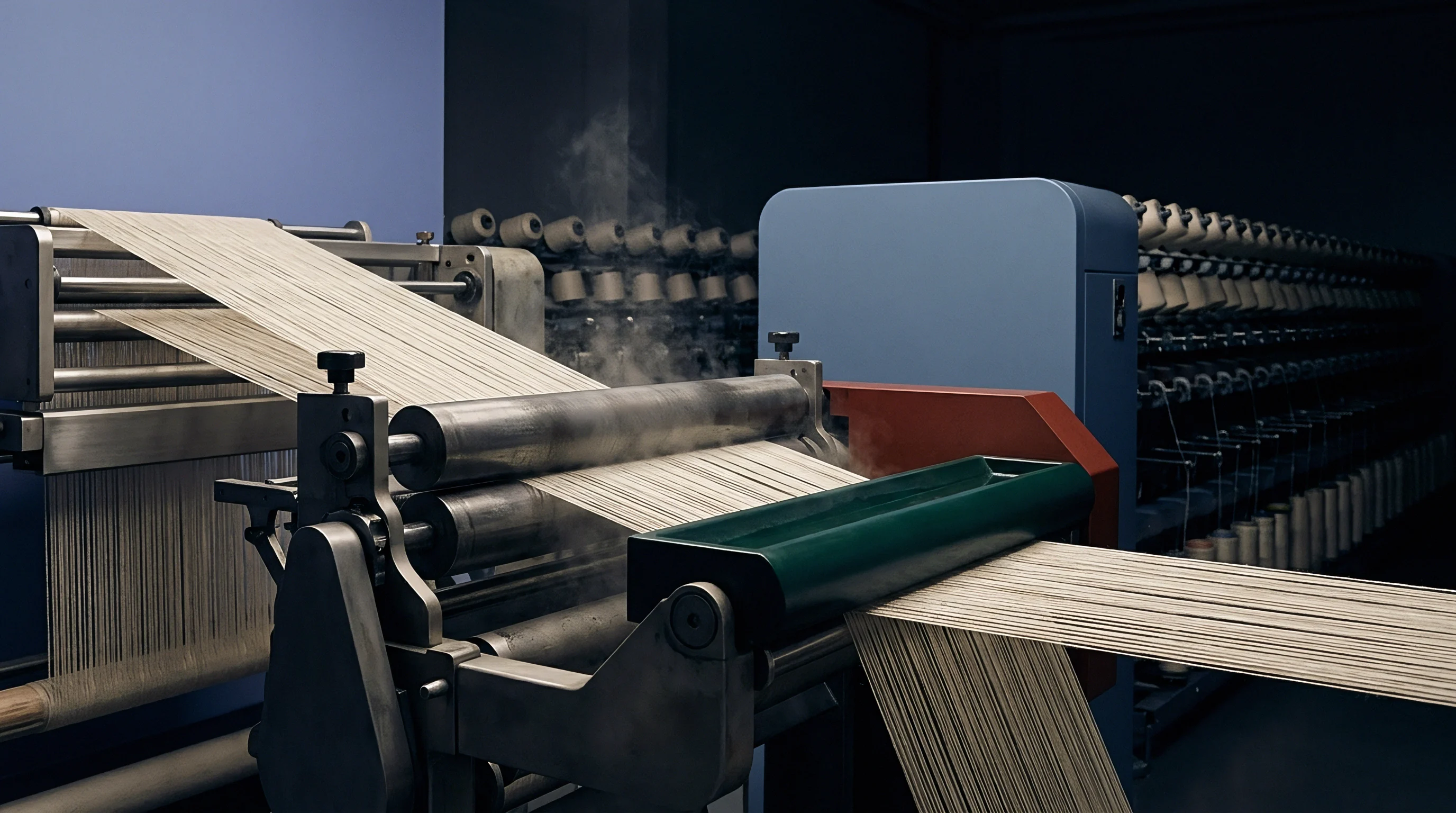
Yarn spinning complicates analysis when flax is blended with secondary fibers like upland cotton, viscose, or synthetics. Physical blending in blowroom machinery mixes materials from entirely different geographic baseline zones. Cotton shares C3 photosynthetic mechanics but generally grows in hotter climates under flood irrigation, leaving heavier carbon and oxygen isotope signatures than rain-fed European flax.
- Pectin Extraction Shifts Enzymatic retting removes light isotopic fractions from surface polysaccharides, enriching residual tissue in heavy isotopes by up to 0.4 per mil in oxygen.
- Chemical Scouring Depletion Hot alkaline scouring strips non-cellulosic wax and pectin, leaving high-purity crystalline cellulose with a stable isotopic signature.
- Bleaching Oxidation Rates Peroxide bleaching alters surface oxygen functionality without modifying core structural carbon-bound hydrogen ratios.
- Fiber Ratio Variance Mechanical drafting variations across spinning frames shift local blend proportions, altering expected isotope values accordingly.
Viscose and lyocell come from regenerated wood pulp, carrying signatures from industrial forestry regions across North America, Scandinavia, or South America. Synthetics like polyester derive from petrochemical feedstocks, showing light carbon isotope ratios and negligible nitrogen or oxygen. Evaluating a blended yarn requires separating individual fiber signals chemically or applying linear mixing calculations calibrated to known blend ratios.
Raw yarn lots frequently show local blend variations when fibers fail to integrate perfectly during carding and drawing. Sampling protocols require taking multiple representative specimens across a spinning lot to average out draft-induced swings. Failing to account for bobbin-to-bobbin variance distorts baseline projections and risks false non-compliance flags during customs audits.
High-temperature mill scouring is sometimes cited to explain isotopic deviations, though it does not erase the native geographic signature of the raw fiber.


Bench

Isotope Ratio Mass Spectrometry Execution
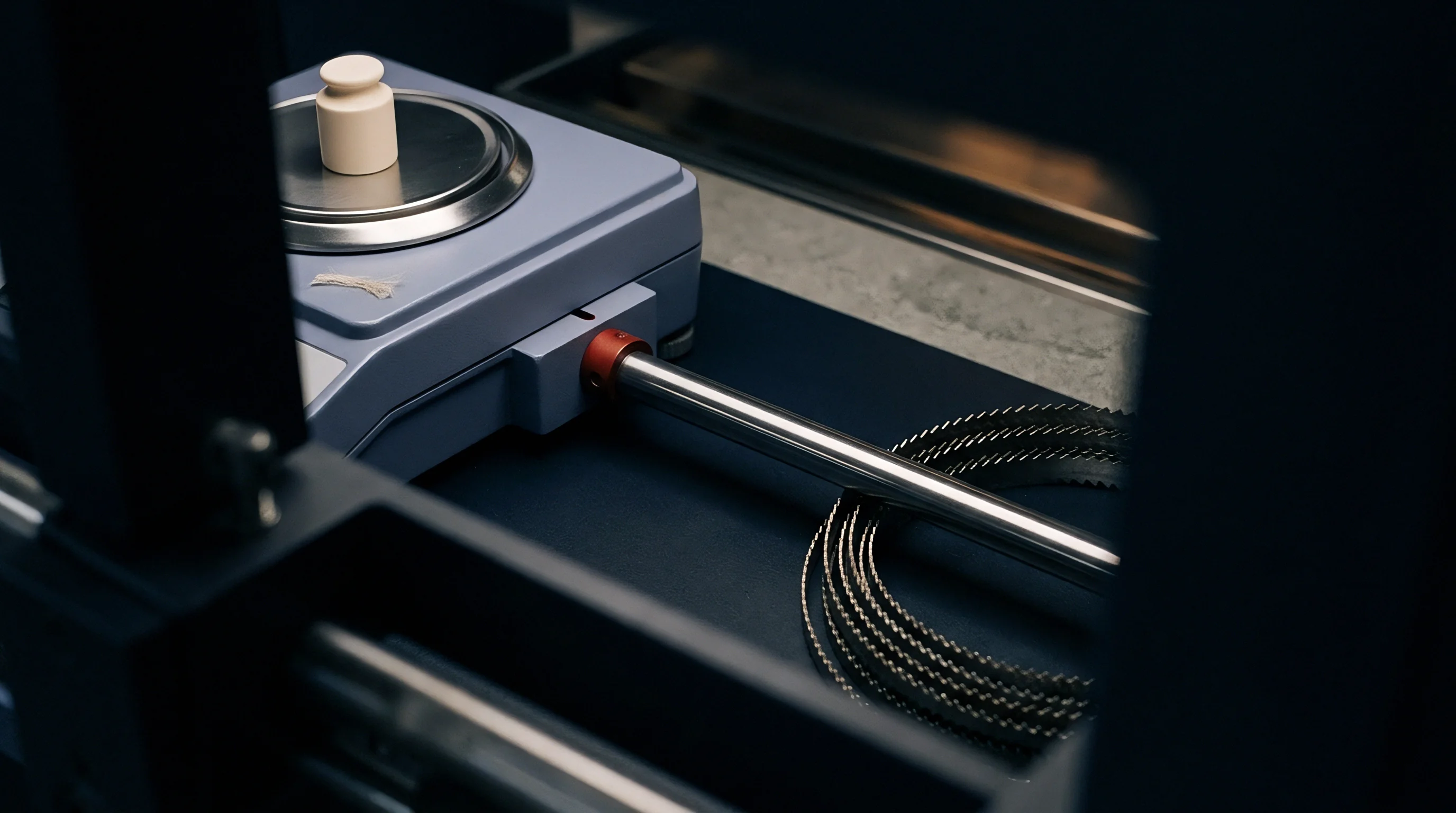
Verifying stable isotope ratios in yarn samples relies on High-Temperature Conversion Elemental Analysis coupled to Isotope Ratio Mass Spectrometry (TC/EA-IRMS) for hydrogen and oxygen, and Combustion Elemental Analysis (EA-IRMS) for carbon, nitrogen, and sulfur. Clean preparation isolates pure structural cellulose from sizing agents, lubricants, dyes, and non-cellulosic coatings. Solvents such as ethanol and toluene remove lipophilic surface contaminants before hot water washes strip starch-based warp sizes.
Isotope ratio mass spectrometry requires complete removal of synthetic sizing agents to prevent carbon signature distortion in blended yarns.
Determining non-exchangeable hydrogen isotope ratios requires specialized dual-water vapor equilibration. Because hydroxyl hydrogen in cellulose exchanges easily with ambient moisture, lab humidity can distort measured values. Samples are equilibrated with two waters of known, distinct hydrogen compositions at 108 degrees Celsius inside custom chambers.
This locks or accounts for exchangeable sites, isolating carbon-bound hydrogen for high-temperature pyrolysis at 1450 degrees Celsius over a glassy carbon reactor core.

How Does Chemical Scouring Shift Isotopic Baseline Values?
Commercial scouring uses hot sodium hydroxide solutions to strip residual pectins, waxes, and hemicellulose from greige yarns. The alkaline treatment hydrolyzes lipids and extracts low-molecular-weight polysaccharides, which carry slightly lighter carbon and heavier oxygen signatures than pure crystalline cellulose. The remaining scoured fiber shifts toward the core cellulose baseline, raising carbon ratios by 0.3 to 0.6 per mil and lowering oxygen ratios by roughly 0.4 per mil compared to raw scutched flax.
- Dry yarn samples in a vacuum oven at 60 degrees Celsius for 12 hours to eliminate free moisture.
- Extract lipids, waxes, and sizing chemistries using a Soxhlet apparatus with a 2:1 toluene/ethanol solvent mixture for 6 hours.
- Boil extracted samples in 0.5 percent sodium hydroxide solution for 45 minutes to replicate industrial scouring and remove surface impurities.
- Rinse repeatedly with deionized water until effluent conductivity drops below 2 microsiemens per centimeter.
- Equilibrate sample batches alongside international cellulose reference standards in dual-water vapor reactors.
- Convert structural cellulose to carbon monoxide and hydrogen gas via high-temperature pyrolysis for mass spectrometry measurement.
Precision monitoring requires routine calibration against international reference materials from the IAEA and USGS, including IAEA-CH-6 cellulose and USGS40 glutamic acid. Lab error margins must stay within 0.15 per mil for carbon, 0.3 per mil for oxygen, and 1.5 per mil for hydrogen. Exceeding these limits invalidates the deconvolution algorithms used on binary fiber blends.
Failing to account for non-exchangeable hydrogen equilibration creates analytical variance that masks regional hydrological differences, rendering test reports useless in origin disputes.


Discrepancy

Mass-Balance Deconvolution Models
Evaluating blended yarns isotopically requires mass-balance deconvolution to separate the signal of declared European flax from secondary fibers. In a binary blend of European flax and upland cotton, the measured bulk isotope value is the sum of the mass-weighted values of each component. Reliable deconvolution depends on confirming the exact blend ratio through quantitative methods, such as solvent dissolution or microscopic cross-section counts under ISO 1833.
Mathematical modeling applies the following linear mass-balance relationship:
δblend = fflax × δflax + (1 – fflax) × δpartner
Where δblend is the measured isotope ratio of the scoured yarn, fflax is the mass fraction of flax determined by ISO 1833, δflax is the target isotope ratio of the flax fiber, and δpartner is the baseline isotope value of the secondary fiber. When testing a 50/50 flax/cotton yarn claiming European origin, if the cotton component carries known or average regional values, the target flax signal can be calculated directly.
| Measured Bulk δ18O (‰) | Cotton Base δ18O (‰) | Calculated Flax δ18O (‰) | European Baseline Window (‰) | Origin Compliance Determination |
|---|---|---|---|---|
| +22.5 | +25.0 | +20.0 | +18.5 to +22.0 | Compliant (European Origin Validated) |
| +24.2 | +25.5 | +22.9 | +18.5 to +22.0 | Non-Compliant (Enriched Signature) |
| +21.0 | +21.5 | +20.5 | +18.5 to +22.0 | Compliant (European Origin Validated) |
| +25.8 | +26.0 | +25.6 | +18.5 to +22.0 | Non-Compliant (High Contamination Risk) |
Isotopic Variance in Non-European Fiber Inputs
Substituting lower-cost flax harvested outside Europe introduces clear isotopic anomalies. Flax grown under irrigation or in semi-arid environments shows enriched oxygen and carbon values that deconvolution readily uncovers, even in blends. A 60/40 flax/viscose yarn declaring European origin but containing Central Asian raw material produces deconvoluted flax oxygen values above +24 per mil VSMOW, far outside the European reference envelope.
Contamination or undocumented substitutions distort the isotope matrix, triggering red flags during customs checks.
Variability in secondary fibers adds noise to mass-balance calculations. If the partner fiber baseline shifts by more than 1.0 per mil in oxygen, the uncertainty around the deconvoluted flax signal expands considerably. In high-stakes customs investigations, physically separating yarn components through mechanical dissociation or selective dissolution yields pure fractions, removing the need for mathematical assumptions.
Commercial contracts should set explicit analytical tolerance thresholds, allowing a maximum isotopic deviation of 0.8 per mil oxygen VSMOW from certified reference baselines before triggering shipment rejection.


Qualification

Chain of Custody and Scheme Scope Mechanics
Validating origin claims on blended European flax yarns requires aligning analytical isotope testing with chain-of-custody documentation. Certification schemes like European Flax, managed by the Alliance for European Flax-Linen and Hemp, track material from field retting through scutching and spinning. A Scope Certificate confirms a facility has the operational controls to handle certified fiber, but only a batch-specific Transaction Certificate ties physical yarn lots directly to audited harvests.
Documentary reconciliation compares incoming scutched fiber weights against outgoing yarn weights, adjusting for standard yield losses during hackling, combing, and spinning. Mass-balance discrepancies or unexplained yield spikes across mill ledgers point to undocumented fiber substitution. Isotope testing provides the final verification step, confirming whether the physical yarn matches the origin declared on transaction papers.
- Scope Certificate Scope Verifies operational certification of scutching, hackling, or spinning mills under ISO 17065 standards, subject to annual renewal.
- Transaction Certificate Reconciliation Tracks individual lot movement, recording net weight, blend percentages, and mill processing site identifiers.
- Scutcher Delivery Notes Document raw bale tag numbers, scutching mill registration IDs, and harvest year details.
- Customs HS Classification Maps origin declarations against tariff codes, including 5306.10 for single flax yarn, 5306.20 for multiple yarn, and 5205.12 for cotton-dominated blends.

Audit Defense Dossier Assembly
Building a defensible origin compliance dossier for cross-border shipments requires pairing lab reports with primary shipping and manufacturing documents. Customs authorities operating under trade agreements or forced-labor regulations examine intermediate processing steps closely, especially when European flax is shipped to East Asian mills for spinning before re-importation. Under Article 60 of the EU Customs Code, non-preferential origin depends on the country of last substantial transformation, but regional fiber designations remain tied strictly to where the crop was harvested.
Full multi-element isotope analysis costs between 400 and 700 Euros per sample lot ~ a tiny fraction of a high-volume yarn consignment’s value. Building an isotopic reference archive when purchasing raw fiber gives spinning mills a clear defense against downstream origin challenges. Archiving 100 grams of raw scutched flax from certified incoming lots provides baseline evidence to resolve discrepancies if finished yarn testing returns borderline enrichment values.
When blended yarn consignments undergo multiple intermediate processing steps across jurisdictions, what threshold of isotopic divergence proves deliberate substitution rather than natural crop-year variation?