Optimizing Wet Spinning Parameters for High Count Linen
High count wet linen spinning requires line flax exceeding Nm 1350 bundle fineness, 70°C trough pectin softening, and precise draft control to ensure strength.

Selection
Fine flax spinning requires long-staple line fibre with distinct physical characteristics, as short tow fibres cannot support the thin cross-sections of high metric yarn counts. Producing fine yarns from metric count 60 (Nm 60, equivalent to 36 lea) up to metric count 100 (Nm 100, equivalent to 60 lea) demands raw scutched flax possessing high tensile strength, precise retting uniformity, and minimal epidermal debris. Fiber bundles entering the hackling shop must exhibit an average length exceeding 750 millimeters, with a metric fibre fineness rating of at least Nm 1200 according to ISO 2370 testing standards.
When raw stock lacks these physical benchmarks, fiber breakage accelerates during hackling, resulting in low line yield and excessive sliver unevenness.
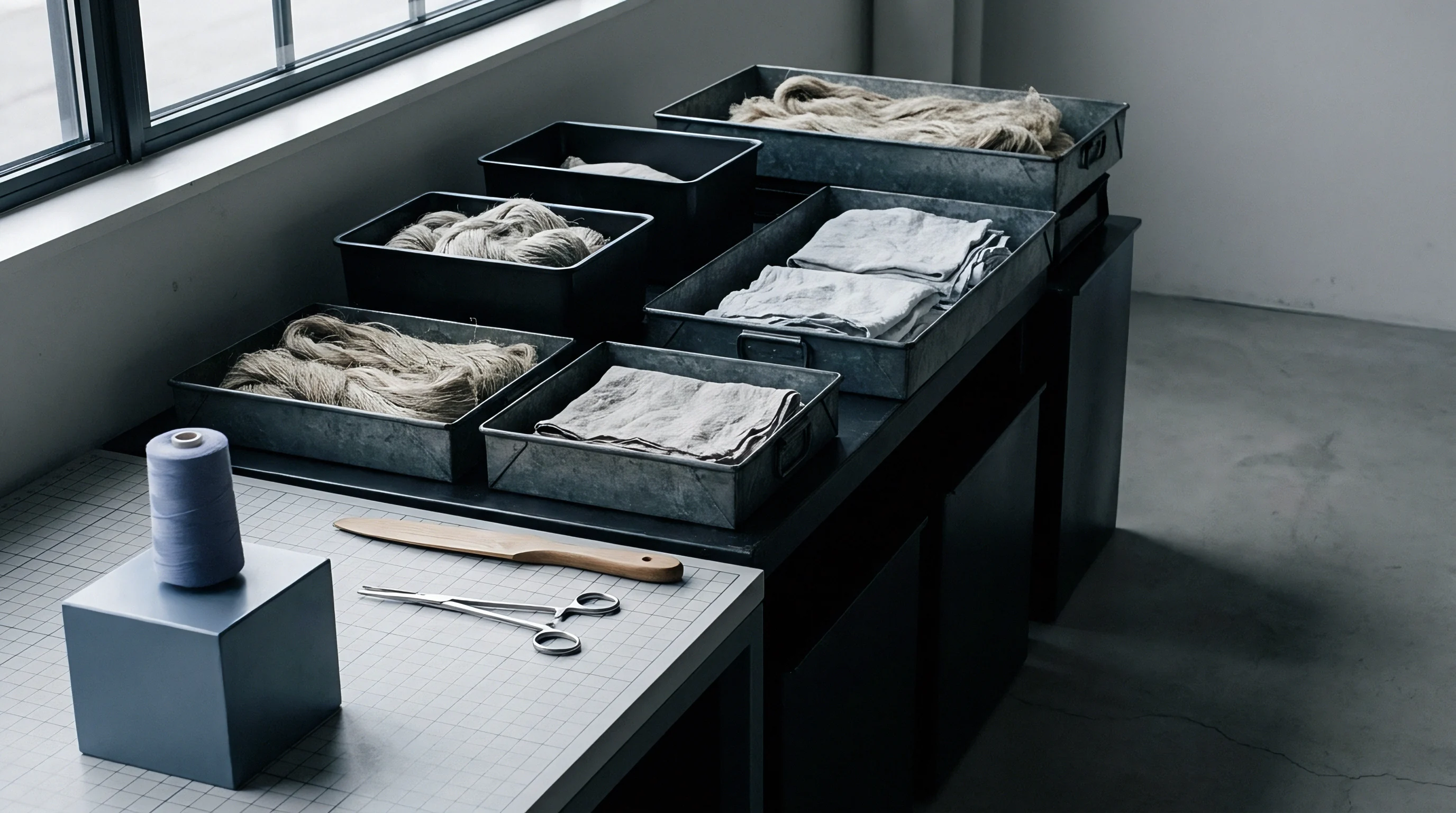
Flax Fibre Physical Benchmarks for High Counts
Fiber bundle fineness and staple length distribution govern the minimum limit of fibers present in the yarn cross-section. Fine yarns operating at Nm 80 require a minimum threshold of 25 to 30 individual fibers per cross-section to maintain structural integrity under mechanical tension. Standard dew-retted stock with coarse bundle structures fails to draft smoothly, causing thin places that snap instantly at the spinning spindle.
| Target Yarn Count (Nm) | Min Bundle Length (mm) | Fibre Fineness (Nm ISO 2370) | Tenacity (cN/tex ISO 3060) | Shive Content (% Mass) | Hackling Line Yield (%) |
|---|---|---|---|---|---|
| Nm 60 (36 Lea) | 700 | 1100 | 38.5 | 0.80 | 52.0 |
| Nm 80 (48 Lea) | 780 | 1350 | 42.0 | 0.45 | 46.5 |
| Nm 100 (60 Lea) | 850 | 1550 | 46.5 | 0.25 | 39.0 |
Scutched line flax sourced from warm-water retting yards or controlled enzyme-retting channels presents higher chemical accessibility than standard field dew-retted material. Water-retted fibers contain lower concentrations of non-cellulosic encrustants such as residual lignin and insoluble calcium pectates. This biochemical purity permits cleaner division of technical fiber bundles into ultimate fibers during roving preparation and wet drafting.
Scutched line flax tested under ISO 2370 yielding below Nm 1350 bundle fineness generates excessive end breaks when spun beyond Nm 80.
Retting uniformity directly determines drafting consistency across the front rollers of the spinning frame. Under-retted flax contains intact middle lamella structures that resist solubilization, leading to coarse fiber clusters entering the drafting zone. Over-retted flax exhibits degraded cellulosic chains inside the primary cell walls, lowering fiber tenacity below 35 cN/tex and producing weak yarns despite fine bundle measurements.

Fibre Defect Modes in Fine Sliver Formation
Defects introduced during raw fiber preparation amplify exponentially during high-count spinning. The presence of shive residue creates immediate yarn breaks at the thread guide, while neps generate slubs that jam automatic winders.
- Unretted Bast Clusters Fibrous bundles retaining thick pectic bonds that fail to divide into ultimate fibers inside the wet trough, causing thick yarn defects.
- Shive Inclusions Hard woody fragments from the flax stem core remaining pinned inside the sliver, causing instantaneous thread breakage at high spindle velocities.
- Entangled Neps Knotted fiber clusters formed during aggressive hackling pin passes, reducing yarn tensile evenness and increasing hairiness values.
- Fiber Length Degradation Short, broken filaments generated by incorrect comb pin densities, lowering the mean staple length below the drafting roller reach threshold.
Procuring raw flax without verifying bundle fineness distributions exposes the buyer to extreme spinning room waste rates. Substandard line flax forces the mill to increase yarn twist multipliers to maintain frame stability, which reduces machine throughput and produces a harsh fabric hand that fails commercial finishing standards.

Conditioning
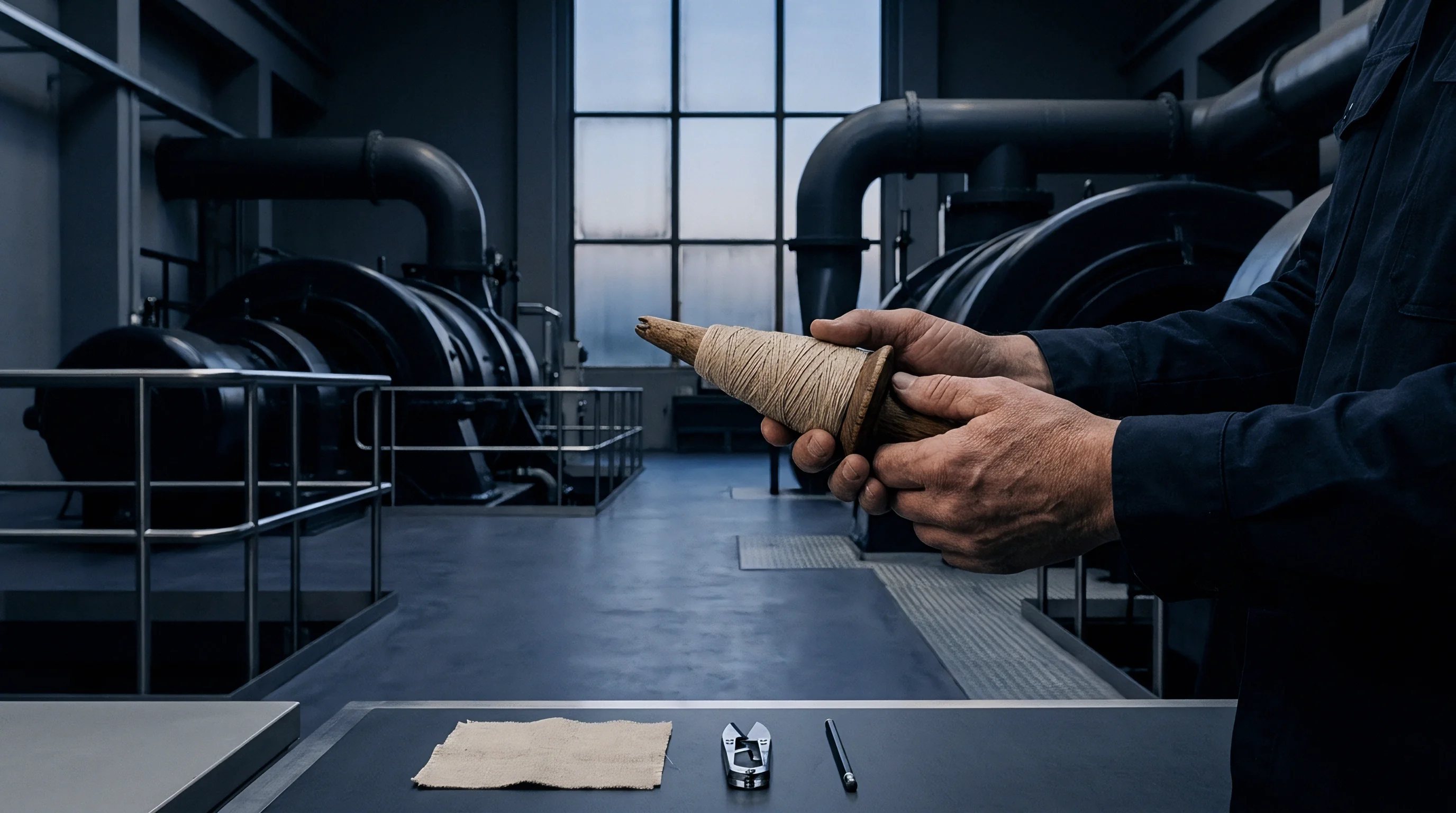
Roving preparation serves as the biochemical bridge between dry hackled sliver and wet ring spinning. To achieve metric counts of Nm 60 and higher, the dense pectic substances binding individual ultimate flax fibers within the technical bundle must undergo partial solubilization and swelling prior to final drafting. Dry sliver wound onto perforated bobbins passes through hot aqueous baths containing mild alkaline reagents and wetting agents, converting rigid fiber bundles into soft, pliant strands capable of sliding smoothly past one another.

Chemical Bath Parameters for Pectin Softening
Roving treatment requires tight temperature and pH regulation within the package dyeing machine or continuous roving tub. Sodium carbonate solutions paired with non-ionic ethoxylated fatty alcohol surfactants lower surface tension, facilitating rapid bath penetration into the core of the dense roving package. Excessive alkalinity degrades the cellulose matrix, whereas insufficient treatment leaves middle lamella pectins crystalline and rigid.
Gentle alkaline treatment at elevated temperatures softens interfibrillar pectins without compromising the structural cellulose core.
Bath temperatures maintained between 65°C and 75°C optimize the rate of calcium pectate conversion into soluble sodium pectate salts. Dwell time inside the chemical vessel ranges from 120 to 180 minutes, depending on roving package density and target yarn count. Submerging roving bobbins without adequate pre-vacuum steps yields uneven chemical absorption, resulting in periodic heavy and light spots along the drafted strand.
Sequential Roving Preparation Routine
The chemical pretreatment sequence for high-count flax roving follows a rigid multi-stage operational procedure designed to stabilize fiber moisture and chemical distribution before spinning.
- Load high-density perforated roving bobbins into the pressurized treatment vessel, securing mechanical spindle locking rings to prevent fluid bypass.
- Apply a vacuum cycle reaching -0.85 bar for 15 minutes to purge trapped air from the core of the dense flax packages.
- Fill the vessel with softened water at 40°C, introducing 2.5 grams per liter of sodium carbonate and 1.0 gram per liter of non-ionic wetting agent.
- Elevate bath temperature at a rate of 2.0°C per minute until reaching a holding threshold of 70°C.
- Maintain forced liquor circulation through package cores, alternating direction every 10 minutes for a total dwell duration of 150 minutes.
- Drain the alkaline liquor and execute two ambient temperature rinse cycles using demineralized water to flush residual solubilized pectins.
- Circulate a weak acetic acid solution at 0.5 grams per liter for 15 minutes to neutralize remaining alkali, achieving a final roving pH between 6.0 and 6.5.
- Hydroextract roving packages in a centrifuge at 1000 RPM for 12 minutes to achieve a uniform residual moisture content of 45 percent by mass.
Inadequate neutralization leaves residual alkali within the moist roving package during storage. Spinners who skip post-treatment rinsing observe yarn discolouration and accelerated corrosion on spinning frame traveler rings, blaming raw fiber suppliers for chemical defects originating entirely within their own pretreatment department.

Drafting
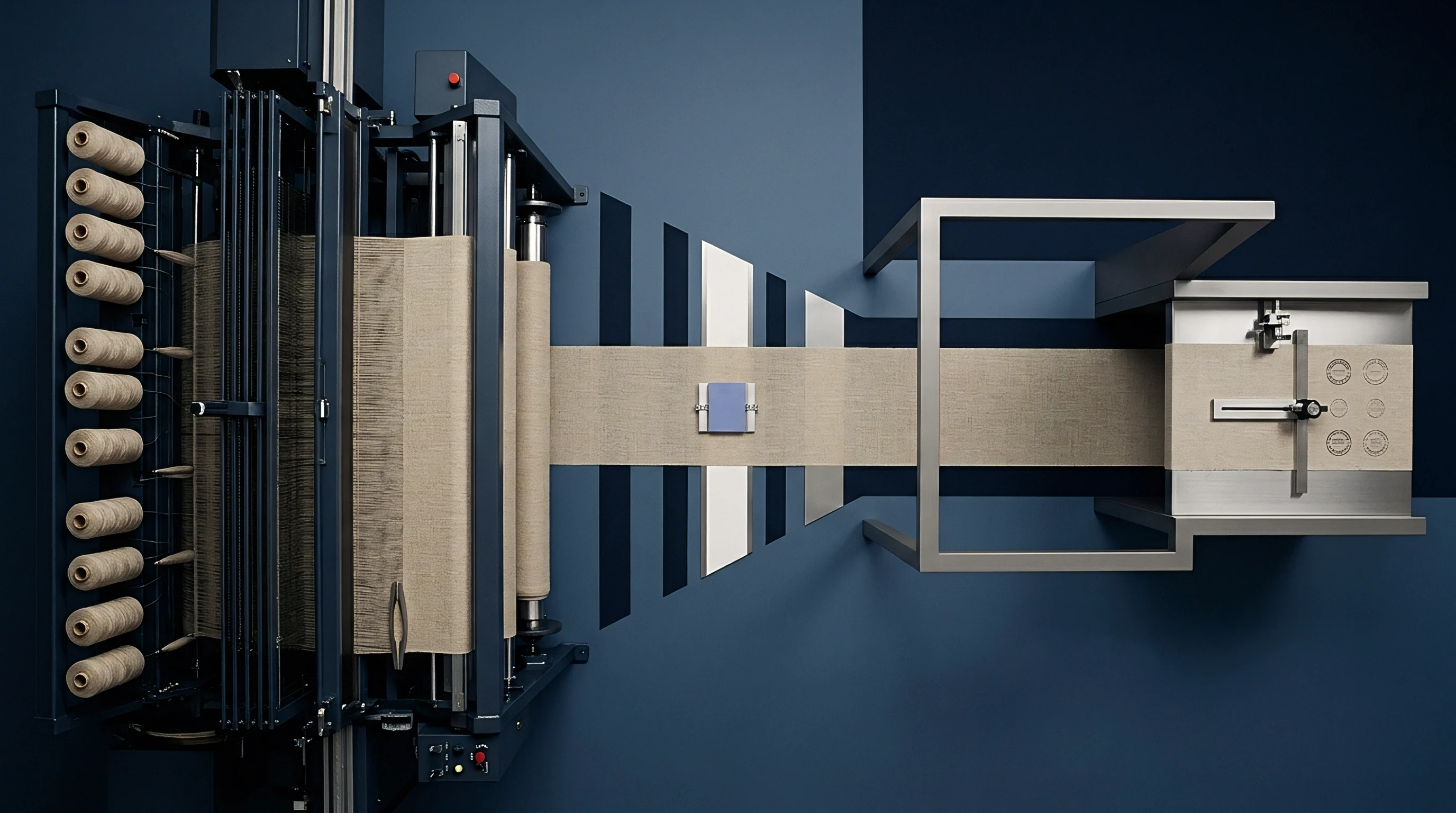
Wet spinning frames process pretreated roving through a hot water trough positioned directly above the drafting zone. The combination of thermal softening inside the trough and mechanical drafting across fluted roller pairs enables ultimate flax fibers to slip past each other without breaking. Fine yarn production demands precise alignment of break draft ratios, main draft settings, roller nip pressures, and spindle speeds to prevent drafting waves and end breaks.
How Does Trough Water Temperature Alter Pectin Softening?
Water inside the spinning trough must be maintained at a minimum of 60°C, with optimal high-count processing occurring at 70°C to 75°C. Hot water lowers the viscosity of remaining pectic gels inside the wet roving strand, allowing smooth fiber displacement under tension. Cold trough water leads to bundle slipping failures, where unsoftened fiber clusters resist drafting force, stalling the front roller nip and snapping the strand.
| Setting Parameter | Nm 60 (36 Lea) | Nm 80 (48 Lea) | Nm 100 (60 Lea) |
|---|---|---|---|
| Trough Water Temperature (°C) | 65 | 72 | 75 |
| Break Draft Ratio | 1.18 | 1.14 | 1.12 |
| Main Draft Ratio | 14.5 | 18.2 | 22.0 |
| Roller Reach Gauge (mm) | 42.0 | 38.0 | 35.0 |
| Spindle Velocity (RPM) | 6500 | 5800 | 5200 |
| Metric Twist Multiplier (alpha) | 115 | 122 | 128 |
Roller reach distance, defined as the setting between the back and front drafting roller nips, must be matched to the wet-expanded staple length of the flax filaments. For Nm 100 yarns, shortening the reach setting to 35 millimeters tightens control over floating short fibers within the drafting zone. Excessively wide roller settings allow short fibers to bundle uncontrollably, producing periodic count variations known as drafting waves.
Spinning frame roller settings matched precisely to wet staple length eliminate periodic count variation waves across fine slivers.
Mechanical Frame Controls and Traveler Selection
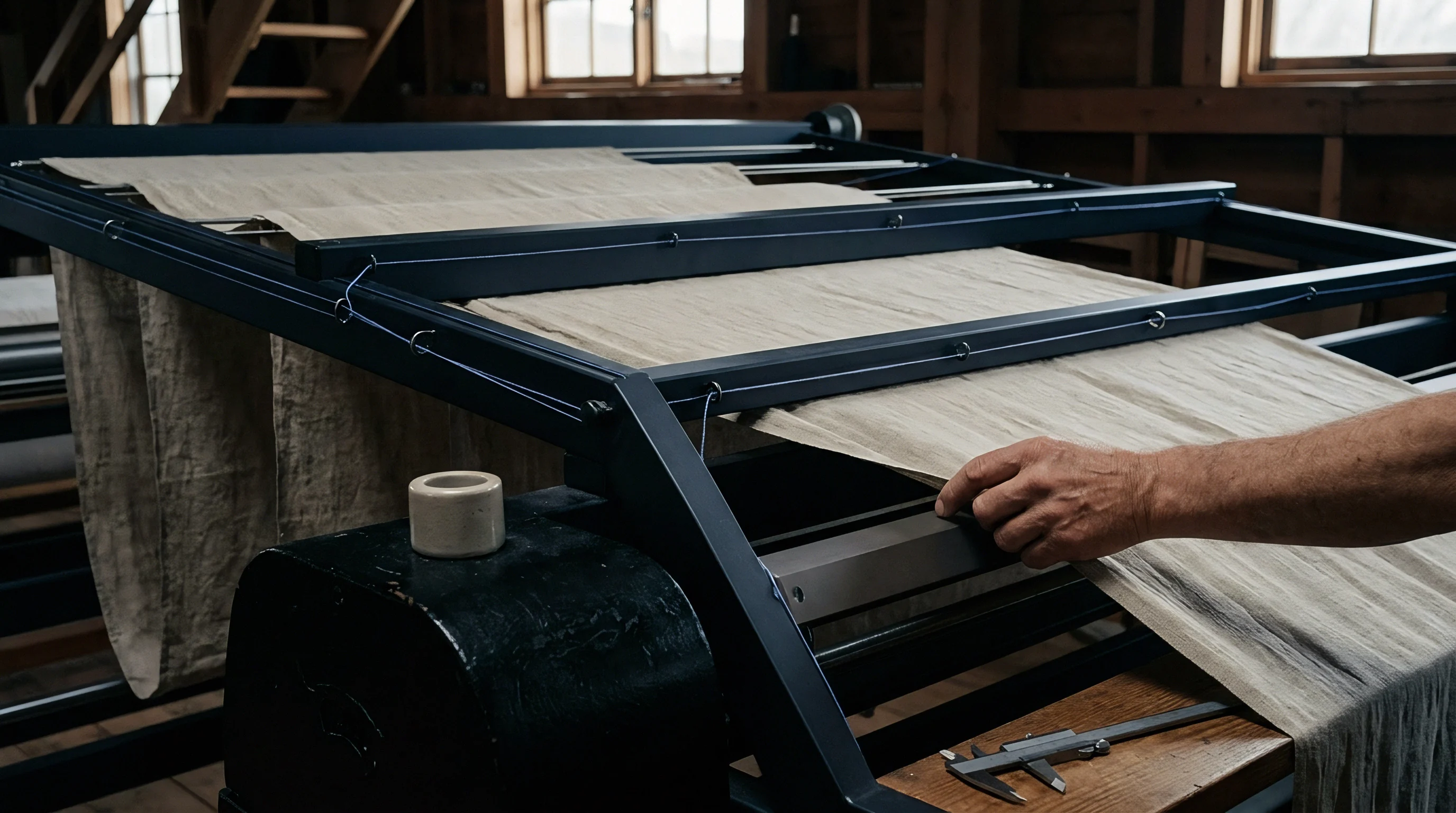
Managing tension between the front drafting roller delivery nip and the winding bobbin prevents yarn structural breakdown during twist insertion. High-count flax yarns possess low wet strength before twist propagation, requiring light traveler weights and polished ring surfaces.
- Break Draft Minimization Restricting break draft ratios between 1.12 and 1.18 prevents early structural disruption of delicate roving strands before entering the main drafting zone.
- Main Draft Distribution Distributing overall draft to ensure total draw ratios do not exceed 25 times original roving linear density, avoiding fiber velocity draft waves.
- Elliptical Traveler Profile Selecting low-profile elliptical travelers coated with titanium nitride reduces ring friction and minimizes yarn surface hairiness during high-speed rotation.
- Trough Bath Refill Rate Maintaining continuous fresh softened water replacement inside the trough prevents solubilized pectin accumulation, which gums up lower drafting rollers.
Twist insertion for high-count linen requires elevated twist multipliers compared to coarse counts. Metric twist multipliers (alpha values) must escalate from 115 for Nm 60 up to 128 for Nm 100. Higher twist levels compensate for fewer fibers present in the yarn cross-section, ensuring the finished yarn meets minimum breaking tenacity requirements under international textile trade standards.
Operating wet spinning frames at excessive spindle speeds introduces centrifugal tension that exceeds the wet strength of high-count yarn strands. Reducing spindle velocity from 6500 RPM down to 5200 RPM when transitioning from Nm 60 to Nm 100 balances threadline tension, preserving fiber alignment and limiting end-breakage rates to commercially acceptable thresholds.
Metrics
Verifying the quality of fine wet-spun linen yarn requires standardized laboratory testing protocols executed under controlled ambient conditions. Linen yarns are hygroscopic, absorbing atmospheric moisture rapidly; testing without prior conditioning yields distorted tensile strength and linear density measurements. Certified yarn lots must comply with ISO 6741 conditioning standards, achieving moisture equilibrium inside a standard atmosphere of 20°C (± 2°C) and 65 percent relative humidity (± 4 percent) before physical testing.

Physical Testing Standards for Fine Linen Yarns
Tensile behavior, unevenness (CV%), thin places, thick places, and nep counts define the commercial grade of high-count linen yarn. Single-strand tensile testing conducted on automated capacitive strength testers in accordance with ISO 2062 evaluates breaking force (cN) and breaking tenacity (cN/tex). High-count yarns must achieve a minimum tenacity of 18.0 cN/tex to survive high-speed weaving shed warp tensions.
| Quality Parameter | Test Standard | Nm 60 Threshold | Nm 80 Threshold | Nm 100 Threshold |
|---|---|---|---|---|
| Mass Coefficient of Variation (CV%) | ISO 16549 | 14.5% | 16.0% | 18.0% |
| Tenacity at Break (cN/tex) | ISO 2062 | 21.0 | 19.5 | 18.2 |
| Elongation at Break (%) | ISO 2062 | 2.8% | 2.4% | 2.1% |
| Thin Places (-50% / km) | Capacitive Test | 12 | 25 | 45 |
| Thick Places (+50% / km) | Capacitive Test | 35 | 60 | 95 |
| Neps (+200% / km) | Capacitive Test | 15 | 30 | 50 |
Yarn evenness testing via capacitive sensors (ISO 16549) measures mass distribution per unit length. Because flax ultimate fibers vary naturally in length and diameter, fine linen yarns inherently exhibit higher mass CV% values than equivalent combed cotton yarns. An Nm 100 wet-spun yarn reaching a mass CV% of 18.0 percent represents top-tier mill execution, whereas CV% figures exceeding 22.0 percent generate visual horizontal banding across woven fabric surfaces.
Yarn testing protocols governed by ISO 2062 demand pre-conditioning at standard atmospheric equilibrium to prevent moisture-induced strength errors.

Yarn Laboratory Specification Dossier Requirements
A comprehensive technical yarn dossier provides verifiable evidence of spinning compliance, shielding buyers from lot-to-lot structural variance.
- Conditioned Linear Density Report Determination of actual metric count (Nm) verified via skein reeling and oven-dry mass testing under ISO 2060 guidelines.
- Tensile Force Curve Analysis Mean breaking load and elongation profiles recorded across 50 individual test breaks per package, confirming minimal strength distribution variance.
- Imperfection Count Metrics Quantitative tally of thin places, thick places, and neps per 1000 meters measured by high-speed optoelectronic testing equipment.
- Splice Mechanical Integrity Certificate Retained strength rating of pneumatic wet splices exceeding 85 percent of parent yarn strength, replacing traditional knot failures.
Evaluating splice performance remains critical for high-count warp yarns. Traditional knots fail to pass through fine reed wires during high-speed air-jet weaving, causing mechanical loom stops. Pneumatic wet splicing joins yarn ends by untwisting, overlapping, and retwisting fibers with fine water mist injection, creating a smooth joint with minimal diameter increase.
Which test method best resolves the structural difference between inherent natural fiber length variation and mechanical drafting waves inside high-count slivers?

Valuation
Yield economics dictate the commercial feasibility of spinning high-count linen yarn. Scutched line flax undergoes progressive mass loss across every mechanical stage: hackling discards short fibers as tow, roving preparation leaches non-cellulosic matter, wet spinning generates trough sludge and yarn waste, and automatic winding removes yarn imperfections. Pricing high-count yarn requires tracking raw fiber mass reduction down to delivered net yarn yield per metric ton of input flax.
Hackling Yield and Spinning Mass Balance
A worked example demonstrates the economic escalation when converting raw scutched line flax into Nm 80 wet-spun yarn. Assume an initial procurement lot of 1,000 kilograms of premium long-staple scutched line flax purchased at a landed raw fiber price of $7.50 per kilogram, yielding a base fiber investment of $7,500.
Processing this stock through aggressive hackling pins required for fine count suitability yields 465 kilograms of long-staple combed line sliver (46.5 percent line yield), with 480 kilograms converted to lower-value hackling tow (48.0 percent tow yield) priced at a recovery value of $2.10 per kilogram ($1,008 total tow credit), and 55 kilograms lost as unrecoverable dust and shive waste (5.5 percent waste). Net line fiber cost allocated to the hackled sliver equals $7,500 minus $1,008, totaling $6,492 for 465 kilograms, or $13.96 per kilogram of combed line sliver.
Roving chemical conditioning and wet ring spinning introduce further mass reductions and process costs. Roving pectin leaching removes 3.5 percent of non-cellulosic mass, while wet spinning end breaks and winder splicing discard an additional 4.0 percent of fiber mass. Total net finished yarn output equals 430 kilograms from the original 1,000 kilograms of raw flax, representing an overall material conversion yield of 43.0 percent.
| Processing Stage | Mass Input (kg) | Mass Output (kg) | Yield Stage (%) | Stage Direct Cost ($) | Effective Cumulative Cost ($/kg) |
|---|---|---|---|---|---|
| Raw Scutched Flax Procurement | 1000.0 | 1000.0 | 100.0% | $7,500.00 | $7.50 |
| Hackling and Combing | 1000.0 | 465.0 (Line) | 46.5% | $1,200.00 | $16.54 (less tow credit) |
| Roving Pretreatment Bath | 465.0 | 448.7 | 96.5% | $650.00 | $18.59 |
| Wet Ring Spinning (Nm 80) | 448.7 | 435.2 | 97.0% | $2,100.00 | $23.99 |
| Winding, Cleansing & Splicing | 435.2 | 430.0 | 98.8% | $480.00 | $25.40 |
Direct processing costs across hackling ($1.20/kg raw), roving chemical treatment ($1.40/kg sliver), wet spinning frame operation ($4.82/kg wet strand), and automatic cone winding with yarn clearing ($1.10/kg yarn) add $4,430 in total manufacturing conversion expense. Adding manufacturing expense to net fiber cost yields a total production cost of $10,922 for 430 kilograms of packaged Nm 80 yarn, resulting in a landed mill manufacturing cost of $25.40 per kilogram.
Raw fibre mass loss across hackling and wet spinning escalates raw material input costs by over one hundred percent per net kilogram of finished yarn.

Impact of Yarn Count on Fabric Metre Cost
Determining the final cost impact on finished woven fabric illustrates why count optimization governs yarn specification decisions. Higher metric yarn counts produce lightweight fabrics with superior drape and comfort, but the exponential rise in yarn manufacturing cost per kilogram must be balanced against fabric weight per square meter.
Consider a standard plain weave linen fabric produced at a width of 1.50 meters, featuring 24 warp ends per centimeter and 22 weft picks per centimeter. Spun at Nm 60, the fabric exhibits an areal weight of 153 grams per square meter, requiring 0.230 kilograms of yarn per linear meter (including 5 percent weaving crimp and selvage waste). At an Nm 60 yarn cost of $18.20 per kilogram, raw yarn content contributes $4.19 per linear meter of woven cloth.
Transitioning the same weave structure to Nm 100 yarn drops the fabric areal weight down to 92 grams per square meter, requiring 0.138 kilograms of yarn per linear meter. However, the production complexity of Nm 100 yarn increases yarn price to $34.50 per kilogram due to lower spinning frame spindle speeds, higher twist multipliers, and lower hackling yields. Yarn content cost for the Nm 100 fabric equates to $4.76 per linear meter, representing a 13.6 percent increase in raw material cost per meter despite a 39.8 percent reduction in total fabric weight.
Sourcing practices must balance target fabric mass, tensile durability requirements, and raw yarn conversion costs when specifying high-count linen yarns. Demanding extreme yarn counts like Nm 100 without explicit structural necessity elevates fabric meter costs rapidly, while introducing weaving performance risks if yarn tenacity and evenness metrics are compromised.