Manual Comb Sorter Operation on Line Flax
Manual comb sorting of line flax isolates bundle length fractions to establish precise mean staple length and prevent yarn breakage during high-count wet spinning.


Sliver
Conditioning raw bast bundles at 20 degrees Celsius and 65 percent relative humidity brings moisture regain to 12 percent before testing begins. Manual comb sorting of line flax depends on getting a uniform sample out of hackled sliver rolls or dressing boards. If moisture fluctuates, bundle stiffness changes ~ altering drafting resistance and causing coarse flax strands to snap early in the pins.
The standard practice is to cut a 500-millimetre section from the middle of a 5-kilogram sliver lot without twisting or teasing the parallel filaments.
Representative sub-sampling takes ten small tufts pulled across the width of that sliver section. Combined, these form a composite specimen weighing exactly 5.0 grams. Light hand-smoothing strips out loose shive and unretted cortical tissue while keeping the primary fibre bundles aligned end to end.
Unretted green pectin bands increase bundle stiffness, causing coarse filaments to snap during manual comb transfer.

Conditioning Standards and Specimen Extraction
Laboratory testing of long bast fibres follows ISO 6741 standards for commercial mass determination and sample preparation. Technologists align the root ends of the sub-sampled tufts on a smooth glass plate, then run a 10-kilogram steel roller over them twice to flatten crimp and enforce parallel bundle alignment. Rolling gets rid of artificial length differences introduced by macro-crimp while coiling sliver.
Drafting force rises whenever residual pectin exceeds 2.5 percent by mass. That excess pectin glues technical fibres into thick ribbons, making it impossible to separate individual bundles cleanly during sorting. Before loading into the sorter pins, the composite sample is weighed on a 4-decimal analytical balance to establish baseline dry mass.

Sample Preparation Errors in Long Bast Testing
Flax fibres vary far more in length than synthetic filaments or combed cotton. Any error made during initial sample extraction carries straight through into the length distribution histograms and yarn count calculations.
- Lead Edge Squaring Failure occurs when operator hand pressure breaks filaments during initial alignment, skewing the distribution curve toward short fibre categories below 50 millimetres.
- Moisture Non-Equilibrium results from testing tufts before reaching full 12 percent regain, causing static charge build-up and fibre cling inside needle beds.
- Transverse Sliver Compression arises from tight coiling in storage, creating mechanical bent spots that register as false fiber breaks during sorting draws.
- Shive Retention Defect occurs when unseparated wood particles lodge inside the comb pins, dragging adjacent long fibres into lower length collector bins.
Before loading pins, operators inspect each sample under low-power magnification to confirm that individual bundle boundaries remain intact and sorting clamps can grip square edges cleanly.
Excessive nep counts during sorting stem from improper hackling pin density far more often than harvest-season rain.
Pinning
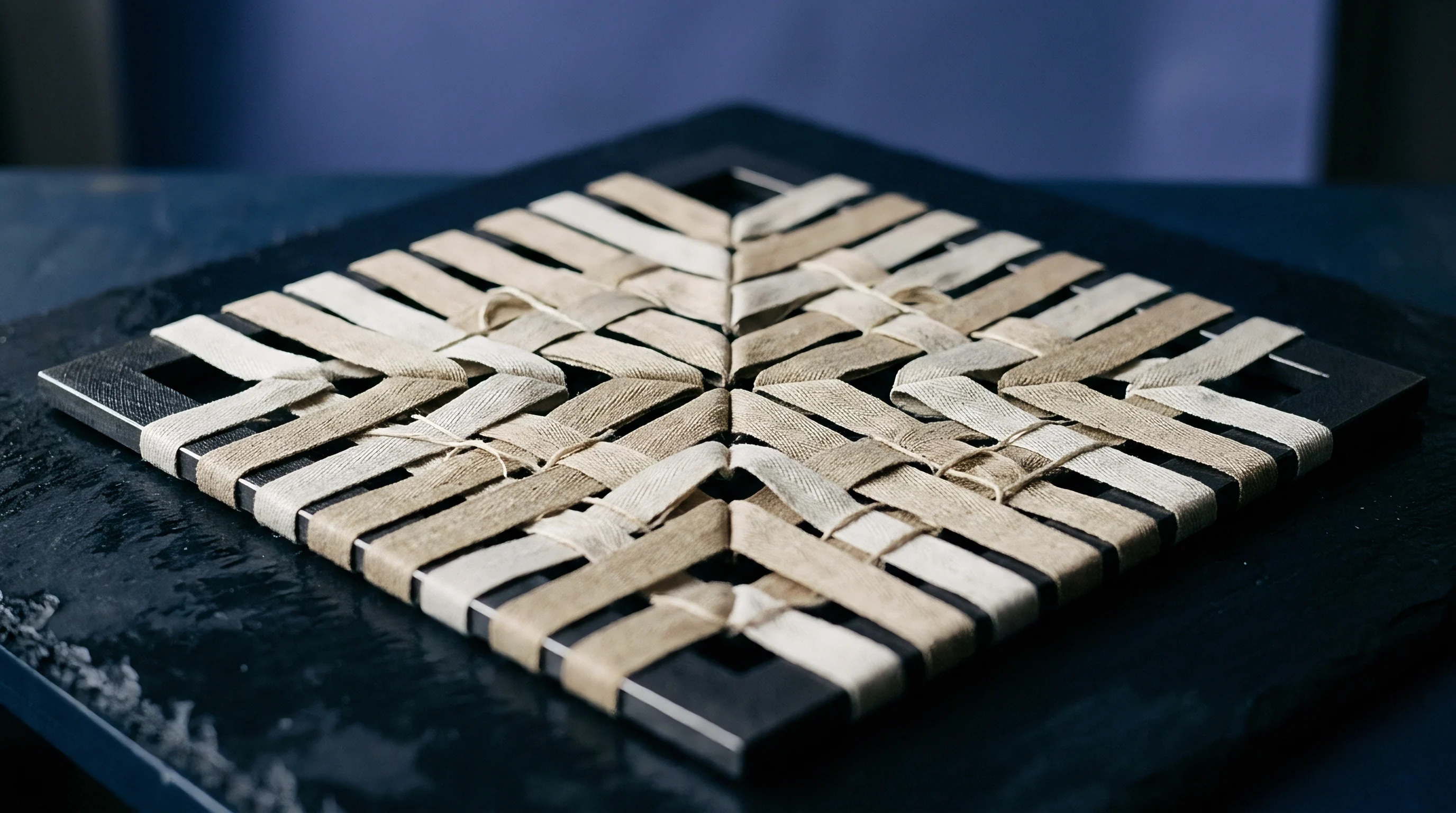
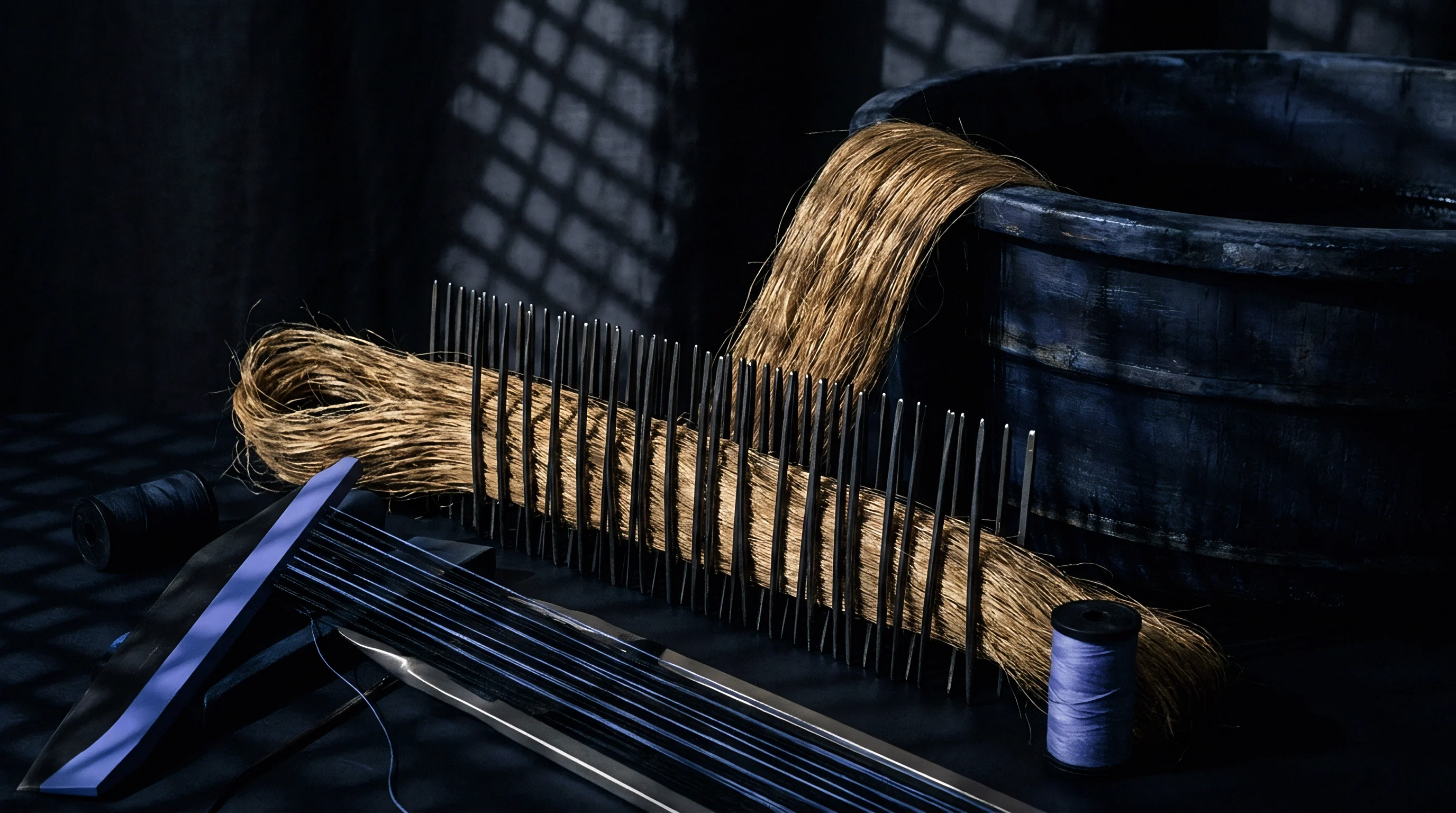
Dual needle beds set up in stationary parallel banks hold hackled fibres upright during drafting. On manual comb sorters built for long line flax, steel needles are mounted in brass bars across two zones: the rear bed handles long root-to-crop bundles up to 600 millimetres, while the front bed isolates shorter technical fibres and fragments.
Needle density increases from 4 needles per centimetre in the coarse receiving zone up to 16 needles per centimetre in the fine sorting zone. This gradient, combined with controlled needle pitch, keeps bundles from bunching or migrating while permitting clean extraction of single fibre arrays.

Comb Bed Calibration and Needle Spacing Parameters
Precise alignment between upper and lower comb beds prevents fibre shear during drafting. Top combs lower into the stationary bed in 5-millimetre depth increments, holding the main body of the bundle secure while forceps pull protruding ends. Jaw pressure across hand-sorting clamps needs to stay uniform across the full width of the grip.
| Fibre Material | Primary Needle Pitch (mm) | Secondary Needle Pitch (mm) | Clamp Jaw Width (mm) | Max Draw Length (mm) |
|---|---|---|---|---|
| Scutched Line Flax | 5.0 | 2.5 | 30.0 | 800 |
| Hackled Line Sliver | 2.5 | 1.0 | 25.0 | 600 |
| Dressed Flax Tow | 1.5 | 0.8 | 15.0 | 250 |
Because linear density governs spinnability, coarse needle beds accommodate unhackled bast ribbons, whereas fine needle beds separate delicate line flax strands intended for fine wet spinning. Operators visually check steel pins regularly for burrs or bent tips that could split long technical fibres during transfer.

Manual Extraction and Drafting Mechanics
Running the sorting sequence requires steady manual control over clamp position, draw velocity, and pin drop cadence.
- Insert the conditioned fibre bundle into the rear stationary needle bank with root ends aligned along the zero line.
- Depress top combs systematically to lock short residual fibers within the rear pins.
- Grasp protruding fibre tips using the wide-jaw sorting clamp at a right angle to the sliver axis.
- Draw fibre groups forward in smooth horizontal strokes to prevent bundle fracture.
- Transfer drawn bundles to the second comb bed, repeating the sequence for left-to-right alignment.
Operators maintain a steady horizontal pull of roughly 15 newtons per draw. Any sudden twist or upward lift snaps long line strands and distorts the length array data.
Aligning fibre bundles accurately against the zero baseline marks the difference between reliable length measurements and systematically overestimating long staple values.


Deposition
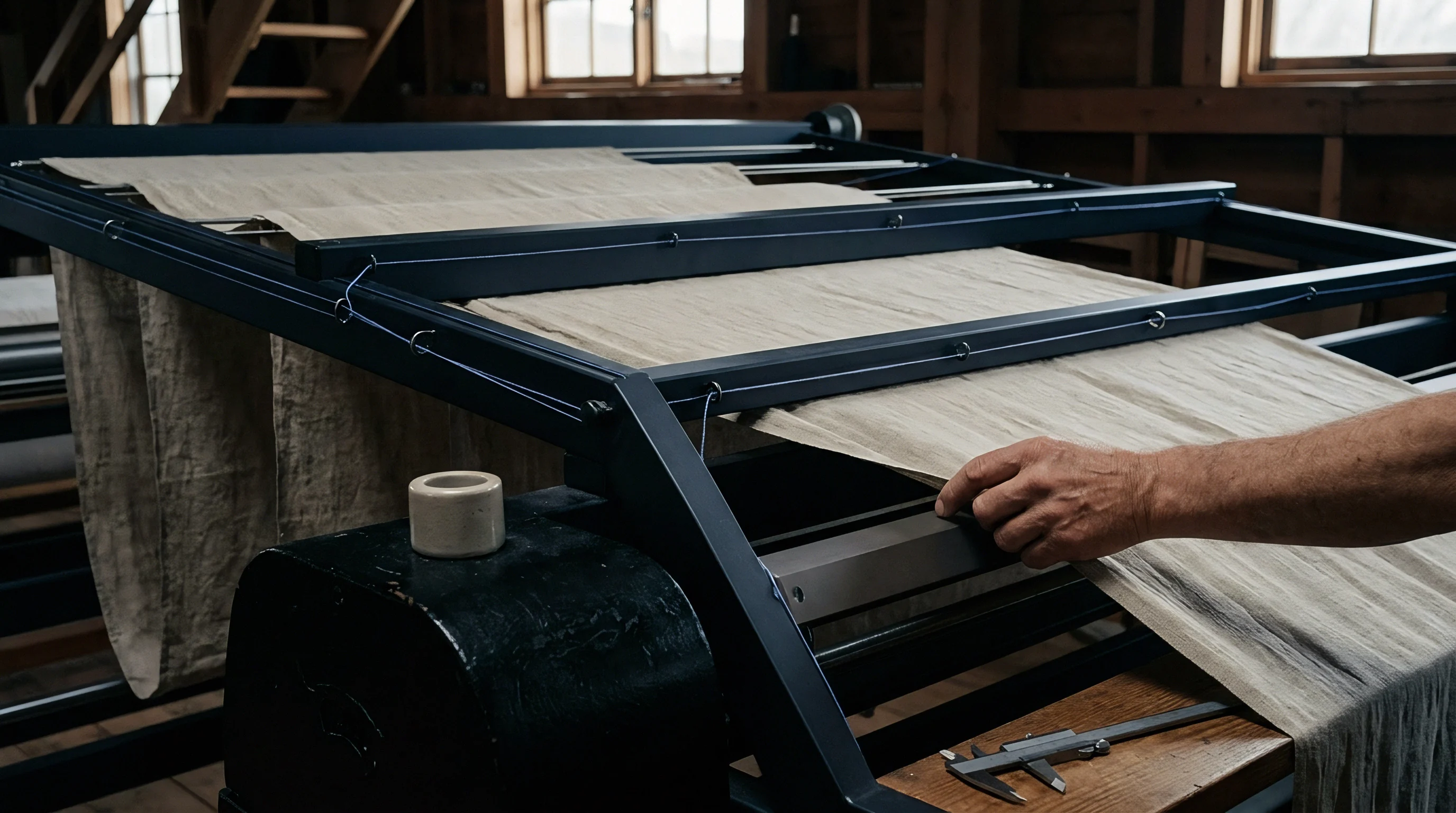
Laying drawn fibre groups onto high-contrast black velvet arrays allows precise measurement of staple length boundaries. Sorter boards use a scale marked in 5-millimetre or 10-millimetre graduations extending from a fixed vertical aluminium datum. The technician places the root end of each extracted group against this zero mark, then presses the strands into the velvet pile using a velvet-covered wooden bar.
Velvet Board Array Alignment Technique
Fibre groups lie parallel without overlapping adjacent length categories. The longest fibre class sits at the far left of the array board, with subsequent draws arranged in descending order to the right, keeping bundle thickness controlled so array width is not distorted.
Static electricity on the velvet can make fine bast filaments curl, creating apparent length contraction. Technologists damp the velvet backing lightly with distilled water before mounting the array to suppress static. Each length step should form a distinct vertical band with clean upper and lower margins.
A clean straight baseline on the velvet array separates true long line length distributions from drafting operator bias.

Gravimetric Quantification of Fibre Classes
Once the visual array is laid down, fraction weighing begins. Fine forceps lift each length group off the velvet board starting with the longest class. The operator transfers each group into a tared container assigned to that specific length interval.
Analytical balances used for comb sorter fractions report mass down to 0.0001 grams. Total recovered fibre mass across all length groups has to stay within 1 percent of the initial 5.0-gram sample weight; any loss beyond 1 percent points to fibres trapped in the pins and invalidates the run.
Misaligning root tips along the sorting datum leads to misclassified staple groups, creating false spinning limit estimates and unexpected yarn breaks on high-speed frames.

Histogram
Plotting length intervals against cumulative mass percentages generates the staple distribution profile used in wet-spinning calculations. Line flax length histograms differ sharply from short-staple cotton profiles, showing broad multi-modal curves caused by the hierarchical structure of technical flax bundles. This cumulative mass curve ~ historically called the Johannsen or Baer array plot ~ provides the empirical basis for setting drafting zone gauge distances on roving and spinning frames.
Staple Length Distribution Curve Analysis
Key parameters extracted from the cumulative mass curve include mean fibre length, modal length, 2.5 percent span length, and short fibre content ~ critical values because short fibres reduce tensile strength when bundles shear under drafting tension.
| Length Interval (mm) | Midpoint Length (mm) | Fibre Mass (g) | Mass Fraction (%) | Cumulative Mass (%) |
|---|---|---|---|---|
| 450 – 500 | 475 | 0.25 | 5.0 | 5.0 |
| 400 – 450 | 425 | 0.60 | 12.0 | 17.0 |
| 350 – 400 | 375 | 1.10 | 22.0 | 39.0 |
| 300 – 350 | 325 | 1.25 | 25.0 | 64.0 |
| 250 – 300 | 275 | 0.85 | 17.0 | 81.0 |
| 200 – 250 | 225 | 0.45 | 9.0 | 90.0 |
| 150 – 200 | 175 | 0.25 | 5.0 | 95.0 |
| 100 – 150 | 125 | 0.15 | 3.0 | 98.0 |
| 50 – 100 | 75 | 0.07 | 1.4 | 99.4 |
| 0 – 50 | 25 | 0.03 | 0.6 | 100.0 |
Mean staple length (Lm) for this dataset reaches 326.5 millimetres. Short fibre content below 50 millimetres sits at exactly 0.6 percent by mass, confirming high hackling efficiency and minimal fibre degradation during scutching.
Hackled line sliver with short fibre mass fractions under six percent below fifty millimetres sustains commercial wet-spinning yields at Nm 80.
Deriving Spinnability Index and Yarn Count Limits
Drafting stability in wet spinning depends on continuous fibre contact within the rove drafting zone. High concentrations of fibres under 50 millimetres float uncontrolled between drafting rollers, causing count variation and thick-thin yarn defects.
Verification dossiers accompanying commercial flax shipments must detail sorting conditions and fraction balances.
- Mass Reconciliation Balance documentation confirming total recovered array mass remains within 99.0 to 101.0 percent of initial specimen weight.
- Environmental Log Sheet recording ambient temperature at 20 plus-or-minus 2 degrees Celsius and relative humidity at 65 plus-or-minus 4 percent during testing.
- Pin Density Certification verifying comb needle pitch calibration according to ISO 2370 bast fibre testing specs.
- Cumulative Distribution Plot signed by an accredited textile technologist displaying calculated mean length and short fibre mass fraction.
Whether automated optical image analysis can fully replace manual comb sorting for coarse bast fibre bundles without underestimating complex branched technical fibres remains unresolved across industrial testing laboratories.


Costing
Translating staple length profiles into economic spinning limits establishes the commercial value of landed flax lots. Long line flax commands top prices per kilogram because it can produce fine wet-spun yarns up to Nm 100. High short fibre content drops the spinnable count threshold down into coarse dry-spun ranges between Nm 10 and Nm 26, sharply reducing landed commercial value per metre of finished linen.
Hackling yield determines metre price, as array curves reveal drafting limits and steady count consistency protects processing margins.

Hackling Yield and Spinning Frame Efficiency
Wet spinning plants adjust frame settings based on comb sorter length profiles. Excessive length variance forces wider roller settings, which increases yarn hairiness and reduces single-end tensile strength measured under ISO 2062 test conditions.
| Target Yarn Count (Nm) | Required Mean Length (mm) | Max Permissible SFC <50mm (%) | Yarn Strength (cN/tex) | Spinning Break Rate (per 1000 sp-hr) | Fabric Price Impact ($/m) |
|---|---|---|---|---|---|
| Nm 12 (Coarse Dry) | 120 | 18.0 | 14.5 | 45 | 3.20 |
| Nm 26 (Medium Dry) | 180 | 12.0 | 16.0 | 35 | 5.80 |
| Nm 50 (Standard Wet) | 250 | 6.0 | 19.5 | 20 | 11.50 |
| Nm 80 (Fine Wet) | 320 | 3.0 | 22.0 | 15 | 18.90 |
| Nm 100 (Ultra Fine Wet) | 380 | 1.5 | 24.5 | 12 | 26.40 |
Fibre breakage during drawing inflates yarn production costs through lost frame efficiency and extra end-down retying labor. A lot exhibiting a 10 percent short fibre fraction incurs a 4.5 percent cost penalty per kilogram of yarn spun.
Contracts specifying ISO 2370 staple length compliance protect yarn buyers against uncompensated delivery of cut tow masquerading as hackled long line flax.

Fabric Landed Price Sensitivity to Fibre Length Variance
Longer mean fibre length correlates directly with higher yarn tenacity, allowing lower yarn twist multipliers. Reducing the twist multiplier increases spinning frame output speed, cutting electricity and machine amortization overhead per linear metre of woven fabric.
When fibre length variation exceeds acceptable limits, weaving mills run into high warp breakage rates on air-jet looms. Sizing costs rise by 15 percent when weaving yarns spun from poorly sorted bast fibres containing high short-fibre fractions.
Inserting a contract clause that conditions final payment on a maximum six percent short fibre mass fraction under fifty millimetres shifts financial liability for drafting breaks directly back to the fibre processor.