Gravimetric and Airflow Linear Density Corrections in Long Flax Processing
Gravimetric moisture regain and airflow porous plug corrections align actual bast fiber mass with spinnable yarn count standards across long flax processing.


Comb
Scutched line flax entering the hackling shop undergoes mechanical division that breaks intercellular pectin bonds along the stem length. Technical fibers in long flax consist of individual ultimate cells bound together by compound middle lamellae, with open lumen voids running through the bundles. Unlike extruded synthetic filaments or single-cell cotton trichomes, long flax bundles vary continuously in cross-sectional geometry, non-cellulosic impurity loading, and effective wall thickness.
Measuring fineness in scutched line and hackled sliver sets the ultimate spinning limit, expressed as metric count (Nm) or lea. Direct gravimetric cut-and-weigh testing measures true mass per unit length (tex, expressed in grams per thousand meters), while airflow permeabilimetry measures fluid resistance through a compressed fiber plug. The two methodologies capture fundamentally different physical parameters: gravimetric weighing includes cellulose, residual hemicellulose, pectins, shives, and absorbed water, whereas airflow permeabilimetry measures total specific surface area per unit volume.
Translating specific surface area into linear density assumes a uniform circular cross-section and constant volumetric density ~ assumptions that fail across long flax bundle architecture.

Bundle Splitting Mechanics and Surface Area Expansion
Mechanical pins penetrate parallel stems to break coarse multi-cellular ribbons down into spinnable technical units. Pinning density increases across successive hackling fields, driving a continuous reduction in mean bundle tex while expanding total external surface area. During early passes, coarse bundles measuring fifty to one hundred tex retain internal void channels and enclosed lumen cavities.
Airflow passing through a test plug encounters resistance governed by the perimeter of these aggregate bundles, while the enclosed lumens add mass to gravimetric weighings without presenting exterior surface drag to the airflow stream.
As hackling progresses, mechanical combing shears the pectin matrix to expose individual ultimate fibers, dropping technical bundle linear density down to five to fifteen tex. Surface area per unit mass increases non-linearly during this division process. Shives add non-fibrous dead weight, while unretted pectin patches hold ultimate fibers in rigid bundles, restricting fluid flow channels during airflow testing while adding mass on the balance.
Technical fiber bundle splitting reduces structural wall thickness while expanding specific surface area per unit mass.

Defect Modes in Fiber Bundle Linear Density
Structural anomalies created during scutching alter the physical relationship between bundle volume, exterior surface drag, and gravimetric mass. Assessing linear density requires identifying these structural variations before establishing mill draft settings.
- Lumen collapse variance ~ Irregular cross-sectional collapse alters fluid flow drag without altering dry cellulose mass. Thin-walled ultimate fibers harvested from under-matured flax collapse into flattened ribbons, increasing specific surface area per unit mass and delivering falsely fine airflow readings.
- Residual pectin occlusion ~ Unretted cortical gums increase outer diameter and bundle mass while restricting internal surface accessibility. Heavy pectin deposits bind multiple ultimate fibers into non-circular aggregates, presenting low specific surface area relative to their gravimetric tex.
- Cortical shive inclusions ~ Woody stem fragments add localized mass spikes without contributing spinnable filament surface area. Shives lodge within test samples, inflating gravimetric tex while altering packing density within airflow chambers.
- Ribbon splitting asymmetry ~ Uneven pin penetration generates high polynomial distribution in bundle fineness across the sliver width. Coarse un-hackled core ribbons skew gravimetric means while airflow resistance scales with the fine perimeter fraction.
Off-spec bundle fineness readings frequently reflect seasonal retting variations rather than uncalibrated pin density on the hackling machine.


Permeability
Airflow meters operating on compressed plug beds rely on fluid resistance to estimate fiber bundle fineness. Standardized test protocols under ISO 2370 direct compressed air through a fixed mass of flax loaded into a fixed-volume cylindrical chamber. Because specific surface area dictates fluid drag, the pressure differential across the porous plug correlates directly with sample surface area, which empirical calibration tables then convert into an equivalent linear density.

Kozeny-Carman Fluid Dynamics in Bast Plug Beds
Laminar gas transfer through porous fibrous media follows pressure drop gradients determined by volumetric surface area. The Kozeny-Carman equation models fluid velocity through the plug as a function of porosity, fluid viscosity, pressure differential, and specific surface area per unit volume of solid fiber, though residual pectins alter specific gravity. For cylindrical fibers with constant solid density, specific surface area relates inversely to fiber diameter, allowing direct derivation of linear density in tex.
Long flax fiber architecture introduces three significant deviations from ideal Kozeny-Carman dynamics. First, ultimate flax cells feature non-circular polygonal cross-sections with central lumen channels, generating higher surface area per unit mass than equivalent cylindrical fibers. Second, technical bundle cross-sections vary along their length, causing localized velocity spikes within wider inter-fiber channels.
Third, residual shives disrupt homogeneous plug packing, creating preferential flow paths that reduce total measured pressure drop. Without empirical correction factors tailored to retting severity and hackling stage, airflow instruments underestimate the true gravimetric tex of coarse, under-retted long flax by up to twenty-five percent.
| Hackling Passage Stage | Nominal Bundle Fineness (tex) | Measured Airflow Drop (kPa) | Gravimetric Cut-and-Weigh Tex | Correction Factor (K_a) |
|---|---|---|---|---|
| Scutched Line Fibre | 35.0 – 50.0 | 1.12 – 1.45 | 42.5 | 1.28 |
| First Hackling Field | 20.0 – 34.9 | 1.46 – 1.95 | 27.8 | 1.18 |
| Final Hackling Comb | 10.0 – 19.9 | 1.96 – 2.80 | 14.2 | 1.09 |
| Combed Line Sliver | 4.0 – 9.9 | 2.81 – 4.20 | 6.8 | 1.02 |

Bast Plug Test Protocol
Operating an airflow meter requires strict mass metering and standardized specimen chamber loading to ensure repeatable pressure differential readings.
- Weigh a test specimen of five grams ± 0.005 grams from conditioned hackled long flax sliver.
- Insert the weighed fibre bundle into the cylindrical test chamber without twisting the longitudinal alignment.
- Compress the specimen to a predefined chamber volume using the regulated plunger assembly.
- Pass dry compressed air through the specimen plug at a constant volumetric rate of two litres per minute.
- Record the differential manometer pressure drop across the bed in kilopascals.
- Calculate the uncorrected specific surface area and apply the bast lumen geometric correction coefficient.
Higher residual shive content increases airflow pressure drop and artificially inflates perceived bundle fineness.
Coarse flax slivers tested under high relative humidity deliver artificially fine airflow readings due to moisture-induced cell wall swelling.

Moisture
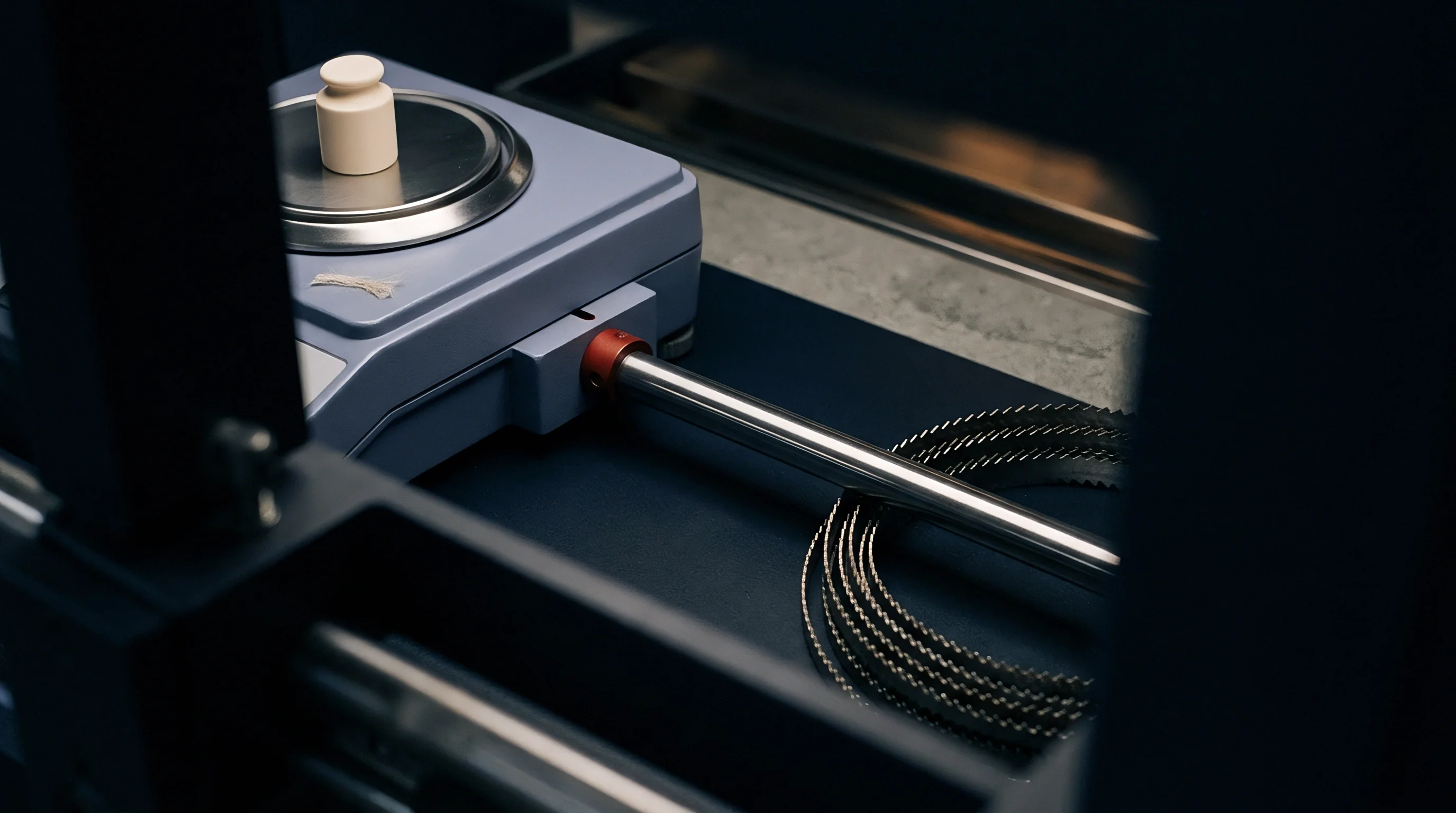
Water molecules adsorb onto hydrophilic hydroxyl sites within flax cellulose, directly shifting mass per unit length and inflating apparent tex. Long flax cellulose contains amorphous regions, hemicellulose, and residual pectins that actively absorb atmospheric moisture. Shifts in ambient relative humidity change the gravimetric mass of a flax lot without changing the quantity of solid polymer matter, making gravimetric linear density corrections necessary to normalize measured weights back to an agreed commercial standard.

Gravimetric Mass Corrections under ISO Standards
Oven drying at elevated temperatures isolates dry material mass from volatile fluid fractions. ISO 6741-1 defines test procedures for determining the oven-dry mass of textile fibers by heating samples to one hundred five degrees Celsius ± two degrees Celsius until constant mass is reached ~ defined as successive weighings at fifteen-minute intervals showing less than zero point one percent variation. This desiccation removes all free moisture.
Commercial flax agreements do not settle transactions on oven-dry mass, relying instead on an official moisture regain allowance added to the dry weight. ISO 6741 sets the standard commercial regain for long flax line and tow at twelve point zero percent, while ISO 139 specifies standard atmospheric testing conditions at twenty degrees Celsius ± two degrees Celsius and sixty-five percent ± four percent relative humidity. When ambient laboratory conditions drift from standard atmosphere, actual moisture regain departs from twelve percent, requiring direct gravimetric formula adjustments.
The mathematical correction formula for linear density converts measured sample mass under ambient regain to corrected linear density under commercial regain:
Tex_corrected = Tex_measured ((1 + R_commercial / 100) / (1 + R_actual / 100))
where R_commercial is 12.0% and R_actual is the measured percentage moisture regain of the sample calculated on an oven-dry basis. Calculating commercial shipment weight requires applying this regain factor directly to scale weights.
| Retting Type | Ambient Relative Humidity (%) | Measured Regain (%) | Raw Tex | Corrected Tex (12% Regain) | Mass Deviation (%) |
|---|---|---|---|---|---|
| Dew-Retted Line | 45.0 | 8.5 | 22.4 | 23.1 | +3.2 |
| Dew-Retted Line | 65.0 | 11.8 | 22.4 | 22.4 | -0.2 |
| Dew-Retted Line | 85.0 | 15.2 | 22.4 | 21.8 | -2.8 |
| Enzyme-Retted Line | 65.0 | 12.1 | 20.0 | 20.0 | -0.1 |
| Water-Retted Line | 65.0 | 12.4 | 18.5 | 18.4 | -0.4 |
| Data normalized to ISO 6741-1 testing protocols under continuous forced-convection desiccation at 105°C. | |||||

Commercial Regain Calculations in Sourcing Contracts
Financial adjustments depend on applying verified laboratory regain figures to gross delivered scale weights. A buyer accepting twenty metric tonnes of long flax line at fourteen percent actual moisture pays for four hundred kilograms of water priced as high-grade bast fiber unless gravimetric adjustments are enforced.
- Standard atmosphere verification ~ Confirm testing ambient climate remains within twenty degrees Celsius and sixty-five percent relative humidity prior to sampling.
- Constant mass thresholding ~ Continue oven desiccation until successive weighings spaced fifteen minutes apart differ by less than zero point one percent.
- Commercial regain selection ~ Apply twelve percent standard allowance for scutched line flax and fourteen percent for wet-spun roving stock.
- Hysteresis loop compensation ~ Account for desorption curves when fibre samples enter testing chambers from wet spinning preparation rooms.
Contracts invoking ISO 6741 allow buyers to deduct invoice weight when delivered regain exceeds twelve percent.
Incorporating ISO 2060 subclause 7.2 into purchase agreements binds suppliers to commercial mass calculations based on dry weight plus twelve percent official regain.


Skein
Winding measured yarn lengths under controlled tension establishes linear density in lea or tex numbers. Skein reeling under ISO 2060 uses standard perimeter reels to produce hanks of specified length, whose measured weight ~ adjusted for moisture content ~ defines the delivered yarn count. Uncorrected count errors degrade downstream weaving efficiency, while draft ratios and cohesion forces dictate sliver weight and strength during processing.

Where Does Airflow Calibration Diverge on Heavy Bundles?
Coarse flax slivers exceeding one thousand tex disrupt uniform air velocity profiles inside permeabilimeter plugs. At high linear densities, large fiber bundles touch, forming non-uniform void distributions within the test chamber. Air follows low-resistance paths between coarse bundles rather than penetrating internal pores.
The differential pressure drops below predicted values, causing the airflow meter to report fineness values lighter than actual gravimetric cut-and-weigh checks show. Calibrating airflow instruments for heavy slivers requires establishing empirical correction curves against gravimetric standards for every five hundred tex increment above two thousand tex.
Drafting Corrections across Drawing and Roving
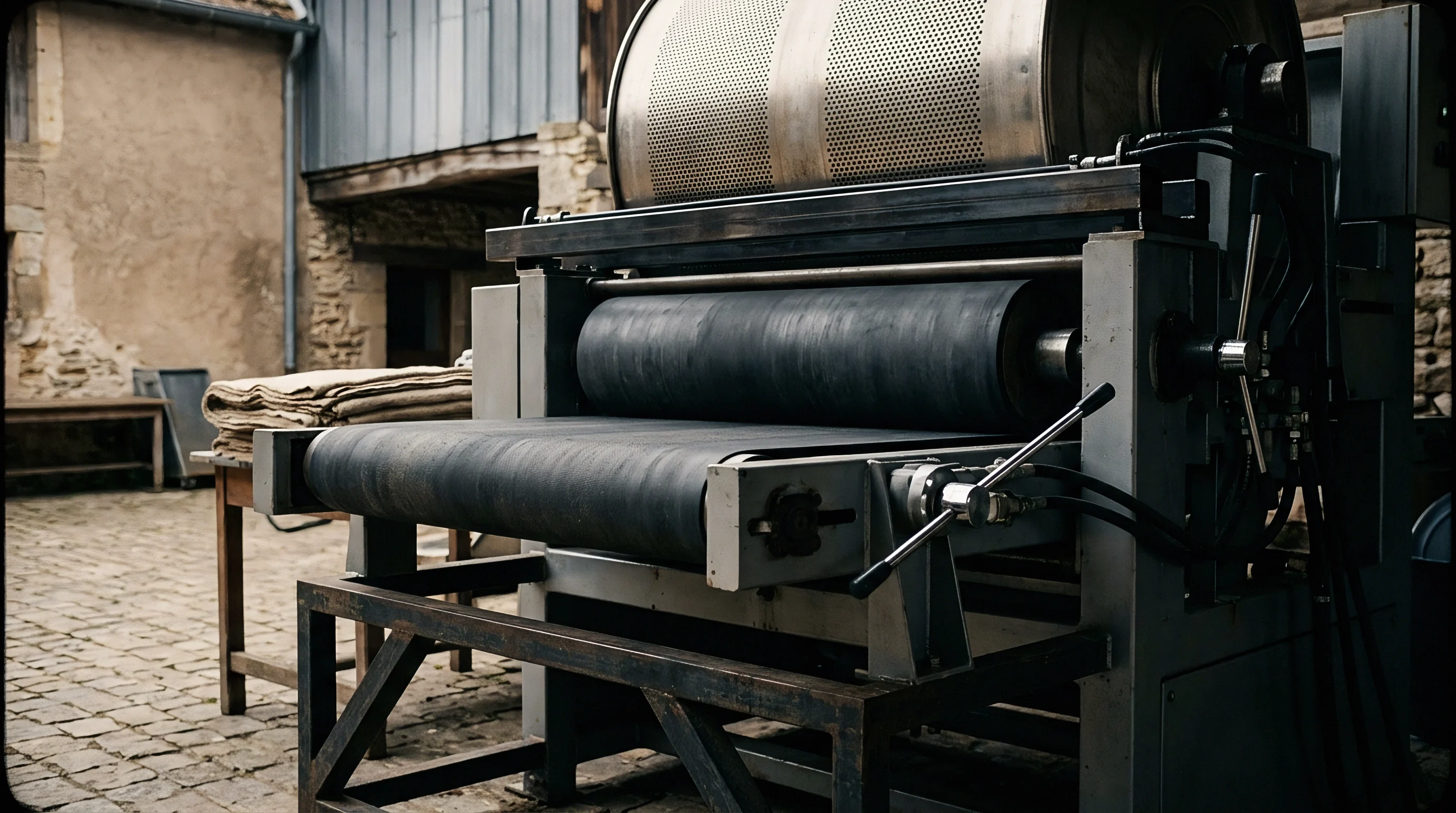
Roller speed ratios on drawing frames dictate linear mass attenuation during yarn preparation, reducing heavy sliver mass down to fine roving counts. Ambient humidity changes on the spinning shop floor alter moisture regain in real time, causing the same volume of flax to register different gravimetric weights at morning startup than at afternoon peak temperatures.
If drawing frame back and front roll speeds remain static while ambient humidity drops, the delivered dry cellulose mass per meter increases without changing scale weight, resulting in roving that spins into heavy yarn. Automated drawframes utilize continuous sliver monitoring systems to adjust draft ratios dynamically. These autolevelers measure sliver cross-sectional mass using mechanical pressure rollers or air-gap capacitance sensors, applying real-time draft corrections to maintain target tex.
A three percent ambient humidity drift in drawing shifts wet-spun yarn count by one full lea metric.

Quality Assurance Documentation
Certified testing laboratories supply standardized documentation to confirm compliance with agreed linear density specifications before shipment release.
- Oven-dry test report ~ Certified laboratory record detailing original mass, desiccated mass, and calculated moisture regain percentage.
- Airflow calibration log ~ Meter verification sheet showing daily reference calibration against cut-and-weigh long flax standards.
- Sliver draft setting record ~ Mechanical gear setup document confirming draft ratios applied at first, second, and third drawing passages.
- Commercial mass certificate ~ Formal invoice attachment translating gross shipment scale weight into net dry weight plus official allowance.
Failing to adjust drafting roll speeds for raw fibre moisture variations leads to out-of-spec yarn count rejections at the weaving mill.


Audit
Incoming shipment verification requires simultaneous gravimetric balance checks and airflow permeabilimeter testing. Discrepancies between seller quality reports and buyer receiving tests usually originate in inconsistent conditioning atmospheres or omitted surface area correction factors for long flax lumen geometry. Systematic verification establishes transparent baseline metrics for commercial settlements.
Discrepancy Resolution Mechanics in Commercial Sourcing
Disagreements between mill acceptance tests and seller specification sheets center on moisture allowance accounting. Scutched flax harvested during wet autumn months carries elevated moisture deep within dense bundle core structures. Standard surface moisture probes under-report internal water mass.
Mill arrival inspection requires taking core samples across three percent of imported bales, sealing specimens in airtight vapor-proof bags, and performing oven drying under ISO 6741 protocols.
When gravimetric testing reveals delivered moisture content exceeding commercial standard limits, buyers recalculate the invoice mass. Airflow measurements are cross-checked against cut-and-weigh specimen sets to verify that bundle fineness meets the agreed minimum metric fibre number. If airflow readings indicate fine fibers but gravimetric checks demonstrate heavy tex, unretted pectin binding or residual shive contamination is confirmed.
| Target Yarn Count (Nm / Lea) | Measured Tex Deviation (%) | Airflow Error Source | Draft Adjustment Factor | Price Settlement Impact (%) |
|---|---|---|---|---|
| Nm 26 / 15 Lea | ± 2.5 | Uncorrected Regain | 1.025 | 0.0 (Within Tolerance) |
| Nm 26 / 15 Lea | + 2.6 to + 5.0 | High Shive Content | 1.048 | – 2.5 Invoice Penalty |
| Nm 39 / 23 Lea | ± 2.0 | Lumen Geometry Drift | 1.018 | 0.0 (Within Tolerance) |
| Nm 39 / 23 Lea | + 2.1 to + 6.0 | Pectin Cohesion Residual | 1.055 | – 4.0 Invoice Penalty |
| Nm 68 / 40 Lea | + 4.0 | Coarse Bundle Ribboning | 1.082 | Lot Rejection or Reprocessing Fee |

Linear Density Deviation and Price Adjustments
Mill laboratory testing establishes whether out-of-spec linear density stems from moisture inflation or structural bundle coarse fraction. When linear density deviations exceed agreed contractual tolerances, price adjustments follow clear arithmetic scales based on dry fiber yield per metric tonne.
Whether portable airflow sensors can replace laboratory oven drying for field inspection of raw long flax bales remains debated among trade technologists.