Determining Technical Bast Fibre Fineness and Hackling Line Outturn
Line yield depends on raw bundle fineness and pin density graduation, directly fixing wet-spun yarn count capacity and landed cost per finished metre.


Strand
Raw scutched flax consists of complex composite bundles bound together by calcium pectinate matrices and middle lamella hemicelluloses. Individual single cells, termed ultimate fibres, measure twenty to forty millimetres in length with cell wall diameters ranging between fifteen and twenty-five micrometres. Commercial processing handles these ultimate cells as technical fibre bundles that span five hundred to nine hundred millimetres along the stem length.
Determining bundle fineness dictates drafting behavior during yarn formation, maximum attainable spin counts, and mechanical losses inside the comb apron.
Technical bundle fineness represents the cross-sectional area or linear density of these composite groupings, measured in decitex or tex. Under ISO 2370, gravimetric determination isolates a specified bundle length, standardizes specimen mass through conditioning, and calculates mean linear density across replicated cut lengths. While gravimetric methods report precise mass-to-length ratios, they require labor-intensive manual alignment of individual fibre tails.
Dew-retted flax conditioned at sixty-five percent relative humidity yields a gravimetric linear density between fifteen and twenty-two dtex for high-grade long line stock.
Airflow permeability apparatuses provide rapid indirect fineness values by forcing compressed air through a packed cylindrical chamber containing a weighed mass of parallel fibres. Specific surface area dictates fluid resistance through the chamber, converting pressure differentials directly into equivalent linear density figures. Optical cross-sectional image analysis presents an automated alternative, capturing geometric diameter distributions across thousands of fibre profiles in seconds.
Each test method yields specific metric profiles that correlate differently with downstream hackling behaviour.
| Test Method | Standard Designation | Sample Size | Testing Duration | Coefficient of Variation |
|---|---|---|---|---|
| Gravimetric Cut and Weigh | ISO 2370 | 500 Bundles | 45 Minutes | 8.5 to 12.0 Percent |
| Airflow Permeability | ISO 1973 Modified | 5.0 Grams | 3 Minutes | 4.2 to 6.8 Percent |
| Optical Cross-Sectional Analysis | ASTM D1444 Modified | 2000 Profiles | 10 Minutes | 11.0 to 15.5 Percent |

Morphological Structure and Cohesion Mechanics
Cohesive energy between ultimate cells governs how technical bundles split under mechanical shear during carding and hackling operations. Higher pectin concentrations in under-retted bast materials maintain tight bundle integration, registering coarse gravimetric dtex values despite fine constituent cell dimensions. Over-retted material exhibits weak middle lamella integrity, causing excessive cell separation during preliminary handling and producing elevated dust loads.
Fibre cross-sectional geometry varies across the length of a single stem, with the thickest bundle diameters located near the root section and finer structures near the tip. Representative sampling mandates taking cut sections from the mid-span of scutched stricks to establish baseline commercial fineness. Fiber wall thickness ratios alter bending stiffness, directly affecting how bundles enter the pinned field of the hackling frame.

Standardized Testing for Linear Density
Conditioning specimens inside a controlled climate chamber at twenty degrees Celsius and sixty-five percent relative humidity remains mandatory under ISO 6741 prior to any mass measurement. Standard moisture regain targets for raw flax hover around twelve percent, and unconditioned testing introduces errors exceeding eight percent on total linear density figures.
- Specimen crimp interference generates artificially high bundle diameter calculations during optical image analysis when fibres lie unaligned.
- Moisture mass distortion inflates gravimetric dtex calculations when unconditioned specimens retain ambient atmospheric dampness.
- Chamber packing density variation alters airflow resistance values, producing inconsistent fineness readings across operators.
- Root section contamination skews average lot fineness toward coarse metrics if stem bases remain un-trimmed during sampling.
Whether non-destructive enzymatic digestion can isolate ultimate cell boundary parameters without altering pristine bundle stiffness remains an unsettled area across bast analytical laboratories.


Comb
Industrial hackling machines split raw scutched fibre bundles through sequential mechanical impact against hackling bars mounted on endless revolving aprons. Feeding hackling frames demands careful manual or automatic placement of scutched stricks into heavy clamping jaws that expose top and root ends sequentially to pinned aprons. The primary objective of the hackling line involves combing out short fibers, removing residual shive, parallelizing long bundles, and splitting coarse technical structures into fine, spinnable slivers.
Graduated pinning patterns ensure progressive mechanical working on the fibre stricks. Early hackling stages utilize sparse pin distributions with round steel needles set at low density to open entangled bundle ends without crushing long line structural fibers. Advanced stages employ high-density pin aprons equipped with flat steel needles operating at densities up to eighteen pins per centimetre, where coarser bundles generate higher waste.
| Hackling Stage | Pin Density per cm | Needle Profile | Apron Speed m/min | Target Bundle Fineness dtex |
|---|---|---|---|---|
| Coarse Breaker | 1.2 to 2.5 | Round Steel 1.8mm | 12.0 | 35.0 to 50.0 |
| Intermediate Splitter | 4.0 to 8.0 | Round Steel 1.0mm | 15.0 | 22.0 to 32.0 |
| Fine Comber | 10.0 to 14.0 | Flat Steel 0.6mm | 18.0 | 14.0 to 20.0 |
| Ultra-Fine Finisher | 15.0 to 18.0 | Flat Steel 0.4mm | 20.0 | 9.0 to 13.0 |

Graduated Pin Density and Splitting Forces
Impact forces delivered by hackling pins pull short, broken, or poorly bound fibers out of the clamped strick. Material removed by the pinned aprons falls into the lower collecting chutes as hackled tow, while intact full-length bundles remain locked in the traveling clamps to emerge as long line flax. Hackling outturn yield expresses the percentage of clean long line fiber recovered relative to the initial mass of raw scutched flax fed into the machine.
Fine pins running at elevated surface speeds exert high shear stresses on individual technical bundles. Under-retted fibres with strong intercellular bonds resist splitting, causing high pin penetration resistance, bundle breakage at the clamp edge, and subsequent transfer of potential long line yield directly into lower-value hackled tow.
Gentle pin graduation preserves long line bundle length while harsh initial impact transfers prime technical fiber directly into tow.
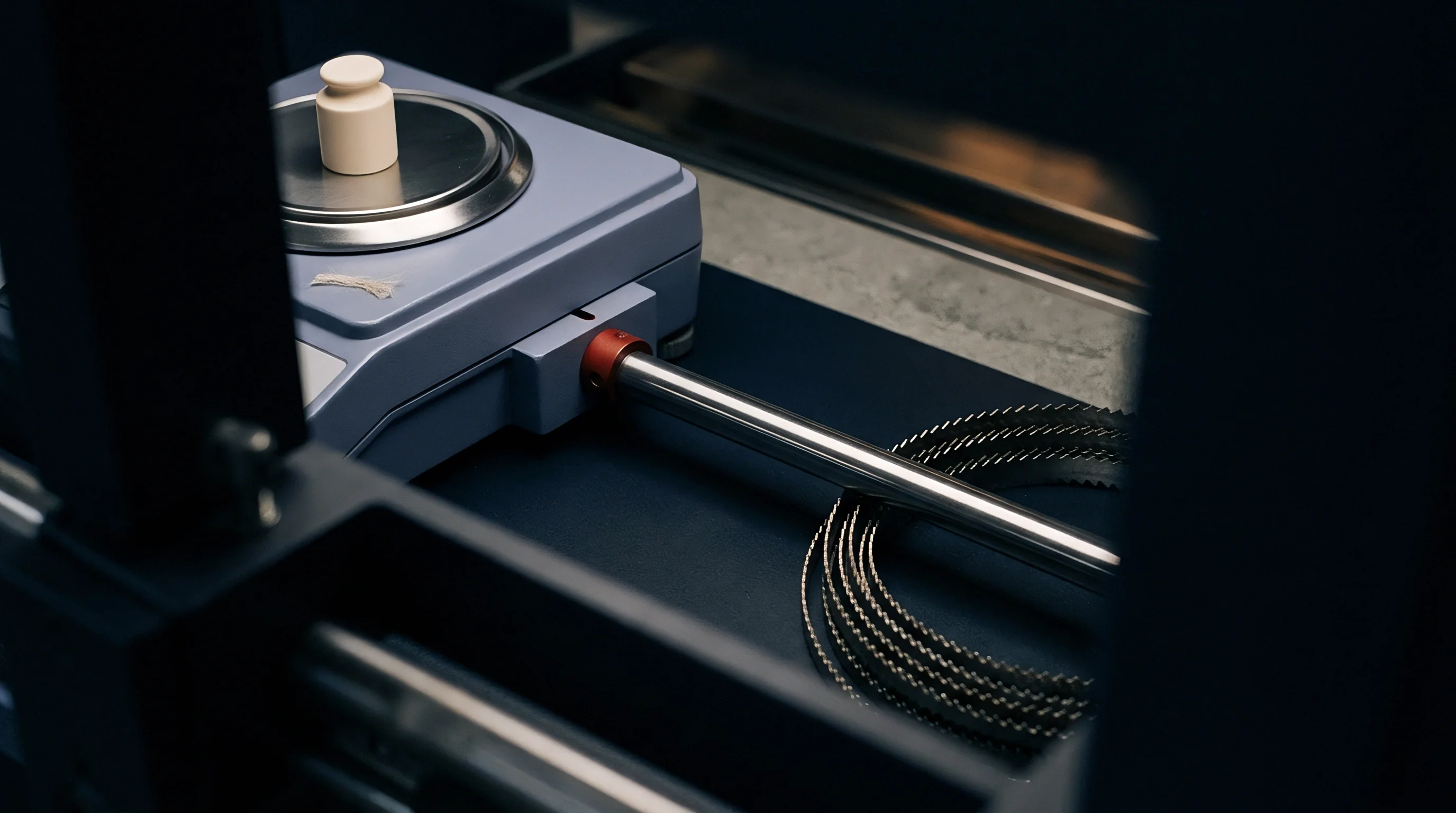
Separation Dynamics of Long Line and Tow
Evaluating hackling line performance requires precise collection routines to audit outturn yields across specific production batches.
- Weigh fifty kilograms of raw scutched flax stricks after conditioning at standard atmospheric parameters.
- Calibrate hackling apron speeds, clamp transit times, and brush wiping clearance according to target fiber grade specifications.
- Feed stricks into the automatic clamping unit, verifying clamp pressure prevents fiber slippage during initial impact.
- Collect processed long line stricks at the delivery end and immediately record total recovered mass on a calibrated scale.
- Gather all hackled tow from brush rolls and vacuum hoppers across both top and root processing sides.
- Calculate line outturn percentage by dividing long line recovered mass by initial scutched mass.
Slower apron speeds with fine pin graduation maintain long line length when processing stiff, under-retted scutched flax.


Scale
Mathematical modeling of industrial outturn relies on raw bundle linear density combined with bundle tenacity measured on zero-gauge tensile testers. Scutched flax lots presenting raw linear densities below thirty dtex paired with bundle tensile strength exceeding forty-five centinewtons per tex consistently yield long line outturn figures above fifty-eight percent. Conversely, weak or coarse raw bundles crumble under high-density pinning aprons, shifting yield balance heavily toward hackled tow production.
Direct linear regression models calculate predicted hackling yield based on two primary laboratory inputs: initial bundle dtex and chemical retting index. Pectin concentration metrics derived from spectrophotometric absorbance at two hundred and eighty nanometers allow mills to adjust mechanical pin density settings before committing commercial lots to the hackling apron.
Standard ISO 2370 compliance failure during lot verification forfeits seller yield guarantees and triggers mandatory re-testing at seller expense.
Does Airflow Testing Accurately Predict Hackling Outturn?
Airflow fineness readings show strong correlation with line outturn when processing homogeneous dew-retted lots from uniform growing regions. Discrepancies arise when testing water-retted or enzyme-treated bast fibers, where surface smooth variations distort airflow pressure drop readings without reflecting actual cross-sectional bundle thickness. In such cases, airflow apparatuses understate bundle fineness, leading spinning mills to anticipate line yields four to six percentage points higher than machine outturn delivers.
While bundle fineness limits the maximum spinnable count, combining airflow permeability values with zero-gauge bundle tenacity figures establishes a dual-parameter index that restores predictive accuracy across all retting types.
- Raw linear density exceeding thirty-five dtex signals insufficient field retting and lowers anticipated line outturn below fifty-two percent.
- Bundle tenacity below thirty-five cN/tex leads to excessive clamp-edge fiber shearing during comb needle impact.
- Impurities exceeding two percent mass fraction distort raw fineness measurements and clog hackling aprons.
- Moisture variations above two percent across stricks induce uneven clamp clamping pressure, triggering fiber slip losses.

Mathematical Yield Models and Lab Correlations
Empirical outturn formulas incorporate a machine aggressiveness factor alongside raw material physical properties. A standard predictive line outturn equation takes the operational form:
Line Outturn Percentage = 72.5 – (0.45 Raw dtex) + (0.32 Bundle Tenacity in cN/tex) – (1.8 Shive Mass Fraction)
Testing lab stricks on miniature sample hackling units provides empirical validation for calculated outturn formulas. Discrepancies between pilot line calculations and industrial production yields generally trace back to variations in clamp transit speed, pin sharpness, or ambient humidity drift on the factory floor.
Miscalculating line outturn by three percent on a twenty-tonne shipment increases yarn production costs by eight cents per finished metre across the spinning run.


Allowance
Commercial valuation of hackled flax incorporates net dry fibre mass calculated after deducting excess moisture and non-cellulosic impurities. Official moisture regain parameters established under ISO 6741 mandate a twelve percent standard allowance for hackled long line flax and a thirteen percent allowance for scutched flax stock. Deliveries containing moisture levels above standard targets incur weight adjustments and price deductions calculated on the commercial invoice.
Shive particles, soil dust, and un-retted cortex tissue remaining in hackled slivers reduce spinnability and cause end breaks during wet drafting. Modern purchasing agreements specify absolute non-cellulosic residual thresholds, capping shive mass fractions at 0.5 percent for premium long line flax intended for fine count yarn production.
| Hackled Line Grade | Mean Fineness dtex | Hackling Line Outturn Yield | Max Wet-Spun Count Nm | Waste Allowance Target |
|---|---|---|---|---|
| Superior Line Premium | 10.5 to 13.0 | 62.0 to 66.0 Percent | Nm 80 to Nm 100 | 3.5 Percent |
| Standard Line Fine | 13.5 to 16.5 | 56.0 to 61.5 Percent | Nm 40 to Nm 60 | 5.0 Percent |
| Medium Line Commercial | 17.0 to 21.0 | 50.0 to 55.5 Percent | Nm 26 to Nm 39 | 6.5 Percent |
| Coarse Line Tow Blend | 22.0 to 28.0 | 42.0 to 49.5 Percent | Nm 14 to Nm 24 | 9.0 Percent |

Moisture Regain and Impurity Deductions
Invoices reflect commercial mass adjustments derived from standardized oven-dry moisture testing. A lot weighing ten metric tonnes at fourteen percent measured moisture gets reduced to its official commercial mass equivalent before pricing calculations apply.
Because moisture varies across bales, testing procedures extract core samples from fifteen percent of packed units within a delivery lot to establish accurate mean water content. Over-moist lots stored in sealed warehouses face micro-fungal degradation risks that degrade bundle tenacity and darken fiber color within weeks.
Wet spinning troughs set to sixty degrees Celsius soften residual middle lamella pectins during drafting.
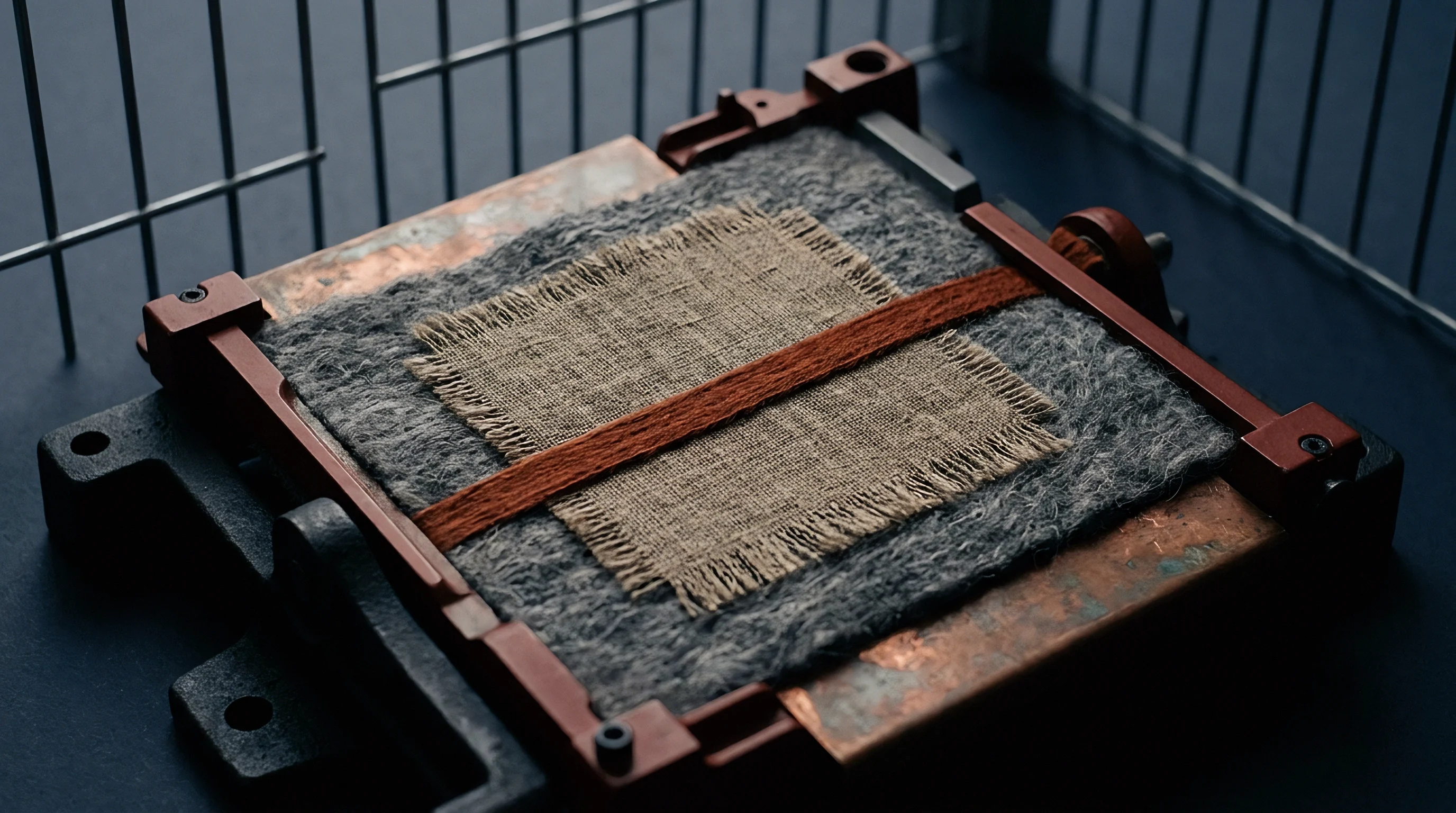
Spinnable Count Bounds for Hackled Line
Achieving stable yarn spinning requires a minimum number of fibers within the yarn cross-section. For wet-spun flax yarn, stable production demands between eighty and one hundred individual fibers in the strand cross-section to prevent drafting waves and frame stops.
Unlike dry spinning, which relies on heavy twist, fine hackled line averaging eleven dtex supports wet spinning up to metric count Nm ninety, corresponding to an eleven-tex yarn carrying approximately one hundred fibers per cross-section. Attempting to spin coarse twenty-four dtex hackled line to high metric counts reduces fiber counts per cross-section below safe operational thresholds, triggering continuous end breakage at the spinning frame.
- Certificate of origin and retting classification documenting growing region, harvest year, and processing method.
- Standardized ISO 2370 test report stating average bundle linear density, sample size, and coefficient of variation.
- Hackling outturn certification detailing long line percentage, hackled tow yield, and total comb waste losses.
- Oven-dry moisture verification record calculating net invoice mass adjusted to official regain allowances.
Elevated tow ratios trace either to seasonal weather shifts during field retting or to improper pin maintenance on the hackling line.


Contract
Commercial settlement for long line flax relies on a landed cost calculation that bridges raw fiber purchase pricing with measured hackling outturn figures. Scutched flax bought at four Euros and twenty Cents per kilogram delivers variable long line unit costs depending directly on hackling line efficiency, where higher outturn reduces final yarn cost.
Because landed prices absorb hackling losses, a sixty percent outturn from one kilogram of scutched flax produces six hundred grams of long line flax and three hundred grams of hackled tow, with one hundred grams lost as unrecoverable dust and shive. Accounting for a hackled tow credit value of one Euro and fifty Cents per kilogram alters the net effective raw material cost of the resulting long line fiber.
| Scutched Price EUR/kg | Hackling Line Outturn Yield | Tow Recovered Yield | Tow Credit EUR/kg | Effective Line Cost EUR/kg | Yarn Cost Impact EUR/m (Nm 26) |
|---|---|---|---|---|---|
| 4.20 | 64.0 Percent | 26.0 Percent | 1.50 | 5.95 | 0.228 |
| 4.20 | 60.0 Percent | 29.0 Percent | 1.50 | 6.27 | 0.241 |
| 4.20 | 54.0 Percent | 33.0 Percent | 1.50 | 6.86 | 0.264 |
| 4.20 | 48.0 Percent | 37.0 Percent | 1.50 | 7.60 | 0.292 |

Landed Cost Arithmetic across Hackling Outturn
Calculating effective long line fiber cost follows a precise commercial formula:
Effective Line Cost = (Raw Scutched Price – (Tow Yield × Tow Credit)) / Line Outturn Yield
Shifted outturn performance from sixty percent down to forty-eight percent inflates effective line cost by over twenty-one percent per kilogram. This cost escalation transfers directly onto spinning room ledgers, driving up the production cost per metre of woven fabric.
Although adequate splice strength prevents frame stops during spinning, sourcing contracts that lack explicit outturn yield guarantees leave mills exposed to severe margin erosion when raw material lots underperform on the hackling apron.

Specification Clauses and Variance Claims
Technical purchase contracts include strict parameter bounds for linear density and outturn yield. Standard agreements mandate a maximum allowable fineness variance of plus or minus five percent from certified lot sample reports before triggering price adjustments.
Rejection thresholds activate when hackling outturn falls more than three percentage points below contract specifications during mill verification trials. In such events, standard settlement clauses mandate seller reimbursement of hackling processing expenses alongside price adjustments on delivered mass.
Incorporating the CILC flax outturn tolerance clause fixes maximum allowable yield deviations at two percent before automatic invoice price adjustments take effect.