Fibre Impurity Measurement
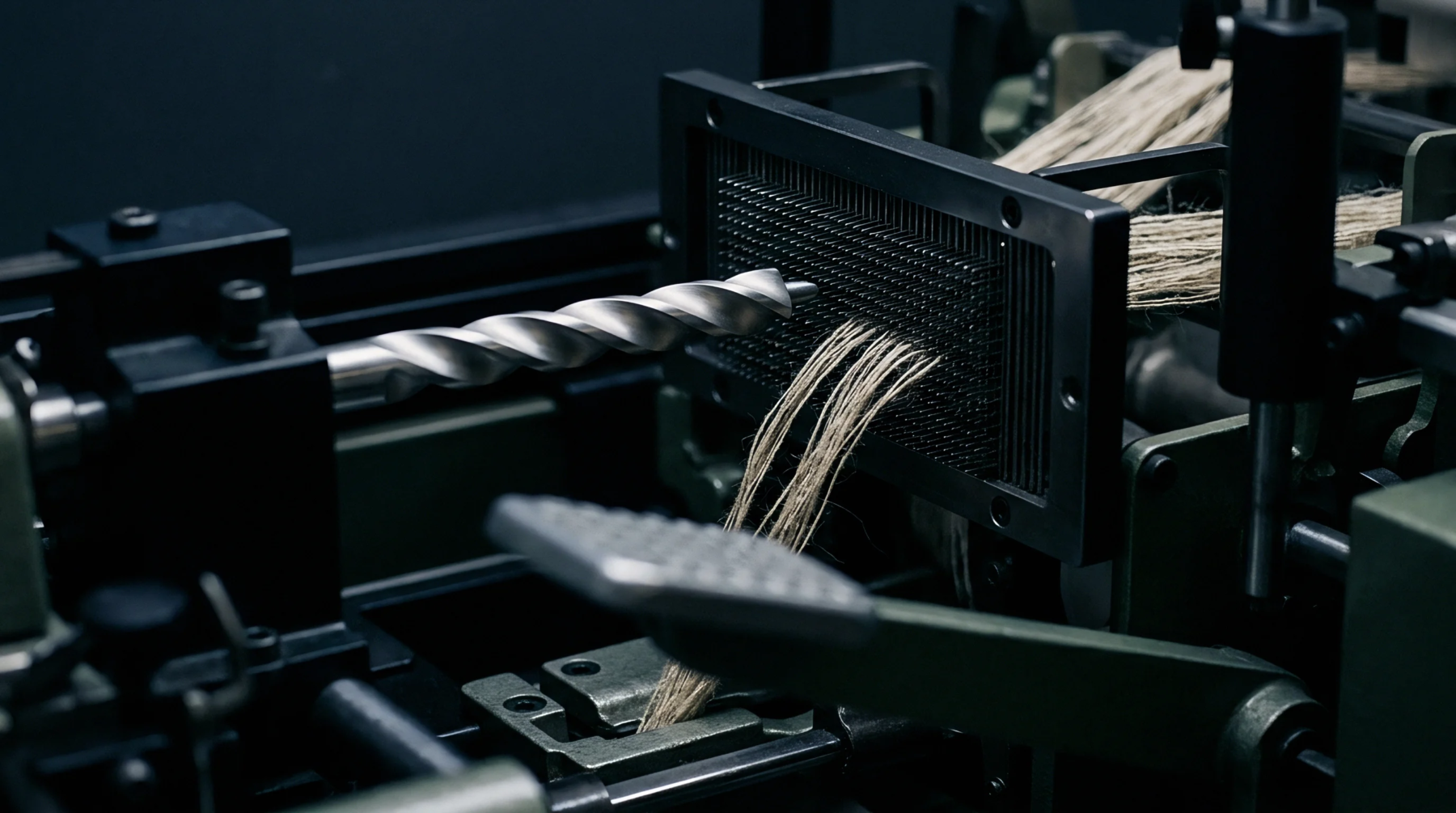
Raw flax processing requires quantification of woody particles remaining within the primary fibre bundle. This shive mass fraction denotes the ratio of non-cellulosic woody matter to the total dry weight of the processed line. Mechanical cleaning systems rely on this ratio to gauge the efficiency of scutching and hackling lines.
Precise determination occurs through oven drying samples to a constant weight, followed by careful physical separation of all bark or stem residues from the cleaned fibre. Operators calculate the quotient by dividing the weight of recovered woody particles by the initial mass of the raw fibre input.
Quality Control Application
Production teams utilise this percentage to verify that scutching equipment maintains alignment with buyer specifications during harvest cycles. Export contracts for high-value linen yarns typically define an upper limit for these particles because residual wood causes thread breakage during rotor spinning. Laboratory analysts perform these checks at the end of the dressing stage before baling the fibre for global distribution.
High readings signal a need for machine maintenance or adjustments to the beaters inside the scutching turbine. Consistency in this value ensures that downstream mechanical operations handle a stable feed without the presence of abrasive contaminants.
Process Limit Constraint
Variations in the moisture content of incoming raw flax occasionally obscure accurate particle mass determination during rapid testing cycles. Laboratory protocols therefore mandate the use of standard atmospheric conditioning chambers to stabilise samples before weighing begins. Differences between mill internal standards and international trade criteria frequently arise when secondary cleaning steps occur after the initial baling process.
Commercial buyers often mandate independent audits to verify these values before accepting large shipments into their logistics chain. Physical woody remains inside the processed batch effectively dictate the price point by defining the grade of the linen crop.