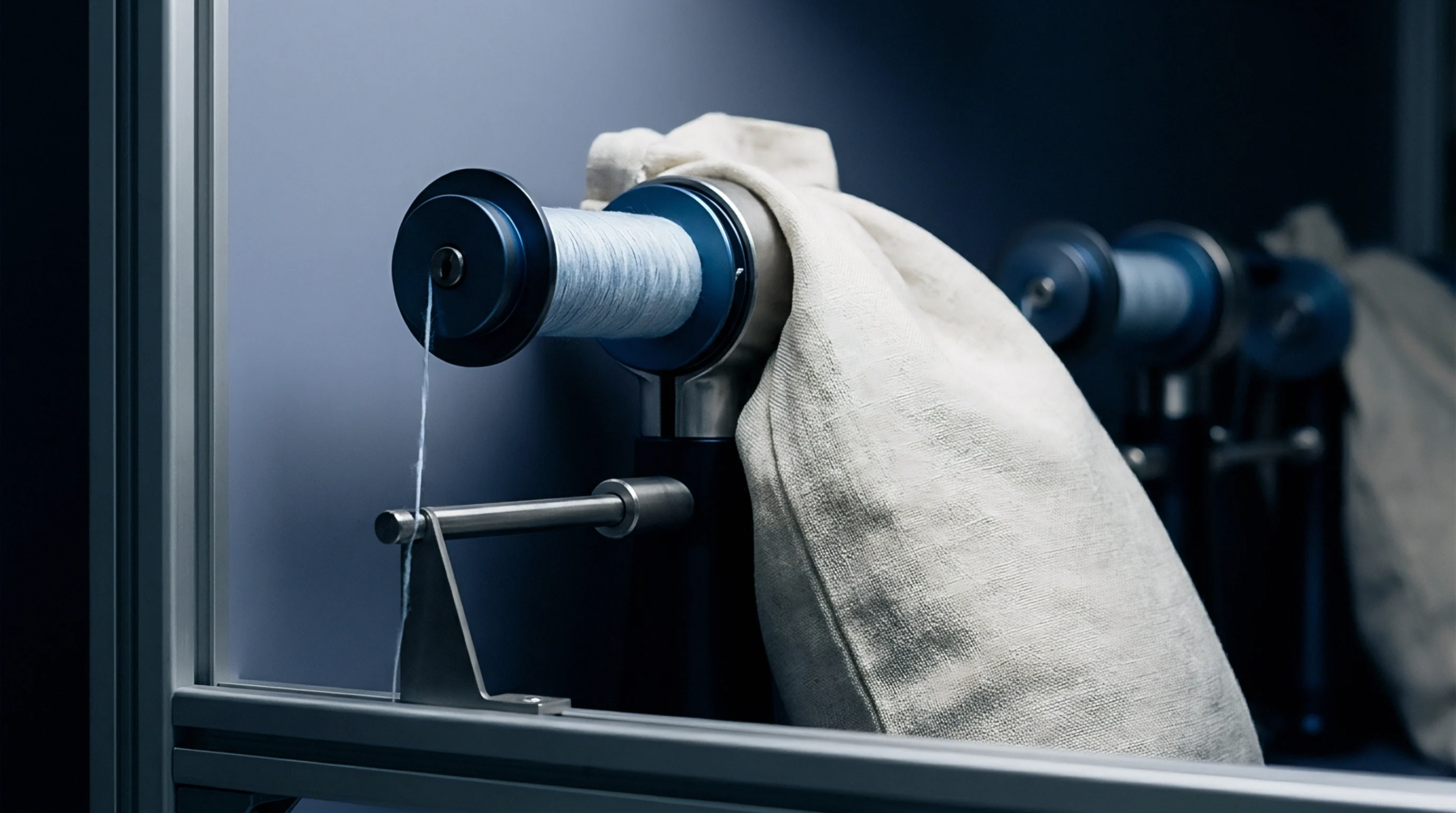
Frictional Evaluation
A laboratory testing instrument determines the friction coefficient of running yarn as it passes over friction pins at controlled speeds. In linen mills, the Zweigle friction tester measures the surface resistance of spun flax yarns before weaving. Technicians record these values in the yarn quality certificate.
Spinning Application
High friction leads to excessive guide wear and breaks during warping and weaving. Utilizing the Zweigle friction tester assists spinners in evaluating the effectiveness of yarn lubricants, waxes, and sizing agents applied to the linen yarn. Because flax fibres are coarse, proper lubrication is required to reduce yarn-to-metal friction during processing.
The test data helps the mill adjust waxing dosage to maintain a consistent friction coefficient across all spun yarn lots, preventing excessive abrasion and lint buildup on the weaving loom guides.
Quality Assessment
The technical specification document from the buyer establishes the maximum acceptable coefficient of friction for the yarn delivery. These test measurements are archived in the quality management database and used to certify that the yarn meets weaving requirements. Choosing the correct wax formulation based on these friction tests prevents yarn damage during subsequent processing steps.
This mechanical friction measurement provides a reliable metric of yarn processability on modern high-speed looms.