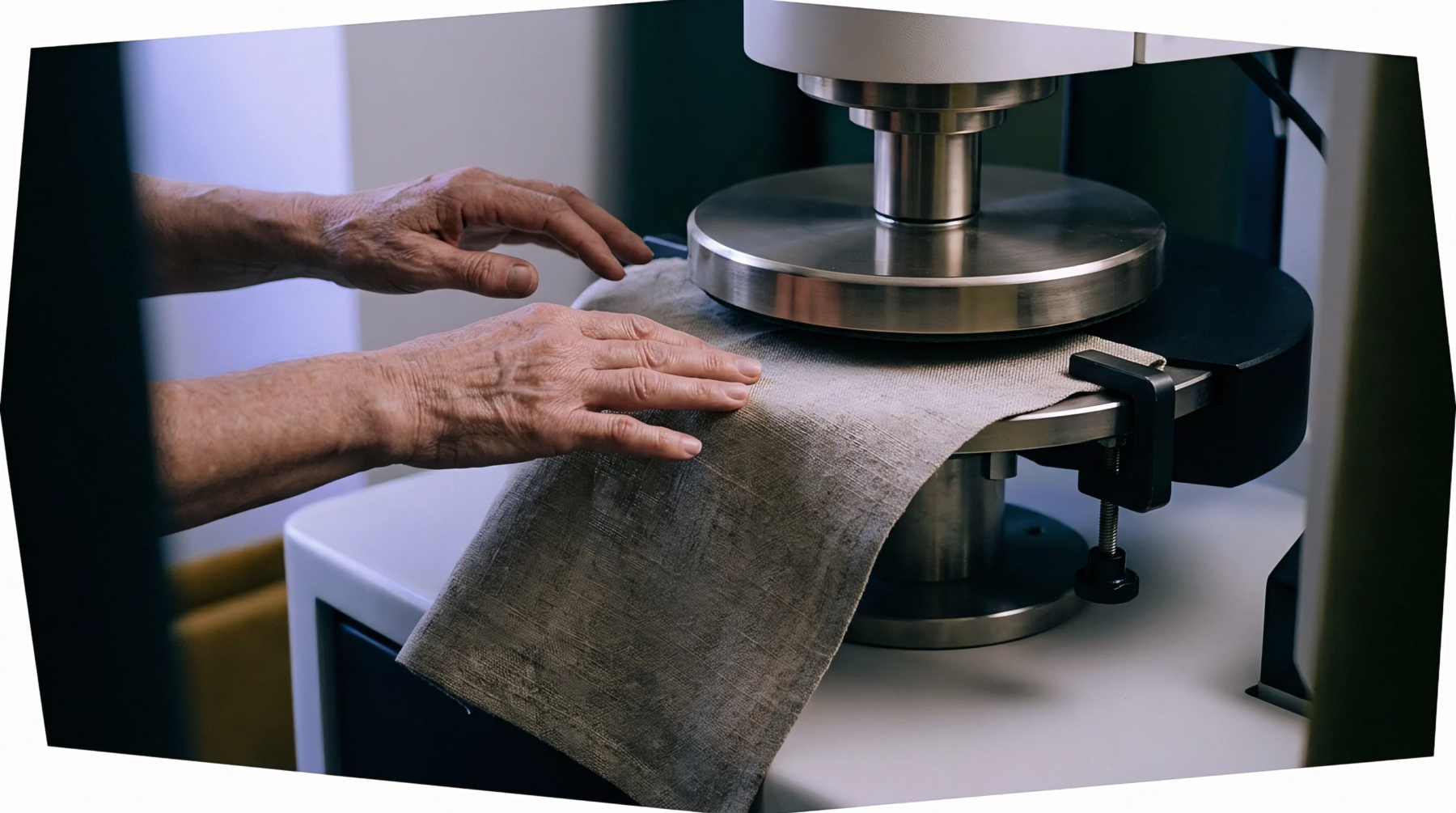
Fabric Deformation
Measurement of the geometric displacement of longitudinal yarns during the weaving phase defines the unbleached warp crimp. This metric quantifies the deviation of these fibres from a straight line when held under standard tension before any chemical scouring or dyeing removes natural wax content. Textile laboratories calculate the value by comparing the extended length of the straightened yarn against the physical length of the woven fabric specimen.
Production Verification
Mill inspectors monitor this tension property to ensure the structural integrity of greige linen cloth intended for further finishing. Excessive variation during the loom process causes irregular take up rates that prevent consistent moisture absorption or printing results in later processing. Technicians extract samples from the loom state to check that mechanical settings align with the required elongation profiles.
Stable unbleached warp crimp prevents internal stress that results in bowing or skewing during the drying stages of fabric manufacture.
Acceptance Criteria
Purchasing contracts specify these mechanical limits to guarantee that every batch of loom state linen adheres to predetermined elasticity targets. Buyers verify the density and weight of the textile against the raw yarn counts recorded in the mill production log. High precision in this measurement allows manufacturers to predict how the cloth behaves when it undergoes the final wash or heat setting.
Consistent control over the initial state of the fibres minimizes waste during the conversion of raw yarn into high quality finished material.