Breakage Threshold
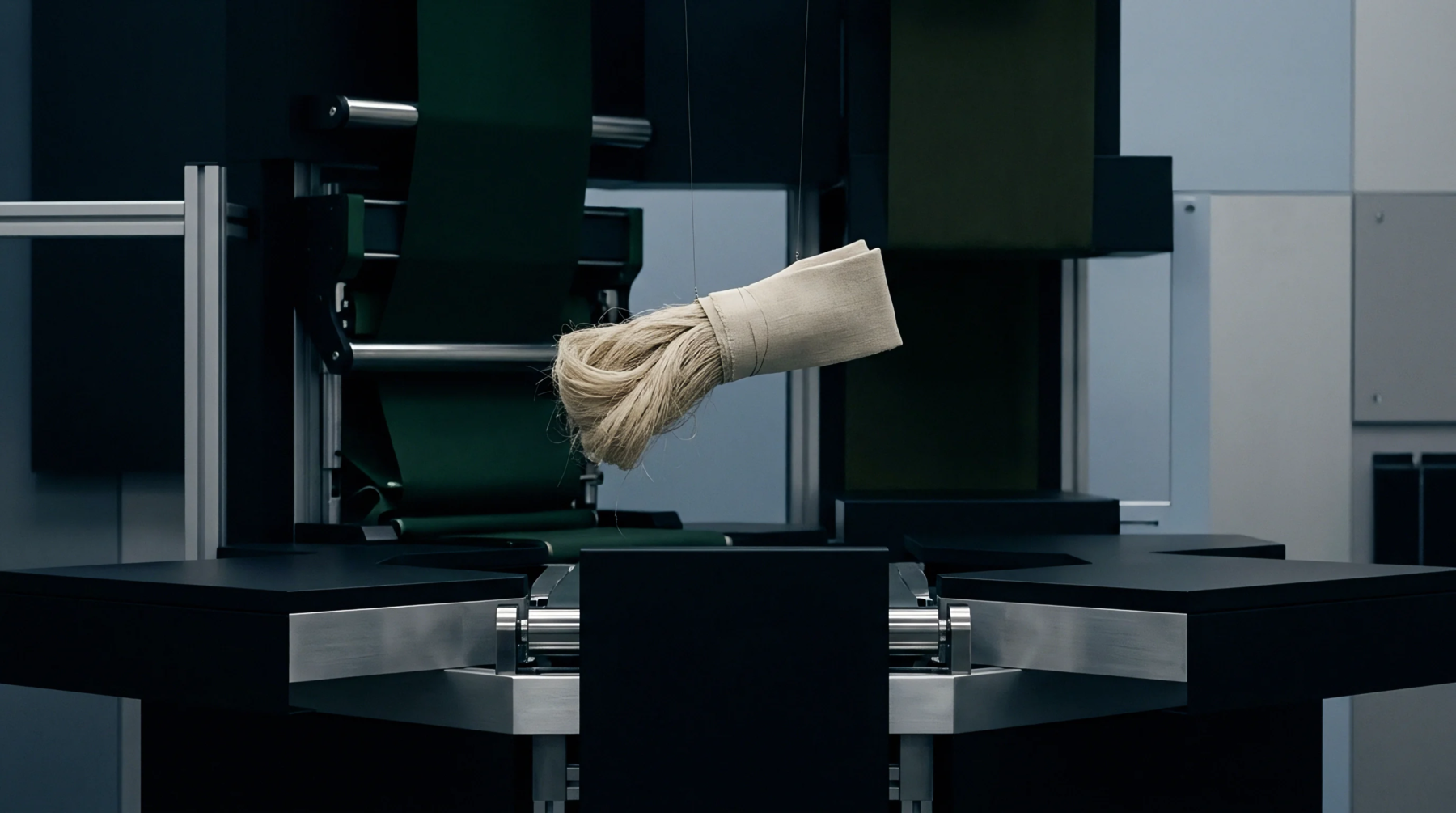
Tensile strength meters measure peak tensile load during the dry spinning phase of flax production to prevent roving breakage on the ring frame. Mill supervisors record the exact breaking force in newtons on the batch quality sheet before yarn moves to the sizing vat. Raw flax fibre grades require a higher rupture threshold than finished linen fabric grades because unspun roving lacks the structural cohesion provided by twist angles and starch binders.
A mill internal standard demands a three hundred newton minimum resistance for coarse warp yarns, whereas European export buyers specify a four hundred newton acceptance ceiling for fine dress linen. This measurement stops applying once the yarn enters the wet spinning bath because moisture alters cellulose elasticity entirely.
Rupture Mechanics
Load sensors register force increments until the vegetable strand snaps under tension. Crosshead displacement occurs at a constant millimetres per minute velocity while the digital readout logs every fluctuation in resistance. Weak pectin bonding between individual ultimate cells causes premature failure long before the nominal fibre strength is reached.
Slippage within the pneumatic clamps invalidates the test run because friction must exceed the nominal breaking force of the specimen.
Quality Control
Quality inspectors compare the recorded breaking force against the purchase specification sheet to verify lot conformity. Yarn batches failing the acceptance threshold are diverted to industrial twine manufacturing instead of export apparel weaving. Certified laboratories calibrate their dynamometers annually using dead weights traceable to national metrology standards.
Tensile testing determines the commercial value of each flax harvest before spinning contracts are finalized.