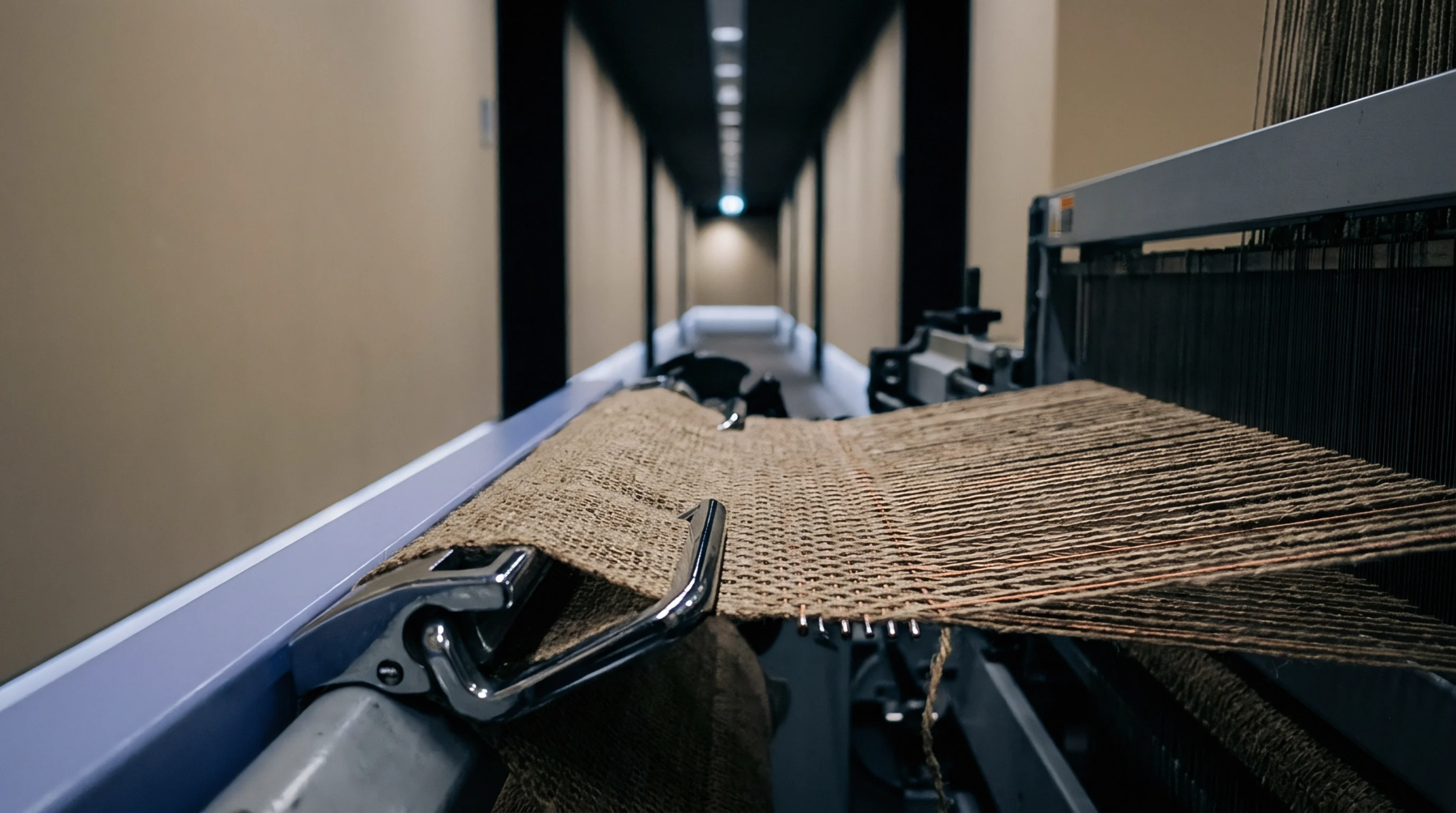
Harness Elevation
Loom geometry measurements establish the vertical distance between the race board and the bottom warp sheet during the shed opening cycle. Setting the lower shed line height on air-jet or rapier looms controls warp yarn contact with the reed race board during weft insertion. Mill setup sheets specify precise millimeter dimensions relative to the loom frame datum for each cloth weight.
Shift supervisors verify these physical measurements using height gauges prior to launching production runs.
Stress Distribution
Asymmetrical shed openings distribute tensile stress unequally between the upper and lower warp sheets during loom operation. Lowering the bottom warp line closer to the race board increases tension on the upper sheet, which improves fabric cover and reduces warp end clinging in hairy flax yarns. High tension on stiff linen warp yarns elevates the risk of end breaks at the harness eyes, whereas insufficient clearance causes weft insertion failures due to sagging bottom yarns.
Technicians adjust the harness frame height and backrest roller positions simultaneously to balance tension forces across the cloth width.
Geometric Defect
Factory inspection logs document warp line settings alongside fabric defect records. Incorrect shed geometry produces uneven selvedges, filling loops, wavy pick lines and reed marks in heavy linen fabrics. Acceptance standards for export grey cloth restrict allowable structural irregularities caused by improper shed geometry.
Regular verification of harness height settings maintains uniform fabric appearance throughout long production shifts.