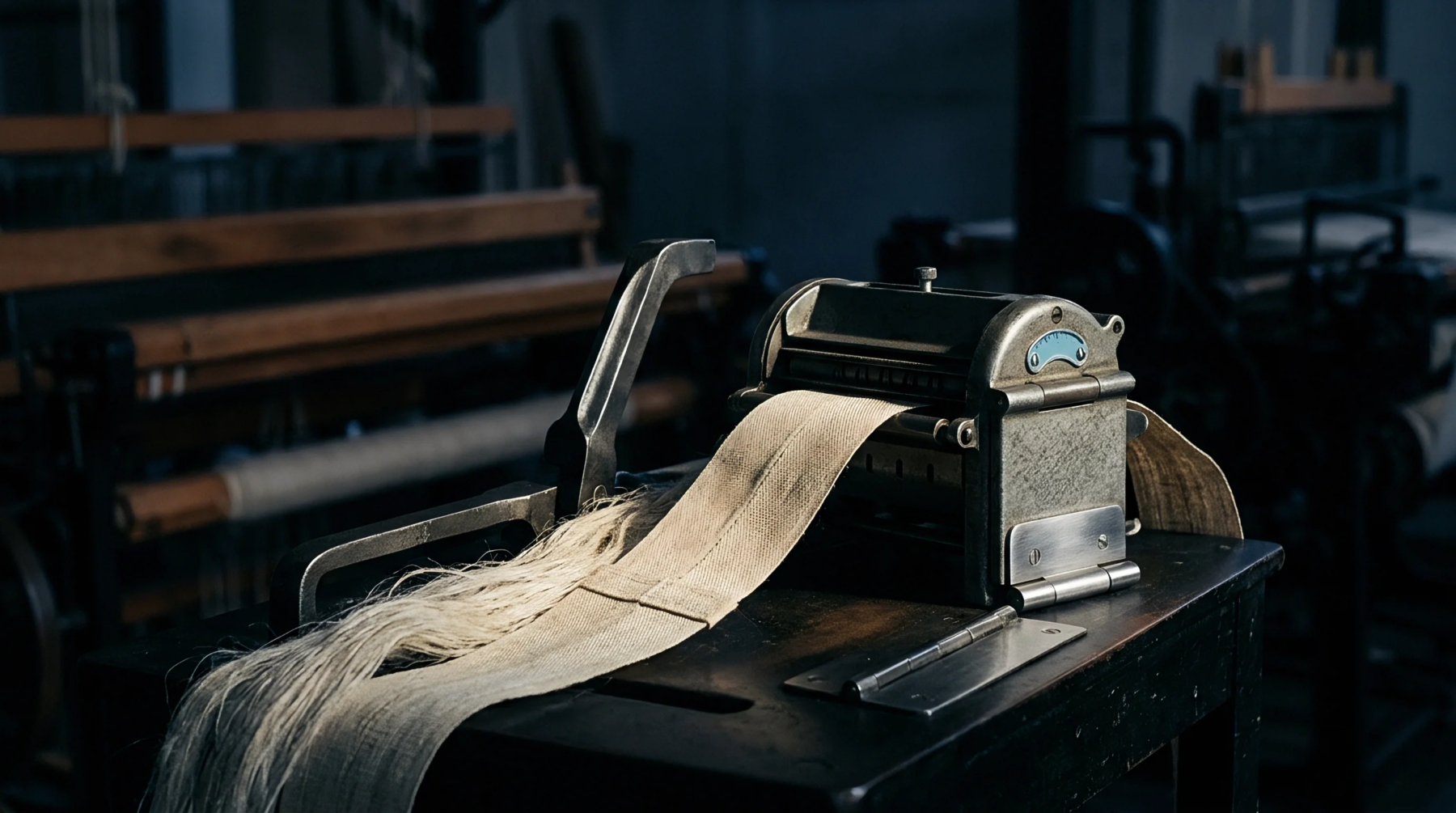
Tension Regulation
Pneumatic or spring-assisted cushioning of the warp beam during the shedding cycle reduces the incidence of yarn breakages on modern looms. This protective cushioning, known as dynamic backrest dampening, absorbs the sudden increases in warp tension as the heddles move. It maintains a relatively constant yarn tension despite the rapid mechanical movements of the loom.
Without this system, high-density linen warps would suffer frequent end breakages due to the low elasticity of flax fibers.
Mechanical Response
The dampening system utilizes a sensor-controlled pivot arm that moves in synchronization with the main crankshaft of the loom. As the shed opens and tension rises, the backrest yields slightly to relieve the strain on the yarn. Once the shed closes, the mechanism quickly restores the backrest to its original position to prevent slackness.
This active adjustment ensures that the tension remains within a narrow, safe band, which is documented in the loom’s electronic setup log. By minimizing tension spikes, the system prevents the warp ends from stretching beyond their yield point.
Fabric Uniformity
Consistent warp tension ensures a uniform pick spacing across the entire length of the manufactured linen fabric. Because dynamic backrest dampening minimizes tension variations, the resulting cloth exhibits no visible bands or density fluctuations.