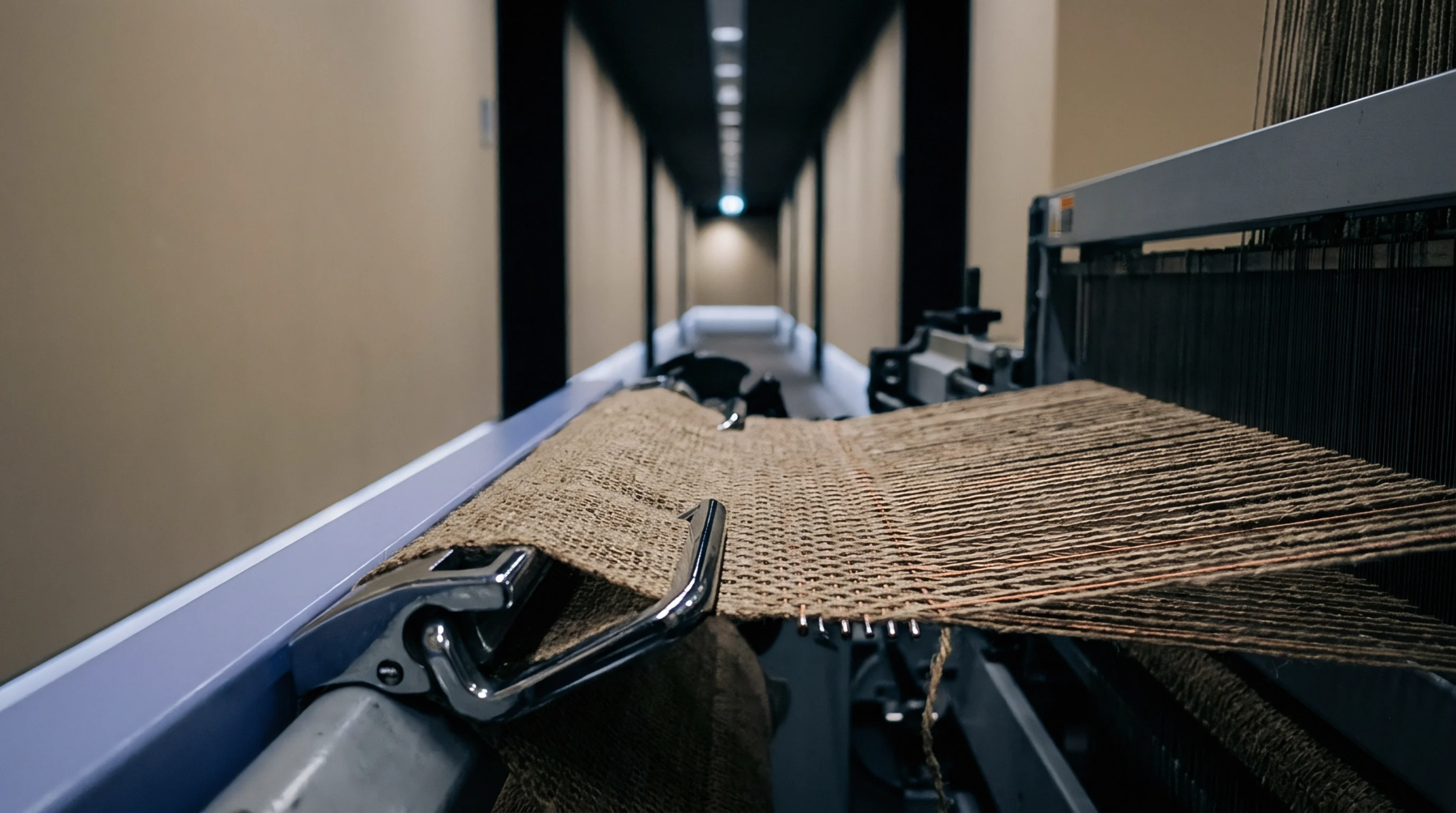
Purification Stage
Industrial purification systems in air-jet weaving mills must remove water and oil contaminants from the air supply to prevent fabric staining. Without effective compressed air filtration, aerosolized lubricants bypass the main valve and deposit directly onto the raw linen yarn. This process maintains air quality according to ISO 8573-1 Class 1 standards.
The weaver’s daily shift log tracks pressure differentials across each filter housing to detect early clogging. Frequent audits ensure that the finished weave remains free from dark grease spots that would otherwise cause a downgrade at the final inspection board.
Mechanical Barrier
Solid contamination is stopped by a multi-stage mechanical barrier that prevents yarn abrasion. Coalescing filters extract oil droplets and liquid water before the air stream reaches the distribution manifold. Particulate filters sit further down the line to capture fine carbon dust from the dryer.
Clean air protects insertion nozzles from wear.
Operational Limit
Excessive moisture in the line leads to erratic jet pressure during the insertion cycle. When humidity rises, weft yarns absorb water and gain weight, causing incomplete picks that trigger automatic loom stops. The mill’s woven fabric inspection report registers these stop-related defects as grading penalties.
This operational limit means that filtration systems must be audited whenever weft insertion times deviate from the baseline.