Viscosity Control during High Speed Sizing of Fine Linen Warps
Inline rotational viscometers adjust size box temperature to maintain steady shear viscosity, securing uniform add-on for high speed fine linen weaving.

Rheology
Fine flax warps running at speeds above one hundred metres per minute impose violent mechanical shearing upon the protective sizing compound. The high specific modulus of linen fibers, combined with low elongation at break (typically 1.5% to 2.2%), creates severe tension spikes across the slasher size box. Chemical size formulations applied to fine counts, such as NeL 50 through NeL 80 dry-spun flax, require precise liquid flow properties under rapid shear rate transitions to coat individual yarn structures without causing inter-fiber bridging.
Flow Behavior in High Velocity Size Boxes
Modern slashing equipment forcing liquid formulations through narrow immersion channels creates velocity gradients exceeding ten thousand reciprocal seconds. Flax yarns possess irregular polygonal cross-sections with pronounced lumen spaces and natural nodes along the ultimate fiber fibrils. Sizing solutions containing modified starches, carboxymethyl cellulose, or polyvinyl alcohol exhibit complex pseudoplastic non-Newtonian flow under these intense hydrodynamic conditions.
At rest, high-concentration starch pastes build internal hydrogen-bonded gel structures that resist movement. Fluid deformation happens rapidly when yarn sheets enter the liquor box at speeds between eighty and one hundred fifty metres per minute. The apparent viscosity drops precipitously as polymer chains align in the direction of machine flow.
Viscosity drops under elevated shear.
| Formulation Chemical Base | Solids Concentration (%) | Low-Shear Viscosity (10 s-1, mPa.s) | High-Shear Viscosity (10000 s-1, mPa.s) | Thixotropic Recovery Time (s) |
|---|---|---|---|---|
| Carboxymethyl Starch / Native Potato Starch (80/20) | 10.0 | 140 | 22 | 4.2 |
| Thin-Boiling Hydroxyethyl Starch | 12.0 | 110 | 18 | 2.1 |
| Fully Hydrolyzed PVA (PVA 117) / Synthetic Wax | 8.0 | 95 | 15 | 1.2 |
| Acrylic Copolymer / Modified CMC Blend | 9.0 | 75 | 12 | 0.8 |
Pseudoplastic Shifts and Temperature Stability
Polyvinyl alcohol and oxidized potato starch combinations display non-Newtonian shear-thinning characteristics inside the squeeze nip. Thermal stability inside the liquid box dictates whether these shear-thinning properties remain predictable throughout long production runs. Starch molecules undergo retrogradation when liquid temperatures fall below eighty degrees Celsius, forming insoluble aggregates that raise apparent viscosity and generate stiff, uneven coatings on fine linen threads.
Elevated temperatures above ninety-two degrees Celsius trigger thermal degradation in acrylic copolymers and lower the film strength of carboxymethyl cellulose. Maintaining tight thermal bands preserves predictable pseudoplastic responses across varying production speeds.
Shear thinning inside the squeeze nip lowers liquor viscosity enough to drive size into the yarn core before high speed exit.
Maintaining precise bath temperature prevents starch retrogradation far better than post-slashing chemical additions.
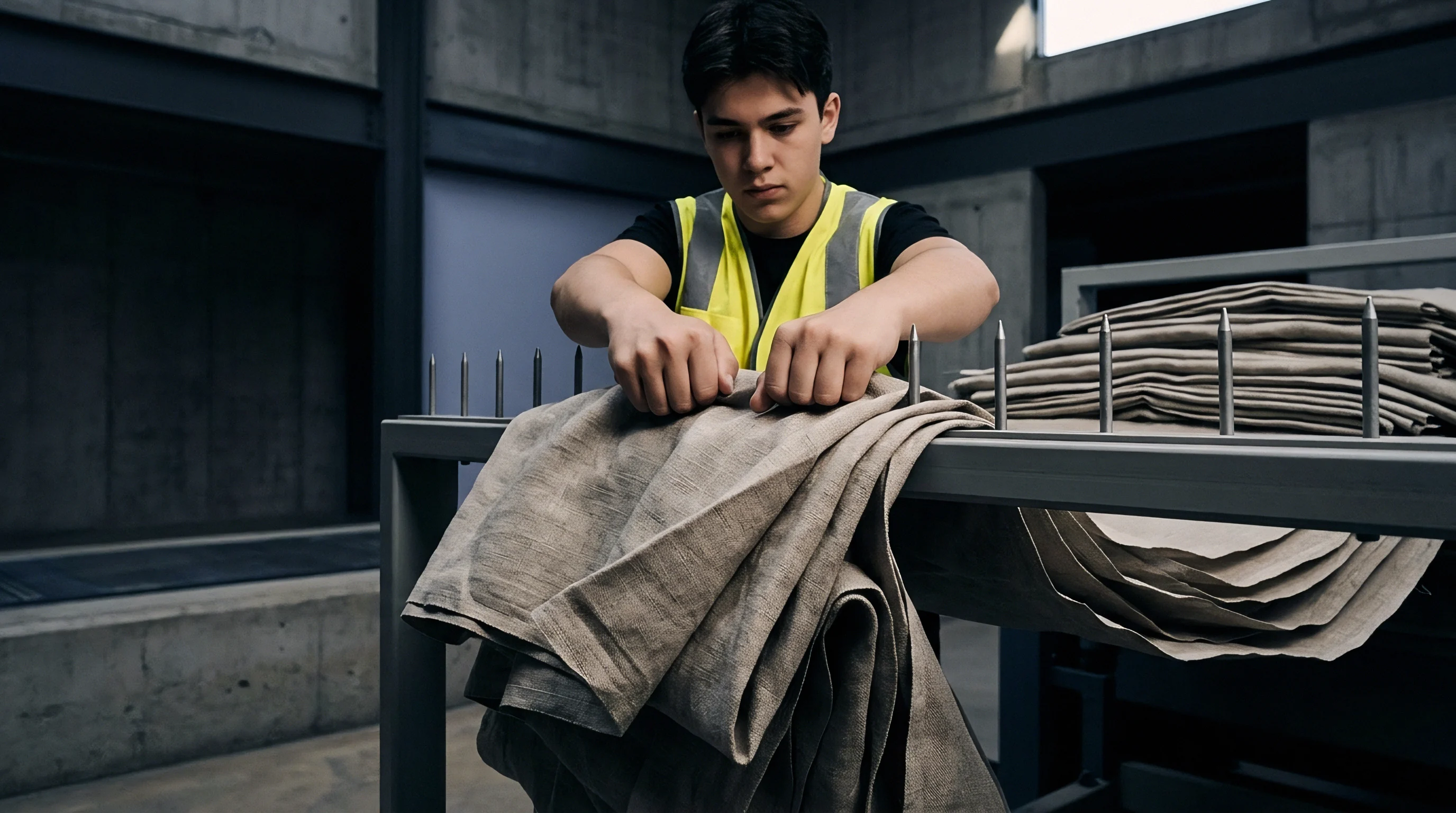
Bath
Liquid size boxes operating on high-speed slashing lines require continuous recirculation to maintain steady thermal energy and uniform chemical dispersion. Fine linen warps consume significant volume as they pass through the immersion tank, carrying away sizing liquor at rates governed by yarn absorbency and line velocity. Replenishing this consumed liquid with fresh concentrate without disturbing fluid consistency represents a core mechanical challenge during long sizing runs.

Recirculation Mechanics and Thermal Loops
Pumping size liquor through indirect steam-heated jackets prevents local concentration spikes caused by water evaporation. Direct steam injection introduces condensate directly into the size mixture, diluting the bath solids by as much as 1.5% per hour during extended creep-speed stops. Closed-loop heat exchangers, equipped with modulating control valves, regulate liquid box temperature within a half-degree Celsius band.
Flow rates within the recirculation loop must exceed the yarn absorption rate by a factor of three. High circulation velocity prevents dead zones where starch pastes settle, cool, and gel along tank corners. Fluid agitation must remain laminar; turbulent surface wave patterns cause foam formation that generates bare spots on fine flax yarns.
- Calibrate the optical refractometer sensor using distilled water at eighty-five degrees Celsius before filling the vessel.
- Deliver premixed size paste into the size vessel at a controlled feeding rate matching yarn consumption.
- Adjust steam valve position to maintain vessel fluid temperature within a band of plus or minus one degree.
- Draw manual check samples every two hours to verify automatic optical Brix calibration against dry weights.
- Purge filtration screens when feed pump differential pressure rises above half a bar.

Refractometer Monitoring and Concentration Correction
Optical Brix measurements taken directly from the size box overflow channel indicate changes in dissolved solids within seconds. Fine linen yarns possess variable natural wax contents (0.8% to 1.5% by weight) depending on retting completeness. As thousands of meters of grey flax warp transit the size vessel, natural waxes and short fibers leach into the liquor, altering the refractive index relative to actual starch solids content.
Digital inline refractometers equipped with automatic temperature compensation correct for thermal density shifts. Plant operators pair inline Brix readings with automated solvent addition dosing pumps. When concentration rises due to surface evaporation, automated valves inject preheated water at eighty-five degrees Celsius to stabilize solids content within 0.2 Brix of target values.
Failing to control size box fluid concentration results in uneven add-on percentages that cause severe yarn abrasion and loom stops during high-speed weaving.
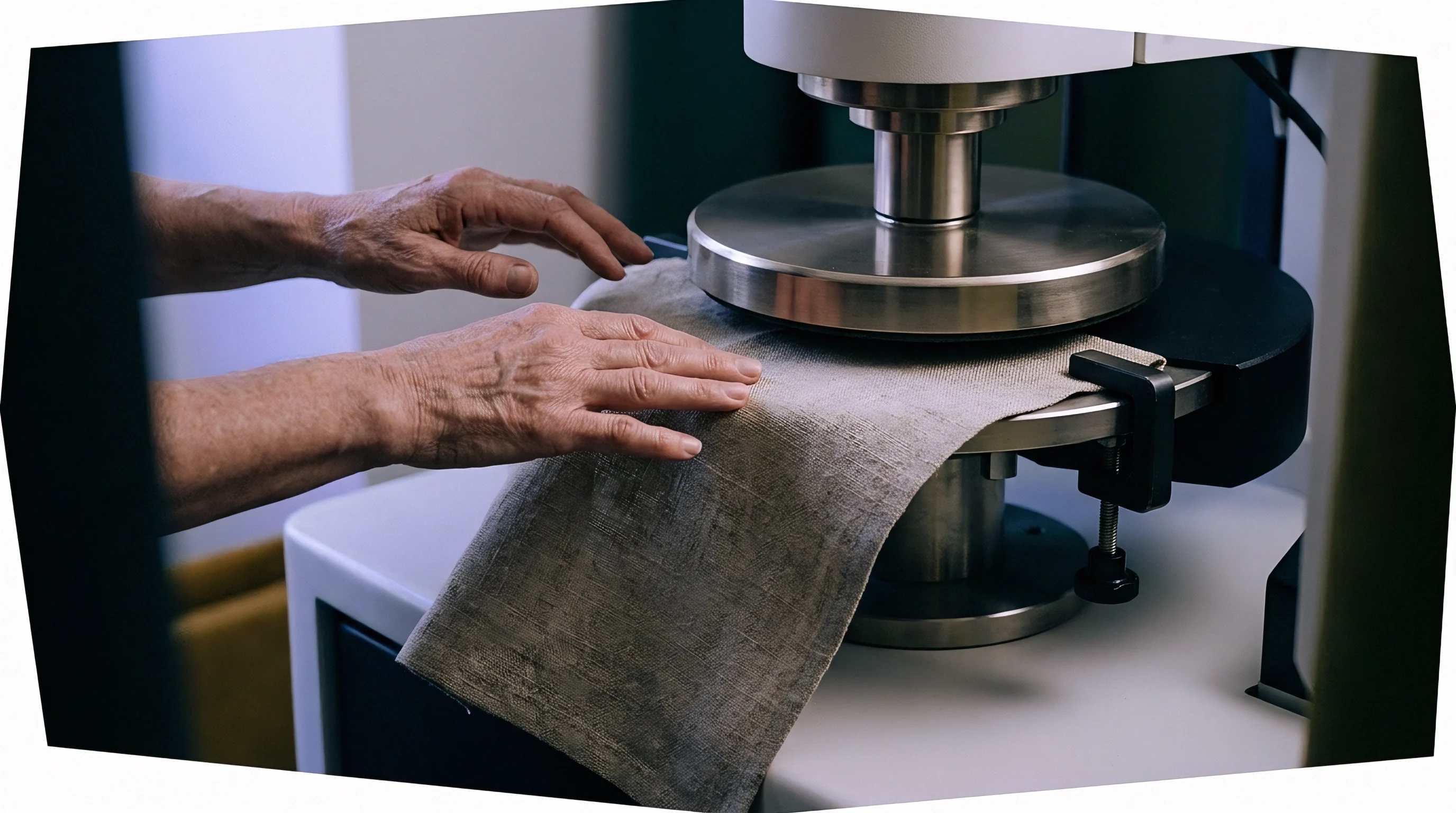

Penetration
Achieving proper liquid depth within fine flax yarns governs whether sizing chemicals form an anchor inside the fiber core or sit as an unattached surface shell. High-speed rapier and air-jet looms subject fine linen warps to peak shedding tensions reaching thirty centinewtons per end. Without proper internal fiber bonding, individual flax ultimates slip past one another within the yarn core, causing end breaks under loom acceleration.

What Squeeze Pressure Preserves Sheath Integrity at High Speeds?
Pneumatic loading on the rubber squeeze rolls regulates the balance between internal liquor uptake and external film build on fine linen warps. Squeeze rolls with synthetic rubber hardness ratings between fifty-five and sixty-five Shore A deliver optimal nip deformation under line pressures of fifteen to thirty-five kilonewtons per meter. High speed slashing increases the hydrodynamic force pushing liquid back against the squeeze nip entry point, demanding higher mechanical nip pressure to prevent excessive size pickup.
Low viscosity size liquids enter the yarn bundle rapidly under high nip pressures, filling spaces between flax ultimate fibers. High viscosity liquids resist penetration, leaving the core dry while building a heavy outer sheath. Squeeze roll pressure governs pickup.
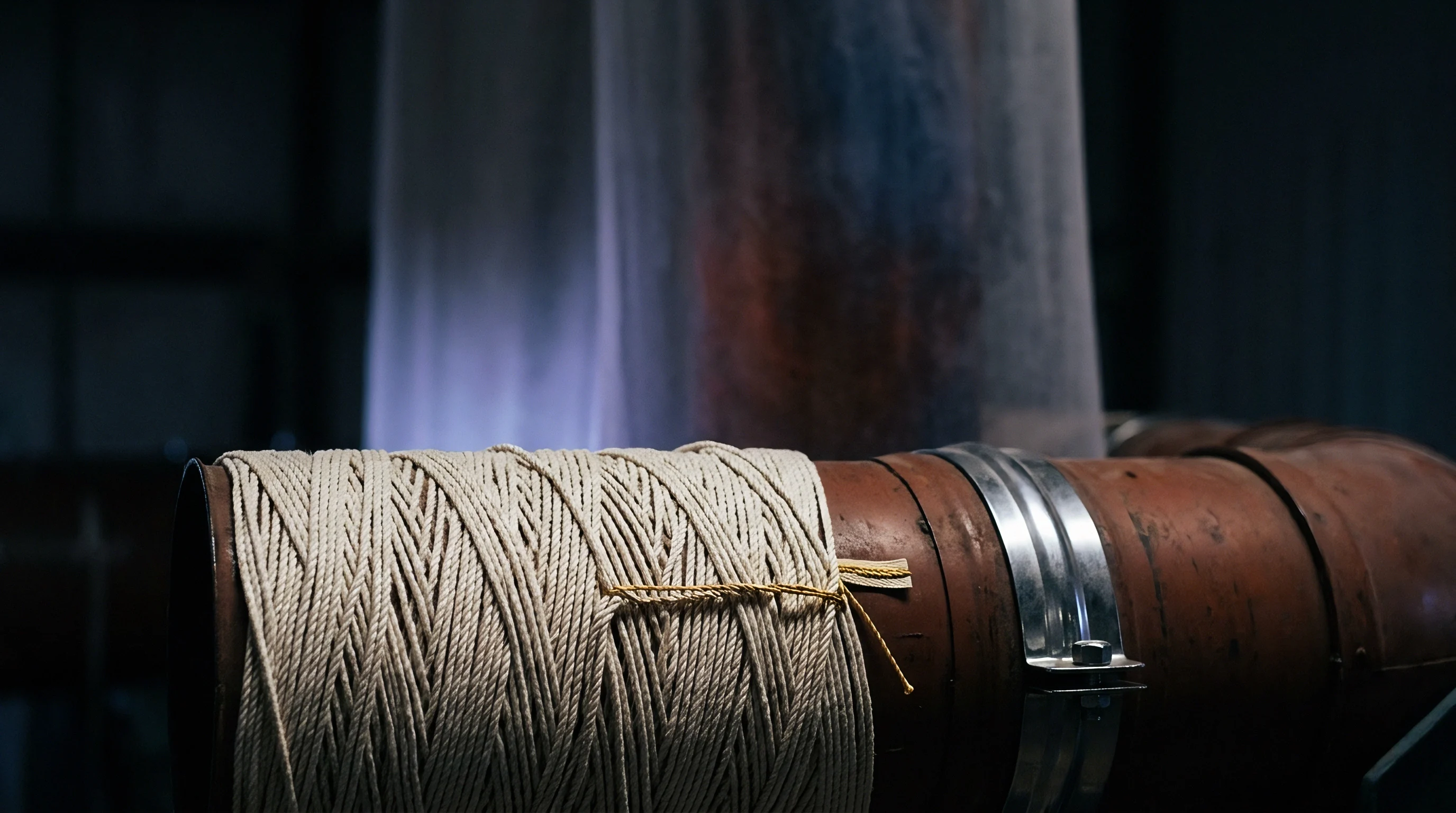
Fiber Bundle Anchoring versus Surface Coating
Fine flax yarns spun from long line flax strands present a stiff crystalline structure with limited inter-fiber space. Unlike porous cotton yarns, flax strands resist rapid fluid absorption. High speed sizing lines running NeL 60 warp sheets must force size paste into twenty to twenty-five percent of the yarn cross-sectional area while leaving seventy-five percent of the yarn core unbonded to preserve essential flexibility.
Microscopic cross-sectional analysis of dyed size samples verifies penetration depth. Excess penetration turns fine flax yarns into rigid rods that snap under heald frame shedding. Insufficient penetration leaves surface fibers unanchored, generating loose fuzz balls during reed beat-up.
- Crystalline Sheath Flaking occurs when excessive surface size dries into a brittle outer shell that breaks off under high reed beat-up forces.
- Core Starvation Weakness happens when high viscosity prevents liquor from entering yarn interstices, leaving internal flax fibers unbonded.
- Shed Hairiness Entanglement arises when inadequate surface lay allows protruding ultimate flax fibers to cling to adjacent warp ends.
- Crimp Differential Stripping develops during high-tension shedding when stiff surface coatings rupture along yarn flexure points.
ISO 13934 testing establishes that size penetration levels below twenty percent of yarn cross-section reduce warp tensile survival under rapier acceleration.
Sizing chemical suppliers frequently claim that unexpected film peeling stems entirely from unrefined flax pectin rather than inconsistent squeeze roller hardness.

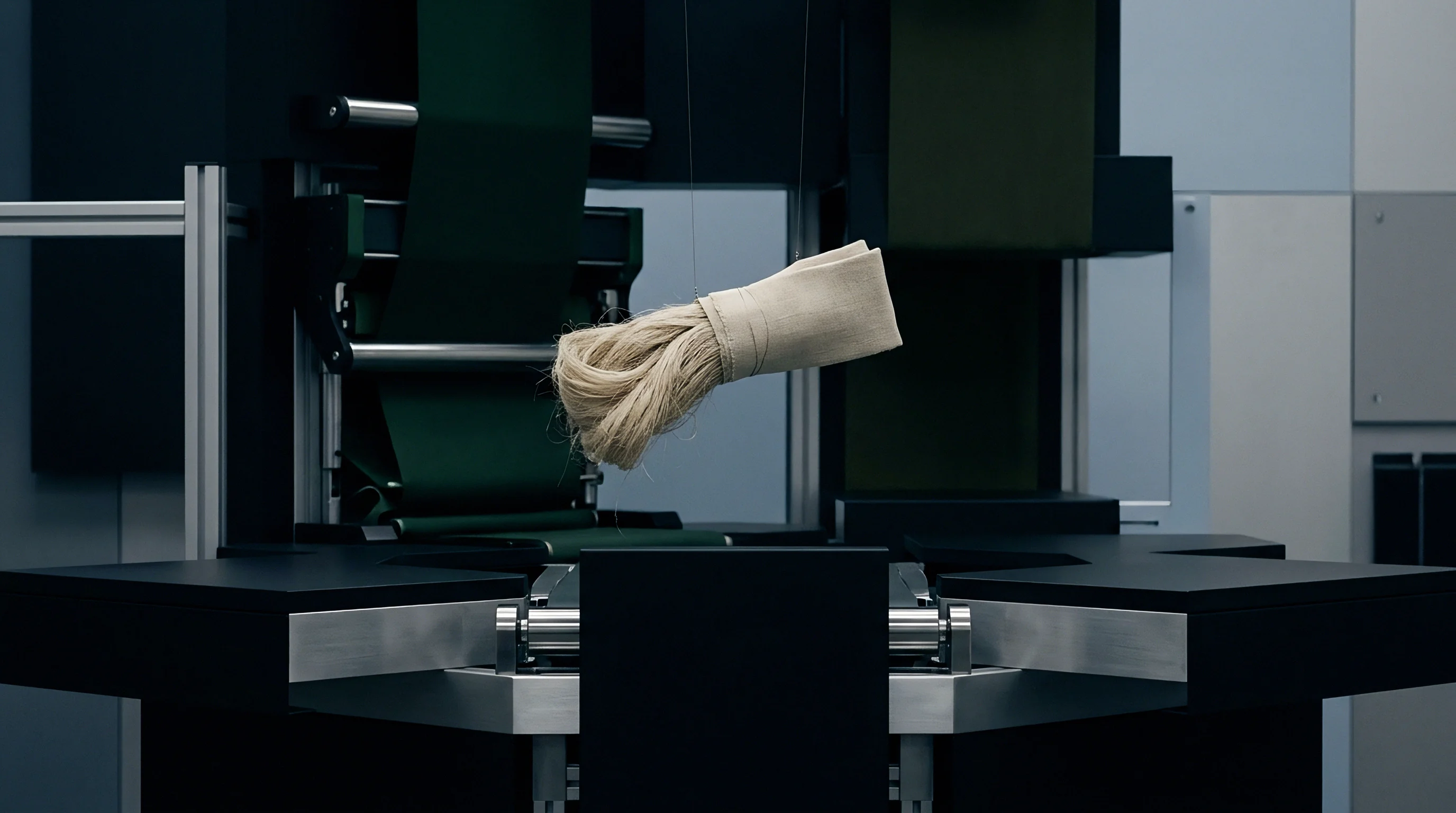
Shear
Velocity changes during machine start-up, creep speed operation, and full running speed alter fluid forces within the size box nip. Fine linen warps run on automated slashers experience rapid acceleration ramps from ten meters per minute during beam creel changes to full production speeds exceeding one hundred twenty meters per minute. Liquid sizing compounds must maintain consistent film-forming properties across these wide operational speed windows.

Speed Transitions and Viscosity Variations
Accelerating a slashing line from ten metres per minute creep mode to one hundred twenty metres per minute production mode increases fluid deformation rate by twelve fold. High shear rates inside the squeeze roller nip lower the dynamic viscosity of pseudoplastic size pastes. When line speed drops during creep operation, shear rate diminishes, causing liquor viscosity to rise instantly.
Higher viscosity during creep speed increases wet size pickup, loading the warp sheet with excess dry size solids. As the machine accelerates back to high speed, viscosity drops, reducing wet pickup and leaving portions of the warp under-sized. Automated speed-dependent squeeze roll pressure controls offset these viscosity fluctuations by raising nip pressure as machine speed decreases.
| Line Operating Mode | Line Speed (m/min) | Effective Shear Rate (s-1) | Apparent Viscosity (mPa.s) | Wet Size Pickup (%) | Dry Size Add-On (%) |
|---|---|---|---|---|---|
| Creep Speed | 10 | 850 | 125 | 82 | 9.8 |
| Ramp Acceleration | 45 | 3800 | 88 | 71 | 8.5 |
| Standard Production | 110 | 9300 | 48 | 61 | 7.3 |
| High Speed Target | 140 | 11800 | 38 | 56 | 6.7 |

Inline Acoustic and Rotational Viscometry
Continuous measurement devices mounted in the feed line sense real-time fluid resistance variations without interrupting production flow. Vibrating element acoustic sensors measure fluid damping directly inside the size vessel, updating viscosity values every second. Rotational inline viscometers measure resistance against a precision rotor driven at constant angular speed within the recirculation pipework.
Viscometer signal outputs integrate directly with slasher Programmable Logic Controllers (PLCs). When measured viscosity drifts beyond target bounds during high-speed runs, the control system adjusts dilution water injection valves or modifies steam heating cycles to restore viscosity target setpoints. Inline viscometers correct thermal drift.
Stable liquor viscosity across speed ramps maintains uniform add-on percentages from machine start to beam completion.
Whether ultra-high-frequency acoustic viscometers can detect localized starch chain degradation before measurable viscosity loss occurs on high-speed linen warps remains an open technical debate among mill engineers.


Transit
Moving fine linen warp threads smoothly through drying cylinders, lease rods, and headstock determines thread alignment and beam density. Linen fibers lack natural elasticity. High speed tension spikes encountered during transit through drying zones induce permanent yarn elongation, destroying residual elastic stretch needed during loom shedding.
Drying Cylinder Temperature Profiles
Steam pressures across consecutive Teflon-coated heating drums must drop gradually to prevent size skin baking and thermal shock. Wet linen warp sheets exiting the size box enter drying zones with fifty to seventy percent moisture content. The initial drying cylinders operate at reduced temperatures between sixty and seventy-five degrees Celsius to dry the surface film gently without causing size migration or film blistering.
Middle cylinders run at higher temperatures up to one hundred twenty degrees Celsius to evaporate core water content. Final drying drums drop back to sixty-five degrees Celsius to cool the warp sheet down before lease rod splitting. Over-drying fine linen below six percent moisture renders flax fibers glass-brittle, while under-drying above nine percent leads to mold growth and yarn sticking on weaver beams.

Lease Rod Separation Mechanics
Splitting the dried warp sheet into individual threads forces the solid size bridges between adjacent ends to fracture cleanly. Sizing liquor that bridges adjacent warp threads forms hard chemical bonds across yarn boundaries. High speed lease splitting breaks these inter-yarn bonds under tension.
Improper size viscosity creates excessive film bridging, increasing force demands on lease rods during separation. Heavy splitting forces strip protective size skins off fine NeL 70 yarns, exposing bare fiber filaments to friction in the loom harness. Correct viscosity minimizes inter-thread bridging, producing clean lease separation with minimal fiber hairiness generation.
- Cylinder Temperature Zone Control maintains initial drying drums at sixty-five degrees Celsius to stop size boiling and migration.
- Moisture Content Target Band locks residual moisture at seven to eight percent to retain inherent flax elasticity.
- Lease Rod Geometry Alignment sets splitting angles to minimize friction forces on fine NeL 70 yarns during separation.
- Headstock Winding Tension Limit holds winding draft below one half percent to prevent permanent thread elongation.
At one hundred twenty metres per minute, an offset of two degrees Celsius on the lead drying drum changes yarn moisture content by one full percentage point.
Incorporating ISO 7211 clause four governing warp length variation under tension into the grey cloth purchasing agreement forces sizing mills to guarantee maximum draft limits during headstock winding.


Yield
Financial return on fine linen weaving depends directly upon eliminating warp breakage stops through optimized sizing parameters. High speed rapier looms running NeL 60 plain weave constructions generate up to seven hundred picks per minute. Every warp stop consumes two to five minutes of loom downtime, generating start marks that drop finished cloth grades from first choice to second quality.

Loom Efficiency and Weft Insertion Rates
Air-jet and high-speed rapier machines running fine flax warps at seven hundred picks per minute require less than one warp stop per hundred thousand picks. Inadequate size viscosity control raises warp break rates to four or five stops per hundred thousand picks, reducing loom shed efficiency below eighty-five percent. Fine linen warps punish sizing errors.
Unscheduled loom stops burn shift profit. Machine stops on high-density linen constructions leave visible stop marks due to stress relaxation in the tensioned flax ends. Controlling size viscosity preserves film elasticity, suppressing warp stops and keeping loom efficiency above ninety-four percent.
| Performance Metric | Low Viscosity Control | Optimized Viscosity Control | High Viscosity Drift |
|---|---|---|---|
| Slashing Line Velocity (m/min) | 80 | 135 | 90 |
| Sizing Chemical Expense per 1000m (EUR) | 42.50 | 48.10 | 55.00 |
| Warp Stops per 100,000 Picks | 4.8 | 0.6 | 3.2 |
| Loom Shed Operational Efficiency (%) | 82.5 | 94.2 | 86.1 |
| Net Landed Cost per Metre Grey Cloth (EUR) | 3.85 | 3.32 | 3.68 |
Sizing Cost Structure and Capacity Economics
Chemical formulations, thermal energy, and machine capacity charges contribute to total sizing expenditure per thousand metres of warp. High quality fully hydrolyzed PVA and modified starch blends cost fifteen to twenty-five percent more per kilogram than raw starches. However, optimized formulations run at lower overall pick-up rates while yielding superior weaving performance.
Calculating total loom shed productivity demonstrates that investing in automated inline viscosity control systems amortizes across fine linen weaving runs within four months of continuous operation.