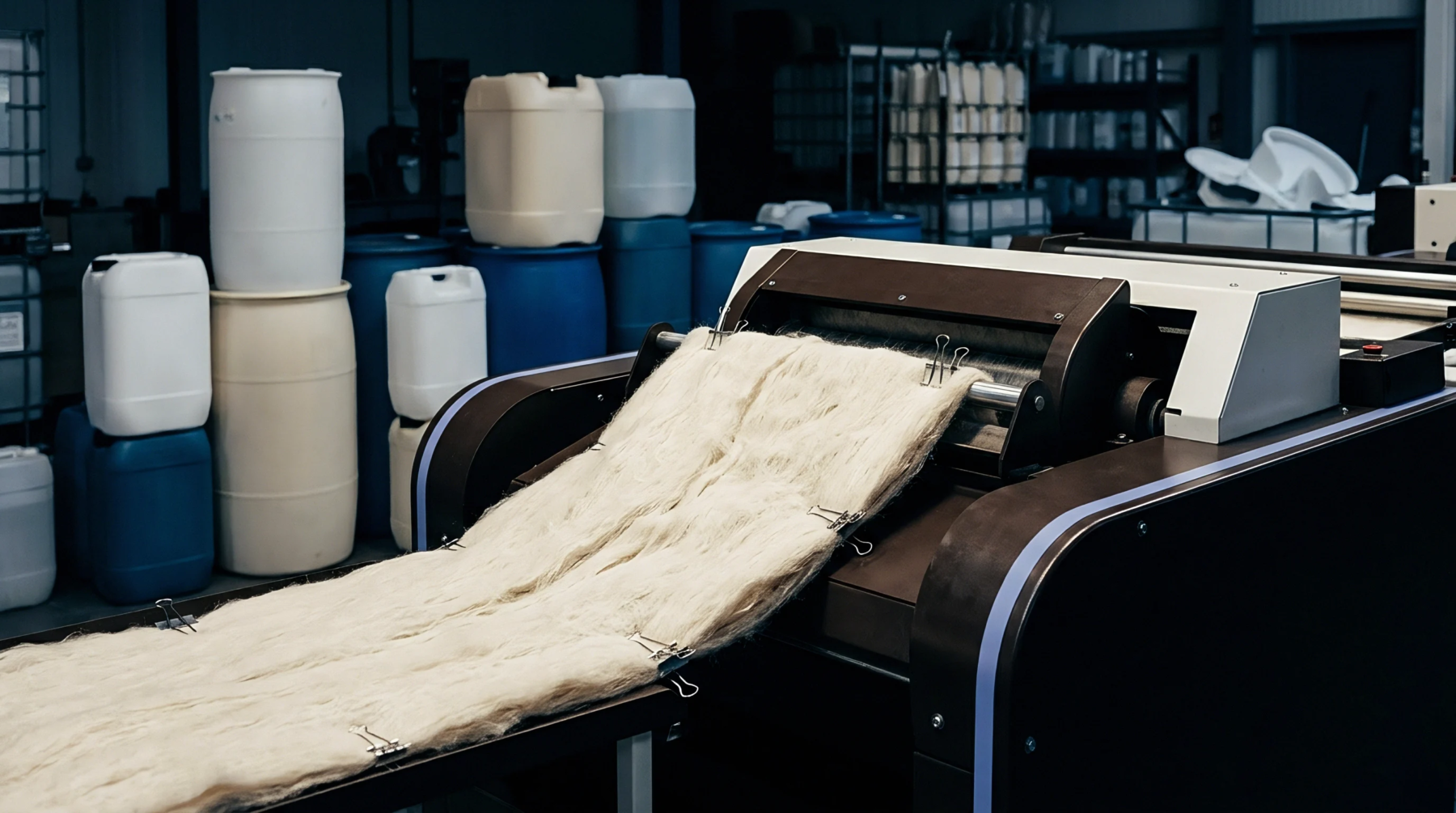
Geometric Irregularity
Structural irregularities in the longitudinal axis of plant stalks represent a deviation from the linear alignment required for high efficiency spinning. In large scale processing facilities, bast fiber crimp distortion occurs when the natural waviness of the scutched flax is altered by uneven mechanical tension or poor retting control.
Mechanical Influence
Mechanical stress applied during the hackling stage often exacerbates the frequency of these bends. When bast fiber crimp distortion is present in a large volume of the raw material, the resulting sliver shows increased mass variation. The pins on the drawing frame cannot effectively straighten fibers that have undergone permanent plastic deformation.
Such bends lead to premature fiber breakage and a reduction in the mean fiber length of the processed batch.
Processing Bound
Standard assessment protocols for raw flax include visual and instrumental checks for these deviations before the material enters the spinning line. The presence of bast fiber crimp distortion is usually documented on the mill receipt as a quality markdown. Once the material reaches the wet spinning trough, the temperature and moisture can sometimes relax minor distortions (but severe kinks remain locked into the yarn structure).
This permanent setting reduces the tensile strength of the finished linen thread and increases the hairiness of the fabric surface.