Chemical Degumming Thresholds for Cottonized Hemp Fiber Tariff Entry
Chemical degumming reduces hemp Klason lignin below 1.5 percent and dtex below 2.5, triggering HS 5302.90 tariff reclassification and trade remedy duties.


Classification
Entry under Chapter 53 of the Harmonized Tariff Schedule turns on physical and chemical boundaries that separate raw bast straw from cottonized fiber ready for short-staple spinning. Port inspectors evaluate incoming shipments by testing residual non-cellulosic content alongside physical staple dimensions. Raw decorticated hemp contains substantial amounts of pectin, hemicellulose, and Klason lignin, which bind single ultimate fibers into coarse technical bundles.
Chemical degumming dissolves these matrices, narrowing bundle thickness and shortening staple length to match cotton spinning profiles. That structural shift dictates whether a lot clears under raw bast fiber headings or secondary processed textile categories.

Bast Fiber Thresholds under Harmonized System 5302
The World Customs Organization separates raw or retted stock from processed fiber by measuring residual non-cellulosics and mean bundle dimensions. Raw hemp classified under heading 5302.10 generally shows linear densities above 15 dtex, with technical fiber lengths spanning from 100 millimeters to more than one meter.
Chemical degumming breaks these bundles apart into individual ultimate fibers. Once cottonized for ring or rotor spinning, the hemp exhibits staple lengths between 28 and 38 millimeters, while linear density falls to 1.2 to 2.5 dtex. Customs inspectors treat these dimensional drops as direct evidence of advanced industrial processing.
Residual Klason lignin content dropping below 1.2 percent by dry mass forces border reassessment under secondary processing codes.
Non Cellulosic Residue and Lignin Boundaries
Laboratory assays draw the line between raw scutched fiber and cottonized stock. Unprocessed hemp stalk typically carries 8.0 to 13.0 percent Klason lignin by weight and over 4.0 percent pectin. Degumming extracts these non-cellulosics, eliminating measurable pectin and pulling Klason lignin below 1.5 percent.
Border authorities monitor these chemical thresholds to catch processed stock declared as raw bast at lower tariff rates. Any lot showing Klason lignin under 1.0 percent alongside hemicellulose levels below 3.5 percent meets the technical standard for cottonized fiber, requiring entry under subheading 5302.90 or related processed headings.
| Processing State | Harmonized System Code | Klason Lignin (% dry mass) | Linear Density (dtex) | Mean Staple Length (mm) |
|---|---|---|---|---|
| Raw or Retted Hemp Straw | 5302.10.00 | 8.0 – 13.0 | 15.0 – 45.0 | 100 – 1500 |
| Scutched / Combed Bast Fiber | 5302.90.10 | 3.5 – 7.9 | 5.0 – 14.9 | 50 – 120 |
| Cottonized Hemp Staple | 5302.90.90 | 0.5 – 1.4 | 1.2 – 2.5 | 28 – 38 |
- Inconsistent Decortication Records Discrepancies between field harvest logs and mill delivery weights signal mixed fiber grades that fail initial customs checks.
- Unverified Chemical Residue Reports Absence of certified testing for residual sodium hydroxide leaves shipments vulnerable to physical border sampling.
- Mismatched Fiber Fineness Declarations Declaring fine dtex values alongside raw straw tariff codes triggers automated customs audit alerts.
- Missing Batch Moisture Regains Failing to standardize dry mass calculations creates artificial shifts in measured chemical percentages during border testing.
Entering processed bast fiber under raw material codes brings retroactive duty assessments, civil penalties, and port holds.
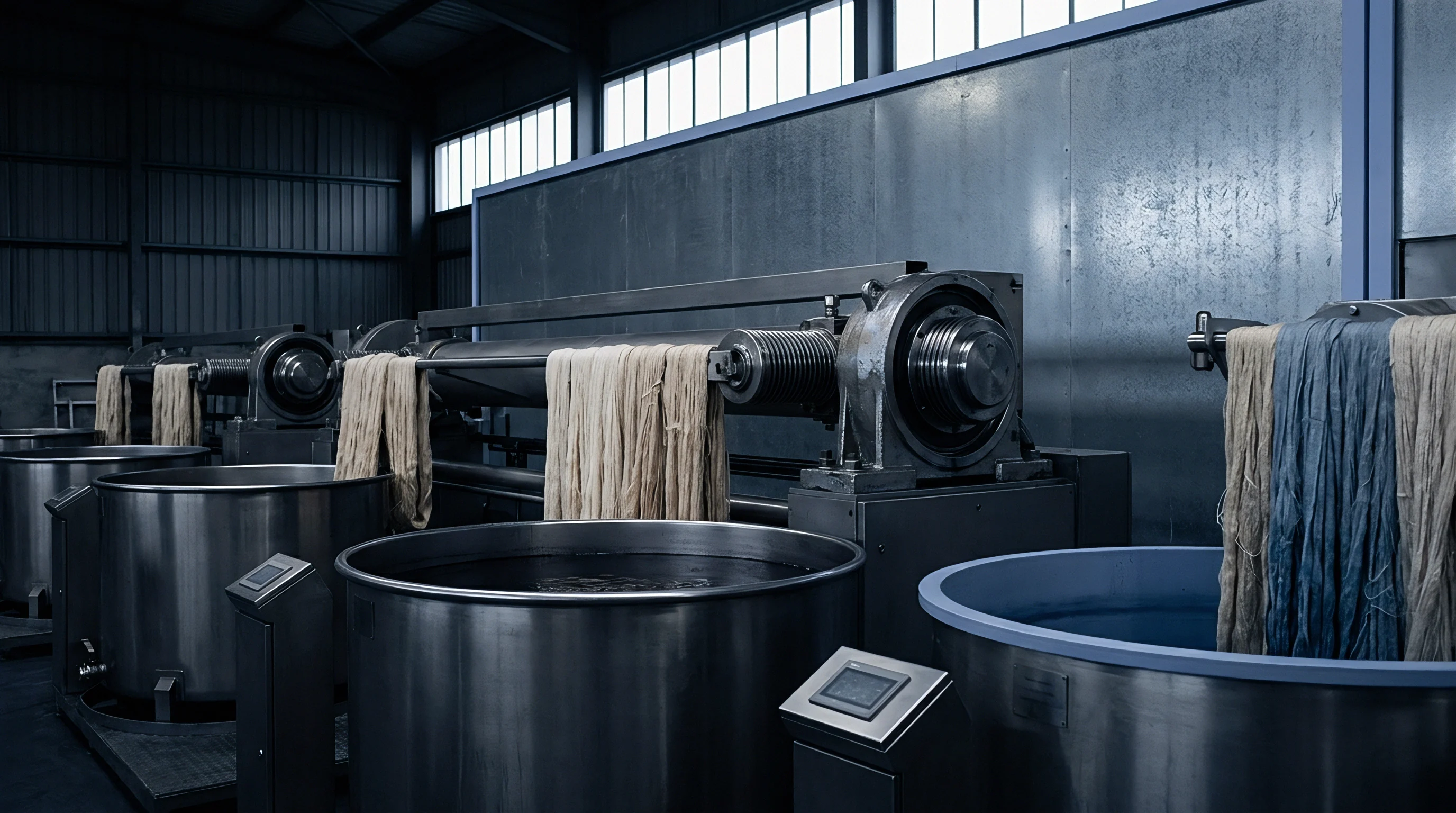

Lye
Hot sodium hydroxide baths dissolve the pectic binders and hemicellulose networks holding bast fibers together. The caustic solution penetrates cell walls to cleave ester bonds across intercellular lignin structures. Controlling bath temperature, alkali concentration, and residence time governs total non-cellulosic mass loss during digestion.

Alkaline Extraction Parameters for Staple Shortening
Mills run cottonization by cooking raw decorticated hemp in pressurized vessels. Caustic liquor concentrations range from 10 to 25 grams of sodium hydroxide per liter at temperatures between 95 and 130 degrees Celsius. Runs last between 60 and 120 minutes, set according to incoming fiber coarseness and target lignin extraction.
Adding chelating agents such as tetrasodium EDTA or sodium silicate sequesters metal ions and prevents hydrolytic damage to the cellulose. Solubilized hemicellulose and pectins wash out with the liquor, generating an overall mass loss of 18 to 26 percent of initial dry weight. The remaining cellulose staples are then ready for mechanical opening.
Failure to meet TAPPI T222 chemical residue standards triggers secondary laboratory sampling and automatic clearance holds.

Enzymatic and Acid Polishing Procedures
After alkaline cooking, fiber bundles are washed and neutralized. Rinsing with dilute acetic or sulfuric acid at 1.5 grams per liter brings pH down to neutral, arresting further cellulose swelling.
Subsequent treatments with pectinase or xylanase enzymes clear remaining surface debris without degrading structural cellulose chains. This polishing step brings staple fineness to 1.5 dtex while keeping residual ash below 0.5 percent. Thorough washing also removes alkali salts that skew gravimetric tests at customs laboratories.
| Process Stage | Chemical Reagents Used | Operating Temperature (°C) | Target Compound Removed | Cumulative Mass Loss (%) |
|---|---|---|---|---|
| Primary Digestion | NaOH (12-20 g/L) + Sodium Silicate | 105 – 125 | Pectin & Soluble Lignin | 14.0 – 18.0 |
| Secondary Wash | Pectinase Enzyme (2.0 g/L) | 50 – 55 | Residual Hemicellulose | 19.0 – 22.0 |
| Acid Neutralization | CH3COOH (1.5 g/L) | 20 – 30 | Alkali Salts & Ash | 22.5 – 25.5 |
- Raw decorticated hemp fiber enters a pressurized reaction vessel containing twelve grams per liter sodium hydroxide at ninety-five degrees Celsius.
- Mechanical agitation proceeds for ninety minutes to dissolve outer pectin layers and weaken intercellular lignin bridges.
- Hot water rinsing flushes dissolved hemicellulose and residual alkali before secondary acid neutralization.
- Mild organic acid wash brings batch pH down to six point five, stopping cellular hydrolysis.
Natural variations in harvest chemistry do not excuse residual lignin readings that exceed declared tariff thresholds.


Assay
Border laboratories use gravimetric, spectroscopic, and microscopic assays to measure non-cellulosics in imported bast shipments. Core samples pulled from five percent of bales in a consignment undergo standard testing to verify manifest descriptions against physical fiber properties.

Can Chemical Degumming Shift Bast Fiber HS Headings?
Customs authorities reclassify bast fiber whenever degumming alters its structural identity and spinning performance enough to cross heading definitions. Standard testing relies on TAPPI T222, which applies 72 percent sulfuric acid to hydrolyze cellulosic carbohydrates, leaving insoluble Klason lignin for gravimetric measurement.
If tests show Klason lignin below 1.5 percent with median fiber lengths under 40 millimeters, customs analysts log the lot as cottonized fiber. That quantitative finding supersedes invoice descriptions of raw or scutched hemp and serves as the legal basis for reclassification.
Laboratory Bench Protocols for Border Verification
Preparation begins by drying samples to constant weight at 105 degrees Celsius, followed by ethanol-benzene extraction to remove waxes, fats, and other extractives. The dry residue undergoes acid digestion to isolate non-cellulosic mass fractions, with standard moisture regain set at 12.0 percent under ISO 6741.
Scanning electron microscopy verifies whether middle lamellae remain intact. Unprocessed bundles display multicellular clusters bound by pectin-lignin matrices, whereas cottonized fibers show individual lumens with smooth outer walls. Combining gravimetric data with cross-sectional micrographs provides definitive proof of chemical modification.
- Klason Lignin Test Verification Executing TAPPI T222 acid digestion quantifies residual structural lignin to determine exact chemical processing depth.
- Linear Density Measurement Check Bench testing via ASTM D1577 measures single-fiber dtex values to confirm individual ultimate fiber separation.
- Ash Content Tolerance Review Burning dry sample mass at 575 degrees Celsius identifies inorganic salt deposits left by improper chemical rinsing.
- Cross Sectional Lamella Audit Scanning electron microscopy verifies complete dissolution of intercellular pectin bridges between ultimate fibers.
Whether international tariff schedules will eventually establish a unified numeric lignin percentage threshold for cottonized hemp across all regional trade blocs remains uncertain.


Customs
Clearance for cottonized bast stock requires a technical trail linking field harvest logs to mill-level chemical processing records. Documentation must prove continuous custody from agricultural decortication through finishing. Customs officers review transaction certificates, chemical consumption sheets, and lab reports before releasing cargo from terminal holding areas.
Dossier Assembly for Port Verification
Importers prepare clearance dossiers before vessels dock, including primary certificates of origin, mill records showing alkali consumption per tonne of raw input, and third-party test reports issued under ISO 17025 accreditation.
Customs auditors check mass balances across the file: raw tonnage fed into digestion vessels must balance against finished cottonized output once standard process losses are factored in. Unexplained gaps between raw input and exported volume point to unverified blending, which triggers immediate border holds.
A complete mill processing ledger with verified chemical batch weights prevents border holds better than any post-entry laboratory defense.

Chain of Custody and Mill Inspection Protocols
Supply chain verification relies on batch tracking across each chemical treatment stage. Mills tag finished bales with lot numbers tying the fiber directly to specific digestion runs.
For shipments out of major Chinese processing hubs, importers obtain plant production logs matching decorticated hemp inputs against caustic soda purchase invoices. This paperwork confirms that cottonization took place at the declared site, countering fraudulent origin claims aimed at dodging trade remedies or tariff surcharges.
- Initial Entry Document Review Entry clerks cross-check declared HS codes against attached mill lab test reports to identify chemical discrepancies before physical clearance.
- Physical Sampling at Port Dock Customs inspectors draw representative cross-sectional samples from five percent of imported bales for independent laboratory analysis.
- Laboratory Bench Digestion Audit Official chemists execute sulfuric acid dissolution tests to determine exact non-cellulosic mass percentages against manifest claims.
- Final Tariff Rate Reconciliation Clearance officers compare laboratory lignin findings against tariff schedules to issue binding duty assessments or administrative holds.
Contracts incorporating ICC Model Clause 312 force processing mills to absorb all retroactive tariff adjustments resulting from inaccurate chemical degumming declarations.

Tariff
Tariff assessments on cottonized bast fiber weigh non-preferential origin rules against processing benchmarks that change how raw materials are classified. Moving from raw to processed status affects base duties, trade remedies, anti-dumping actions, and country-of-origin labeling rules in destination markets.
Duty Structure and Non Preferential Origin Impact
Under non-preferential origin rules, chemical degumming does not confer origin unless substantial transformation criteria are met. Tariff heading 5302 admits raw or retted hemp duty-free or at minimal rates in most regions, whereas cottonized staple entered under 5302.90 falls into higher brackets.
For fiber originating in countries covered by Section 301 tariffs or specific trade remedy orders, correct classification governs final duty costs. Substantial transformation requires a four-digit heading shift or specific recognized processing stages; alkaline boiling without subsequent yarn spinning is rarely sufficient to change non-preferential origin.

Worked Financial Model of Clearance Reclassification
A 20-tonne shipment of hemp fiber invoiced at $2,500 per metric tonne carries an entry valuation of $50,000. Declared under raw hemp lines at 0.0 percent base duty, the initial duty calculation is $0.
Border testing showing Klason lignin at 0.8 percent forces reclassification to cottonized hemp under tariff line 5302.90.90, which carries a 4.5 percent base duty and a 25.0 percent trade remedy surcharge.
| Cost Component | Declared Status (Raw Fiber) | Reclassified Status (Cottonized) | Financial Variance ($) |
|---|---|---|---|
| Base Fiber Valuation (20 Tonnes) | $50,000 | $50,000 | $0 |
| Standard Duty Rate | 0.0% ($0) | 4.5% ($2,250) | +$2,250 |
| Trade Remedy Surcharge | 0.0% ($0) | 25.0% ($12,500) | +$12,500 |
| Misdeclaration Administrative Fine | $0 | 15.0% ($7,500) | +$7,500 |
| Port Demurrage (14 Days Inspection) | $0 | $4,200 | +$4,200 |
| Total Landed Clearance Cost | $50,000 | $76,450 | +$26,450 |
Inconsistent chemical processing increases landed cost volatility far more than transatlantic ocean freight rate spikes.
Importers who verify chemical degumming parameters at the origin mill maintain stable landed costs while unverified shipments risk severe border penalties.