Quantifying Non Preferential Origin Threshold Limits for Cross Border Linen Chemical Finishing Protocols
Chemical finishing confers non-preferential origin only when value-added thresholds match local customs rules under documented transformation.


Vat
Chemically modifying woven flax alters its physical behavior and its commercial standing in equal measure. Industrial wet processing uses aqueous or solvent baths to impart permanent performance traits to raw greige linen ~ commonly through liquid ammonia immersion, resin cross-linking, enzyme softening, fluorocarbon water-repellent coatings, or flame-retardant impregnation. Each run shifts the substrate’s mass, reorganizes its crystal structure, and adds processing cost.
In liquid ammonia finishing, flax fibers enter anhydrous ammonia chilled to minus thirty-three degrees Celsius. The solvent swells the cell walls, transforming the native Cellulose I crystal lattice into Cellulose III. That shift improves crease recovery, helps preserve tensile strength, and curbs lint shedding in commercial wash cycles.
Resin cross-linking relies instead on dimethyloldihydroxyethyleneurea or polycarboxylic acids cured under acidic conditions, bridging hydroxyl groups between neighboring cellulose chains at tightly controlled temperatures between one hundred fifty and one hundred eighty degrees Celsius.
Incoming greige fabric reaches the finishing plant wound on large rolls.
The dry weight added during finishing depends on wet pickup rates and the active solids content of the bath. Heavy resin applications typically raise dry fabric mass by two to six percent, while fluorocarbon water-repellent polymers contribute one to three percent. Conversely, enzymatic desizing and cellulase bio-polishing shave mass off the cloth by stripping away loose surface fibrils and pilling precursors.
Between chemical purchases and the energy required to cure them, these wet stages account for much of a mill’s total finishing outlay.
Finishing operations that fail to permanently alter cellular structure or fabric tariff classification do not shift non-preferential origin.

Cross Linking and Ammonia Wet Processing Dynamics
Whether a finish bonds permanently depends on reaction kinetics and heat control. Handling anhydrous liquid ammonia demands continuous vapor recovery and prompt steam quenching so the flax fibers do not degrade. Operators regulate bath concentration, fabric tension, and dwell time through each continuous pass.
For resin cross-linking, the reaction requires exact catalyst dosing ~ generally magnesium chloride or zinc nitrate ~ to lock the polymer into the cellulosic matrix.
Ammonia immersion fundamentally alters the fiber’s internal hydrogen bonding network.
Under-curing leaves free monomer residues or unreacted formaldehyde on the cloth, breaching certification limits like OEKO-TEX Standard 100 Annex 6. Over-curing runs the opposite risk: excessive heat degrades the cellulose, sometimes cutting warp tear strength by more than thirty percent. To verify recipe compliance, mill technicians log bath pH, chemical concentration, dwell time, and curing temperatures for every dye lot running through the stenter frames.
| Process Protocol | Primary Chemical Agent | Temperature Range | Mass Change Range | Primary Structural Result |
|---|---|---|---|---|
| Anhydrous Ammonia | Liquid Anhydrous NH3 | -35 to -33 C | -0.5% to +0.2% | Cellulose I to Cellulose III lattice shift |
| Resin Cross-Linking | DMDHEU / Polycarboxylic Acid | 150 to 180 C | +2.0% to +6.0% | Inter-molecular hydroxyl covalent cross-links |
| Enzymatic Bio-Polishing | Acid / Neutral Cellulase | 45 to 55 C | -1.5% to -4.0% | Selective hydrolysis of surface micro-fibrils |
| Fluorocarbon Coating | C6 Fluoro-chemical Polymer | 130 to 160 C | +1.0% to +3.0% | Low surface energy hydrophobic film deposition |

Substrates and Finish Retention Metrics
Finish durability is gauged through standardized wash testing. Under ISO 6330 laundering protocols, a durable finish must maintain its functional properties past fifty commercial wash cycles. Fugitive or temporary softeners, by contrast, wash out within five launderings, providing a transient hand feel without permanently altering how the fabric performs.
Chemical dosing logs must reconcile directly with measured fabric weight gains.
Customs auditors distinguish sharply between durable chemical transformations and superficial topical coatings. Establishing that a process is permanent takes hard documentation of chemical bonding ~ such as fixed resin mass or irreversible lattice conversion ~ backed by mill batch sheets detailing every chemical addition.
- Anhydrous Ammonia Bath Sub-zero liquid ammonia alters the cellulose crystal lattice permanently.
- Thermosol Curing Range High-temperature fixation chambers drive covalent bonding between cross-linking resins and flax hydroxyls.
- Enzyme Hydrolysis Reactor Temperature-controlled jet machines hydrolyze protruding surface micro-fibrils to soften the hand and prevent pilling.
- Fluorocarbon Pad Application Padding mangles spread low-surface-energy fluoropolymer emulsions uniformly across the woven structure.
Proprietary chemical recipes are frequently shielded as trade secrets and omitted from commercial invoices, creating documentation gaps during origin reviews.


Substance
Whether cross-border finishing confers economic nationality turns on the legal standards of the importing jurisdiction. Non-preferential origin rules govern basic tariff application, trade remedy measures like anti-dumping duties, quotas, and country-of-origin labeling. How customs administrations evaluate wet processing varies widely from one regime to another.
Under Article 60(2) of the Union Customs Code (Regulation 952/2013), goods produced across multiple jurisdictions take origin where they underwent their last substantial, economically justified processing. For textiles in Chapter 53 of the Harmonized System, binding list rules dictate which operations qualify. Minor finishing steps ~ calendering, scouring, or routine softening ~ never meet the EU threshold for substantial transformation.
Auditing authorities scrutinize documented line-item costs rather than blended mill estimates.
The United States applies 19 CFR 102.21 to determine textile origin. For woven linen under HS 5309, origin almost always attaches where fabric formation took place ~ namely, the weaving mill. Applying wet chemical finishes to imported greige fabric will not confer US origin unless the operation triggers a specific tariff shift permitted under the section rules.
Under European Union non-preferential origin list rules, chemical finishing confers origin on greige fabric only when accompanied by full dyeing or printing and at least two specific preparatory or finishing operations where the value added exceeds forty-five percent of the ex-works price.
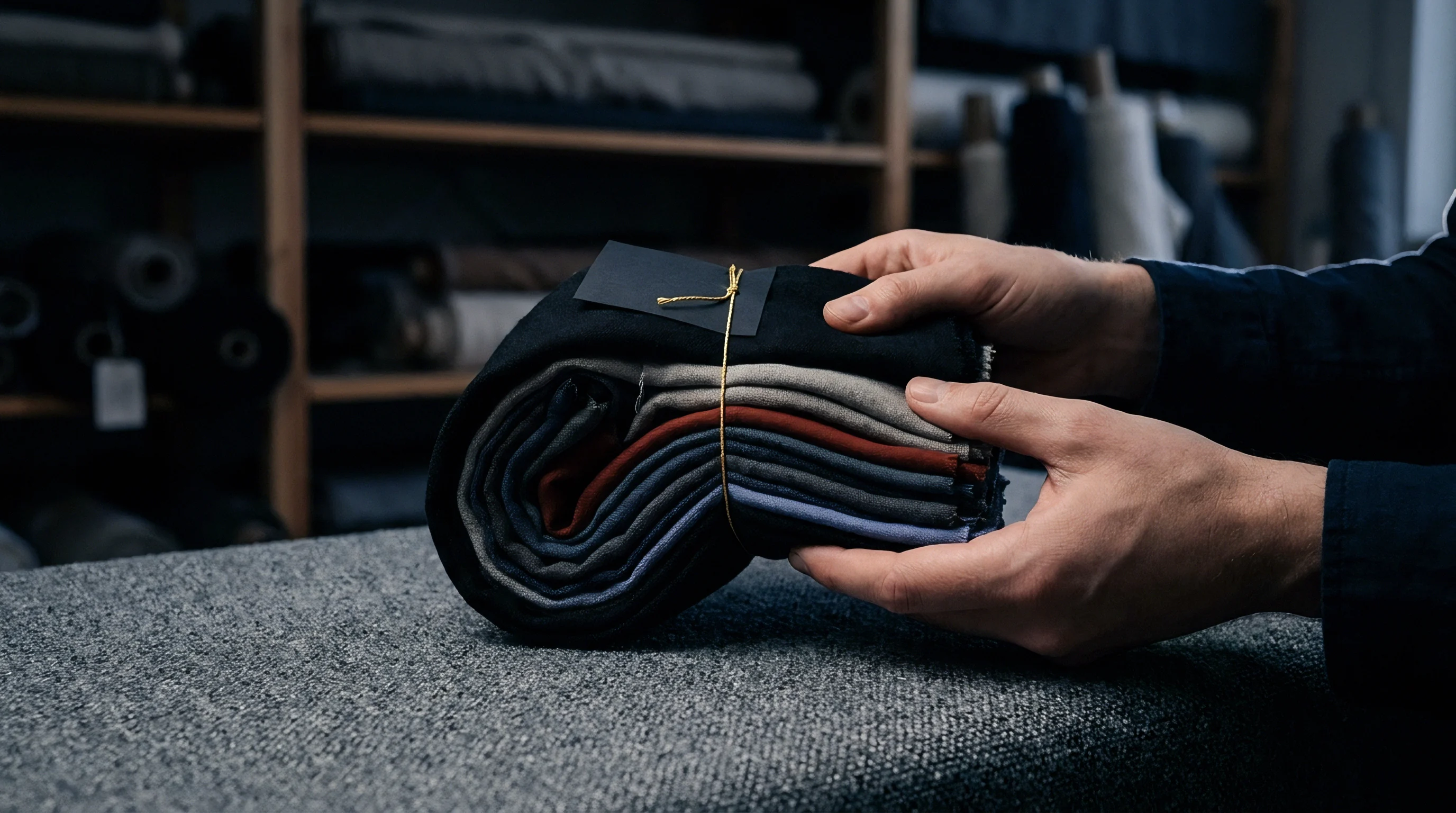
Can Chemical Finishing Confer Non Preferential Origin Status?
Wet finishing alone rarely confers origin without an accompanying change in tariff classification or substantial manufacturing. Turning unbleached linen yarn (HS 5306) into finished cloth confers origin because the weaving operation creates a four-digit heading change from yarn to fabric. In contrast, running imported woven greige (HS 5309) through wet finishing leaves the cloth under heading 5309, failing the standard tariff-shift test unless explicit list exceptions apply.
These classification benchmarks leave little margin for administrative discretion.
EU list rules for HS 5309 allow finishing to confer origin only under a strict compound test. The process must incorporate dyeing or printing alongside at least two substantial finishing operations, such as mercerization, flame-retardant application, preshrinking, or resin impregnation. On top of those physical steps, the operations must generate enough local value to clear the statutory percentage of the finished ex-works price.
| Jurisdiction | Legal Framework | Primary Origin Criterion | Finishing Alone Confers Origin? | Ad Valorem Threshold Requirement |
|---|---|---|---|---|
| European Union | UCC Reg 952/2013 Art 60(2) | Specific List Rule / Last Substantial Process | Conditional (Dyeing + 2 Finishes) | 45% Ex-Works Value Add |
| United States | 19 CFR 102.21 Rules of Origin | Fabric Formation (Weaving) | No (Except specific coated HS 59) | Not applicable for fabric heading shift |
| United Kingdom | Customs Regulations 2020 | Substantial Transformation / List Rules | Conditional (Dyeing + 2 Finishes) | 50% Build-down Value Method |
| Japan | Customs Tariff Law Art 4-2 | Change in Tariff Heading (CTH) | No (Weaving sets origin) | 40% Direct Production Cost |

Ad Valorem Calculations and Cost Distribution
Meeting ad valorem origin criteria requires documented accounting of direct production costs incurred within the finishing country. The value-added ratio compares domestic finishing expenditures against the ex-works value of the finished cloth:
Value Add Ratio = ((Ex-Works Price – Non-Originating Greige Fabric Cost) / Ex-Works Price) × 100
Allowable direct costs include chemical auxiliaries, machine operator labor, process energy consumed by finishing ranges, and depreciation on dedicated machinery. Customs auditors systematically disallow general overhead, freight, insurance, administrative salaries, and profit margins from these direct production calculations.
An origin claim stands or falls on the plant’s underlying production records.
Consider a cross-border scenario where greige linen woven in Country A at 3.50 Euros per meter ships to Country B for liquid ammonia treatment and resin cross-linking. If the finishing plant in Country B adds 1.20 Euros in chemical and utility costs plus 0.80 Euros in direct labor, and sells the cloth ex-works at 6.20 Euros per meter, the resulting value addition comes to forty-three point five percent. Because that falls short of the statutory forty-five percent threshold, non-preferential origin stays anchored in Country A.
Declaring origin based on non-qualifying finishing operations exposes the importer to retroactive duty assessments, cargo holds, and statutory penalties.

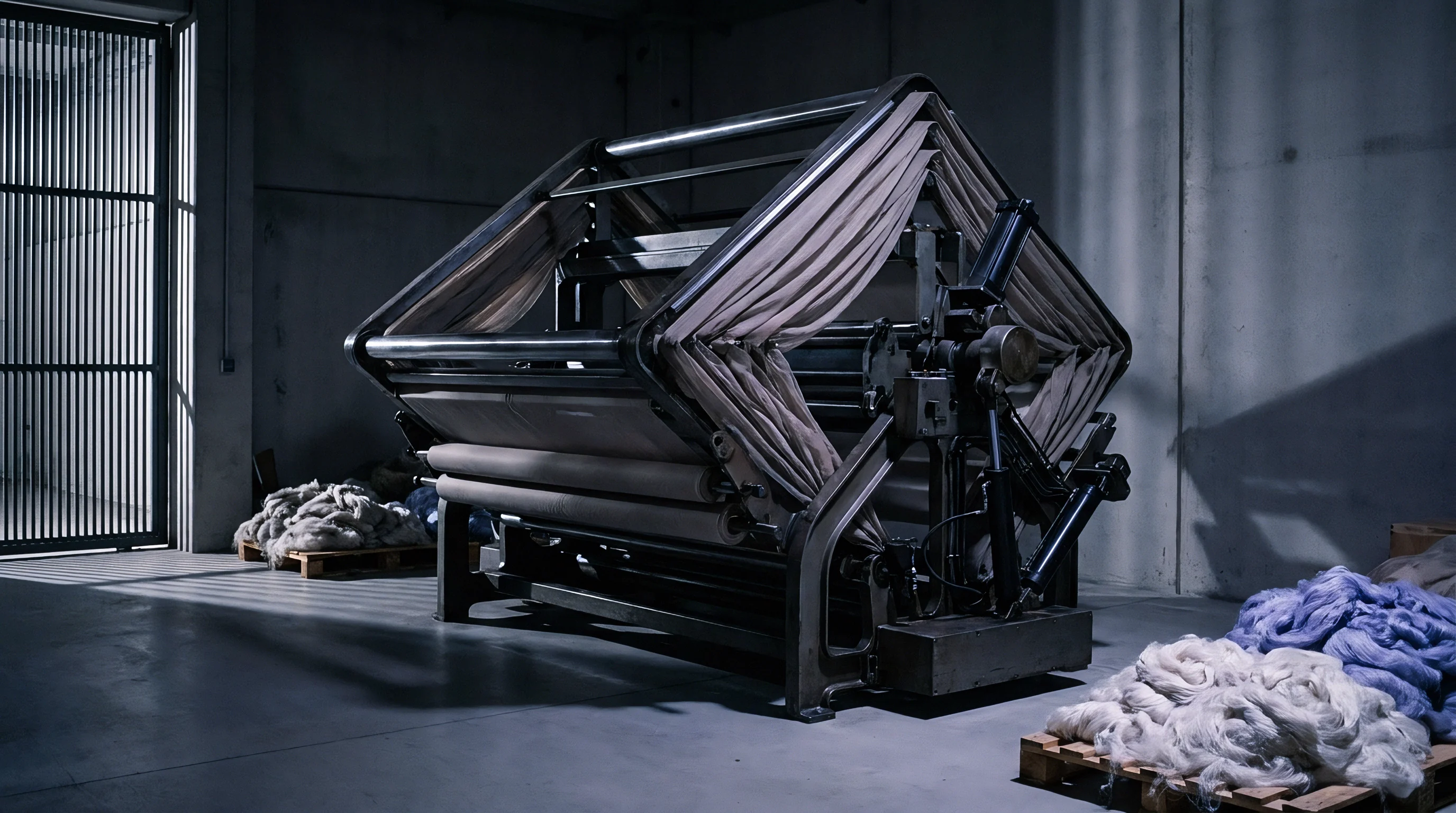
Trace
Tracing goods across multiple borders requires complete alignment between physical lots and transactional paperwork. Audits work back from the finished fabric through wet processing, weaving, and yarn spinning. Customs officials compare lot-level production dockets against customs declarations and shipping manifests to catch undocumented substitutions.
Audit teams pull individual lot route sheets to verify processing chronologies.
Physical segregation and roll tracking keep greige fabric linked to its origin papers as it moves through the plant. Finishing mills rely on shop-floor routing sheets that record incoming roll numbers, tare and gross weights, recipe identifiers, machine operator logs, and final roll measurements. Any unexplained divergence between input poundage and finished yardage suggests unrecorded lot commingling or material substitution.
“Contractual claims of origin require complete chemical dosage logs and matching weighbridge tickets at every intermediate processing facility.”
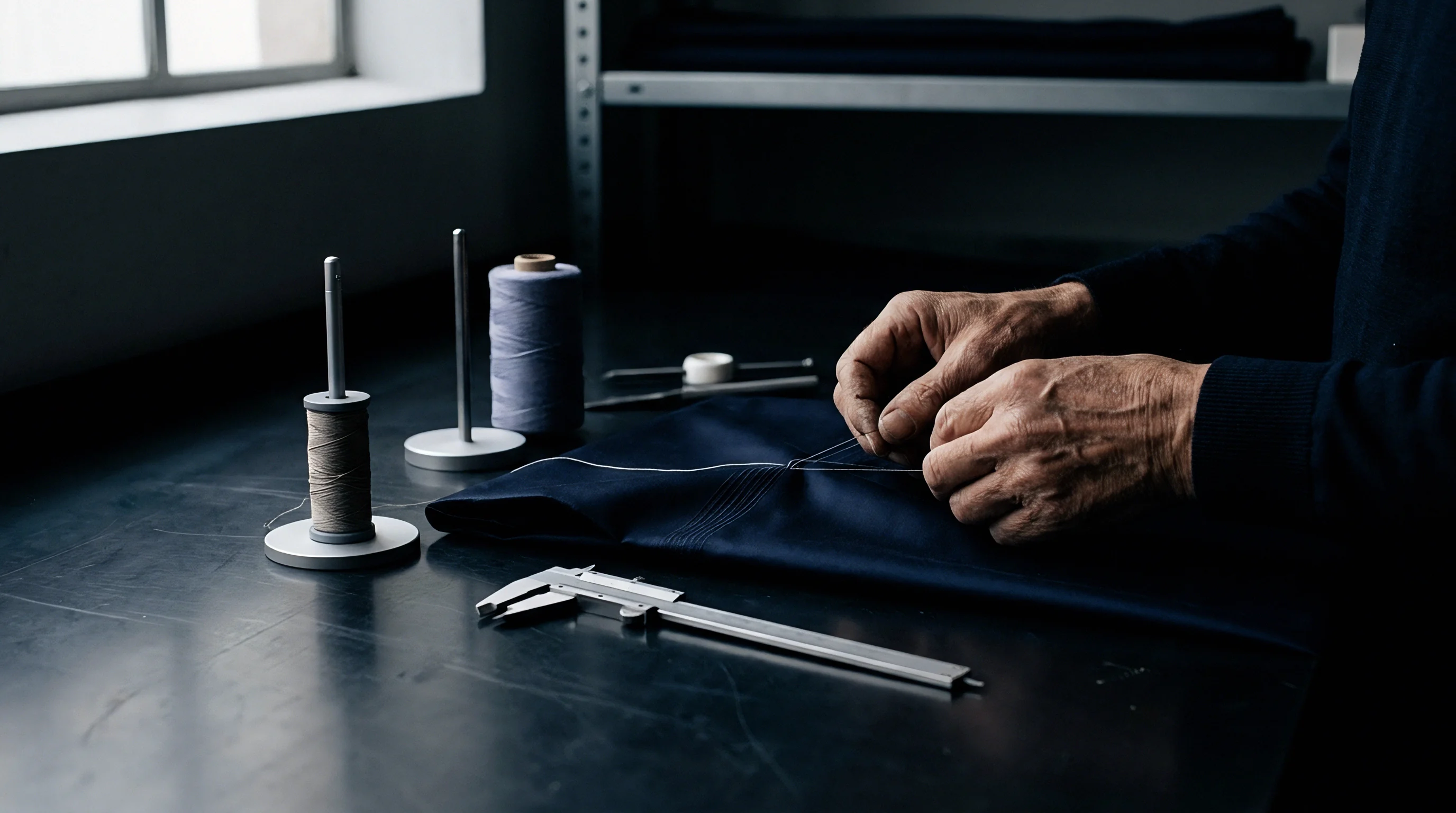
Reconciling Greige Mass against Chemical Dosage Logs
Mass-balance reconciliations offer objective proof of whether finishing runs actually took place as claimed. Batch records detail chemical additions ~ polymers, softeners, catalysts ~ metered into the padders for a given fabric lot. Comparing active dry chemical mass against the net weight gain of the cured fabric confirms whether the claimed chemistry was genuinely applied.
Mass-balance reconciliation exposes real production yields and chemical pickup.
Mass balance verification relies on a direct formula: Finished Fabric Weight = (Greige Fabric Input Weight – Process Moisture Loss – Scouring Scraps) + Fixed Chemical Mass. An unexplained variance exceeding two percent prompts deeper audit scrutiny, leading investigators into plant electricity draw and boiler steam logs for the stenter frames.

Audit Sequence for Multi Jurisdiction Processing
Auditing multi-stage linen production follows a chronological paper trail to confirm origin compliance.
- Collect original purchase invoices and fiber certificates of origin from the weaving mill.
- Review bills of lading and import clearance entries for greige fabric entering the finishing country.
- Examine wet processing route sheets, chemical bath formulation logs, and automated oven temperature profiles.
- Reconcile plant chemical inventory ledgers against lot consumption figures.
- Verify outbound export declarations, ex-works sales invoices, and mill quality assurance release certificates.
Missing dosing dockets break the chain of custody and invalidate origin claims.
The importer of record carries legal liability for tariff accuracy and supporting proof.
A documentation trail that omits raw batch weights during wet finishing will fail customs review, regardless of commercial endorsements or chamber-of-commerce stamps.


Protocol
Laboratory testing verifies whether claimed chemical modifications actually took place on the fiber. Analytical methods separate synthetic auxiliaries from the underlying cellulose, delivering empirical data to defend tariff declarations against customs inquiries. Standard test protocols confirm chemical identity and check whether performance holds up under laundering.
Spectroscopic testing confirms whether resins have permanently cross-linked the cellulose.
Fourier-Transform Infrared (FT-IR) spectroscopy identifies the functional groups bonded to the cellulose backbone. Attenuated Total Reflectance (ATR) FT-IR picks up the characteristic carbonyl band near 1720 cm-1 left by polycarboxylic acid agents, as well as amide peaks tied to DMDHEU resins. For quantitative confirmation, ISO 1833 solvent extraction protocols dissolve and isolate resin solids from the flax matrix.
Analytical laboratory verification isolates specific chemical signatures, establishing whether functional modifications meet statutory thresholds.

Laboratory Assays for Chemical Finish Verification
Diagnostic standards verify both finish identity and wash endurance. Liquid chromatography-mass spectrometry (LC-MS) detects trace fluorochemical surfactants, distinguishing between C6 and C8 water-repellent systems. When evaluating flame retardants, Scanning Electron Microscopy coupled with Energy Dispersive X-ray Spectroscopy (SEM-EDS) maps phosphorus or silicon deposits across individual fiber surfaces.
Empirical test results outweigh assertions made on commercial paperwork.
Physical performance tests complement spectroscopic data. Under ISO 2313, crease recovery angle measurements quantify resin cross-linking: untreated linen scores below 100 degrees, whereas properly cross-linked fabric tops 220 degrees. For water repellency, ISO 4920 spray ratings evaluate hydrophobic performance before washing and after repeated laundry cycles.
| Finish Category | Diagnostic Test Standard | Analytical Instrumentation | Quantitative Verification Benchmark |
|---|---|---|---|
| Cross-Linking Resin | ISO 2313 / AATCC 66 | ATR FT-IR Spectroscopy | Crease recovery angle > 220 degrees; FT-IR peak at 1720 cm-1 |
| Water Repellent | ISO 4920 / ISO 23232 | LC-MS / SEM-EDS | Spray rating 100 pre-wash, > 80 post 30 wash cycles |
| Flame Retardant | ISO 6941 / ISO 1210 | X-Ray Fluorescence (XRF) | Phosphorus content > 1.5% by weight of dry fabric |
| Ammonia Modification | ISO 13934-1 / XRD | X-Ray Diffraction | Cellulose III crystal lattice conversion ratio > 60% |

Worked Case Accounting for Value Add Ratios
Determining non-preferential origin under value-addition rules requires line-item production accounting. In this scenario, a 10,000-meter lot of unbleached woven greige linen (HS 5309.11) moves from Country A to Country B for liquid ammonia treatment, cross-linking, and flame-retardant finishing. The landed greige cost at the finishing plant in Country B is 4.00 Euros per meter, or 40,000 Euros for the consignment.
The finishing mill runs the lot continuously using 450 kilograms of anhydrous ammonia, 300 kilograms of polycarboxylic acid resin, and 600 kilograms of organophosphorus flame retardant. Direct chemical costs total 8,500 Euros. Direct processing and inspection labor adds 4,200 Euros.
Thermal energy, water treatment, and allocated machine utilities contribute 3,800 Euros. Together, direct finishing costs in Country B amount to 16,500 Euros, or 1.65 Euros per meter.
The finished fabric (HS 5309.19) sells ex-works to an importer in Country C at 6.80 Euros per meter, setting the lot value at 68,000 Euros. Testing this transaction against a forty-five percent non-preferential origin threshold involves deducting the non-originating greige cost:
Value Addition Percentage = ((68,000 – 40,000) / 68,000) × 100 = (28,000 / 68,000) × 100 = 41.18%
At forty-one point eighteen percent, the domestic value addition falls short of the statutory forty-five percent requirement in Country C. Despite clear chemical and physical transformations, the fabric fails the ad valorem origin test and remains originating in Country A.
If processing parameters change ~ adding specialized fluorine-free repellents and adjusting labor allocations ~ direct finishing outlays rise to 21,000 Euros, producing an ex-works price of 7.60 Euros per meter (76,000 Euros total lot value). Recalculating the ratio:
Revised Value Addition Percentage = ((76,000 – 40,000) / 76,000) × 100 = (36,000 / 76,000) × 100 = 47.37%
Under these revised figures, the forty-seven point thirty-seven percent value addition clears the forty-five percent mark. Assuming destination customs recognizes multi-step wet chemical finishing as a qualifying transformation under its list rules, non-preferential origin shifts to Country B.
- FT-IR Spectral Baseline Infrared scans establish the baseline absorption profile of raw, unreacted flax cellulose.
- Solvent Extraction Mass Assay Soxhlet extraction with organic solvents separates topical softeners, oils, and surface polymers from the substrate.
- X-Ray Fluorescence Analysis Elemental screening quantifies phosphorus and halogen concentrations to verify durable flame-retardant loading.
- Differential Scanning Calorimetry Thermal profiling measures glass transition shifts and polymer cross-linking density within the cellulosic matrix.
Customs authorities have yet to establish uniform FT-IR absorption intensity thresholds across testing laboratories, leaving some interpretive leeway during audits.
Liability
The importer of record bears strict legal and financial responsibility for accurate origin declarations and supporting audit dossiers. When customs authorities reject an origin claim, the importer faces back duties, accrued statutory interest, and administrative fines that can outstrip the original shipment value. Relying passively on a supplier’s certificate of origin without verifying the underlying processing offers no legal shield during an audit.
Origin declarations create binding statutory liabilities under customs law.
Supply agreements should allocate origin risks explicitly among buyers, finishing converters, and weaving mills. Standard procurement terms require suppliers to cooperate with customs inquiries by providing immediate access to batch sheets, dye logs, and chemical consumption records. If the mill cannot produce those files, border agencies will routinely deny preferential or claimed origin.
Incomplete factory records expose commercial shipments to immediate penalties.

Customs Penalties and Origin Misdeclaration Exposure
Border agencies in major jurisdictions penalize negligent and fraudulent origin declarations heavily. Under US law (19 U.S.C. 1592), gross negligence carries civil penalties reaching four times the unpaid duty or forty percent of the entered value. In the European Union, member-state customs administrations assess fines up to double the evaded duty while pursuing back duties over a three-year post-clearance recovery window.
Managing customs risk requires a documented audit file before goods ship. Importers who maintain verification files ~ chemical recipe logs, machine run sheets, and landed cost breakdowns ~ are equipped to survive formal inquiries. When direct mill records are missing, customs authorities typically reclassify goods back to the country where the raw fiber was spun or woven, usually at higher tariff rates.
Contractual Safeguards and Supplier Warranty Drafting
Sound risk management requires explicit warranty language in procurement contracts. Comprehensive agreements include indemnity provisions covering duties, penalties, and legal expenses if a mill’s origin representations fail customs verification.
Purchase orders should make vessel dispatch conditional on the seller delivering accredited transaction certificates and chemical assay reports. If the mill cannot supply the agreed verification file, the contract should give the buyer the right to reject the consignment without penalty.
Under standard supplier warranty provisions, the finishing mill warrants that its non-preferential origin claims comply with regulations in the destination country, agreeing to hold the buyer harmless against any back duties, fines, legal costs, or administrative penalties resulting from an origin redetermination.