Mass Balance Reconciliation across Offshore Linen Processing Operations
Auditing offshore linen mass balance demands real-time dry weight tracking, moisture regain adjustments, and batch-level transaction certificate verification.

Yield
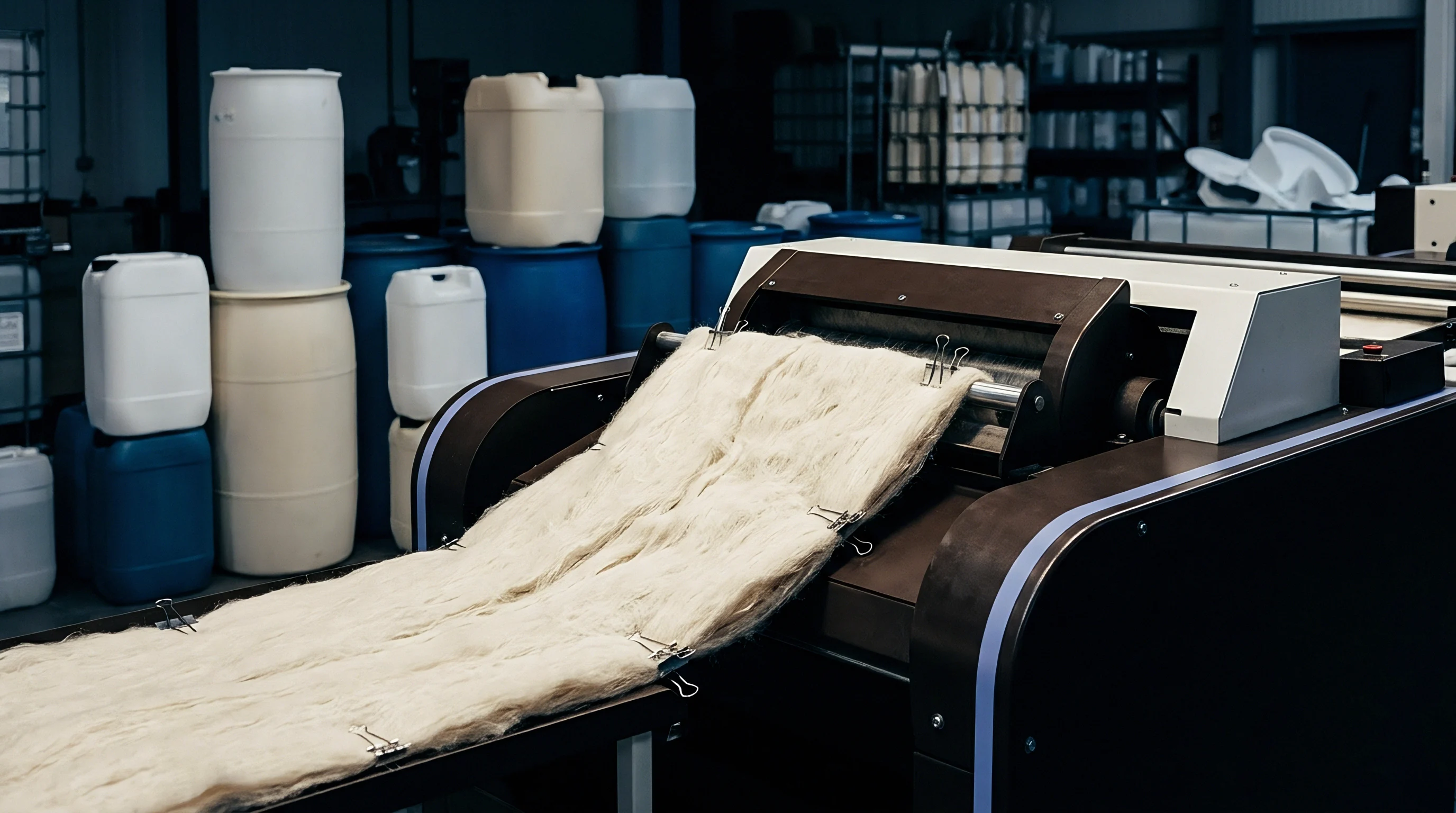
Raw flax fiber arrives at spinning facilities in dense bales containing both non-cellulosic impurities and variable moisture. Verifying origin claims starts at the bale store weighbridge with input mass accounting. Scutched long flax carries natural shives, residual pectin, and water that directly shift the dry fiber baseline.
When offshore mills take delivery of European flax, the invoice weight rarely matches the usable net spinning mass, largely because maritime transit introduces ambient moisture that inflates gross weight without adding a single gram of cellulose.
Calculations for raw material input have to isolate bone-dry fiber mass from gross delivered weight. Under ISO 2060 testing specifications, standard commercial moisture regain for flax yarn is 12 percent, which corresponds to a moisture content of 10.71 percent on a wet-weight basis. When bales land with higher ambient moisture, logging total wet weight as pure fiber input skews the entire mass balance ledger.
A mill taking in 50 metric tonnes of raw scutched flax at 14 percent moisture receives 43.0 metric tonnes of bone-dry fiber, whereas an invoice billed at the standard 12 percent regain assumes 44.64 metric tonnes of dry cellulose. That 1.64-tonne discrepancy hands the mill an unearned volume margin before the fiber ever reaches mechanical carding.
Raw flax fiber billing invoices based on standard 12 percent regain create a 1.64 tonne unaccounted cellulose baseline error per 50-tonne consignment when incoming bale moisture reaches 14 percent.

Conversion Ratios in Offshore Wet Spinning
Turning raw long flax into fine yarn requires carding, hackling, drawing, and wet spinning. Hackling splits the stock into long sliver and short tow fibers, typically yielding 60 to 70 percent long fiber sliver and 30 to 40 percent short fiber tow depending on straw quality and retting. Wet spinning then washes out non-cellulosic material: hot water baths dissolve remaining pectins, taking another 2 to 5 percent of dry fiber mass as scouring loss.
Auditors rely on stage-specific yield factors to reconcile raw input against finished yarn across an offshore operation. Net fiber output through the spinning line is calculated as:
M_yarn = M_input × (1 – M_hackling_loss) × (1 – M_wet_loss) × ((1 + R_standard) / (1 + R_incoming))
Here M_yarn represents final yarn weight at standard regain, M_input is gross incoming fiber weight, M_hackling_loss is fractional tow and waste drop, M_wet_loss covers bath solubles, R_standard is the official regain (0.12), and R_incoming is tested moisture regain when the bale is opened. Calculating yarn yield without correcting for moisture differences corrupts chain-of-custody records from the outset.
- Unadjusted Moisture Balances inflate certified mass pools when mills log wet bale weights on delivery without subtracting excess water before feeding the spinning line.
- Tow Stream Misallocation happens when short fiber combings from certified long flax are sold into conventional channels while their weight stays credited to the certified yarn ledger.
- Tare Mass Omission creates false volume credits by including timber pallets and steel strapping in the raw textile input weight.
- Scour Loss Disregard overlooks the roughly 3 percent organic mass lost in hot-water drafting troughs, inflating theoretical yarn recovery.
Whether digital traceability platforms can handle wet-spinning mass reconciliations without physical weighbridge inspections at regional processing hubs remains unresolved.
Loss
Fiber degradation during hackling and drafting generates separate waste streams that directly affect reconciliation totals. High-speed pins shear weaker strands into comber noils, fly fiber, and floor sweepings. Automated ring spinning mills track operational waste allowances for every fiber grade, particularly since long scutched flax needs multiple gill passes that break fiber continuously as drafting waste builds up.
Tracking mechanical fiber drop requires weighing each waste category at scheduled intervals. Short tow separated during hackling typically goes to coarse yarn spinning or non-woven industrial lines. If a mill fails to deduct this tow from its certified long-fiber ledger, yarn yield looks artificially high on paper.
Counting that material simultaneously as primary yarn output and secondary saleable tow renders the certified allocation fraudulent.

Quantitative Categorization of Mechanical Fiber Waste
As scutched flax runs through pin drafting systems, shorter fibers break out of the continuous sliver. Classifying this mechanical waste by staple length, purity, and intended outlet is essential for accurate inventory accounting across offshore processing hubs.
| Processing Stage | Input Material Form | Waste Category | Expected Mass Loss Range (%) | Required Traceability Document |
|---|---|---|---|---|
| Bale Opening & Hackling | Raw Scutched Flax | Short Tow & Shives | 28.0 – 38.0 | Hackling Weighbridge Ledger |
| Gilling & Drawing | Hackled Sliver | Comber Noils & Fly Waste | 3.5 – 6.0 | Drafting Waste Log Book |
| Roving & Wet Spinning | Drawn Roving | Trough Solubles & Broken Ends | 2.5 – 4.5 | Spinning Room Scrap Record |
| Winding & Clearing | Spinning Bobbins | Yarn Snippets & Knotter Waste | 0.8 – 1.5 | Winder Output Reconciliation |
| Weaving Preparation | Yarn Cones | Warp Waste & Sizing Loss | 1.5 – 3.0 | Beam Shed Scrap Register |

Moisture Regain Discrepancies across International Transit
Bale weights change as flax moves from damp European warehouses into shipping containers and on to Asian spinning mills. Flax cell walls absorb or release moisture as ambient humidity shifts in transit. A container sealed at 65 percent relative humidity in Antwerp will reach Ningbo at an altered moisture equilibrium, dictated by thermal conditions along the maritime route.
- Probe incoming flax bales across multiple depths with calibrated dielectric meters immediately after unsealing the container.
- Draw ten 100-gram core samples per lot and oven-dry them at 105 degrees Celsius to reach zero moisture.
- Determine the dry mass coefficient by comparing oven-dry weights against scale tickets from the weighbridge.
- Adjust the receiving ledger to reflect dry cellulose weight plus the standard 12 percent commercial regain allowance.
- Issue a formal discrepancy notice to the fiber broker whenever delivered dry mass falls below bill of lading figures.
Auditors evaluate intake against a dry fiber baseline rather than invoice weights to separate transit moisture swings from genuine material loss.


Margin
Spinning mills operate under tight margins where certified stock commands heavy premiums. European flax fiber runs 30 to 70 percent higher per kilogram than uncertified domestic or regional fiber, creating an obvious incentive to blend conventional stock into certified mass balance pools while supplying clean transaction certificates on finished orders.
Mass balance rules permit physical mixing of certified and conventional fiber on the floor, so long as final output matches certified input less documented operational waste. But when a facility takes in 10 tonnes of certified European flax yarn and claims 12 tonnes of certified fabric output, the balance has been broken. That extra 2 tonnes is conventional fabric sold at certified prices, inflating operating margins through distorted blending ratios.
European flax raw material price premiums of 30 to 70 percent per kilogram incentivize unauthorized physical fiber substitution within non-segregated offshore mass balance pools.

Financial Arbitrage in Mass Balance Blending
Gaps between certified intake records and factory output create space for material substitution. Mass balance rules allow physical co-mingling on the floor, but they require strict volumetric parity between certified fiber fed in and certified cloth shipped out.
| Operating Parameter | Strict Physical Segregation | Mass Balance Allocation | Financial Arbitrage Risk |
|---|---|---|---|
| Raw Fiber Segregation | Dedicated Bales & Machinery | Co-mingled Storage & Lines | High (Conventional Fibre Blending) |
| Certified Fiber Surcharge | Full Batch Cost ($1.80-$2.40/kg) | Proportional Volume Premium | Medium (Over-Allocation of Output) |
| Third-Party Audit Fee | $4,500 – $8,000 per Audit Visit | $2,500 – $4,500 per Audit Visit | Low (Standardized Ledger Review) |
| Yield Loss Variance Allowance | Physical Weighing per Batch | Calculated Standard Yield Factor | High (Inflation of Standard Yields) |
| Traceability File Exposure | Low (Physical Lot Segregation) | High (Paperwork Matching Gaps) | Critical (Origin Retraction Risk) |
Take a mill processing a 40-tonne order of linen yarn. The plant buys 20 tonnes of certified European flax at $5.50 per kilogram and 20 tonnes of conventional fiber at $3.20 per kilogram, for a total material cost of $174,000. Assuming a standard processing yield of 68 percent, valid mass balance accounting yields 13.6 tonnes of certified yarn and 13.6 tonnes of conventional yarn.
If the mill adjusts its internal software to log an 85 percent yield on the certified input while knocking conventional yield down to 51 percent, the certified balance jumps to 17.0 tonnes. Selling the resulting 3.4 tonnes of conventional yarn under certified transaction certificates at $9.80 per kilogram yields $33,320 in illicit margin. Without matching physical weighbridge slips, paper accounting balances fall apart during physical site inspections.
Importers relying on unverified mass balance claims face retroactive duty adjustments, inventory seizures, and regulatory penalties when audits uncover discrepancies.

Tolerance
Certification schemes set rigid timeframes for volume reconciliation across spinning and weaving plants. Under chain-of-custody standards like ISO 22095, mass balance accounting runs on fixed reconciliation cycles, typically capped at 12 months. Mills cannot bank surplus certified volume indefinitely to cover future production shortfalls; once the reconciliation window closes, unused credits lapse.
Allowed variances between floor counts and digital ledgers rarely exceed 3 to 5 percent. Crossing that threshold brings mandatory corrective action requests and can suspend a mill’s scope certificate. In regions with layered subcontracting chains, audits require checking physical stock, machine power draw, and waste disposal manifests in tandem.

Mass Reconciliation Audits under Standard Rules
Auditors reconcile mill ledgers against delivery tickets and spinning utility records. Certification bodies accredited under ISO 17065 check incoming transaction certificates from upstream scutchers, verifying that lot numbers align with the receiving register.
Auditors cross-reference power consumed by spinning frames against reported yarn tonnage. Wet-spinning one kilogram of fine linen yarn draws between 3.5 and 5.2 kilowatt-hours of electricity. If plant records claim 100 tonnes of certified yarn output but meter logs show power consumption consistent with only 60 tonnes of machine runtime, the volume claim collapses.

Can Mass Balance Chains Guarantee Physical Fibre Origin?
Physical segregation isolates verified lots throughout processing, whereas mass accounting permits physical mixing on the line. Under a strict mass balance framework, a yard of finished linen fabric may contain zero physical fibers from the European field named on its label. The certificate guarantees only that an equivalent volume of certified raw material entered the system upstream.
Brands that require true origin verification for high-end goods cannot rely on mass balance models. Physical segregation requires dedicated line runs, machine clean-downs between lots, and isolated storage in greige warehouses ~ operational hurdles that add 15 to 25 percent to manufacturing costs over standard mass balance runs.
- Input Certificate Validation confirms that transaction certificates come from accredited scutchers holding active scope certificates.
- Moisture Balance Verification confirms that incoming wet bale weights are converted to dry cellulose through standardized oven tests.
- Energy Parity Cross-Check matches utility power bills against spinning frame run hours and reported yarn output.
- Subcontracting Flow Inspection examines commission weavers and dye houses for physical batch isolation and complete transfer paperwork.
- Inventory Reconciliation Timing ensures volume credits are balanced within the required 12-month certification window.
Operational scrap variations make physical batch segregation difficult across automated wet-spinning lines, though chain-of-custody standards treat line waste as fully quantifiable.
Tariff
Cross-border trade rules require concrete evidence of transformation when textile goods clear customs. Non-preferential rules of origin enforced under Article 60 of the Union Customs Code in the European Union and under 19 CFR 102 by United States Customs and Border Protection impose specific processing criteria on linen yarn and fabric. Neither authority accepts mass balance ledger credits as proof of physical origin for preferential tariff rates or sanctions compliance.
Border authorities demand documentation showing exact manufacturing locations from raw fiber through spinning, weaving, and wet finishing. If a Chinese mill takes European scutched flax and blends it with Russian stock under a mass balance scheme, the finished yarn forfeits its single-origin status at customs entry, as unreconciled balances invalidate origin claims upon inspection.

Customs Origin Rules for Blended Linen Goods
National authorities weigh physical production stages alongside documentary records when assigning country of origin. Treating mass balance volume certificates as proof of customs origin leaves importers open to legal penalties and retroactive duty assessments.
| Destination Jurisdiction | Governing Regulation | Substantial Transformation Rule for Linen Cloth | Acceptability of Mass Balance Accounting for Origin |
|---|---|---|---|
| European Union | Union Customs Code (UCC) Art. 60 | Weaving from yarn accompanied by double stage processing | Rejected (Requires Physical Transformation Records) |
| United States | 19 CFR 102.21 (Textile Origin Rules) | Fabric formed by weaving regardless of yarn origin | Rejected (Physical Origin of Inputs Mandatory) |
| United Kingdom | UK Customs Tariff (Preferential Origin) | Weaving accompanied by finishing or printing process | Rejected (Paper Ledger Allocation Not Recognized) |
| Japan | Customs Tariff Law Art. 68 | Complete weaving process within single territory | Rejected (Strict Batch Physical Traceability) |
Assembling an audit-ready origin file requires an unbroken document trail from harvest to port of arrival, compiled before submitting declarations for offshore shipments.
- Field Scutching Delivery Notes linking harvested straw lots to specific scutchers in Western Europe.
- Export Certificates of Origin issued by chambers of commerce, detailing fiber volumes and bill of lading numbers.
- Spinning Mill Receiving Records listing bale serial numbers, scale weights, tested moisture levels, and warehouse bay locations.
- Commission Spinning Work Orders covering target yarn counts, machinery assignments, and daily spindle logs.
- Weaving Shed Beam Records tracing yarn lots directly onto loom warp beams and piece tags.
- Transaction Certificates issued by independent certifiers for every transfer of ownership along the processing chain.
Under Article 60 of the Union Customs Code, origin determinations require evidence of physical processing rather than ledger allocations.
Recovery
Short fibers combed out of the main sliver serve as valuable stock for coarse yarns and industrial non-wovens. In wet-spinning certified long-staple European flax, hackling and combing cast off between 30 and 40 percent comber noils and tow. This secondary stream retains certified status under mass balance rules only if the plant enters both its recovery and downstream sale into the transaction ledger.
Problems emerge when mills sell comber noils to coarse-count spinners without debiting that volume from their certified fiber pool. If 10 tonnes of certified flax yields 6.5 tonnes of fine yarn alongside 3.2 tonnes of short tow, the books must reflect both products. Invoicing 10 tonnes of certified fine yarn while also booking 3.2 tonnes of certified tow amounts to a 32 percent volume inflation, leaving an open discrepancy in what must be a closed ledger.

Reconciling Comber Noils and Recycled Fibre Streams
Secondary fiber streams need dedicated lot codes to prevent double-counting in site-level material balances. Most modern setups draw short fibers off comb heads and carding flats via pneumatic suction directly into designated baling compactors.
Auditors check recovery by calculating the ratio of long sliver output to short tow across individual production lines, testing the split against standard mechanical benchmarks:
M_total_input = M_long_sliver + M_comber_noils + M_bound_water_loss + M_dust_waste
When a mill reports conversion figures that improbably minimize noil generation, inspectors check waste bays and dust filtration baghouses. Dust and unrecoverable fly fiber consistently claim 1.5 to 3.0 percent of dry fiber input. Facilities that omit dust loss artificially inflate their recovery rates, leaving phantom volume credits in their digital ledgers.
Tracking comber noil disposition balances the material account, closing the loop against double-counted certified intake.