Isotopic Profiling Verification for Third Country Flax Processing Chains under Import Scrutiny
Isotopic profiling validates raw flax geographical origin by matching isotopic signatures against reference isoscapes despite third-country processing shifts.


Soil
Geography leaves an indelible chemical mark on raw flax fiber during plant growth. As Linum usitatissimum draws moisture and soil nutrients from the earth, atmospheric and geological elements incorporate permanently into the cellular structure of the phloem fibers. Stable isotope ratio mass spectrometry targets hydrogen, oxygen, carbon, nitrogen, and strontium isotopic ratios contained within purified flax cellulose.
These values reflect the precise latitude, elevation, distance from coastal waters, seasonal temperature, atmospheric humidity, and local bedrock mineralogy of the farm location. Under heightened import scrutiny, particularly from customs authorities enforcing origin sanctions or anti-forced-labor regulations, physical verification through isotopic profiling provides empirical proof of raw fiber harvest location independent of commercial shipping documents.
Flax fiber harvested across major growing zones exhibits distinct multi-isotope profiles. Western European cultivation zones spanning coastal France, Belgium, and the Netherlands absorb rainwater influenced by Atlantic weather systems. This environment imparts characteristic oxygen-18 (delta-18-O) and deuterium (delta-2-H) values into plant tissue.
Conversely, raw flax cultivated across continental landmasses in Northern China, Russia, or Central Asia reflects lighter meteoric water signatures combined with distinct soil isotope compositions derived from ancient geological formations. Heavy radiogenic strontium isotope ratios (87-Sr over 86-Sr) in soil clays transfer directly into stem tissue, creating a site-specific elemental signature that survives mechanical scutching and hackling.
A strontium isotope ratio of 0.7095 in unbleached flax fiber indicates coastal soil origin when groundwater salinity exceeds two parts per thousand.
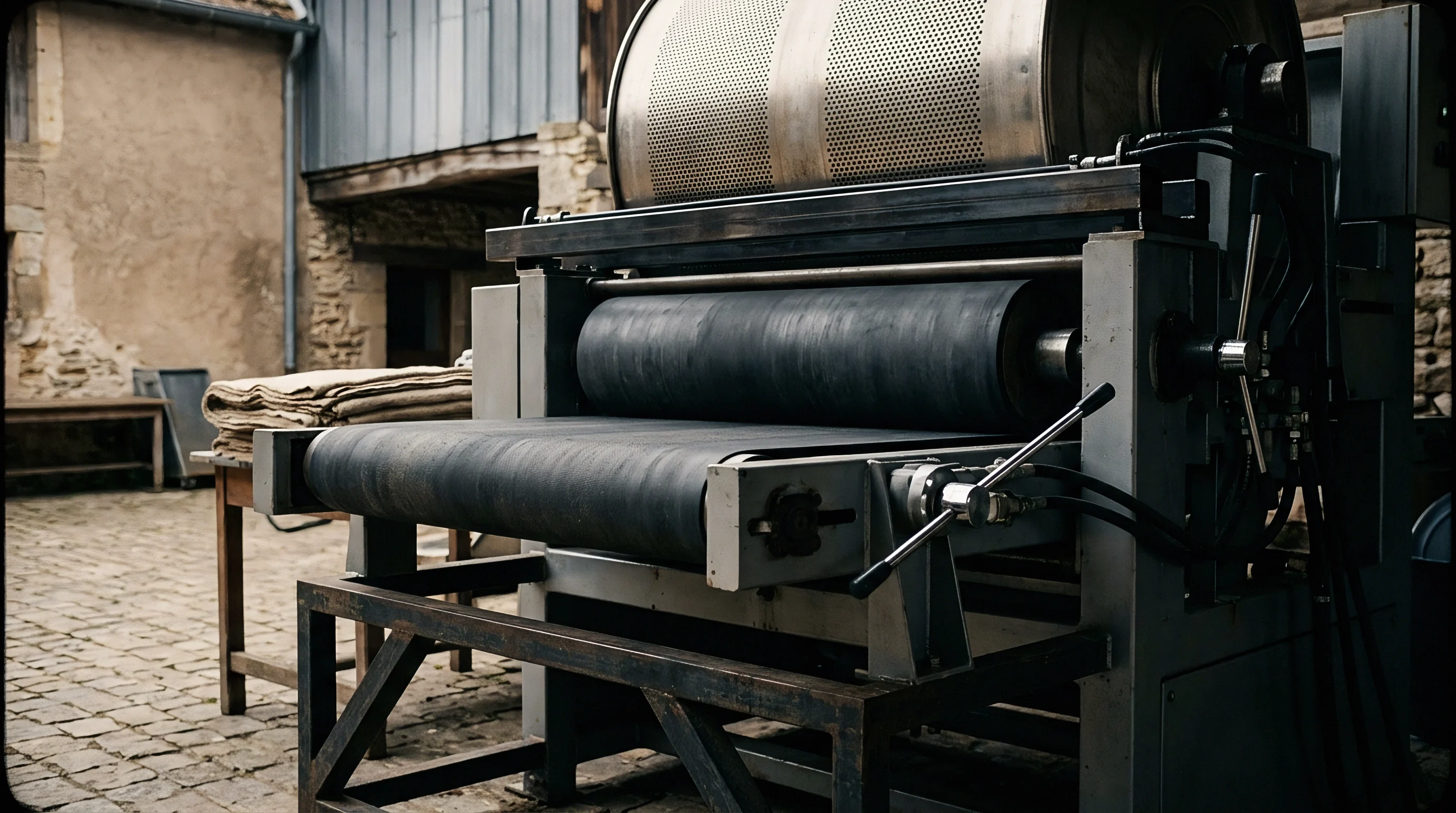
Geochemical Baselines and Isotopic Fractionation
Rainwater hydrogen and oxygen stable isotopes incorporate directly into cell-wall cellulose during photosynthetic carbohydrate synthesis. Evapotranspiration at the leaf surface enriches leaf water in oxygen-18 and deuterium relative to root uptake water. The extent of this enrichment correlates directly with atmospheric relative humidity and leaf temperature during the short ninety-day growing window between spring emergence and summer pull.
Carbon-13 (delta-13-C) values in flax cellulose follow C3 photosynthetic pathways, exhibiting baseline discrimination against heavier carbon dioxide isotopes that varies according to drought stress and ambient temperature. Nitrogen-15 (delta-15-N) ratios reflect regional soil organic matter composition, synthetic fertilizer application types, and crop rotation management.
Establishing an empirical baseline requires systematic field sampling across flax-growing territories. Reference isoscapes map spatial variations in stable isotope compositions by synthesizing precipitation isotope networks with soil geology datasets. Raw flax fiber pulled from fields in Normandy demonstrates a tightly bounded delta-18-O range, whereas flax harvested in Heilongjiang or Xinjiang exhibits lower delta-18-O values due to inland atmospheric moisture trajectories.
Distinguishing these baseline values forms the foundation for detecting third-country origin masking.

Third Country Processing and Origin Laundering Vectors
Unscrupulous yarn spinners move raw baled straw across international borders to evade trade restrictions. High-volume textile conversion hubs in third countries frequently import raw scutched flax bales from restricted regions, combine them with certified European fiber stock, and wet-spin yarn destined for North American or Western European weaving mills. Paper documentation, including bills of lading, certificates of origin, and sanitary export declarations, can be falsified or issued through intermediate trading entities that mask original agricultural origins.
Verification protocols must account for third-country processing schemes. When third-country mills blend raw fibers prior to carding and wet spinning, the resulting yarn exhibits an intermediate isotopic profile proportional to the blend ratio. Single-origin declarations for yarn lots produced from mixed fiber stock fail isotopic verification when measured values drift outside the defined reference isoscape boundaries of the declared growing zone.
- Isotopic Drift Beyond Isoscape Boundaries occurs when measured oxygen and deuterium values fall outside the verified two-sigma confidence ellipsoid of the declared agricultural growing zone.
- Heterogeneous Fiber Blending manifests as high sample-to-sample variance across multiple small yarn subsamples taken from a single spinning bobbin.
- Unexplained Radiogenic Strontium Deviations indicate that raw fiber absorbed mineral nutrients from bedrock formations incompatible with the declared field geology.
- Synthetic Nitrogen Fertilizer Bias skews delta-15-N values far above natural baseline soil ranges, signaling agricultural practices inconsistent with regional organic growing certifications.
- Depleted Deuterium Profiles signal crop irrigation drawing from deep continental aquifers rather than Atlantic coastal rainfall patterns.
Whether isotopic isoscapes can consistently distinguish high-latitude inland growing regions when seasonal precipitation variances shift annual rainwater values remains an active area of empirical research.


Water
Wet chemical finishing introduces chemical shifts into raw plant matter. After agricultural harvest and scutching, flax fiber undergoes extensive biological and industrial treatments to separate long bast fibers, remove non-cellulosic matrix components, and convert coarse flax bundles into fine textile yarn. Dew retting in the field relies on soil fungi and moisture to degrade pectin and hemicellulose.
Water retting, though largely restricted due to environmental regulations, immerses straw bundles directly in regional rivers or tanks. Each process exposes exposed cellulose to micro-environmental water sources, altering exchangeable hydrogen atoms within hydroxyl groups.
Downstream spinning and finishing operations further modify fiber surface chemistry. Alkaline scouring using heated sodium hydroxide removes residual plant waxes, fats, and residual shive particles. Bleaching with hydrogen peroxide or sodium hypochlorite breaks down natural pigments, while mercerization treatments restructure cellulose crystals from cellulose I to cellulose II.
These aqueous chemical interventions introduce external oxygen and hydrogen atoms into the outer molecular layers of the flax fiber, creating processing-induced isotopic shifts that auditors must separate from agricultural origin signals.
Alkaline scouring alters hydrogen isotope ratios in flax cellulose while leaving heavy metal signatures intact.

Retting Chemistry and Cellulose Isotopic Alteration
Microbial enzymatic degradation of pectin during plant field exposure leaves stable carbon ratios largely untouched. Dew retting relies on environmental moisture, where rain droplets and dew condense on lying straw. Hydrogen exchange between ambient water vapor and cellulose hydroxyl groups occurs rapidly during this field exposure phase.
Oxygen atoms bound within non-exchangeable carbon-oxygen bonds remain structurally stable during retting, retaining the original agricultural photosynthesis signal.
Industrial water retting, where practiced, introduces local river or municipal water into the outer stem tissues. If process water carries a significantly different isotopic signature than the farm rainwater, surface contamination can occur. Analytical protocols resolve this by subjecting fiber samples to laboratory nitration or equilibrium exchange treatments, isolating C-bound structural hydrogen that reflects true plant biosynthesis.

Industrial Scouring Bleaching and Mercerization Effects
Hot sodium hydroxide baths strip waxes, hemicelluloses, and residual lignins from greige yarn. Scouring reduces total sample mass while elevating purified alpha-cellulose content. Because non-cellulosic impurities contain different baseline isotope ratios than pure cellulose, scouring slightly shifts the overall bulk carbon-13 and oxygen-18 values of the fiber toward pure cellulose baselines.
Laboratory verification models must establish baseline profiles using purified alpha-cellulose standards rather than raw, uncleaned fiber tissue.
Bleaching operations introduce oxygen from oxidation reagents into modified cellulose hydroxyl structures. Intensive hydrogen peroxide treatment under alkaline conditions causes mild oxidative degradation, altering delta-18-O values of the finished yarn proportional to bath concentration, temperature, and residence time. Mercerization under heavy caustic soda concentration (15 to 25 percent NaOH) swells fiber walls and reorganizes crystalline domains, permitting process water to penetrate deep into previously inaccessible crystalline microfibrils.
| Processing Stage | Dominant Chemical Action | Delta-18-O Shift Range | Delta-2-H Non-Exchangeable Shift | Verification Diagnostic Value |
|---|---|---|---|---|
| Mechanical separation of fiber bundles | Baseline 0.0 per mil | Baseline 0.0 per mil | Primary agricultural origin signal | |
| Fungal pectin degradation in field | -0.2 to +0.3 per mil | -1.5 to +2.0 per mil | Reflects field rain and dew exposure | |
| Hemicellulose and wax extraction | +0.3 to +0.8 per mil | -0.5 to +0.5 per mil | Shift driven by matrix purity changes | |
| Oxidative destruction of chromophores | +1.0 to +2.5 per mil | +1.0 to +3.5 per mil | Requires process-corrected isoscape baseline | |
| Caustic crystal structure conversion | +0.5 to +1.2 per mil | +2.0 to +5.0 per mil | Permits process water hydrogen exchange |
Mills frequently attribute unexpected shifts in oxygen isotope ratios to seasonal shifts in municipal process water supplies rather than fiber blending.


Vector
Analytical measurement demands strict sample preparation protocols to isolate structural cellulose. Testing laboratories receive incoming commercial samples ranging from raw scutched flax tow to bleached greige yarn and finished woven fabric. Raw samples carry surface contaminants, crop oils, spinning lubricants, and residual dirt that corrupt isotope ratio measurements.
Extraction using organic solvents in a Soxhlet apparatus removes lipids, waxes, and synthetic spinning finishes prior to isotopic analysis.
Isolating non-exchangeable hydrogen remains the critical step in accurate isotopic measurement. Hydroxyl hydrogen atoms in cellulose exchange rapidly with ambient moisture vapor, introducing atmospheric humidity noise into analytical results. Nitration converts cellulose into cellulose nitrate, replacing reactive hydroxyl groups with nitrate esters and preserving only the carbon-bound structural hydrogen.
Alternatively, online high-temperature thermal conversion elemental analyzers (TC/EA) coupled with controlled water vapor equilibration systems allow laboratories to calculate and subtract the exchangeable hydrogen fraction directly.

Instrumentation and Isotope Ratio Mass Spectrometry
High-temperature conversion elemental analyzers connected to gas source mass spectrometers measure total hydrogen and oxygen ratios. Samples are pyrolyzed inside a reaction column at temperatures exceeding 1400 degrees Celsius under anaerobic conditions. Pyrolysis converts organic hydrogen into hydrogen gas (H2) and organic oxygen into carbon monoxide gas (CO).
Chromatographic columns separate the analyte gases before introducing them into the ionization chamber of the mass spectrometer.
Combustion elemental analyzer isotope ratio mass spectrometry (EA-IRMS) determines carbon-13 and nitrogen-15 ratios. Samples undergo complete flash combustion at 1000 degrees Celsius in an oxygen-rich atmosphere, converting structural carbon into carbon dioxide and structural nitrogen into nitrogen oxides, which are subsequently reduced to nitrogen gas (N2). Multi-collector inductively coupled plasma mass spectrometry (MC-ICP-MS) measures radiogenic strontium ratios (87-Sr over 86-Sr) following acid digestion and chromatographic separation of matrix elements.
ISO 17025 accreditation of isotopic testing laboratories guarantees method validation required for legal admissibility in customs origin disputes.

Where Does Isotopic Verification Outperform Document Audits Alone?
Paperwork verification founders when third-country mills mix certified raw fiber with uncertified stock in identical spinning lots. Document audits confirm that a mill purchased twenty tonnes of certified European long-flax, but paper alone cannot verify whether those specific twenty tonnes entered the carding line for a given customer order. Isotopic testing physically analyzes the fabric delivered at the port of entry, bypassing administrative recordkeeping gaps.
Customs enforcement actions demand physical evidence that withstands legal challenges. While audit dossiers demonstrate administrative compliance, isotopic measurement supplies physical proof of agricultural origin. When third-country processing chains operate across non-cooperative jurisdictions where physical mill inspections are restricted, laboratory analysis of imported goods becomes the primary verification tool.

Statistical Classification and Reference Isoscapes
Multivariate algorithms analyze complex multi-isotope arrays against established geographical database maps. Principal Component Analysis (PCA) reduces multi-element isotope data (delta-18-O, delta-2-H, delta-13-C, delta-15-N, 87-Sr/86-Sr) into principal components that explain maximum regional variance. Linear Discriminant Analysis (LDA) and Random Forest classifiers assign unknown textile samples to defined geographic regions based on training sets constructed from verified authentic samples.
Consider a verification case evaluating a suspicious 50-tonne yarn shipment declared as 100 percent Western European flax processed in a third-country spinning facility. The laboratory collects twenty random yarn packages across five production rolls. Analytical testing yields a mean delta-18-O value of +24.2 per mil with a standard deviation of 0.4 per mil, and an 87-Sr/86-Sr ratio of 0.7142.
The verified Western European reference isoscape for unbleached flax exhibits a delta-18-O range between +27.5 and +29.8 per mil and an 87-Sr/86-Sr range between 0.7082 and 0.7105. The third-country local baseline exhibits a delta-18-O mean of +23.8 per mil and an 87-Sr/86-Sr mean of 0.7148.
Calculated probability modeling demonstrates that the sample values lie more than five standard deviations outside the European reference ellipsoid. The LDA classification algorithm computes a 98.6 percent probability of origin matching the third-country local fiber baseline, indicating either complete substitution or a heavy blend containing over 80 percent local non-declared raw flax. The analytical determination provides actionable evidence for customs seizure or contract termination.
Multi-element isotopic profiling yields higher classification certainty than relying on any single isotope ratio alone.

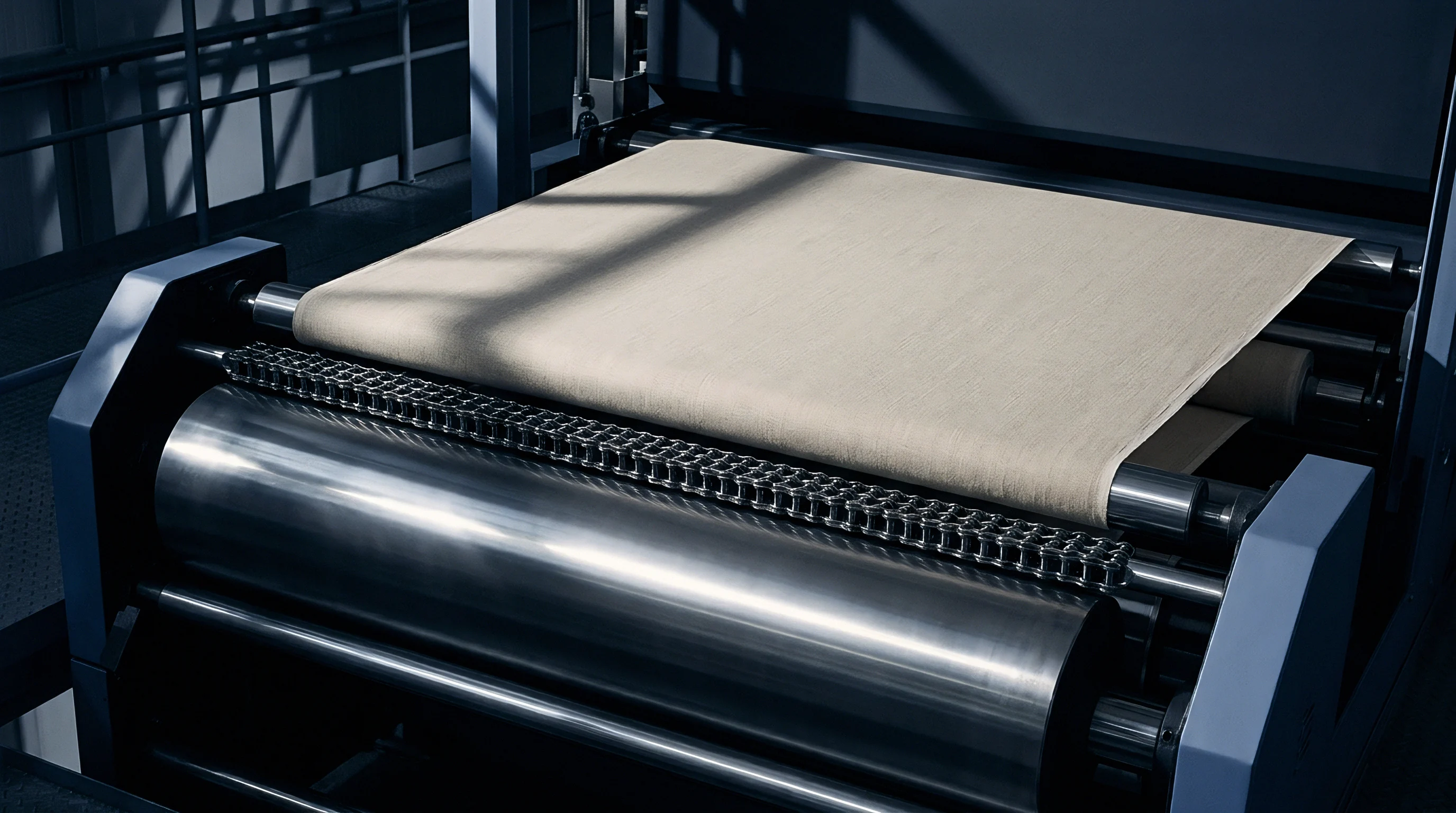
Scutcher
Physical verification of textile provenance rests on reconciling raw fiber inputs with finished woven production. Raw scutched flax, pulled from stalks and separated from wood shives, enters spinning mills packed in high-density bales bearing agricultural lot numbers and scutching mill identifiers. Chain-of-custody verification requires tracing these physical input bales through hackling, sliver preparation, wet spinning, drying, winding, and weaving.
In third-country processing facilities, this physical trace must match documentary transaction records at every transformation gate.
Scope certificates confirm a facility’s physical capability and administrative authorization to process certified fiber under standards such as European Flax or Masters of Linen. Transaction certificates validate specific commercial shipments, linking input bale weights to output yarn or cloth tonnage. When processing occurs in third-country facilities operating outside direct European oversight, verification integrity relies on combining transaction certificates with physical mass-balance calculations and periodic isotopic spot testing.

Documentary Chain of Custody and Scope Certificates
European Flax certification models track raw plant material from farm cooperative through primary fiber extraction. The scheme guarantees that flax raw fiber originates in Western Europe (France, Belgium, Netherlands). When scutched flax exports to third-country mills in Asia, European Flax scope certificates travel with the material, allowing third-country spinners to issue transaction certificates for yarn produced from certified fiber stock.
Masters of Linen certification demands that all conversion steps from yarn spinning to final weaving occur exclusively on European soil, placing third-country processors completely outside Masters of Linen scope.
Auditors examining third-country processing chains must verify certificate validity directly with issuing certification bodies. Fraudulent schemes frequently use expired scope certificates, alter declared fiber weights on transaction certificates, or apply a single valid transaction certificate to multiple downstream export shipments.
| Verification Framework | Geographic Scope Coverage | Third Country Mill Eligibility | Primary Audit Mechanism | Susceptibility to Fiber Blending Fraud |
|---|---|---|---|---|
| Western European raw fiber production | Eligible for spinning and weaving tiers | Documentary transaction certificates | Moderate without physical isotope testing | |
| 100% European processing (field to fabric) | Not eligible (strictly European operations) | On-site physical processing audit | Low due to strict territorial boundaries | |
| Global empirical isoscape mapping | Universal application to all facilities | Direct physical analytical testing | Very low due to bio-geochemical measurement |

Mill Floor Mass Balance Auditing
Yarn yield equations convert raw long-flax and short-flax inputs into equivalent metric counts. During hackling and carding, raw fiber experiences mass loss as short fibers (tow) and residual dust separate from long flax strands. Wet spinning adds twist and moisture, while yarn boiling and bleaching induce further mass loss through extractables removal.
A mill audit verifies that total certified raw fiber purchases equal total certified finished goods outputs plus documented processing waste allowances.
- Reconcile incoming raw scutched flax weight tickets and bale serial numbers against supplier transaction certificates upon receipt at the mill warehouse.
- Audit carding and hackling production logs to verify that certified bale lots pass through designated machine lines without unrecorded blending from adjacent production runs.
- Calculate spinning yield ratios by comparing sliver mass input against finished yarn bobbin output, accounting for standard four-to-eight percent processing waste.
- Cross-check finished fabric shipping weights against loom production tickets and outbound export declarations to confirm net fiber content matching certified inputs.
Failing to reconcile spinning yield losses against certified bale weights exposes the entire consignment to customs rejection and origin invalidation.


Bond
Importing linen under heightened regulatory scrutiny creates severe financial exposure for importers of record. Under enforcement policies such as the United States Uyghur Forced Labor Prevention Act (UFLPA) or European Union supply-chain due-diligence regulations, customs agencies presume that goods manufactured in or routing through targeted regions contain restricted inputs unless clear and convincing proof proves otherwise. Importers must defend their shipments using complete provenance dossiers containing agricultural records, chain-of-custody transaction papers, mass-balance reconciliations, and physical isotopic test results.
Customs detentions generate immediate operational costs. Storage fees, demurrage charges at port terminals, laboratory analytical fees, and specialized legal representation accumulate while shipments remain impounded. If an importer fails to overcome the presumption of non-compliance, customs authorities order mandatory export or destruction of the goods, causing complete loss of inventory value alongside commercial breach-of-contract liabilities with retail buyers.

Customs Enforcement Mechanisms and Detention Risks
Regulatory agencies in destination markets impound textile shipments pending physical proof of non-restricted origin. Customs officers review entry documentation for red flags, including third-country transit points known for transshipment, inconsistent Harmonized System (HS) code classifications across Chapter 53 (flax yarn and woven fabric), and gaps in spinner transaction certificates. Importers receive formal notices of detention requiring submission of a comprehensive traceability dossier within narrow statutory deadlines.
Isotopic test reports from ISO 17025 accredited laboratories serve as high-value physical evidence in detention responses. Demonstrating that imported fabric exhibits an isotopic signature matching verified Western European reference isoscapes directly refutes allegations of restricted origin sourcing. Incorporating physical testing into routine import compliance protocols reduces customs hold times and strengthens legal defense positions.
Customs authorities detain non-compliant textile imports long before commercial arbitration settles financial liability.

Commercial Contracts and Origin Warranty Structuring
Buyers mitigate compliance exposure by placing precise provenance liabilities into procurement agreements. Standard purchase orders that rely on generic supplier warranties provide inadequate legal protection when third-country mills engage in origin laundering. Sourcing contracts must mandate explicit provenance compliance standards, require batch-level isotopic testing, and assign direct financial liability for customs detentions caused by documentation failures or physical test non-conformance.
| Verification Risk Profile | Recommended Isotopic Sampling Protocol | Testing Cost Per Metric Metre | Landed Cost Impact Percentage | Customs Risk Exposure Level |
|---|---|---|---|---|
| Annual verification audit (1 sample per 50,000 m) | 0.01 EUR | Less than 0.2 percent | Low customs scrutiny risk | |
| Batch sampling (1 sample per 10,000 m) | 0.05 EUR | 0.5 to 0.8 percent | Moderate customs audit risk | |
| High-density testing (1 sample per 2,500 m) | 0.20 EUR | 1.5 to 2.5 percent | High customs detention exposure | |
| 100 percent lot verification (1 sample per roll batch) | 0.60 EUR | 4.0 to 6.0 percent | Extreme customs seizure risk |
Implementing effective procurement safeguards requires structuring unambiguous contractual terms. Buyers protect their landed margins by integrating specific warranty clauses into supplier agreements:
- Batch Level Isotopic Compliance Warranties guarantee that every delivered fabric lot conforms to declared agricultural isoscapes as verified by independent accredited laboratory testing.
- Customs Detention Indemnification Clauses require third-country suppliers to compensate importers for port demurrage, legal fees, and testing costs resulting from origin-related impoundments.
- Mandatory Chain of Custody Document Submission obligates mills to provide complete scutcher-to-loom transaction certificates prior to invoice settlement.
- Financial Holdbacks and Escrow Retention permit buyers to retain ten to fifteen percent of shipment value until customs clearance and analytical origin verification complete successfully.
Inserting an origin breach indemnity clause into the purchase order transfers detention holding costs directly to the third-country processing mill.